






Walnut Display Shelves
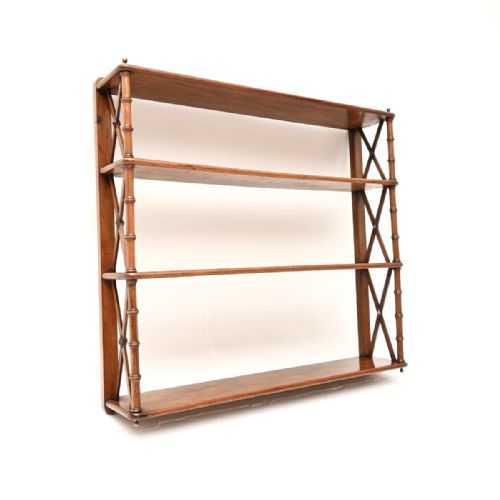
These walnut display shelves bring together practical book storage and open presentation surfaces across Victorian, Edwardian and Art Deco forms.
Walnut Display Shelves
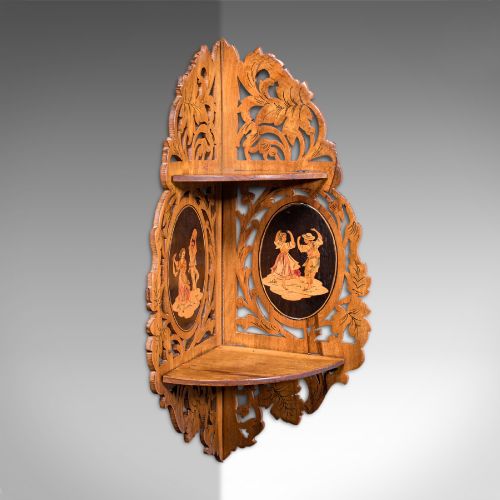
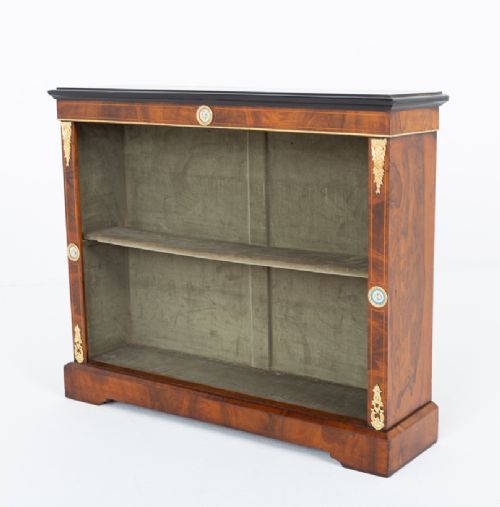
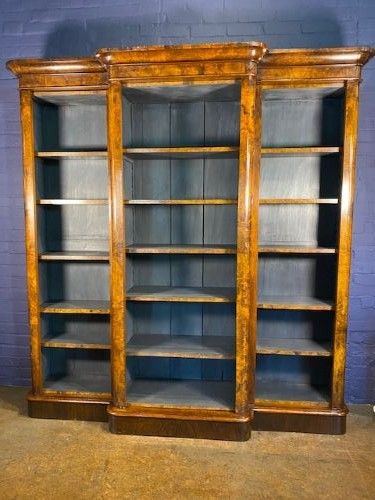
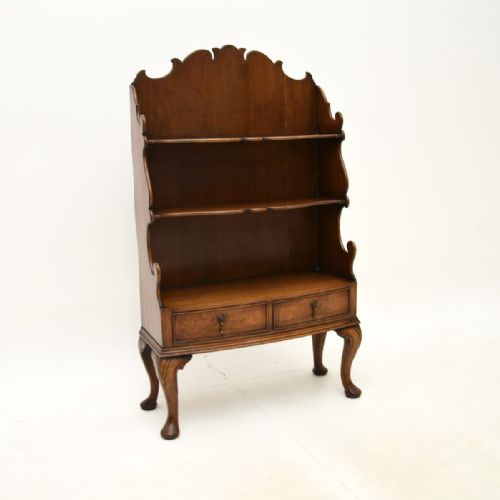
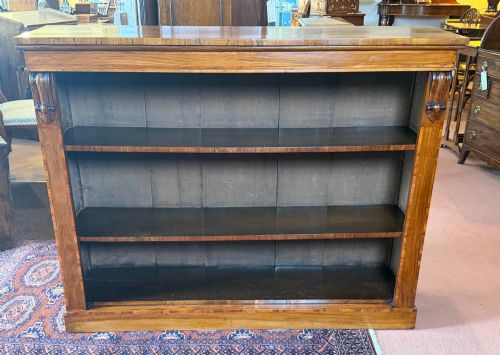
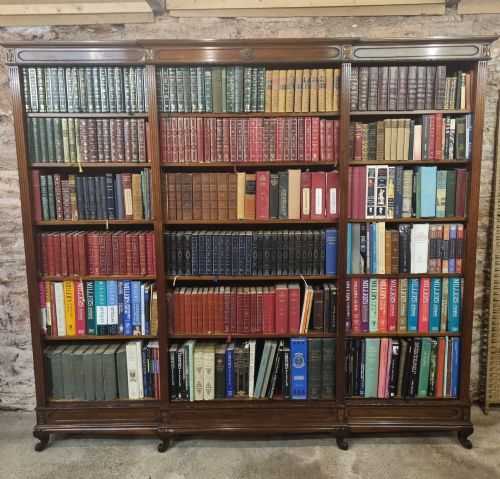
When you search for walnut display shelves, you encounter pieces designed to hold books, ceramics and decorative objects in domestic rooms. The selection on this page leans heavily toward Victorian open bookcases and whatnots, alongside Edwardian and Art Deco variations.
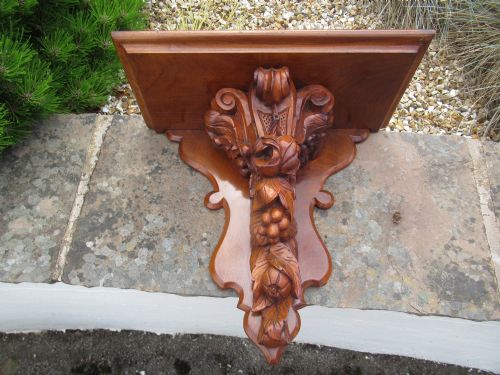
Forms range from wall-mounted brackets and corner shelves to large library bookcases and multi-tiered etageres. Walnut and burr walnut dominate the timber choices, often paired with glass, brass and ormolu mounts.
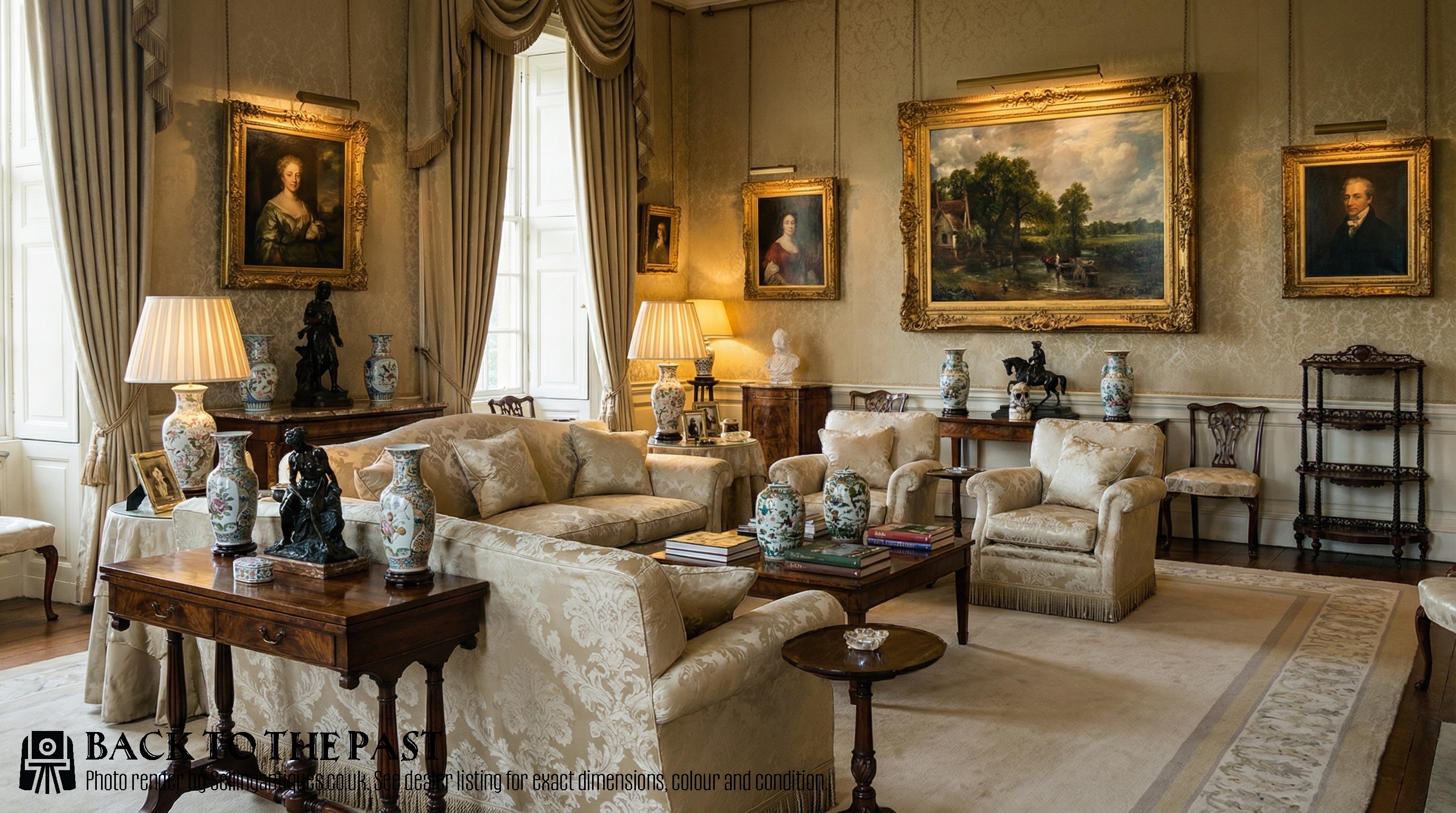
How they were made
Cabinet makers utilised solid timber alongside walnut veneer and burr walnut to create figured surfaces on fronts and tabletops. Secondary woods like pine appear in carcases and drawer linings.
Walnut Display Shelves Retail Price Guide 2026
Typical asking prices for walnut display shelves among the pieces listed under this phrase on Sellingantiques today, from the lower quarter to the upper quarter. They describe what is for sale here now, not the wider market.
What varies in quality
The distinction between standard and superior pieces rests on the grain selection within the burr walnut veneer and the crispness of carved details. Matching timber figures across large surfaces require considerable skill from the maker.
Interior construction details, such as adjustable shelving mechanisms and solid timber backboards, separate utilitarian items from pieces intended for formal reception rooms.
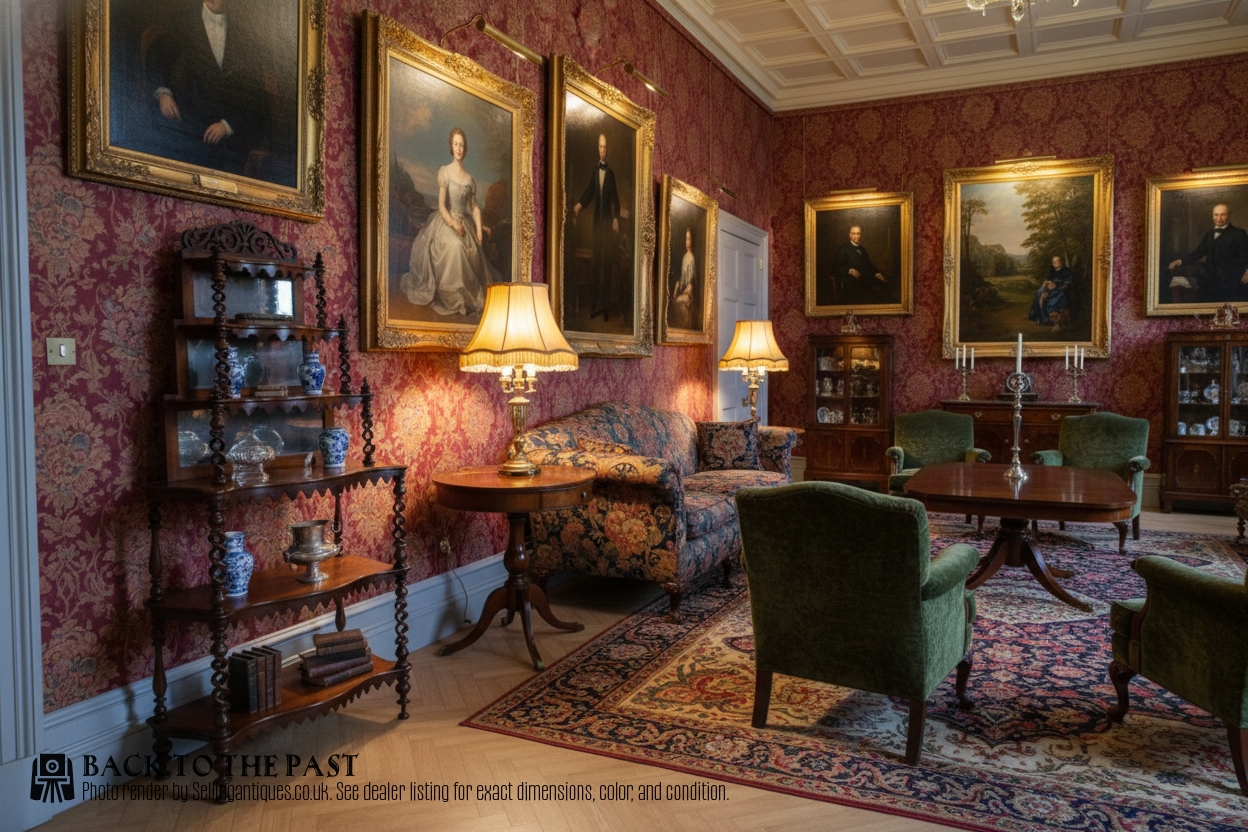
Gabriel Viardot·Gillows
The Walnut Display Shelves Glossary
- Burr walnut
- A veneer taken from the knotted growth of a walnut tree, yielding complex, swirling grain patterns. It was favoured for high-status Victorian and Edwardian furniture.
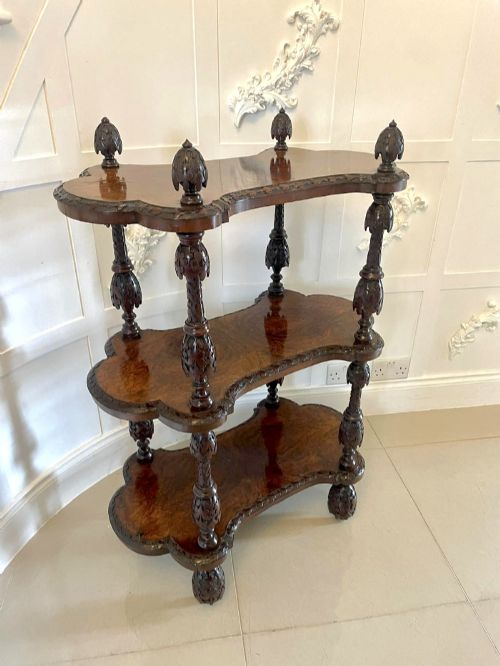
- Whatnot
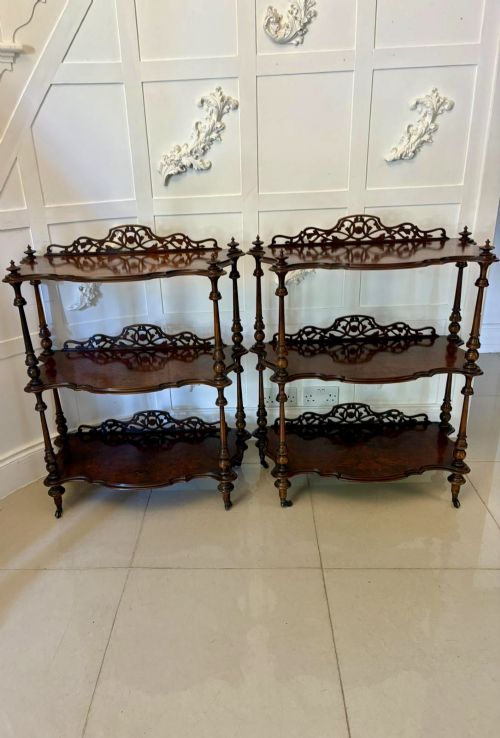
- An open set of tiered shelves used for displaying ornaments and small objects. These pieces often feature turned upright supports and multiple platforms.
- Credenza
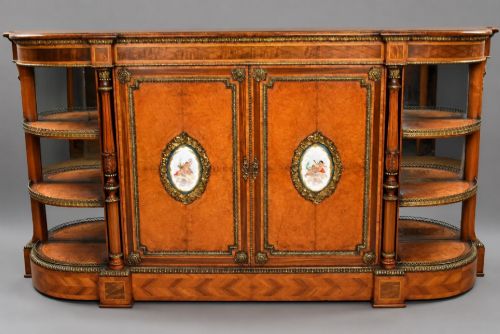
- A low cabinet, frequently fitted with glass doors and ormolu mounts, used for storage and display in nineteenth-century interiors.
- Ormolu
- Gilt bronze mounts applied to furniture for decorative effect. It appears regularly on nineteenth-century credenzas and cabinets.
- Etagere
- A piece of furniture consisting of a set of open shelves for displaying small objects. French examples often incorporate slender turned legs.
Walnut Display Shelves: Frequently Asked Questions
How do I clean burr walnut shelves?
Dust regularly with a soft, dry cloth to prevent dirt accumulation on the delicate veneer. Avoid commercial silicones and harsh cleaning sprays that can damage the polish.
Apply a traditional beeswax polish sparingly when the wood appears dry, buffing gently to maintain the natural sheen.
Are these shelves suitable for heavy books?
Many open bookcases feature adjustable wooden shelves supported on sturdy timber battens, making them practical for everyday libraries. Heavier volumes sit best on lower fixed shelves.
Wall-mounted units require secure fixing to solid masonry or studwork to bear the weight of books safely.
How can I date a walnut bookcase?
Victorian pieces often display rich burr walnut veneers, elaborate carved details or ormolu mounts. Edwardian and later examples tend toward cleaner lines and lighter proportions.
Interior construction, such as the presence of hand-cut dovetails or modern metal shelf supports, offers further clues to the period.
What is the difference between an etagere and a whatnot?
Both terms describe tiered open shelving units designed for display rather than heavy storage. Whatnot is the traditional English term, whereas etagere often denotes pieces with French styling and slender turned legs.
Both forms serve well for holding ceramics, small sculptures and decorative items in living spaces.