

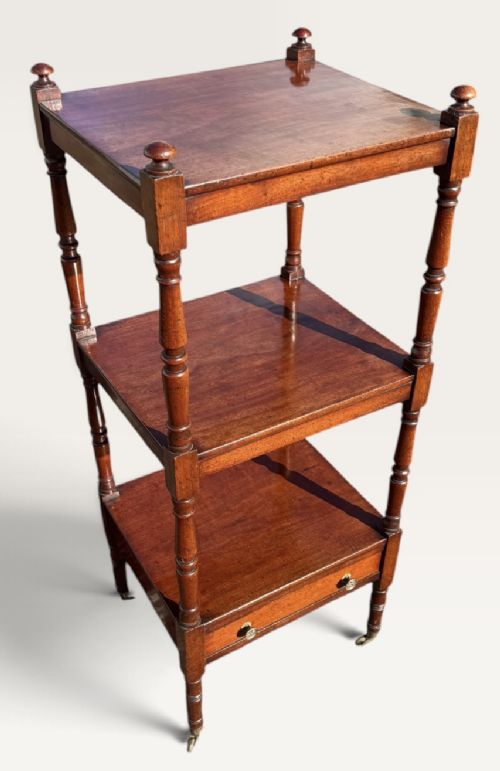
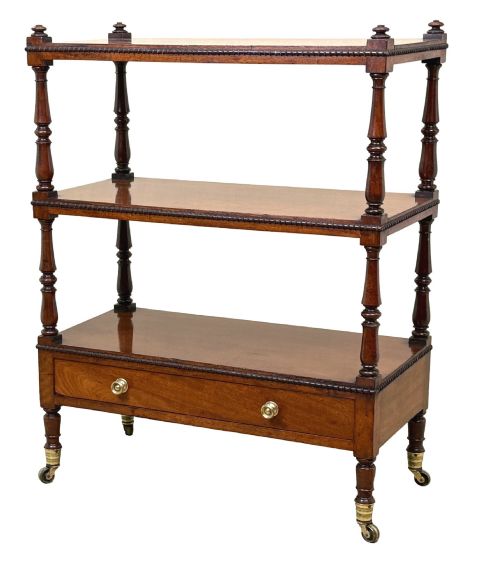
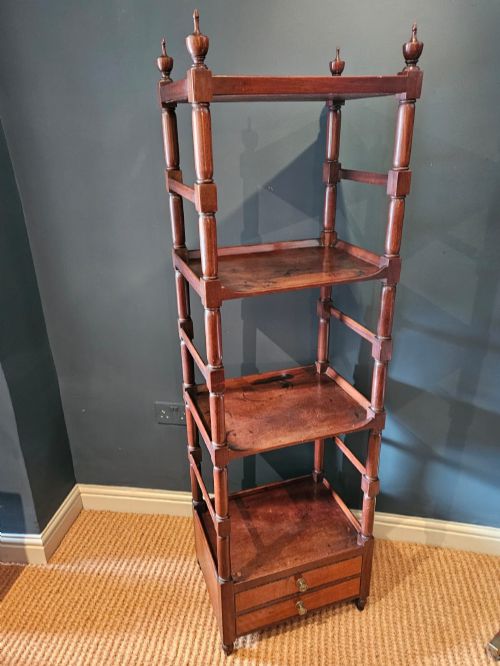
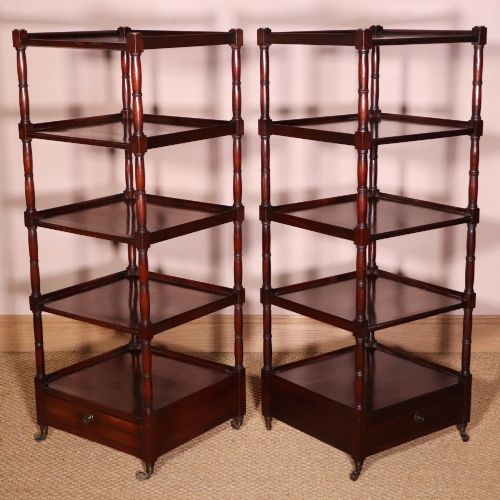
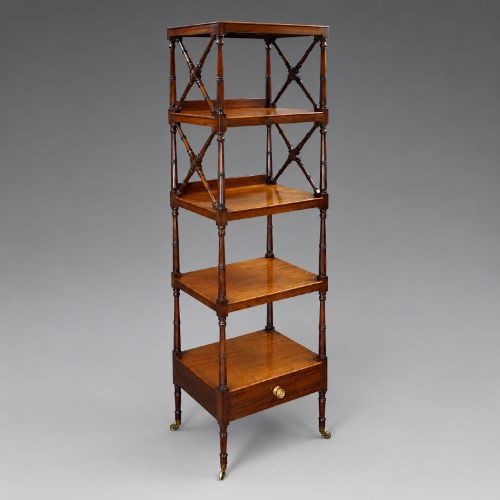
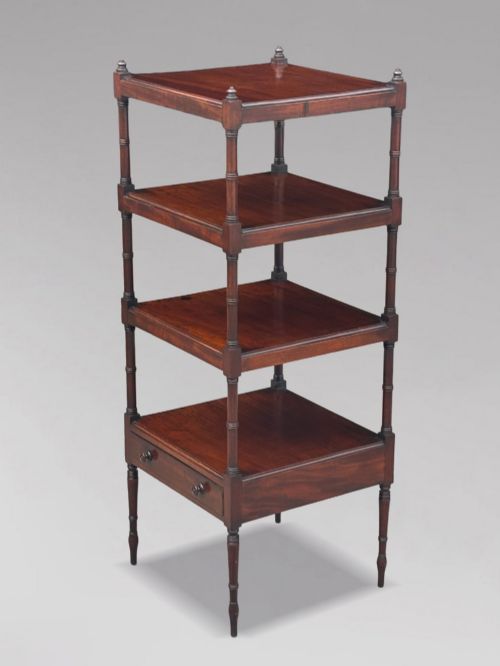
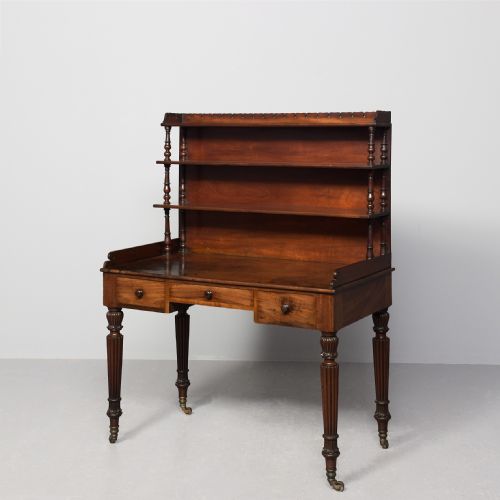
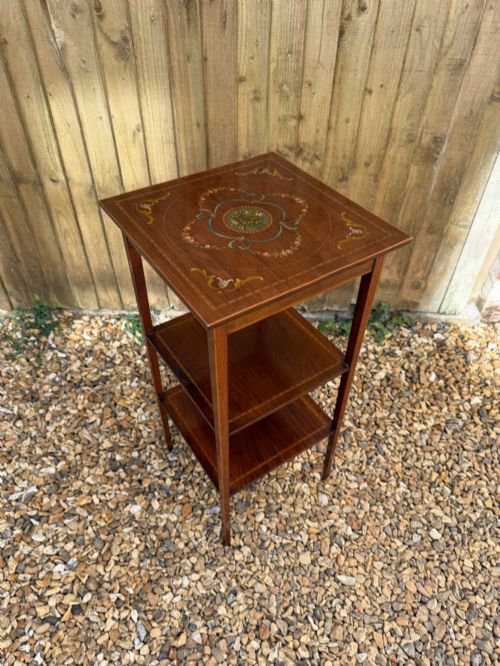
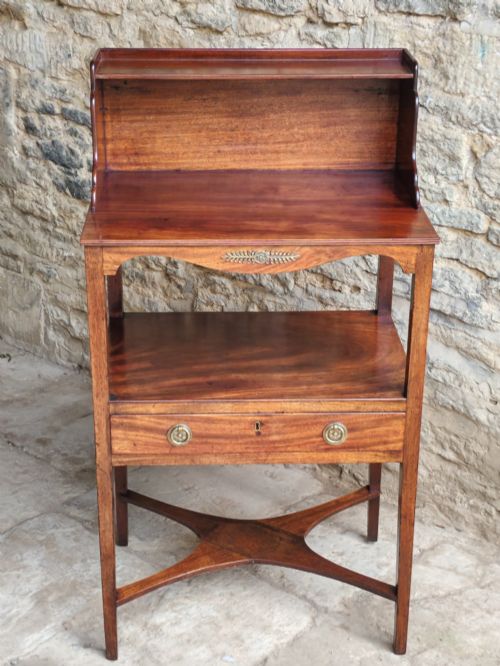
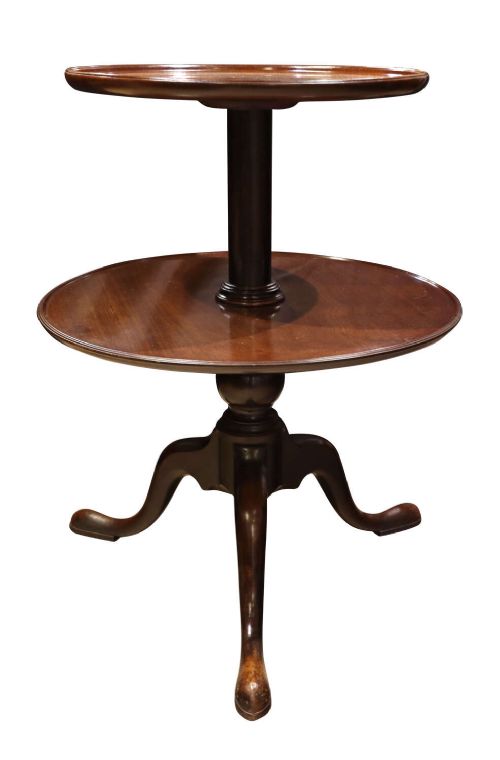
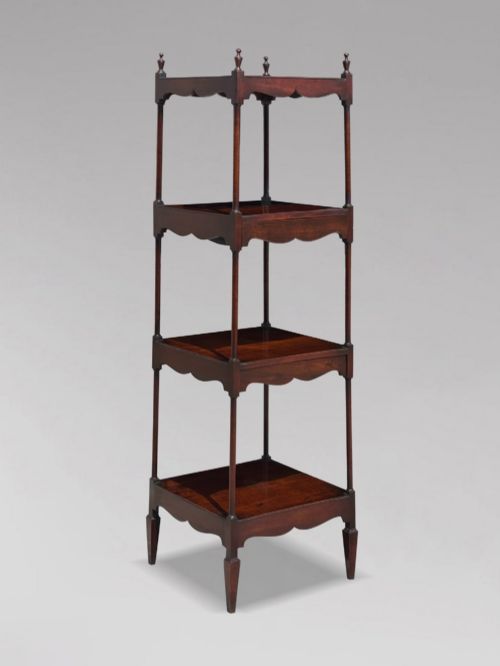
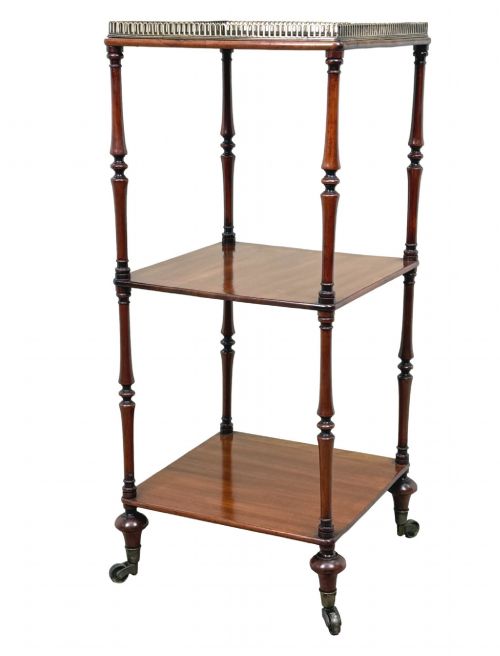
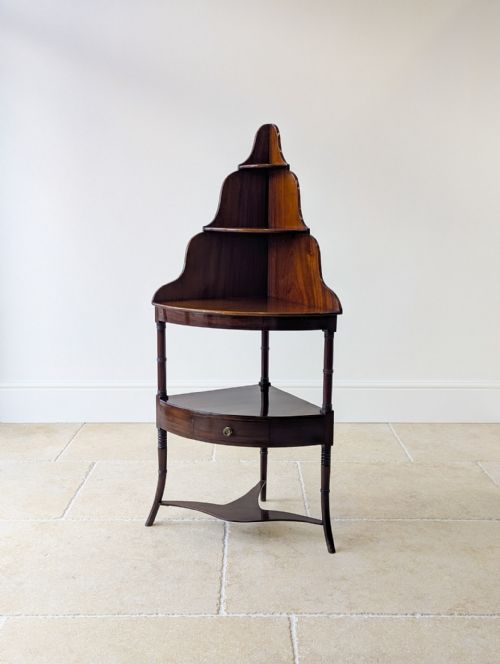


Georgian Mahogany Etagere
These georgian mahogany etagere pieces are tiered display stands that bring practical elegance to any room.
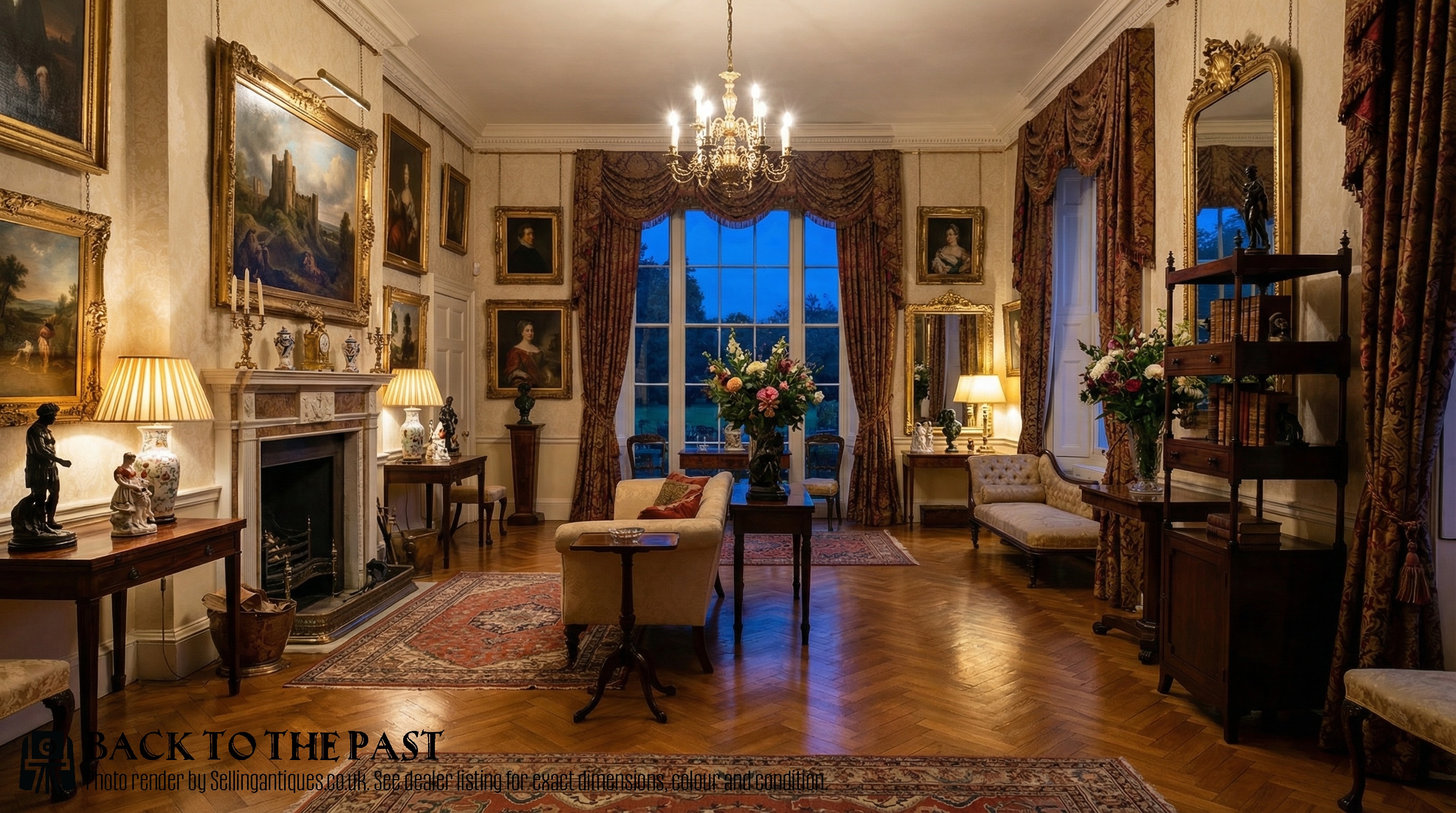
Georgian Mahogany Etagere
A georgian mahogany etagere is a multi-tiered stand designed for holding books, display items or small objects, appearing in forms such as three-tier and four-tier whatnots, waterfall display shelves, and occasional tables with cupboards.
The pieces on this page span the Georgian and George III periods, the Regency era, and later interpretations from nineteen-ten, showing how cabinetmakers adapted the multi-tiered format over time.
Originating as practical display furniture, these pieces combine open shelving with occasional enclosed lower sections, offering versatile display space within a compact footprint.
How they were made
Makers built these pieces primarily from solid mahogany and wood veneer, incorporating brass details and cane elements into the construction of the tiers and supports.
Construction techniques focused on creating stable multi-tiered frameworks, balancing upright supports with graduated or uniform shelves to handle everyday display requirements.
Georgian Mahogany Etagere Retail Price Guide 2026
Typical asking prices for georgian mahogany etagere among the pieces listed under this phrase on Sellingantiques today, from the lower quarter to the upper quarter. They describe what is for sale here now, not the wider market.
Listings include pieces from the Georgian, George III, and Regency periods, alongside nineteen-ten examples utilising mahogany, brass, wood veneer, and cane.
What varies in quality
Quality rests in the selection of timber figures and the precision of the joinery connecting the tiers and uprights, where finer examples display careful attention to grain alignment.
Proportion and structural grace separate standard production from superior work, particularly in how the tiers step back and how securely the corner supports integrate into the overall design.
The Georgian Mahogany Etagere Glossary
- Etagere
- A piece of furniture consisting of a set of open shelves for displaying small objects. These tiered stands developed in France before being adopted by British cabinetmakers.
- Whatnot
- A multi-tiered piece of furniture used for storing or displaying ornaments, books, and curiosities. This term appears frequently alongside etagere in period descriptions.
- Mahogany
- A durable tropical hardwood prized for its rich reddish-brown colour and stable working properties. It served as the primary material for high-end case furniture throughout the Georgian period.
- Tier
- An individual level or shelf within a multi-level structure. Multiple tiers allow for the organised display of decorative objects without taking up extensive floor space.
Georgian Mahogany Etagere: Frequently Asked Questions
What is a georgian mahogany etagere used for?
These tiered stands served originally to display books, porcelain, and ornaments in principal rooms. Their open shelves made decorative items easily visible from various angles.
Today they function similarly in domestic interiors, holding collections, plants, or everyday objects while adding period character to a corner or wall space.
How do you distinguish a whatnot from an etagere?
The terms often overlap in antique descriptions, though etagere traditionally points to French-influenced display pieces, while whatnot is a vernacular British term for the same multi-tiered shelving unit.
Both forms utilise stacked platforms supported by uprights, sometimes incorporating a small drawer or cupboard at the base for additional utility.
How do I date a mahogany etagere?
Dating relies on examining the timber characteristics, construction methods, and hardware choices relative to documented period styles such as George III and Regency.
Later interpretations from the twentieth century often display subtle differences in timber finishing and structural assembly when compared to authentic eighteenth-century examples.
Where should I place an etagere in a room?
Free-standing etageres work well against flat walls or within corners where vertical space can be utilised effectively without blocking walkways.
Because these pieces feature open shelves accessible from the front or sides, they suit positions where natural light can highlight the objects placed upon them.