




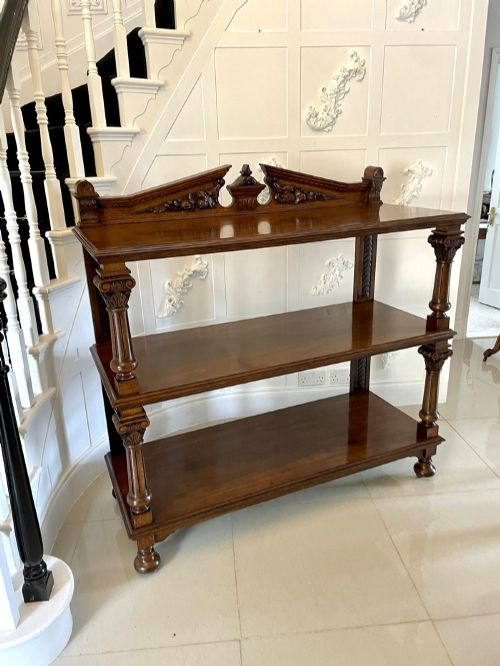
Antique Three Tier Stand
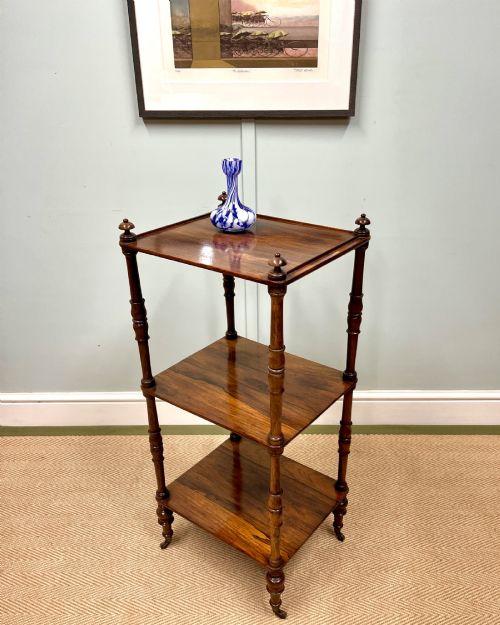
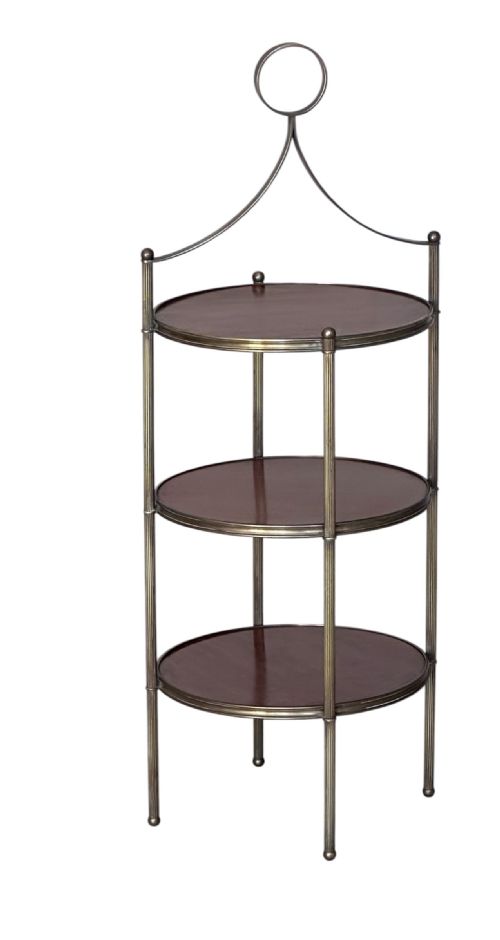
An antique three tier stand offers tiered vertical display, catching the eye with graduated shelves in mahogany, rosewood, oak, and silver plate.
Antique Three Tier Stand
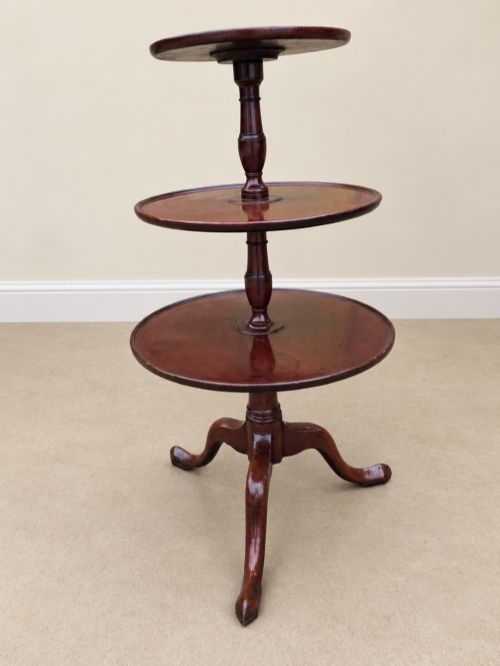
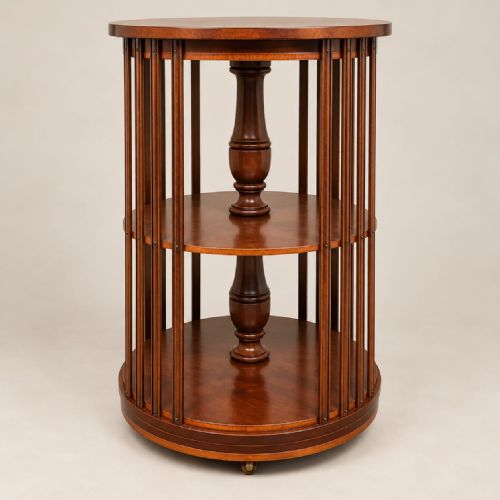
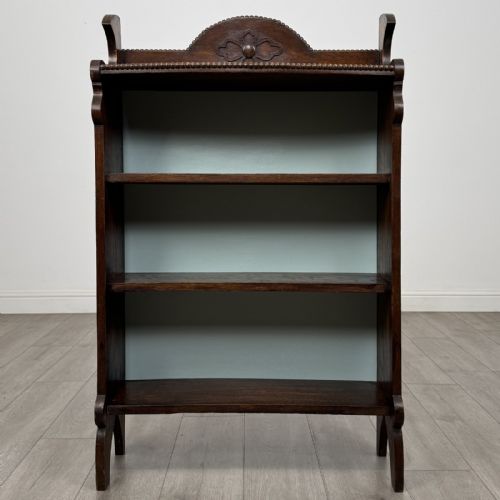
An antique three tier stand spans multiple forms including whatnots, etageres, dumb waiters, side tables, and cake stands. These pieces appear across periods from the 18th century through the Georgian, Regency, William IV, Victorian, Edwardian, and Arts and Crafts eras.
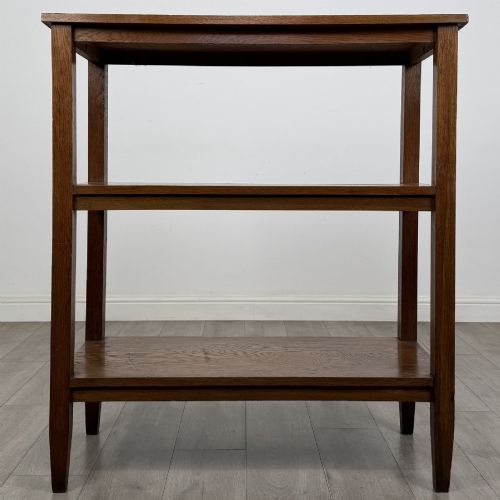
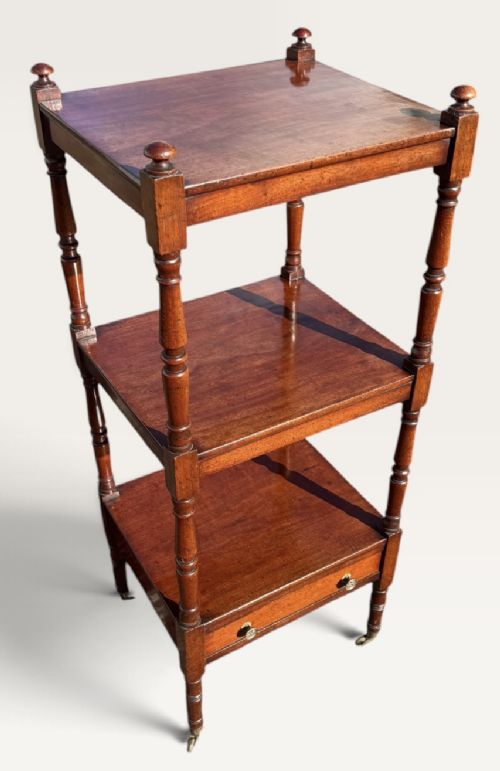
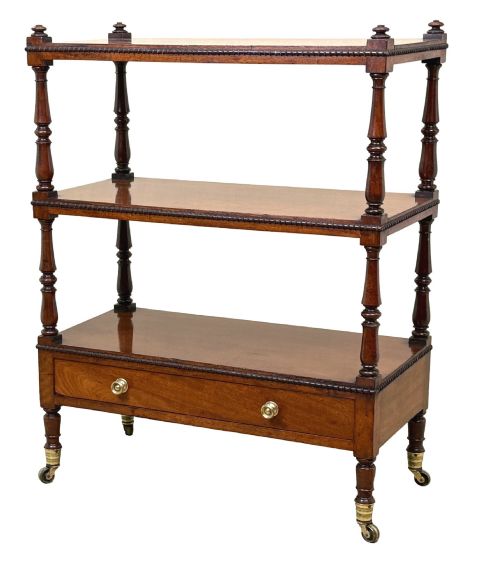
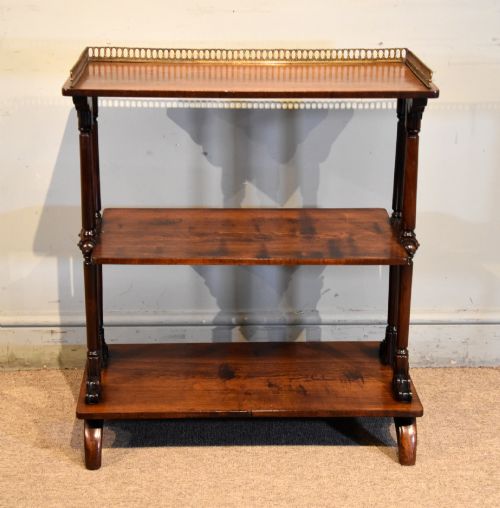
The most common versions on this page are mahogany whatnots from the Georgian and Regency periods, alongside Edwardian mahogany and silver-plated cake stands. Buyers also encounter bamboo, walnut, rosewood, and solid oak constructions intended for display or serving.
Materials and Construction
Cabinetmakers utilised hardwoods such as mahogany, rosewood, walnut, and solid oak, occasionally incorporating brass details, inlay, or ceramic elements. Cake and serving stands feature silver plate alongside original plates, glass cut crystal, and folding mechanisms.
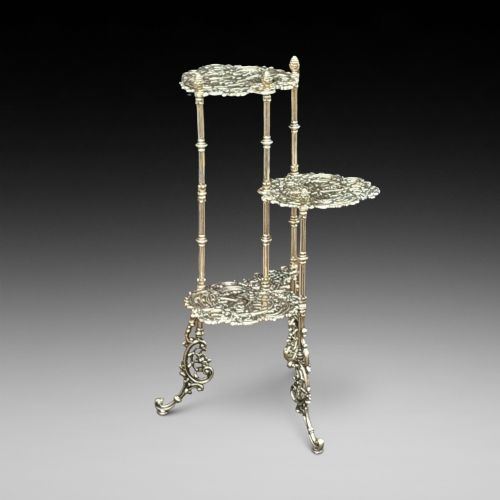
Joinery techniques link graduated shelves to turned supports or uprights, creating stable vertical structures designed for display or dining service. Metal stands integrate tiered wireframes or plated tiers with folding frames.
Antique Three Tier Stand Retail Price Guide 2026
Typical asking prices for three tier stand among the pieces listed under this phrase on Sellingantiques today, from the lower quarter to the upper quarter. They describe what is for sale here now, not the wider market.
Periods represented range from 18th-century Georgian and Regency pieces through to Edwardian folding stands and Cotswold School oak.
Judging Quality
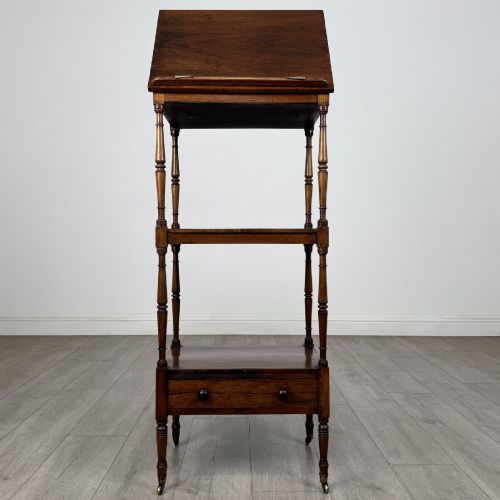
Timber selection dictates the distinction between standard items and superior examples, with figured mahogany and rich rosewood grain marking higher craftsmanship. The crispness of turning on supports and the integration of drawers or fine inlay elevate the piece.
For silver-plated tiers, the preservation of the plating and the inclusion of original plates or cut crystal dictate the standing of the stand. Structural rigidity across all three tiers remains essential regardless of whether the piece functions as a whatnot or a cake stand.
Edwin Blyde·Walker & Hall
The Antique Three Tier Stand Glossary
- Etagere
- A French term for a piece of furniture consisting of a set of open shelves for displaying small objects. These often align closely with whatnots in English furniture forms.
- Dumb waiter
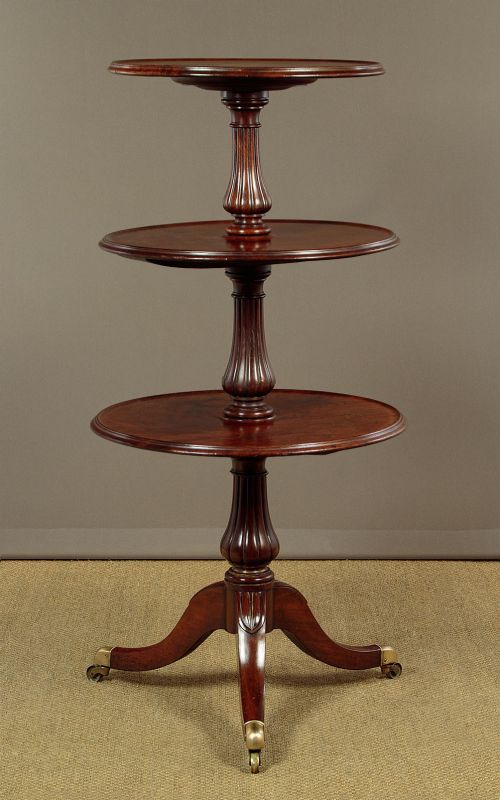
- A tiered freestanding piece used in dining rooms for serving food without servants present. 18th-century examples frequently employ graduating circular mahogany trays.
- Regency
- A British design period spanning the early 19th century, known for classical restraint and influenced by ancient Roman and Greek styles. Furniture from this era often utilises dark hardwoods and brass mounts.
- Silver plate
- A thin layer of silver applied to a base metal such as copper or Britannia metal. This technique allowed manufacturers to produce elaborate cake stands for Edwardian tea service.
Antique Three Tier Stand: Frequently Asked Questions
What is an antique three tier stand used for?
These pieces served various domestic functions depending on their form. Whatnots and etageres held books and ornaments, while dumb waiters assisted with dining room service.
Cake stands provided tiered presentation for afternoon tea. Today, buyers utilise them for displaying plants, ceramics, and tableware in living spaces.
How do I tell a Georgian stand from a Victorian one?
Georgian and Regency pieces tend to rely on architectural mahogany and rosewood with understated turning and classical proportions. Victorian and Edwardian examples introduce broader material choices such as bamboo, walnut, and silver-plated metal.
Later Victorian and Edwardian items also encompass folding mechanisms for cake stands and more ornate display functions like etageres with drawers.
Are these stands sturdy enough for daily use?
Solid hardwood whatnots and oak side tables offer robust structural integrity suitable for supporting books, lamps, and heavy decorative objects. Folding cake stands and wire-supported tiers require gentle handling due to their lighter frames.
Checking the joints where the shelves meet the uprights ensures long-term stability in daily settings.
What is the difference between a whatnot and an etagere?
Both terms describe multi-tiered open shelving units, though etagere often denotes French-influenced or highly decorative display pieces. Whatnot is the traditional English term spanning utility furniture and display stands.
In practice, makers and dealers often used both labels interchangeably for three-tier furniture.