


Antique Whatnot Shelf
An antique whatnot shelf is a tiered open display stand designed to hold books, ornaments and curiosities.
Antique Whatnot Shelf
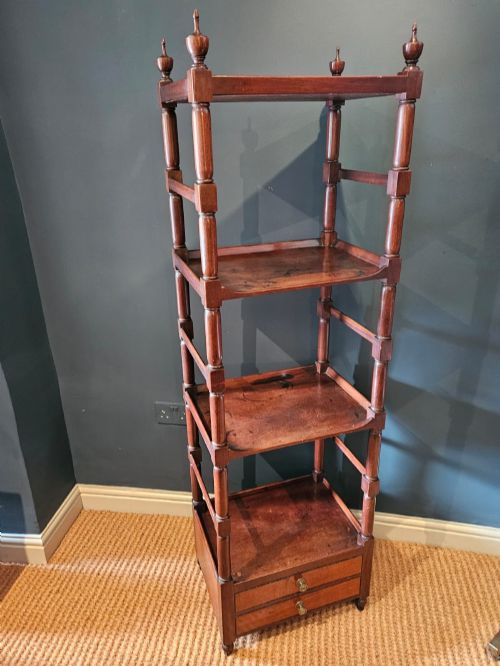
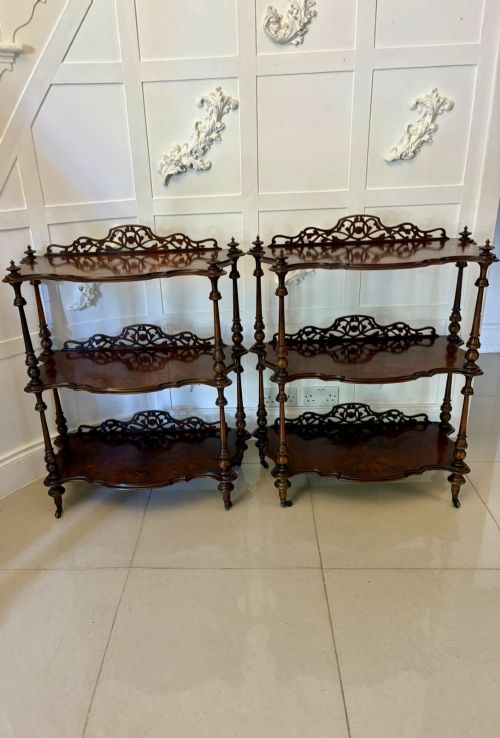
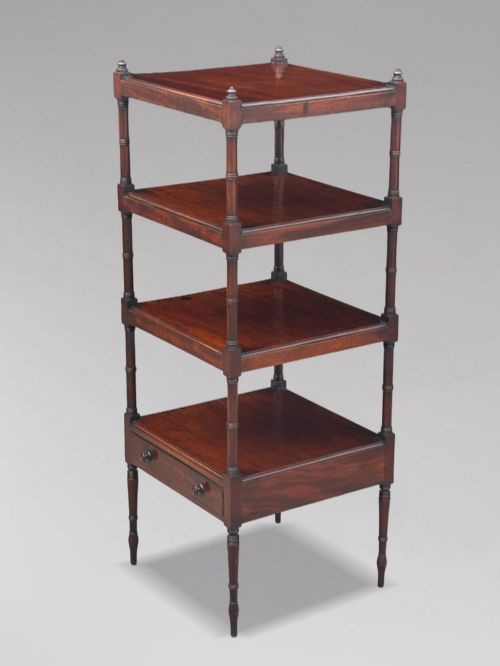
An antique whatnot shelf provides multiple open tiers supported by upright posts or columns, originating to hold small decorative objects or books. The pieces found here span the Georgian, Regency, William IV and Victorian eras, alongside later revivals.
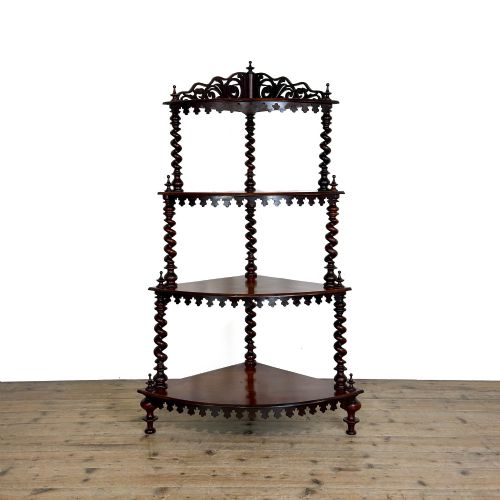
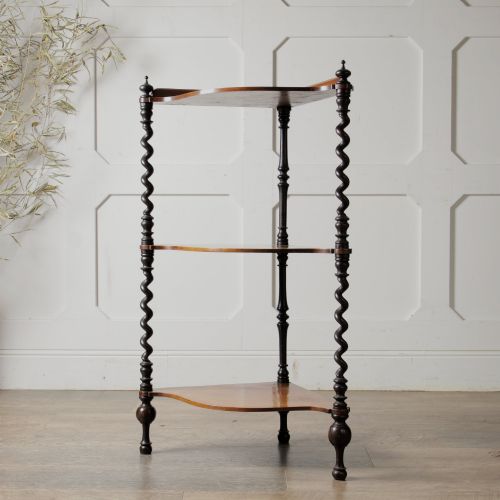
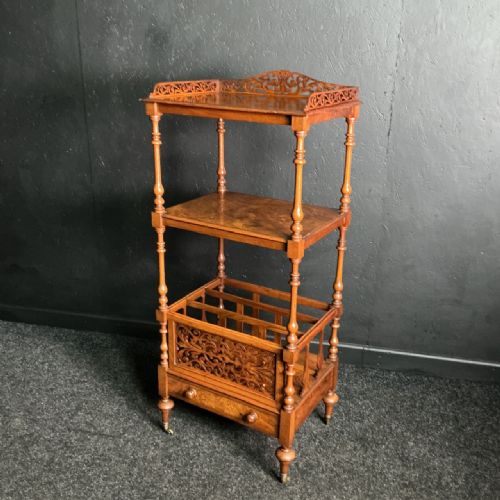
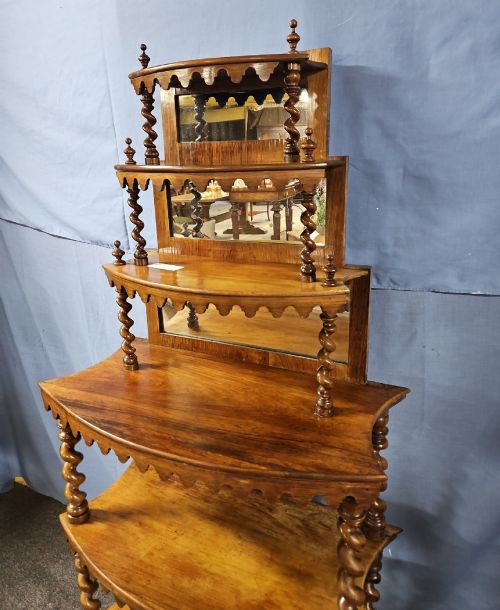
Most examples met on this page date from the nineteenth century and take the form of freestanding multi-tier stands, corner units or wall-mounted shelves. Walnut, mahogany and rosewood dominate the surviving stock, often paired with turned uprights or delicate spindle galleries.
Judging quality and execution
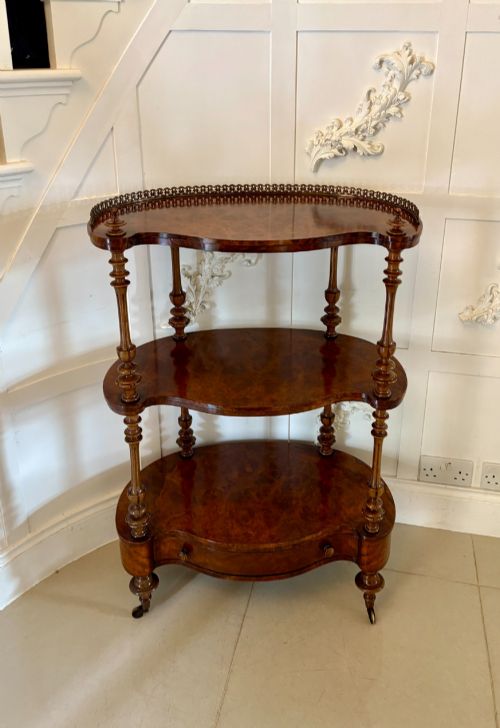
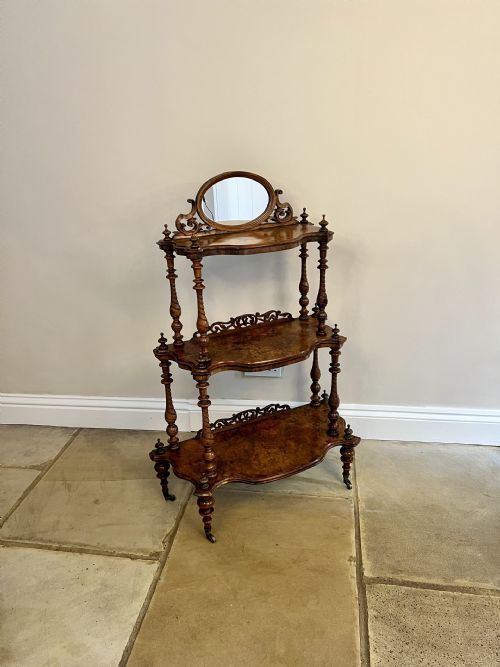
Quality rests in the choice of timber figure, such as richly patterned burr walnut or dense mahogany, and the crispness of turned or carved details on the upright supports. Superior pieces display refined proportions, balanced tier heights and meticulous joinery that maintains rigidity across multiple shelves.
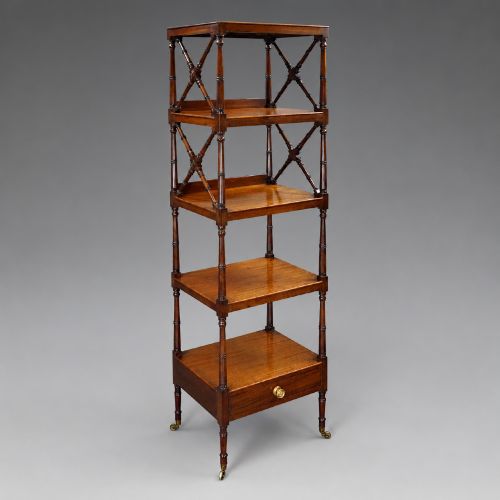
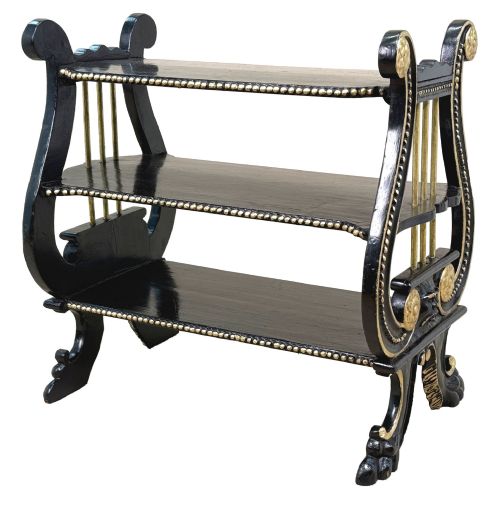
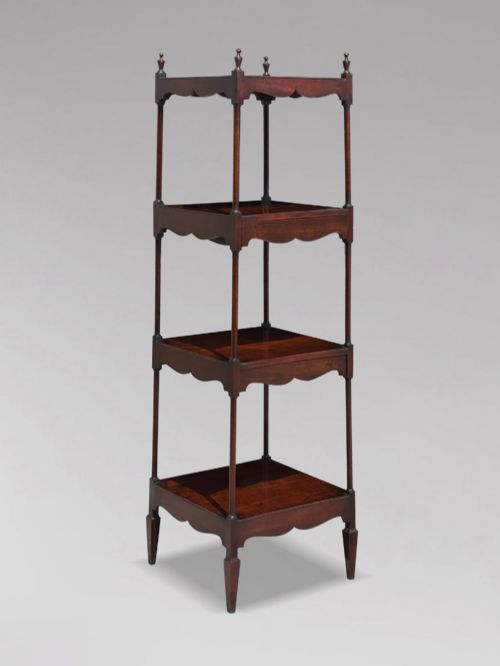
Formats span freestanding three and four-tier stands, corner units, music stands, and wall-mounted hanging shelves.
Gillows·Leonard Wyburd for Liberty and Co
The Antique Whatnot Shelf Glossary
- Whatnot
- A multi-tiered open furniture piece used for displaying ornaments or holding books. It evolved during the eighteenth century as domestic spaces required designated surfaces for curiosities.
- Etagere
- A French-derived term for a set of tiered display shelves. These pieces often feature delicate framing and serve to exhibit decorative objects.
- Canterbury
- A low, multi-tiered stand featuring sloped partitions designed originally for holding sheet music or folios. Some tiered variants combine open display shelves with a partitioned lower section.
- Parquetry
- Geometric wood inlay work arranged in patterns such as cubes or chequers. It decorates the flat tier surfaces of finer nineteenth-century examples.
- Barley twist
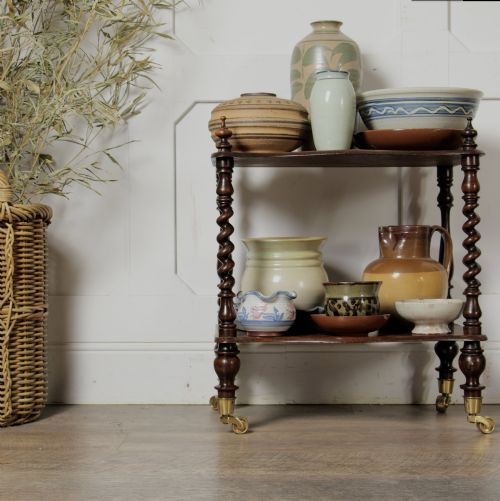
- A turned wooden column carved in a spiral twist resembling a rope. This decorative turning is frequently found on the upright supports of Victorian stands.
Antique Whatnot Shelf: Frequently Asked Questions
What were whatnot shelves originally used for?
These tiered stands served primarily to hold the miscellaneous items that accumulated in Victorian and Georgian parlours, hence the colloquial name. They kept books, ceramics and decorative ornaments neatly arranged and visible.
Over time, specific rooms adopted them for holding tea wares, sheet music or small portfolios alongside general decorative displays.
Where should I place a whatnot in a modern room?
Freestanding multi-tier stands work well against plain walls or beside seating where their open profile keeps the room feeling spacious. Corner versions utilise neglected junctions in smaller rooms effectively.
Avoid placing delicate rosewood or walnut surfaces in direct sunlight to protect the timber grain and rich natural patination.
How do I distinguish a Regency whatnot from a Victorian one?
Regency examples typically feature cleaner classical lines, often executed in figured mahogany with slender turned columns and brass castor fittings. Their proportions tend to feel architectural and restrained.
Victorian iterations frequently introduce richer timbers like burr walnut, more exuberant turned supports such as barley twists, or elaborate serpentine shelf shapes.
Are wall-mounted whatnot shelves common?
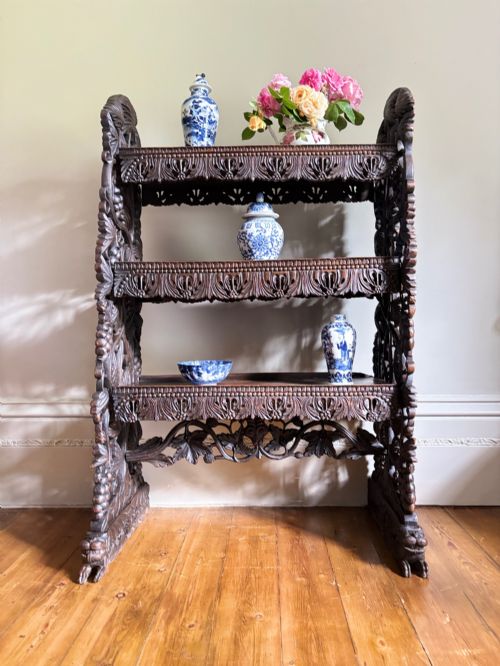
Wall-mounted variants appear frequently in late nineteenth-century styles, including bamboo and Arts and Crafts oak designs. They allowed smaller spaces to benefit from display surfaces without occupying floor area.
These hanging pieces usually feature three or more stepped shelves and often incorporate small mirrors or fretwork brackets.