

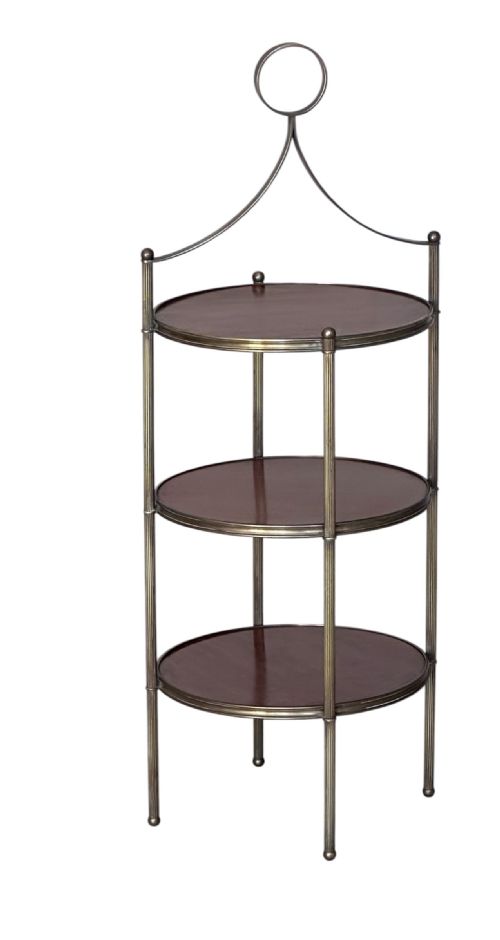
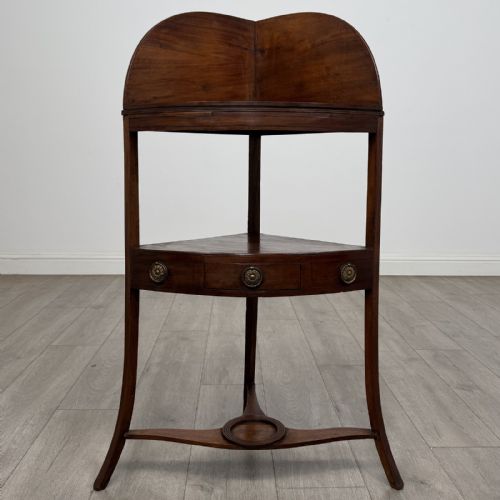
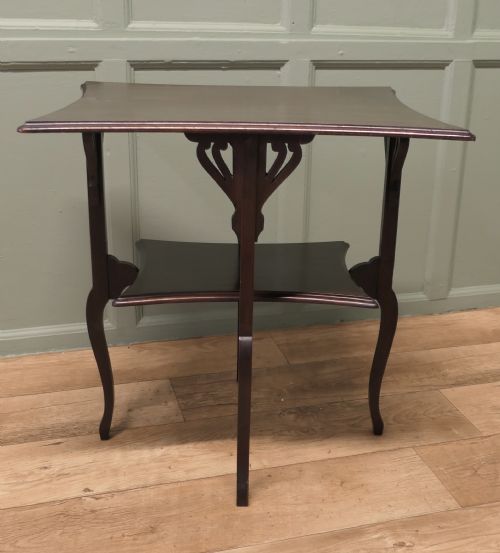
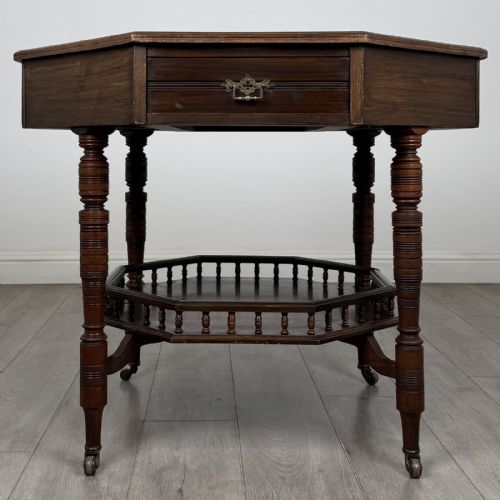
Mahogany Tier Shelf
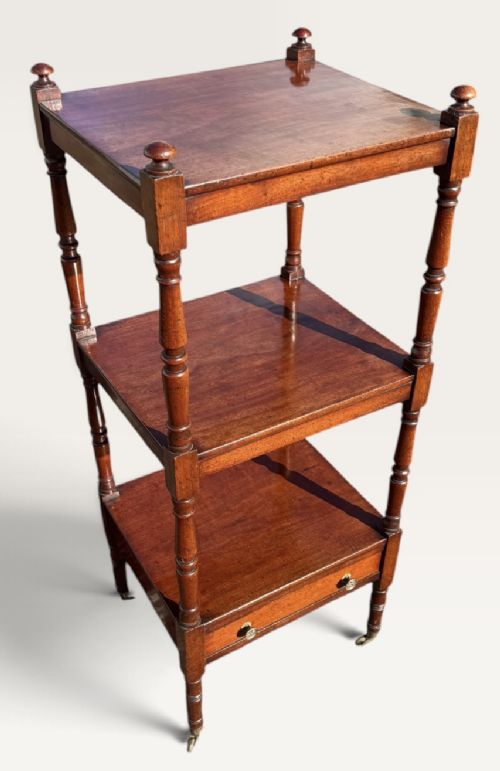
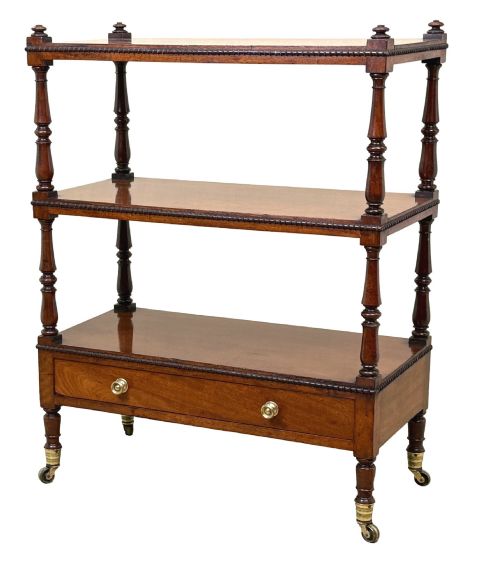
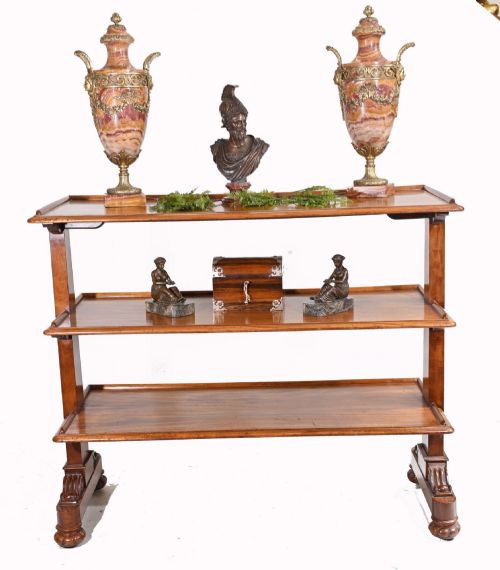
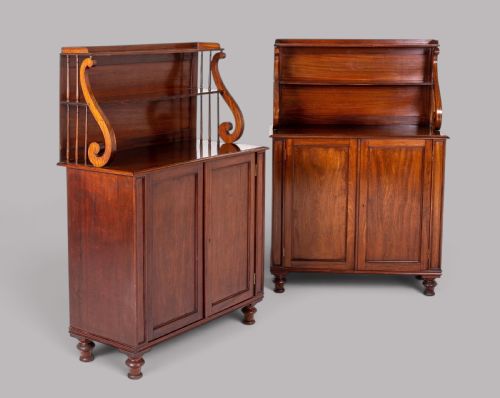
A mahogany tier shelf brings tiered display and storage into a room through open graduated tiers and sturdy upright supports.
Mahogany Tier Shelf
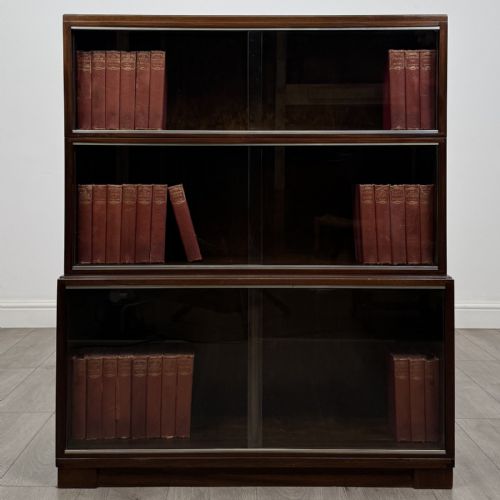
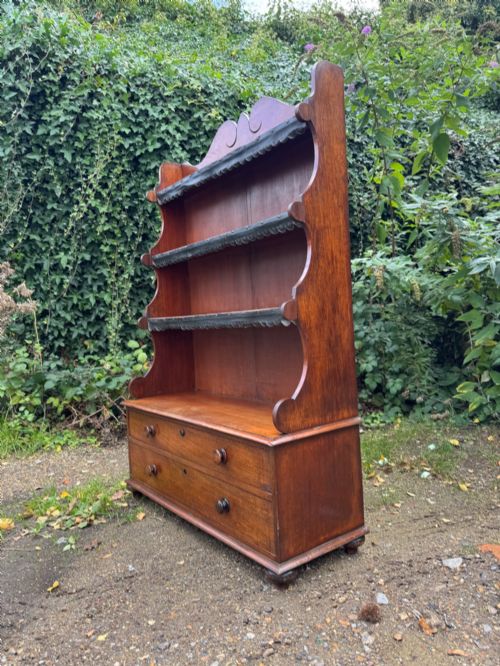
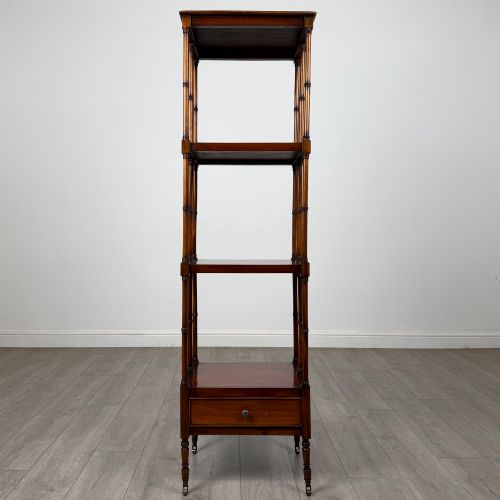
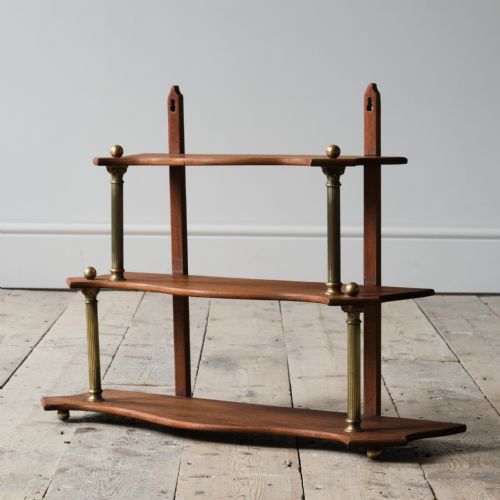
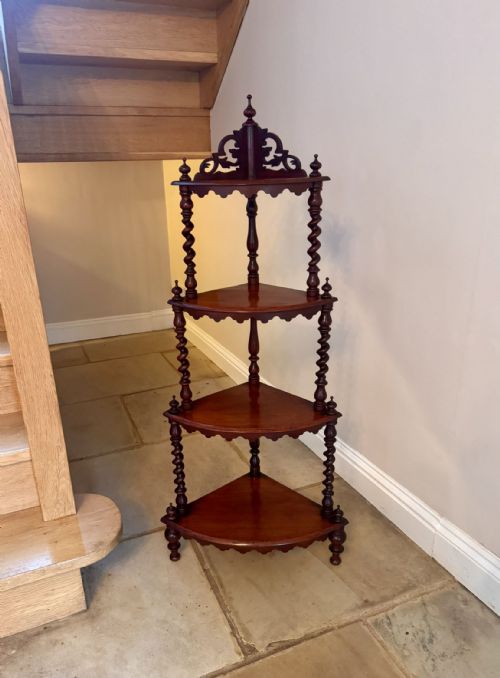
A mahogany tier shelf encompasses open bookcases, wall hanging shelves, corner whatnots, étagères, and standing display units. These pieces range from compact two tier wall brackets and small corner stands to tall four tier bookcases and revolving stands designed to hold books and display objects.
The versions most frequently met on this page date from the Georgian, Regency, and Victorian periods, alongside later revival and Edwardian pieces. They appear as freestanding floor models with multiple tiers or as wall-mounted hanging shelves constructed for efficient use of space.
How They Were Made
These items rely primarily on solid mahogany and mahogany veneers, often supplemented with secondary woods for internal framing and backing. Structural stability is achieved through turned supports, barley twist uprights, and precise joinery connecting the stacked shelves.
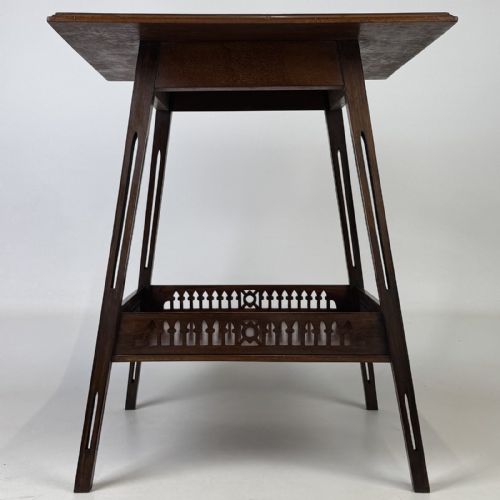
Decorative detailing on the pieces includes brass fittings, inlaid boxwood, marquetry inlay, and fretwork panels. Some variants incorporate glass elements, cast iron components, or small drawers integrated beneath the shelves.
Mahogany Tier Shelf Retail Price Guide 2026
Typical asking prices for mahogany tier shelf among the pieces listed under this phrase on Sellingantiques today, from the lower quarter to the upper quarter. They describe what is for sale here now, not the wider market.
Listings feature mahogany tier shelves spanning the Georgian, Regency, Victorian, and Edwardian eras, incorporating materials like brass, glass, and boxwood inlay.
What Varies in Quality
The distinction between standard examples and finer pieces rests on timber selection, the crispness of turned or carved uprights, and the refinement of any inlay work. Finer items exhibit carefully figured mahogany grain and harmonious proportions across the stacked tiers.
Construction methods also separate workshop tiers, displaying dovetailed drawer construction and secure joints between shelves and supports rather than basic mechanical fasteners.
Gillows·Globe Wernicke
The Mahogany Tier Shelf Glossary
- Whatnot
- A piece of furniture consisting of several open shelves placed one above the other, used for displaying ornaments or books. Originating in the 18th century, it became a staple of Victorian interiors.
- Étagère
- A piece of furniture with a set of open shelves for displaying small objects or ornaments. The term often describes slender tiered stands intended for decorative placement.
- Barley Twist
- A type of turned furniture leg or column resembling a twisted rope. This decorative carving style appears frequently on Victorian supports.
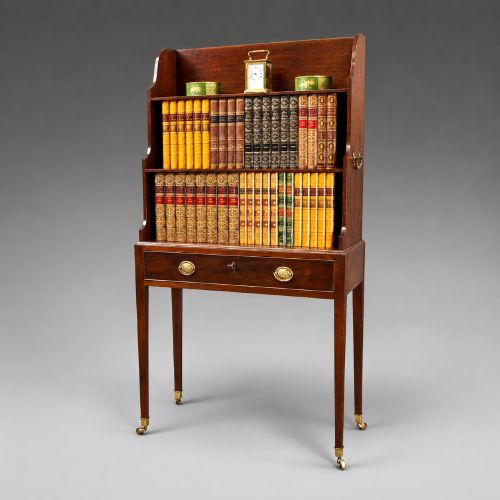
- Waterfall Bookcase
- A set of open shelves where each tier is successively shallower from bottom to top, following a stepped profile. These pieces are particularly characteristic of the Regency period.
- Marquetry Inlay
- Decorative woodwork in which pieces of tinted wood, boxwood, or other materials are fitted into a veneer to form patterns. It adds contrasting colour to flat shelf surfaces and friezes.
Mahogany Tier Shelf: Frequently Asked Questions
What is a mahogany tier shelf used for?
These pieces function primarily to display books, ceramics, and ornaments while taking up minimal floor or wall space. The stacked design allows for organised display across multiple levels.
Freestanding versions stand in corners or beside seating, while wall-mounted variants utilise vertical wall space for storage.
How do I tell a Regency tier shelf from a Victorian one?
Regency examples typically feature cleaner architectural lines, waterfall profiles, and understated reeded or turned supports dating from the early 19th century. They often reflect the classical influence of George III and Regency design.
Victorian pieces tend to introduce heavier ornamentation, such as barley twist columns, turned finials, and darker mahogany tones, reflecting mid to late 19th-century tastes.
Are wall hanging shelves sturdy enough for heavy books?
Wall-mounted tiers work best for lighter volumes, decorative objects, and cabinet plates rather than dense sets of heavy folios. The strength depends on the wall fixings and the structural integrity of the backboards.
Freestanding whatnots and stacking bookcases provide greater weight capacity for heavy collections.
Where should I place a corner whatnot?
Corner whatnots fit neatly into empty room junctions, making efficient use of awkward angles for display. They suit sitting rooms, hallways, and studies where floor space is limited.
Their graduated tiers draw the eye upward, adding height and architectural interest to an otherwise plain corner.