

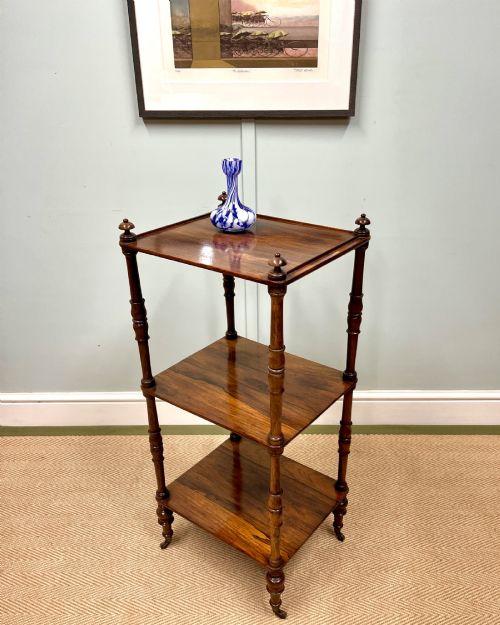
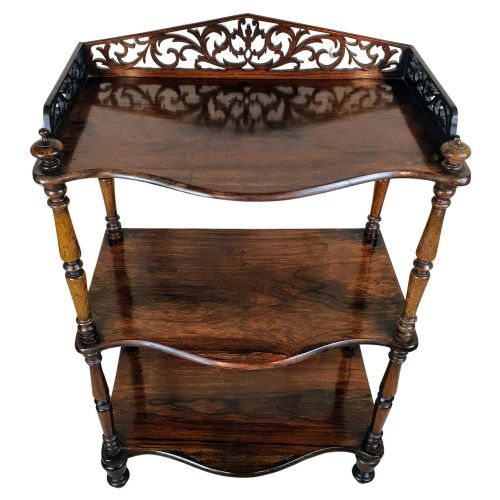
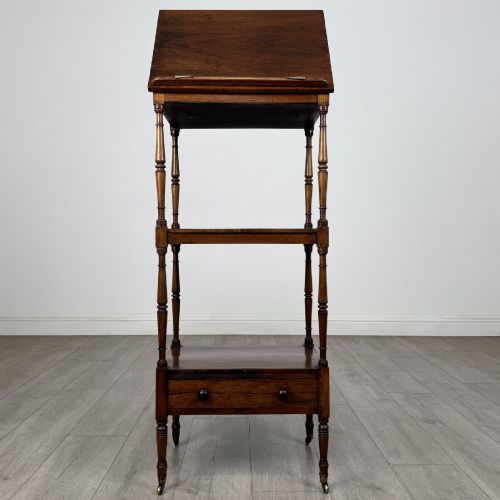
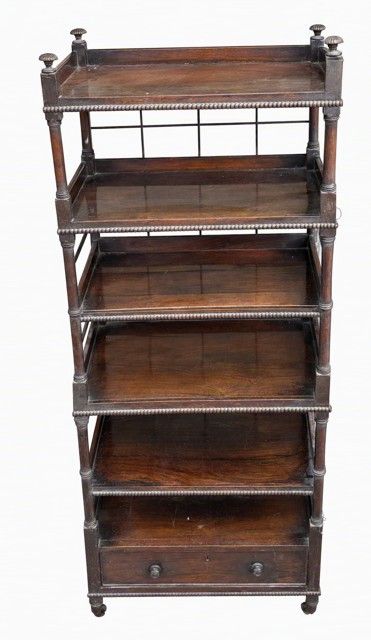
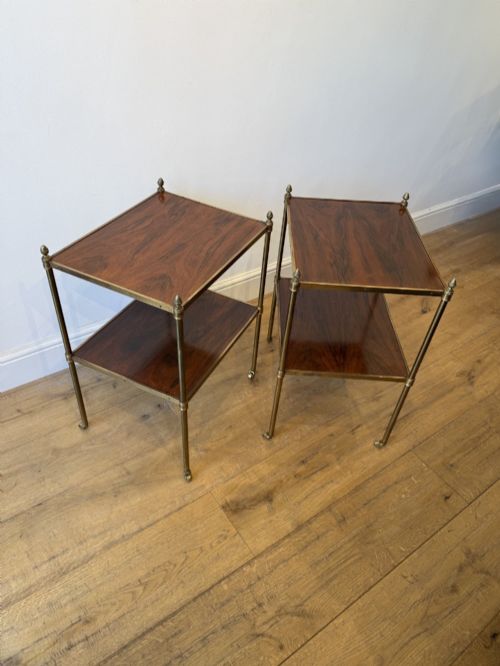

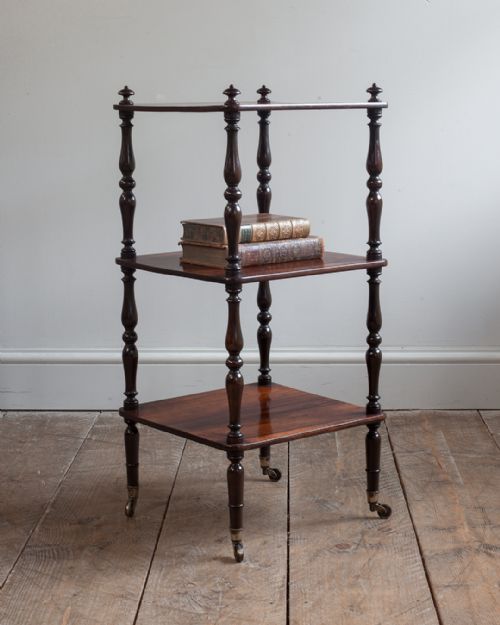


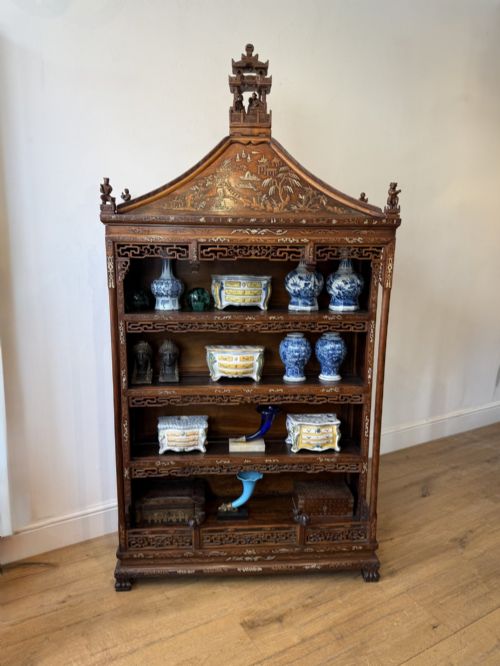


Antique Rosewood Etagere
These antique rosewood etagere pieces bring multi-tiered display and refined shelving to a room, offering both practical surface space and distinct period character.

Antique Rosewood Etagere
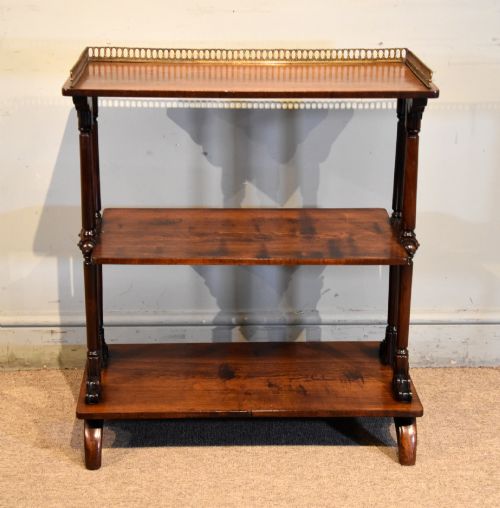
An antique rosewood etagere serves primarily as an open shelving unit or whatnot designed for displaying decorative objects, books, and small collections. Buyers searching this phrase typically encounter multi-tiered Victorian and nineteenth-century examples alongside earlier Regency designs.
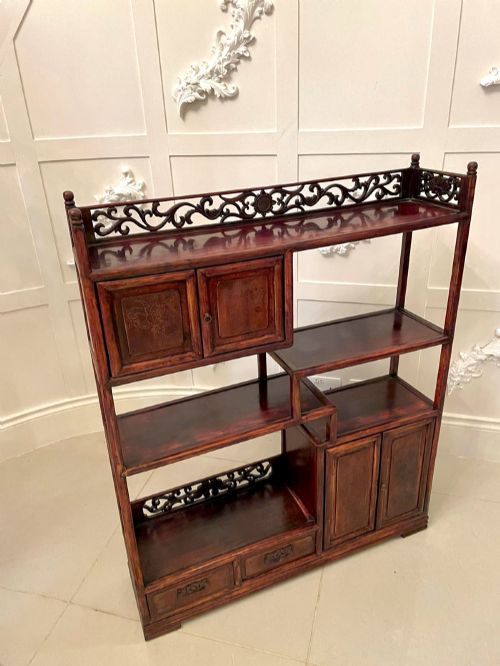
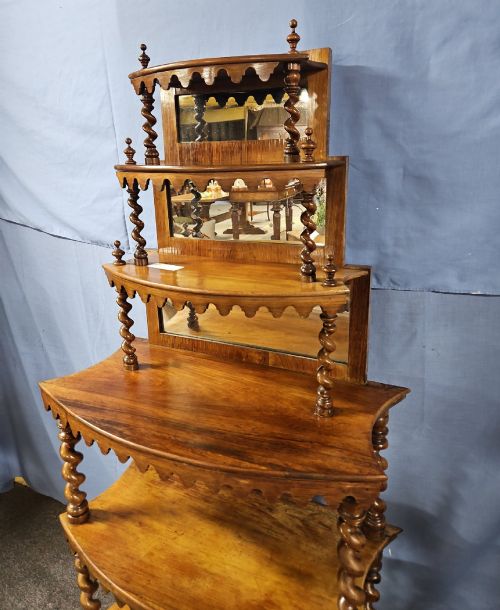
The forms on this page range from compact corner whatnots and tabletop versions to tall six-tier stands and freestanding central buffet shelves. Many pieces incorporate open framework supported by slender uprights, while others combine shelving with enclosed lower cabinets or drawers.
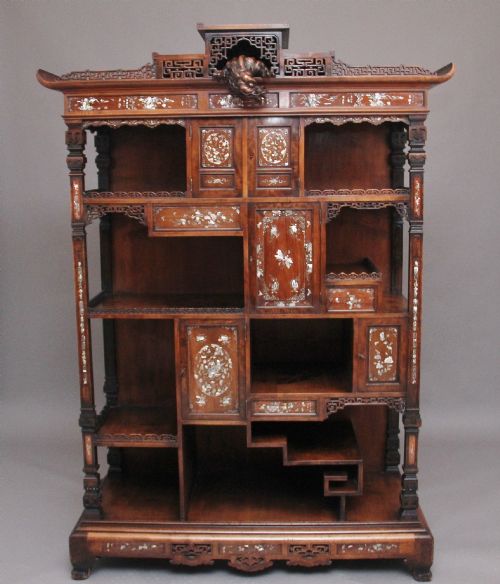
Origins span standard British cabinetmaking of the nineteenth century alongside French revival pieces and Chinese hardwood interpretations. This variety ensures that whether a room requires a narrow corner display or a prominent console-height tier, an appropriate silhouette appears in the listings.
Materials and construction methods
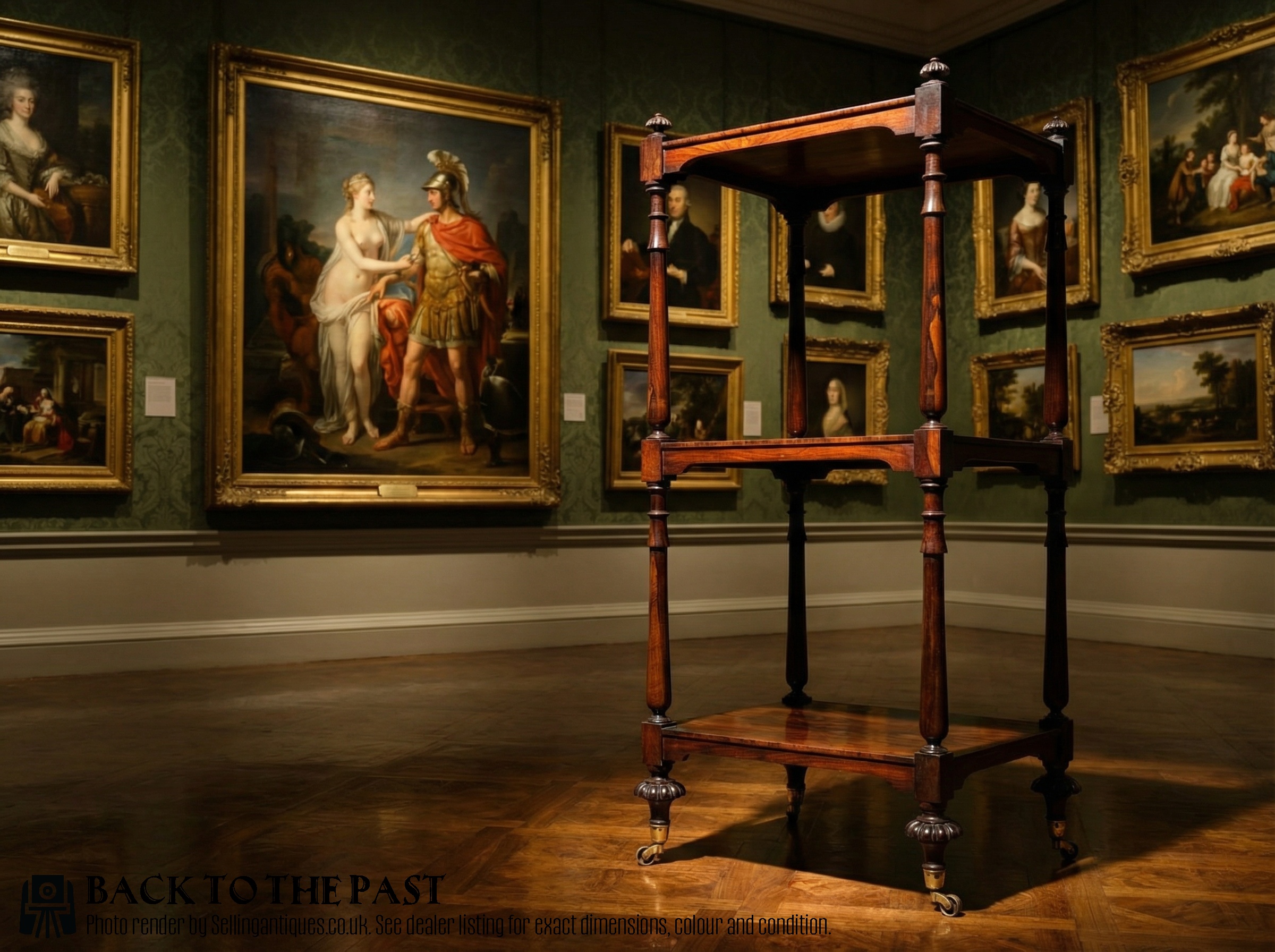
Cabinetmakers relied on dense rosewood as the primary timber, frequently pairing its deep grain with contrasting satinwood inlay, marquetry, or brass mounts. Ormolu accents and glass panels appear on select French-influenced pieces to elevate the decorative scheme.
Construction techniques involve delicate turned or barley-twist upright supports carrying multiple graduated shelves, joined with precise joinery suited to open furniture. Certain examples integrate brass galleries, turned finials, or carved woodwork reflecting Anglo-Indian and Chinese influences.
Antique Rosewood Etagere Retail Price Guide 2026
Typical asking prices for rosewood etagere among the pieces listed under this phrase on Sellingantiques today, from the lower quarter to the upper quarter. They describe what is for sale here now, not the wider market.
Listings feature rosewood combined with satinwood, brass, glass, and ormolu across Victorian, Regency, and Edwardian periods.
Distinctions in quality and execution
Quality reveals itself through the crispness of marquetry inlay, the integration of matching timber grains across the tiers, and the structural rigidity of the upright supports. Superior pieces maintain balance and proportion across multiple shelves without relying on heavy bracing.
Refined examples demonstrate meticulous attention to detail in brass galleries, turned finials, and hand-carved elements, whereas simpler versions rely on plain timber surfaces and straightforward tiered boards.
Edwards & Roberts·Samson & Son
The Antique Rosewood Etagere Glossary
- Etagere
- A piece of furniture consisting of a set of open shelves for displaying small objects or ornaments. It originated in France and became popular throughout the nineteenth century.
- Whatnot
- A multi-tiered stand or open shelving unit used for books, ornaments, or display. The term emerged in the nineteenth century for pieces that held whatever was needed.
- Marquetry
- Decorative veneer work arranged in intricate patterns or pictures using various woods and materials. It frequently adorns the shelves and tabletops of fine nineteenth-century examples.
- Ormolu
- Gilded bronze applied as mounts, feet, or decorative highlights on furniture. It adds a bright metallic contrast to dark rosewood surfaces.
- Gallery
- A raised ornamental border surrounding the edge of a shelf or tabletop. It typically consists of pierced brass or turned wooden spindles.
Antique Rosewood Etagere: Frequently Asked Questions
What were antique etageres used for?
These pieces served as display furniture for ceramics, silver, and decorative ornaments in nineteenth-century reception rooms and drawing rooms. Their multiple open tiers allowed hosts to showcase collections while keeping items accessible.
Over time, owners also utilised them for books, sheet music, and everyday objects. Their adaptable open design suited both formal parlours and intimate sitting rooms.
How do I date an antique rosewood etagere?
Dating relies on examining the timber selection, construction style, and decorative motifs present on the piece. Regency examples typically feature cleaner neoclassical lines, whereas Victorian pieces often introduce elaborate turning, marquetry, or carved details.
Hardware such as brass castors, screw types, and gallery designs offer further chronological clues. Comparing the proportions against documented nineteenth-century cabinetmaking styles helps narrow down the decade.
Where should I place an etagere in a modern room?
An etagere fits well in a living room, study, or hallway where open vertical display adds dimension without crowding floor space. Corner versions make efficient use of empty wall junctions.
Because these pieces are finished on multiple sides or designed to stand against a wall, placement depends on the specific layout. Placing them away from direct sunlight protects the rosewood timber and inlay from fading.
What is the difference between an etagere and a whatnot?
While the terms are often used interchangeably in antique listings, an etagere traditionally leans towards French-influenced decorative display pieces with fine marquetry or ormolu mounts. A whatnot generally refers to the practical British shelving stands common throughout the Victorian period.
Both serve the same primary function of tiered open storage. The distinction rests chiefly on the cabinetmaker's decorative vocabulary rather than the physical structure.