
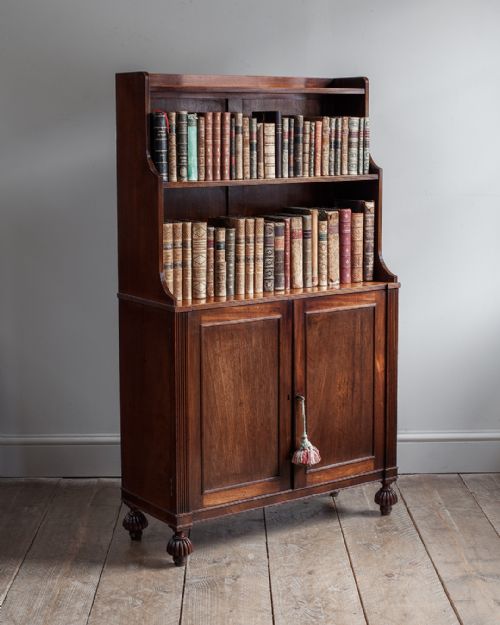
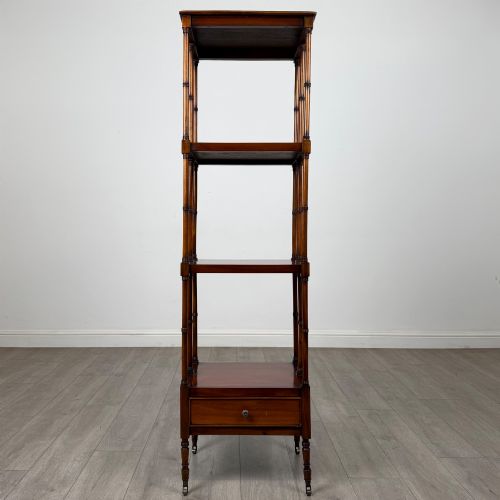
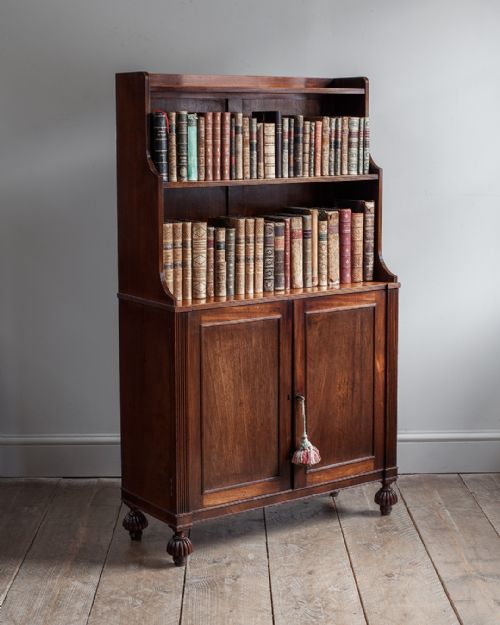
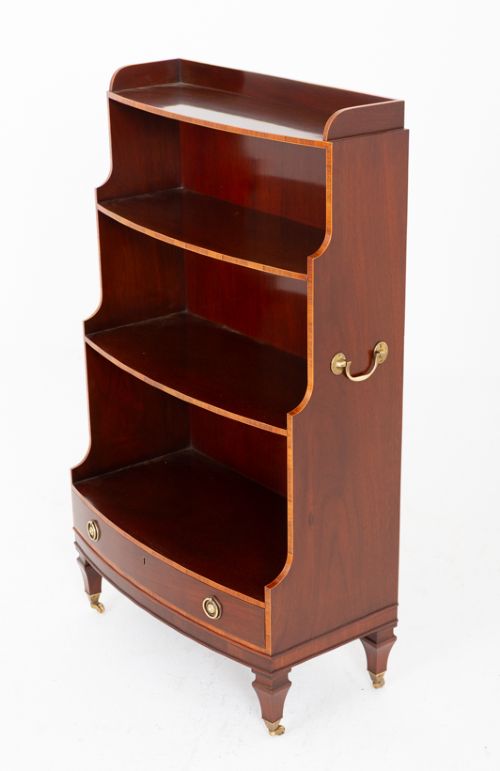
Regency Tiered Stand
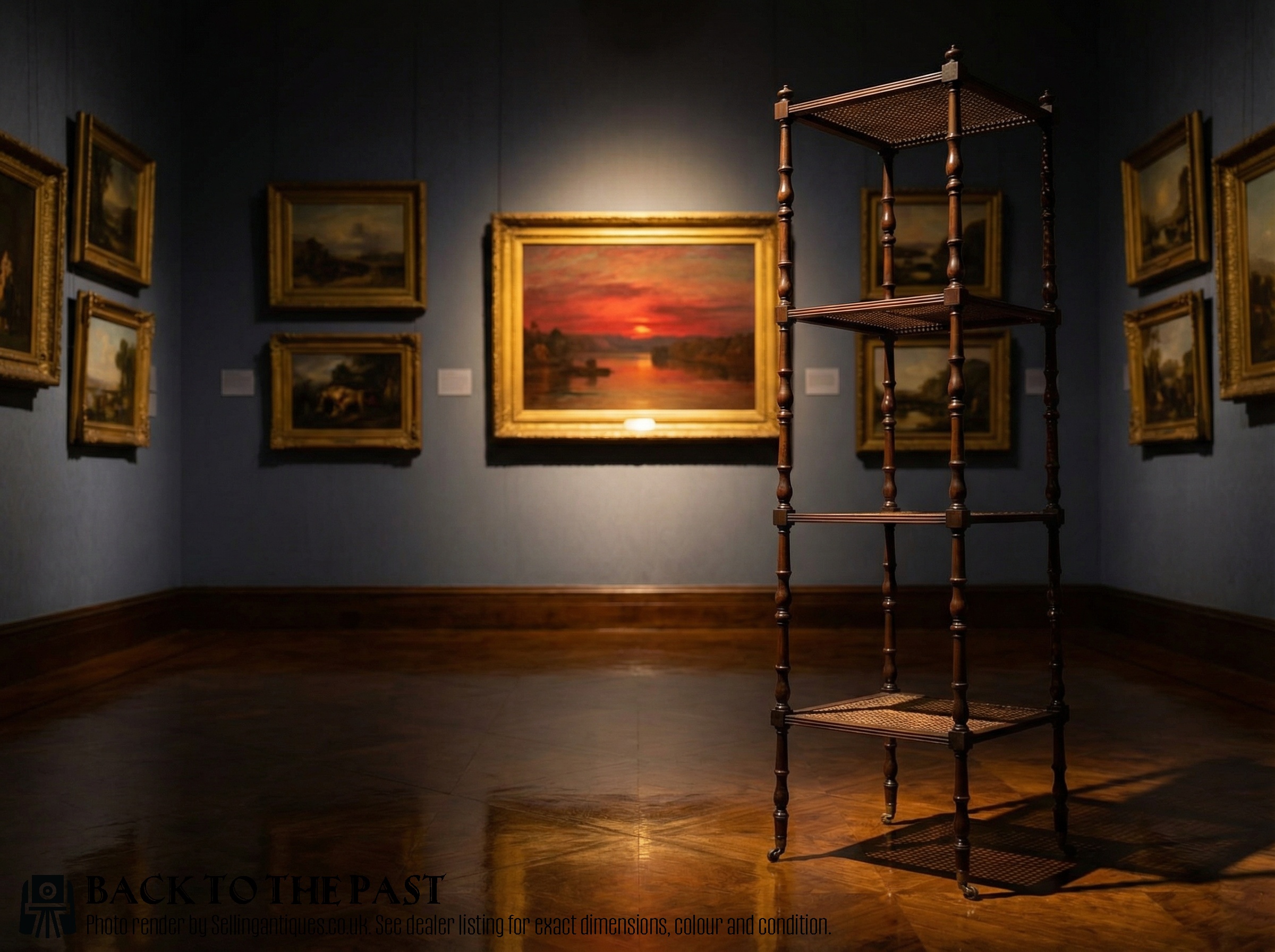
A regency tiered stand provides layered display surface in rich timber, combining utility with architectural grace for the home.
Form and Period
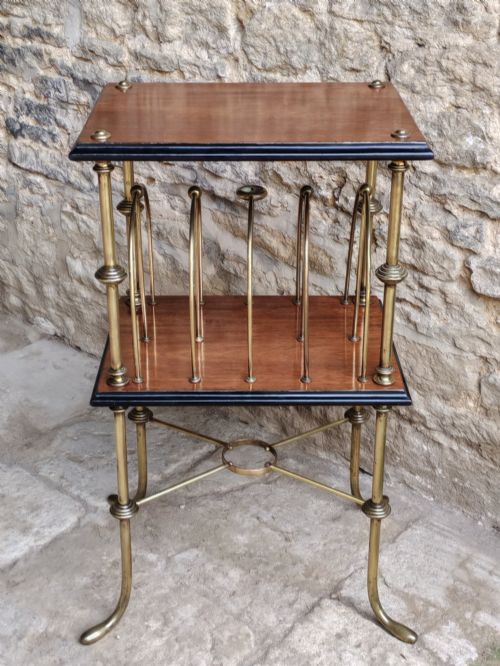
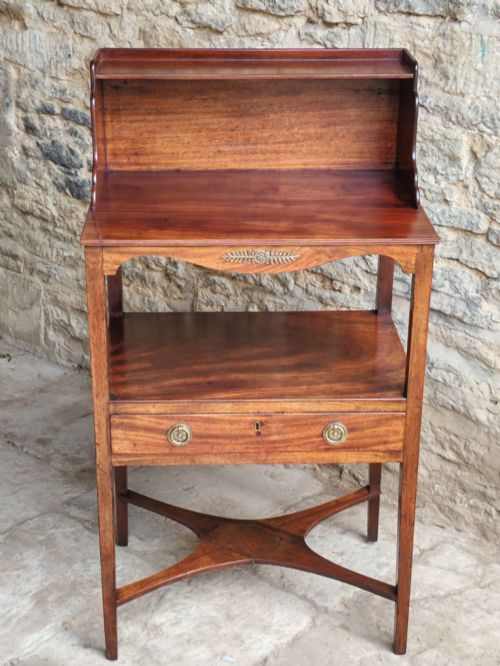
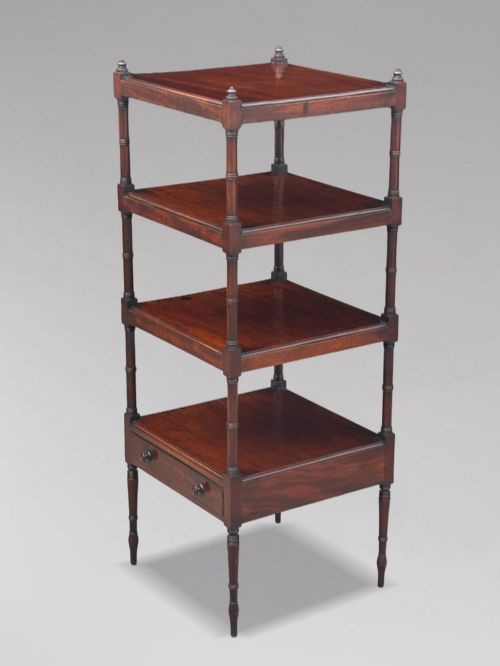
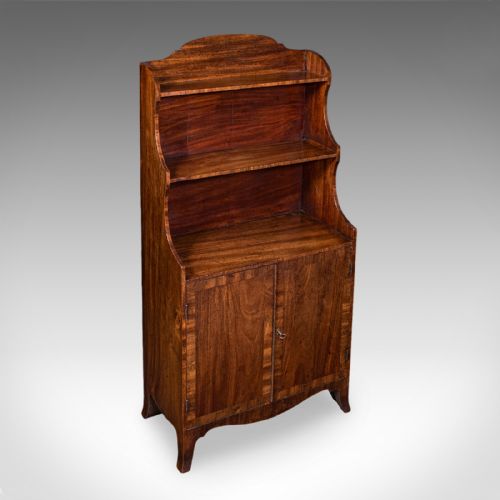
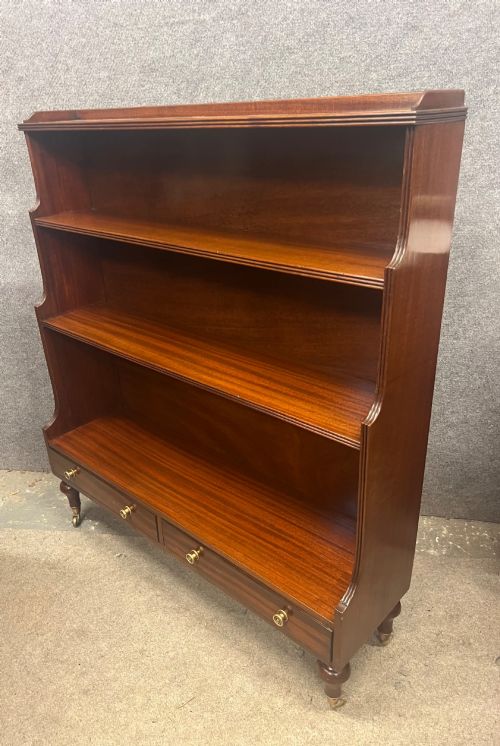
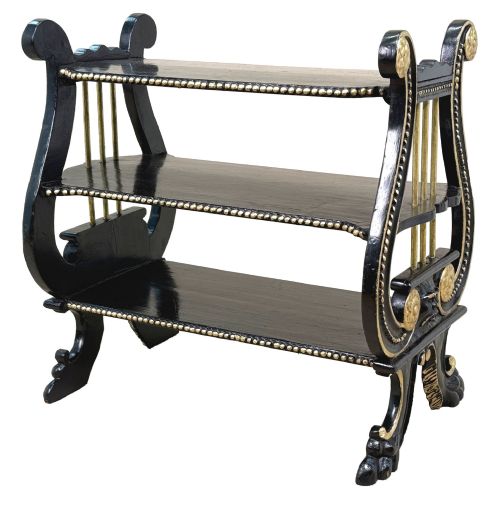
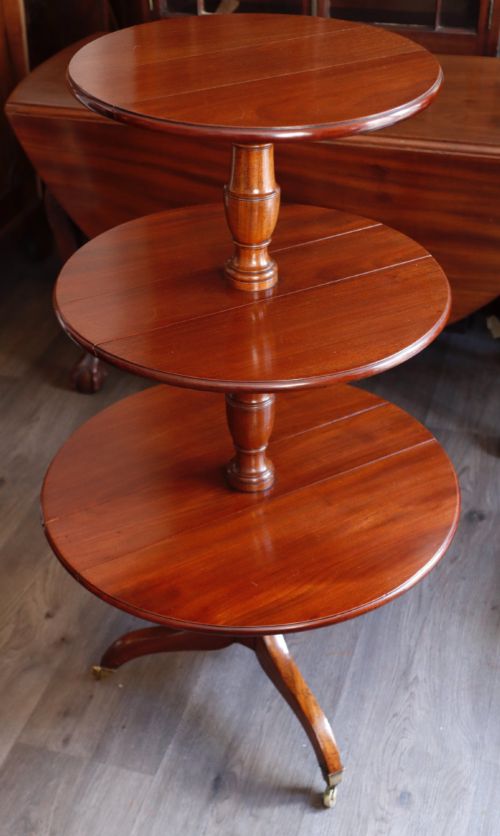
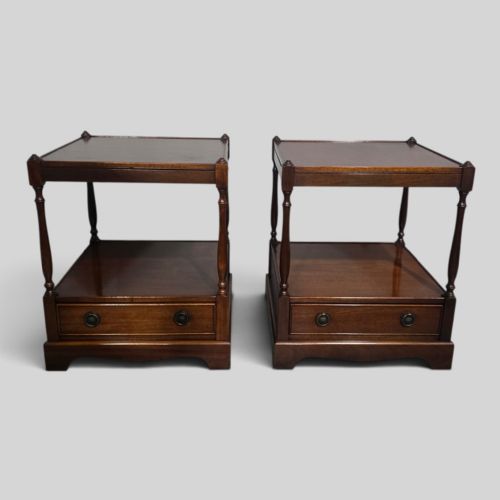
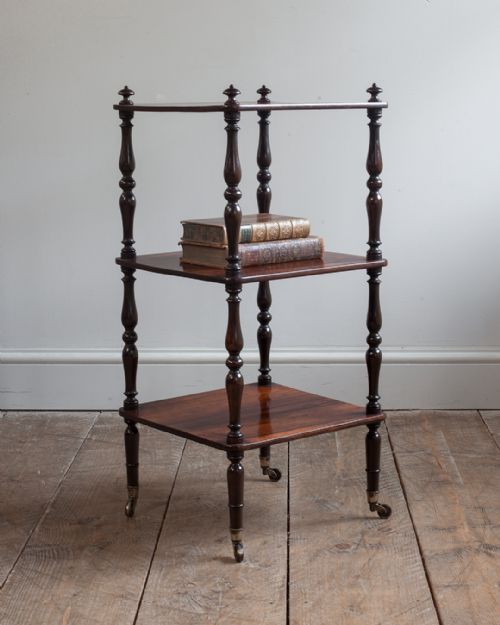
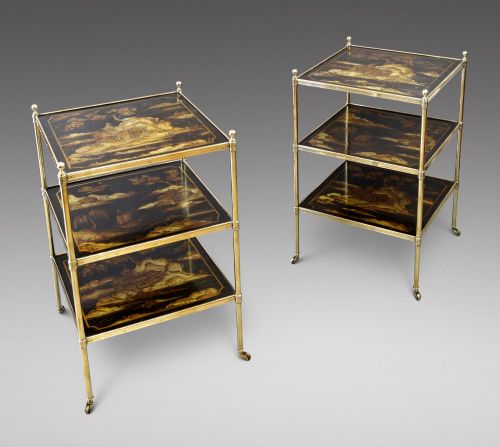
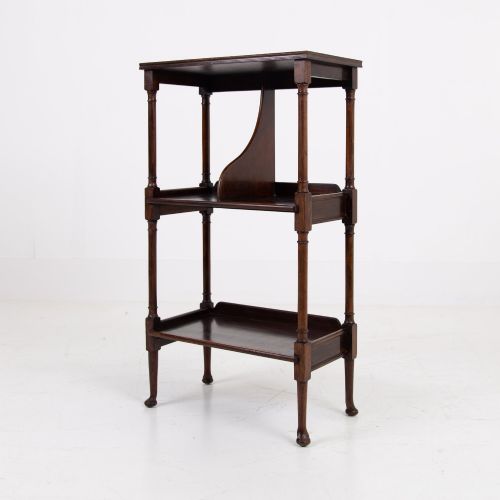
A regency tiered stand encompasses multi-level etageres, whatnots, music stands, and dumb waiters originating from the Regency, George IV, and Georgian periods. These pieces serve as practical display furniture, utilising multiple stacked platforms to organise books, china, or serving dishes in a compact footprint.
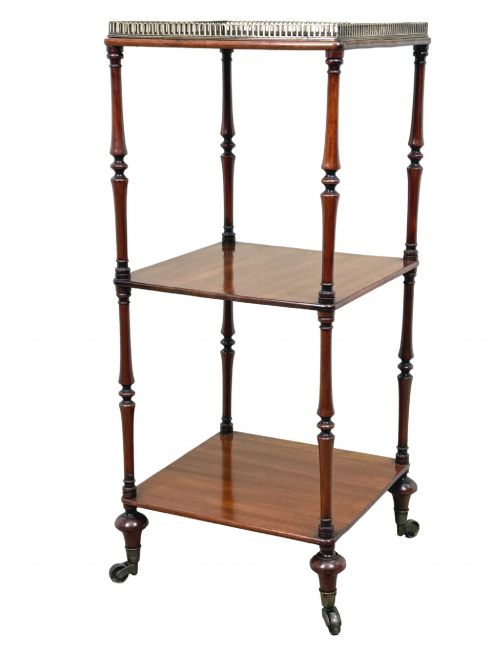
The most common formats on this page are mahogany and rosewood whatnots and etageres dating from around eighteen hundred to eighteen twenty. Makers constructed these stands with square, octagonal, or round tiers supported by slender columns or tapering uprights, occasionally incorporating folding shelves or music racks.
Materials and Construction
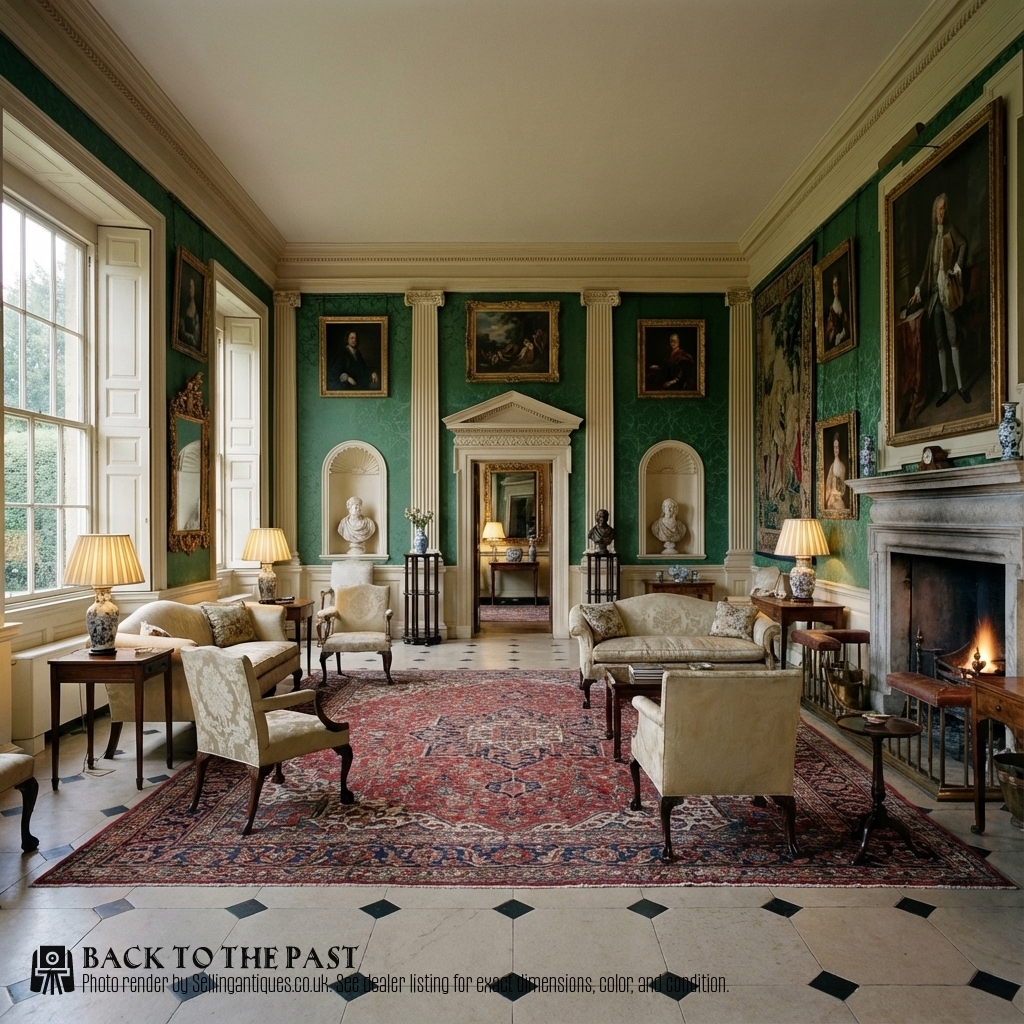
Cabinet makers utilised dense imported hardwoods like mahogany and rosewood, alongside oak and cane, selecting timber with pronounced grain figures for the primary tiers. Brass fittings, castors, and columns frequently appear as structural supports and decorative accents.
Joinery techniques involve precise turning for upright supports and sturdy jointing for the multiple stacked platforms. Certain pieces integrate folding mechanisms or tapering forms that require careful carpentry to ensure stability across every shelf.
Retail Price Guide 2026
Typical UK retail prices for regency tiered stand, calculated from the Sellingantiques database of over a million retail prices indexed since 2003. This retail price guide relies exclusively on Sellingantiques data; no external sources or auction records are used, so the figures do not describe the wider market.
Listings feature pieces spanning the Regency, George IV, and Georgian periods, constructed from mahogany, rosewood, oak, and brass.
Distinction in Craft
Quality separates pieces through the selection of timber figures and the finesse of the turned or reeded columns supporting each tier. Finer examples display meticulous attention to jointing and proportion across multiple shelves.
Attribution to esteemed workshops elevates certain pieces, whilst matched pairs and specific regional timbers, such as Irish mahogany or figured rosewood, demonstrate higher craftsmanship.
The Regency Tiered Stand Glossary
- Etagere
- A set of open shelves for displaying small objects or books. This form provides multiple tiers of storage in a graceful frame.
- Dumb waiter
- A tiered stand used in dining rooms to hold food and utensils without servant attendance. These revolve or hold stationary plates across several levels.
- Regency
- The British design period spanning the early nineteenth century. Furniture from this era draws heavily on classical Greek and Roman motifs.
Frequently Asked Questions
What is a regency tiered stand used for?
These stands provide functional display space across multiple stacked platforms, suiting books, ceramics, and decorative objects in a principal room.
Historically, dining room variants held serving dishes and utensils, functioning as portable sideboards during meals.
How do you distinguish an etagere from a whatnot?
An etagere generally emphasises open display for decorative items, utilising delicate framework and multiple accessible shelves.
A whatnot serves a similar multi-tiered function but often includes small drawers or lower enclosed spaces alongside open shelving.
How do I care for antique timber tiers?
Keep the wood away from direct sunlight and sudden temperature shifts to prevent the timber from drying or splitting. Regular dusting with a dry cloth maintains the polished finish.
A light application of traditional wax preserves the natural sheen of mahogany and rosewood surfaces.