
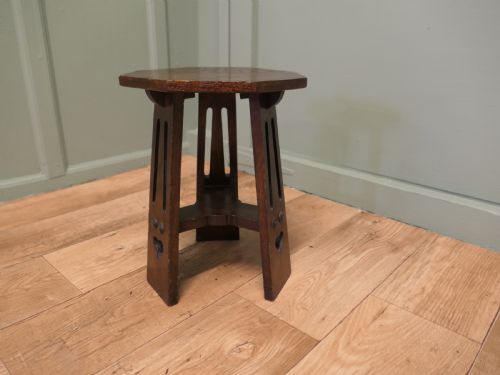
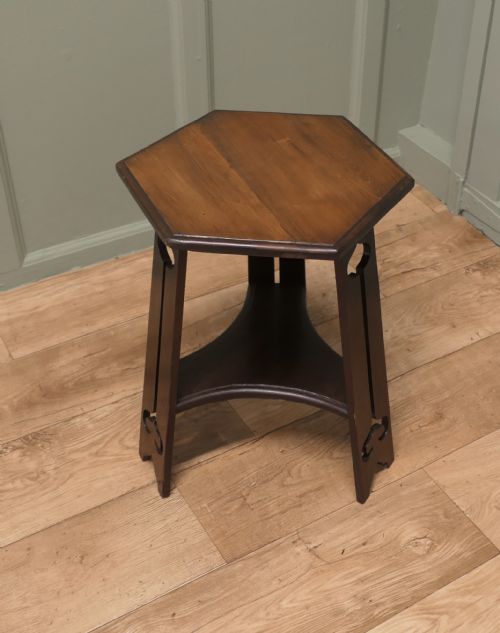
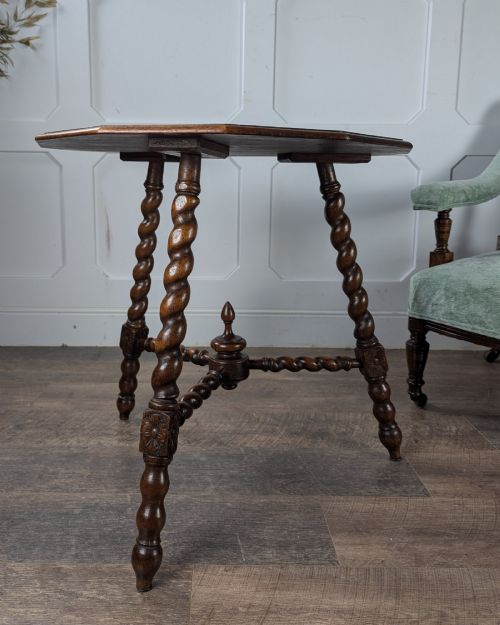
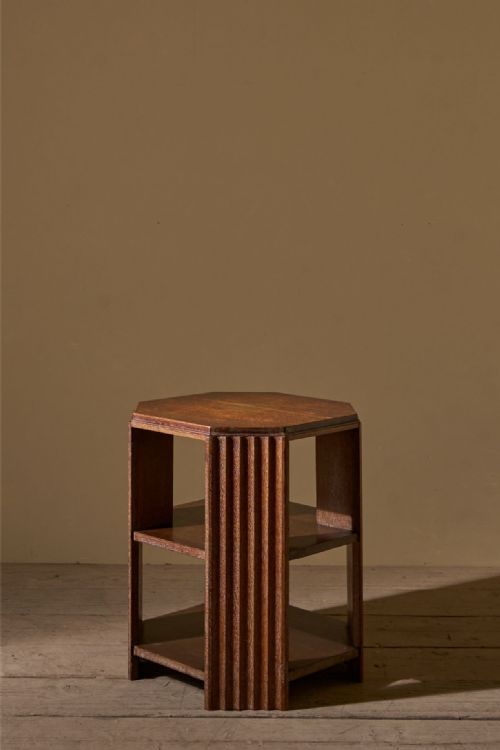


Octagonal Oak Side Table
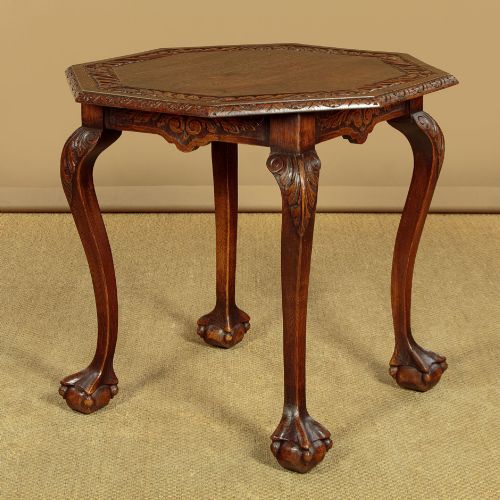
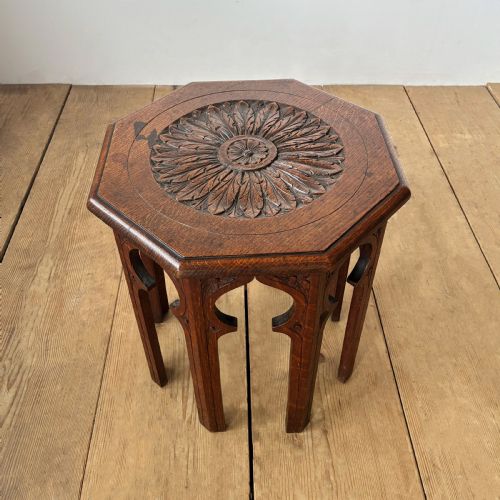
An octagonal oak side table brings geometric form and honest timber into a room, serving as a sturdy surface for books or lamps.
Octagonal Oak Side Table
An octagonal oak side table offers a distinct eight-sided top that breaks the monotony of rectangular rooms, standing on various leg arrangements from simple pillars to barley twists. These pieces function as occasional tables, plant stands, or compact centre tables in both modest and grand interiors.
The versions most commonly met on this page date from the late nineteenth century through to the nineteen-thirties, reflecting the shifts in domestic utility across the Victorian, Edwardian, and Art Deco eras. Makers utilised the natural grain of oak to create surfaces that range from plain timber to parquetry decoration and copper insets.
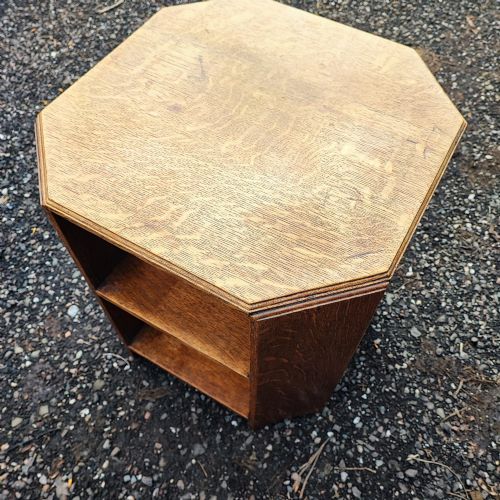
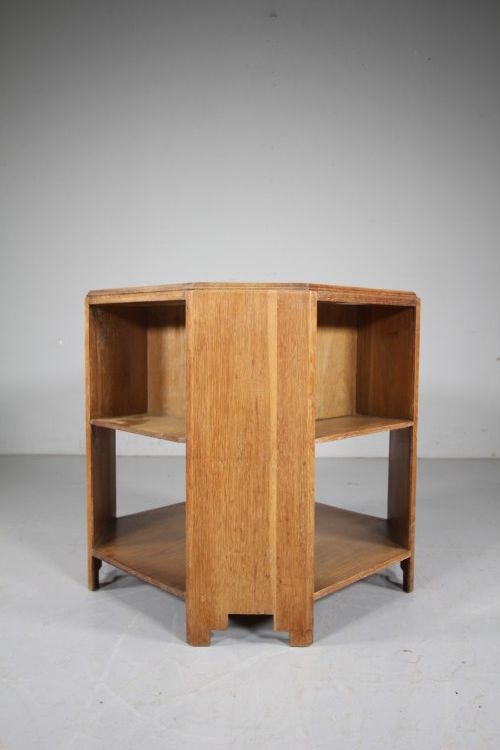
Many examples lean towards Arts and Crafts simplicity or draw on earlier stylistic revivals such as Jacobean and Gothic forms. Buyers encounter these tables in varied heights, some fitted with lower shelves or book storage beneath the main octagonal top.
How They Were Made
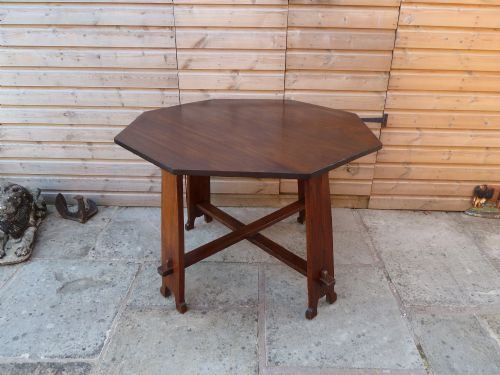
Solid oak and timber form the primary structure of these tables, frequently paired with secondary hardwoods or decorative surfaces like pollard oak, leather, and beaten copper. Cabinet makers employed traditional joinery techniques to construct the multi-sided tops and support them on sturdy pedestals or three and four-legged frames.
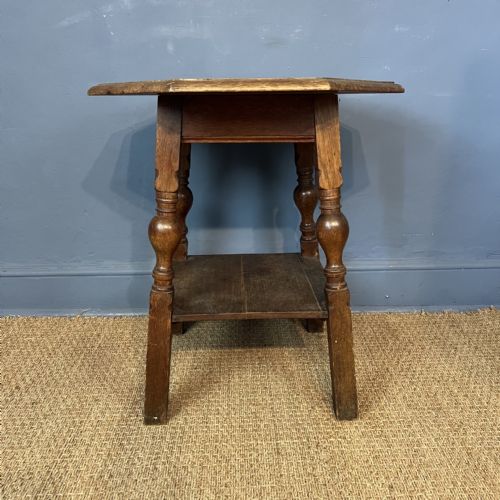
Surface ornamentation ranges from hand-carved foliage and geometric parquetry to limed finishes that highlight the open grain of the wood. Details such as turned barley twist legs and pegged joints demonstrate the reliance on manual skill by workshops and larger retailers.
Octagonal Oak Side Table Retail Price Guide 2026
Typical asking prices for octagonal oak side table among the pieces listed under this phrase on Sellingantiques today, from the lower quarter to the upper quarter. They describe what is for sale here now, not the wider market.
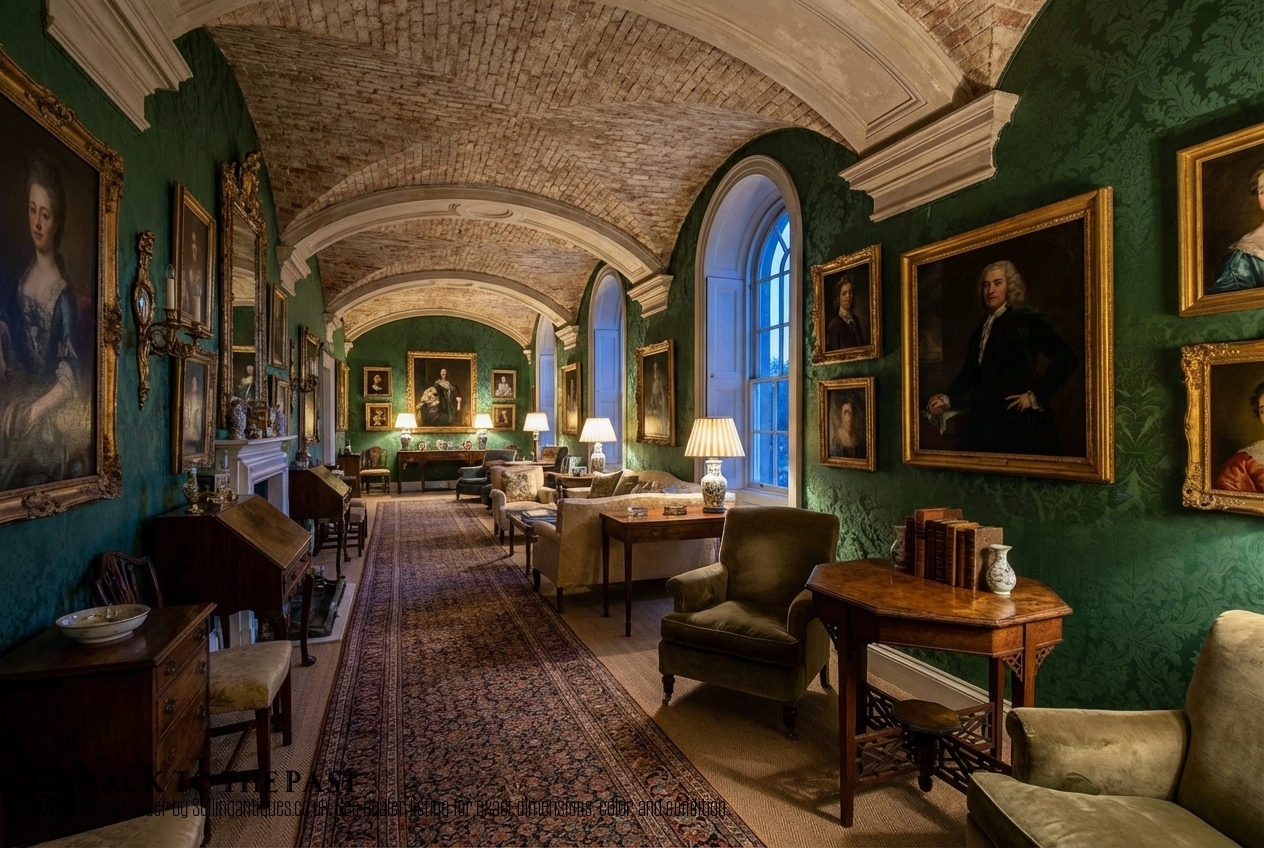
A surprising number of these tables double as bookcases, proving that Victorians loved reading just as much as geometry.
What Varies in Quality
The standard of a piece rests largely on the selection of timber and the crispness of the carpentry, particularly at the complex mitred joints of the octagonal top. Solid construction without excessive modern intervention distinguishes an honest period example from a lesser or heavily altered build.
Heals·Liberty and Co·Gillows·Sir Robert Lorimer
The Octagonal Oak Side Table Glossary
- Parquetry
- Geometric wood mosaic work used for decorative tabletops. This technique creates patterned surfaces from contrasting timber pieces.
- Barley twist
- A turned wooden column resembling the spirals of barley sugar. It appears frequently on the legs of Victorian and Edwardian tables.
- Limed oak
- A wood finishing technique that leaves a white pigment in the open pores of the oak. It became popular during the Art Deco period.
- Etagere
- A piece of furniture with small open shelves for displaying ornaments. These tiered structures provide compact vertical storage.
- Pollard oak
- Timber taken from trees that have been pollarded, producing dense and highly figured growth rings. This decorative wood was favoured for high-status table tops.
Octagonal Oak Side Table: Frequently Asked Questions
What is an octagonal oak side table?
An octagonal oak side table is a small piece of furniture featuring an eight-sided top made from oak. These tables serve as versatile surfaces for lamps, books, or plants in various domestic spaces.
They appear in styles ranging from Arts and Crafts simplicity to Art Deco and Victorian revivals. Their compact footprint makes them suitable for corners or beside seating.
How were these tables used originally?
These tables served multiple domestic purposes depending on their height and whether they included lower shelves or book compartments. They functioned as lamp stands, smoking tables, or small centrepieces in sitting rooms and halls.
Taller versions often acted as plant stands, while those with shelves held periodicals and books within easy reach of an armchair.
How do I date an octagonal oak table?
Dating relies on observing construction methods, timber treatments, and stylistic indicators such as carved motifs or leg turns. For instance, limed finishes and clean geometric lines point towards the nineteen-thirties, whereas heavy carving often suggests the Victorian era.
Evidence of pegged joints and hand-working helps distinguish older nineteenth-century examples from later mass-produced pieces.
How do I care for a vintage oak table?
Care involves keeping the timber away from direct heat sources and strong sunlight to prevent the oak from drying out or splitting. Regular dusting with a dry cloth maintains the surface sheen without building up chemical residues.
Wax can be applied sparingly to nourish solid oak surfaces, provided the finish is appropriate for wax polish rather than modern varnish.