


Octagonal Tilt Top Table
An octagonal tilt top table combines geometric form with a clever pivoting mechanism, offering a versatile surface that saves space when stored upright.

Octagonal Tilt Top Table
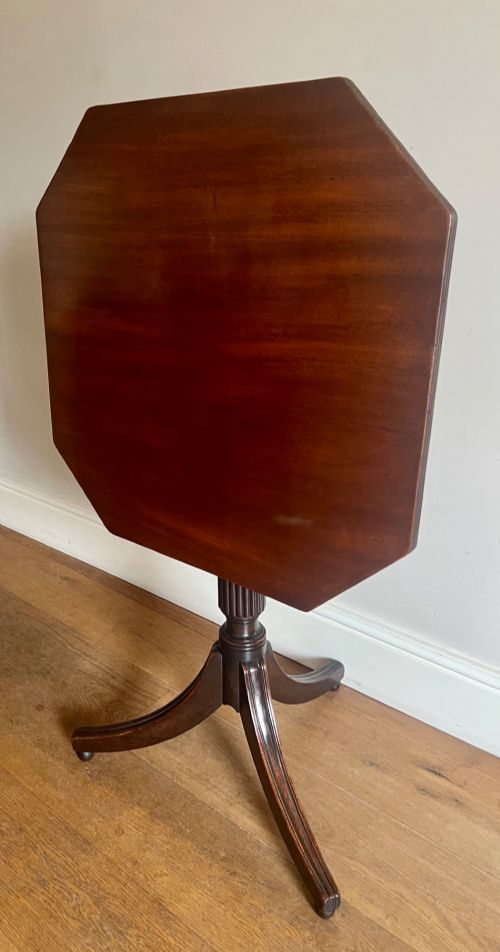
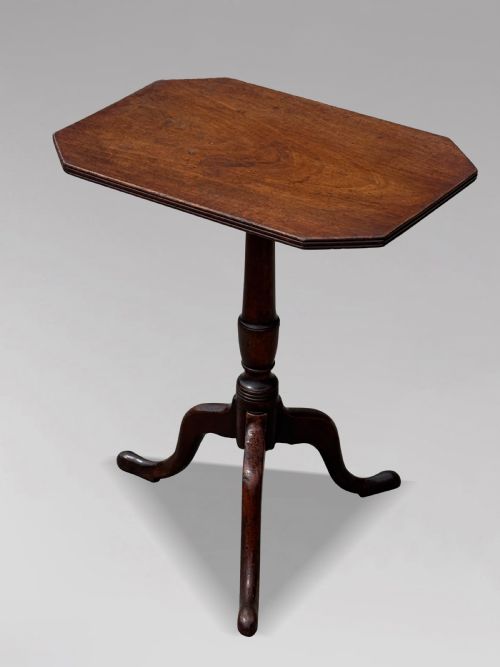
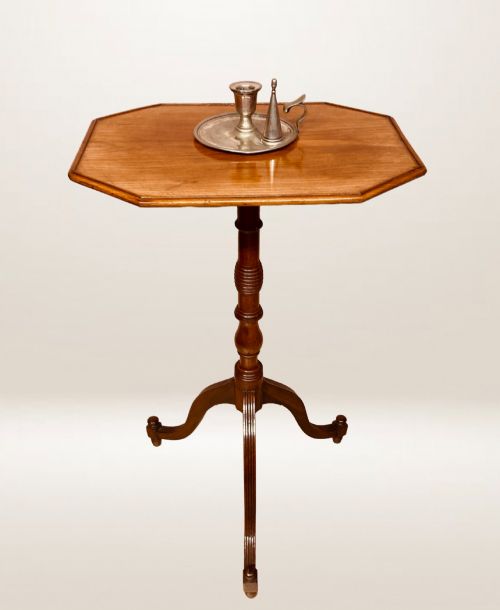
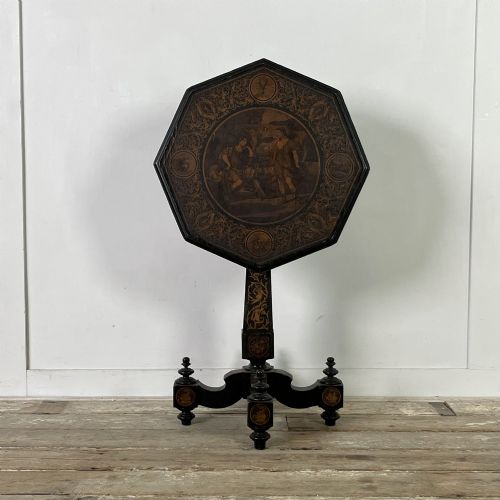
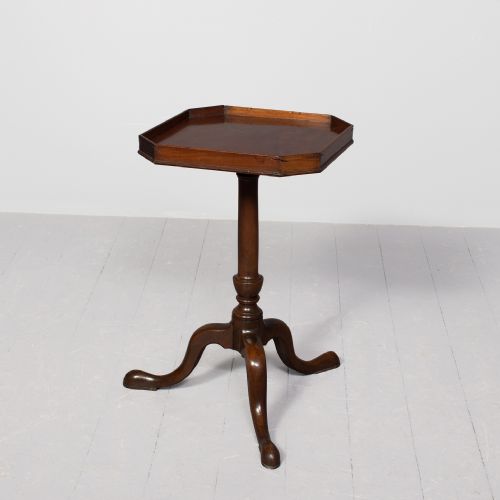
When searching for an octagonal tilt top table, a buyer encounters pieces spanning the eighteenth, nineteenth, and early twentieth centuries. These encompass Georgian, Regency, and Victorian periods, reflecting stylistic shifts from restrained mahogany designs to ornate inlaid surfaces.
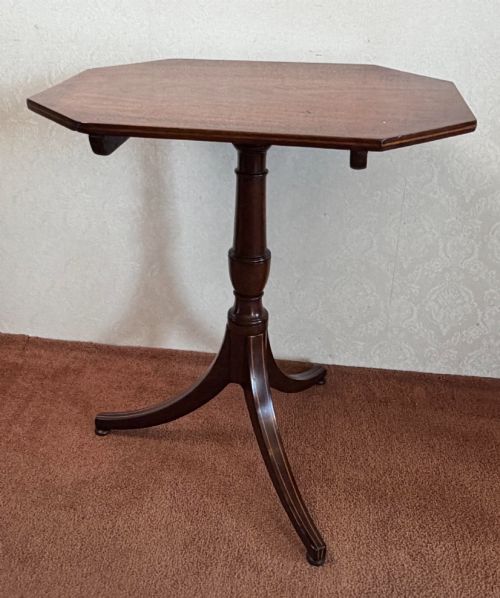
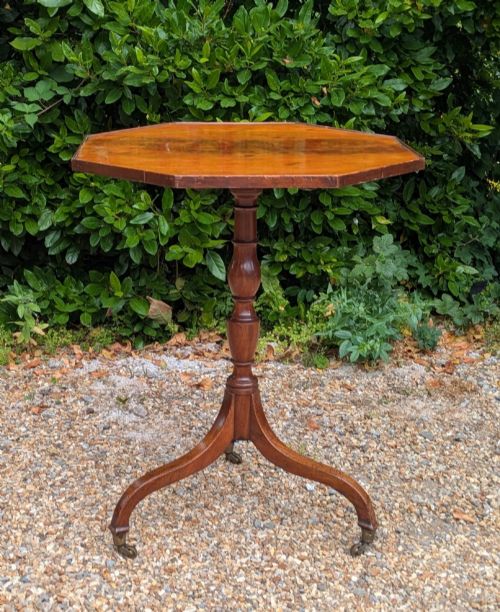
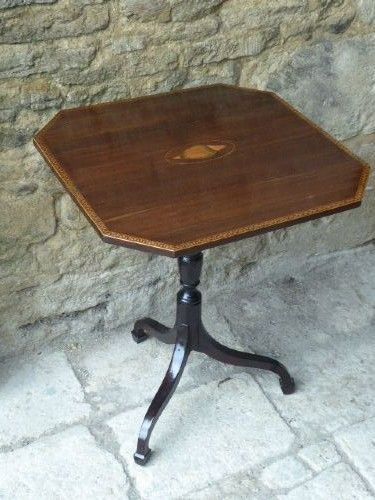
The format appears across several functional forms, most frequently as wine tables, lamp tables, and occasional tables supported by tripod bases. Larger examples serve as breakfast or centre tables, utilising pillar supports rather than simple folding legs.

How They Were Made
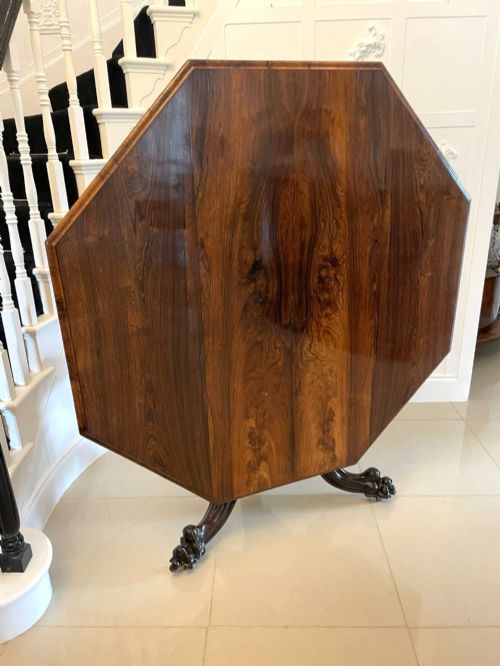
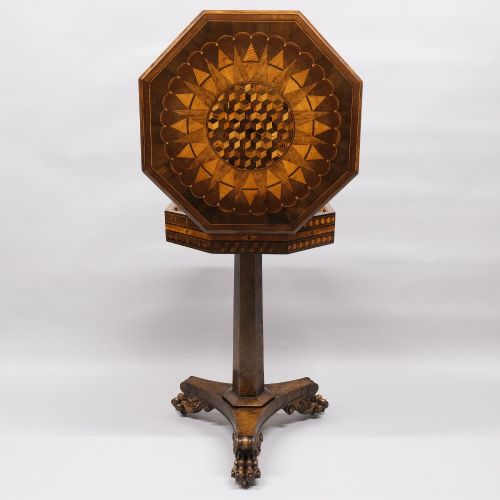
Cabinet makers built these tables primarily from dense hardwoods like mahogany, walnut, and rosewood, often pairing them with contrasting timbers such as satinwood, boxwood, and oak. Many examples incorporate intricate wood inlay, parquetry, and brass stringing to decorate the geometric tops.
The tilting mechanism relies on a pivoting block or a birdcage mounting fixed beneath the top, allowing the surface to rotate and lock into a vertical position. This clever joinery connects the top to a central pedestal column, which usually terminates in a tripod or quadruple foot base.
Octagonal Tilt Top Table Retail Price Guide 2026
Typical asking prices for octagonal tilt top table among the pieces listed under this phrase on Sellingantiques today, from the lower quarter to the upper quarter. They describe what is for sale here now, not the wider market.
Some nineteenth-century tables feature inlaid chessboard tops, transforming a side table into an impromptu gaming station.
What Varies in Quality
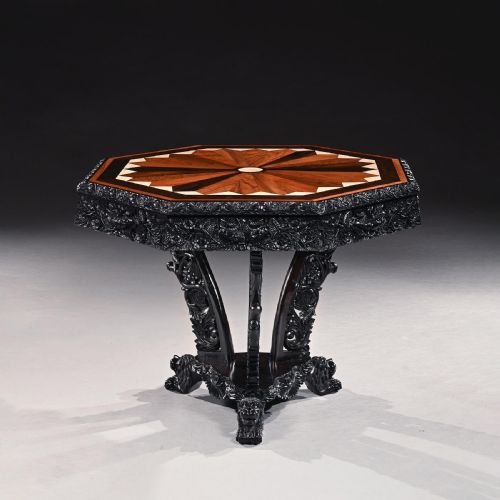
The distinction between ordinary and exceptional pieces rests upon the precision of the timber selection and the complexity of the surface decoration. Figured veneers, delicate boxwood stringing, and detailed pictorial marquetry elevate a piece beyond standard workshop production.
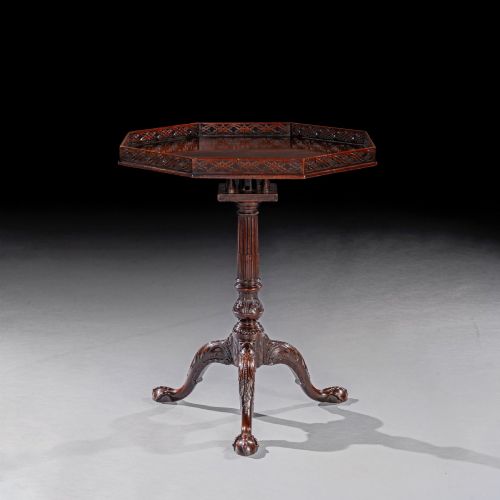
Constructional refinement dictates structural integrity, visible in the snugness of the tilt mechanism and the carving of the central pillar and feet. Pierced galleries, finely turned pedestals, and substantial brass castors separate master cabinet work from simpler utilitarian items.
Gillows·Ralph Turnbull·James Winter·Almerico Gargiulo
The Octagonal Tilt Top Table Glossary
- Tilt top
- A table mechanism featuring a hinged top that pivots from horizontal to vertical, allowing the piece to stand flat against a wall when not in use. This clever design saves valuable floor space in smaller rooms.
- Tripod base
- A support structure comprising three legs radiating from a central pillar. It provides stable footing on uneven floors by ensuring all three points maintain contact.
- Birdcage
- A rotating wooden framework fitted beneath the table top that allows the surface to both tilt and revolve. This upper mechanism adds stability and complexity to finer eighteenth-century examples.
- Marquetry
- The art of forming decorative patterns by fitting together small pieces of various coloured woods and veneers. Artisans apply these pictorial designs directly onto the main table top.
- Boxwood stringing
- Thin inlaid lines of pale boxwood set flush into darker surrounding timber to create geometric borders. This technique highlights the faceted edges of octagonal surfaces.
Octagonal Tilt Top Table: Frequently Asked Questions
What is a tilt top table used for?
These tables served flexible daily functions in historic homes, moving easily from serving tea or holding lamps to resting against a wall. Their pivoting design meant they functioned as side furniture without permanently occupying floor space.
In modern rooms, they retain this versatility as compact accent surfaces that fit beside seating areas or in hallways while offering historical character.
How do you operate the tilt mechanism?
A traditional catch or spring-loaded pin underneath the surface secures the top in a horizontal position during use. Disengaging this catch allows the table top to pivot ninety degrees upright.
When testing an antique mechanism, support the top with your hands to prevent it from dropping suddenly, as older wood and brass catches can wear over time.
How do I date an octagonal table?
Dating relies on combining the timber choice, leg style, and the construction of the pivoting mechanism beneath the top. Eighteenth-century pieces frequently feature birdcage mounts and slender tripod legs with pad or snake feet.
Nineteenth-century examples often display bolder pedestals, platform bases, or rich rosewood and walnut veneers with elaborate brass or wood inlay work.
Are these tables stable?
Tripod bases provide dependable stability on level floors because three points naturally rest flat without rocking. The weight of dense hardwoods like mahogany or rosewood also helps keep the structure grounded.
However, the tilting joint introduces a small amount of natural movement to the top, which remains normal for authentic period examples.