

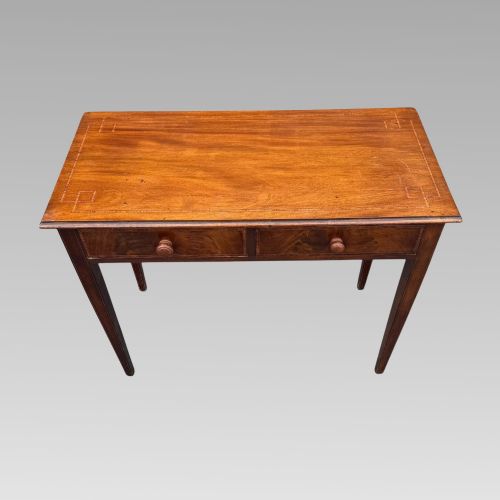
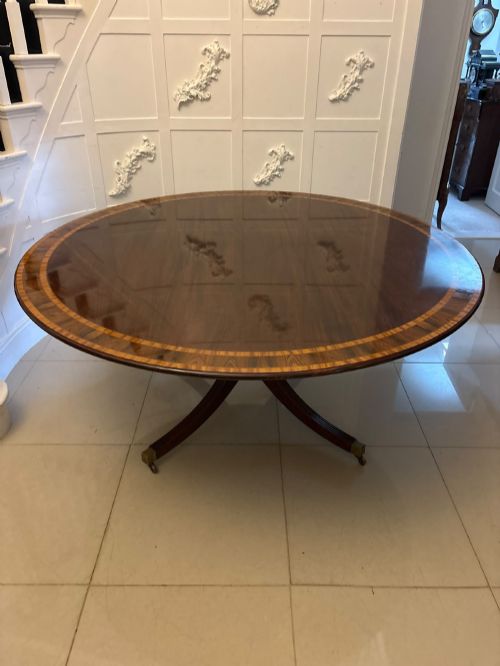
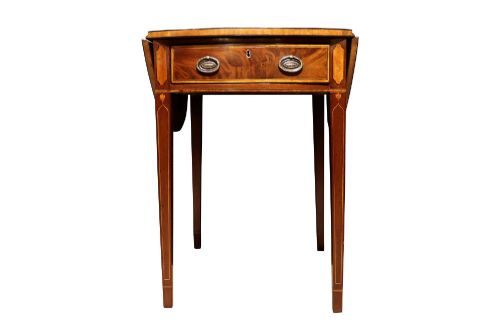
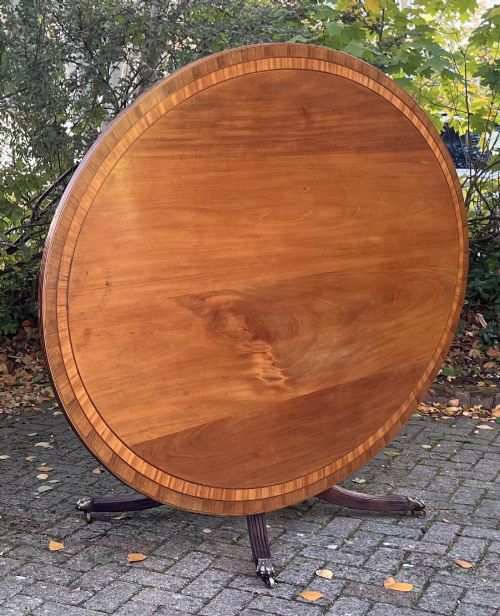
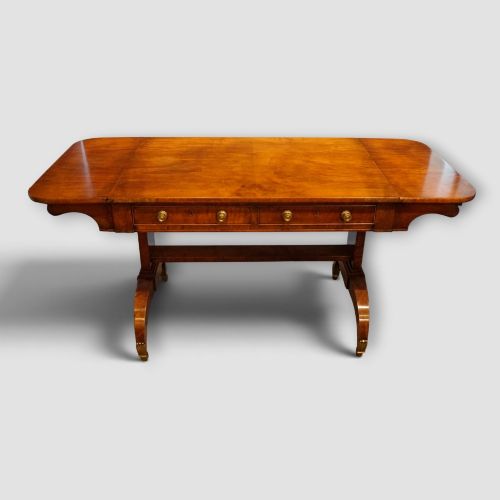

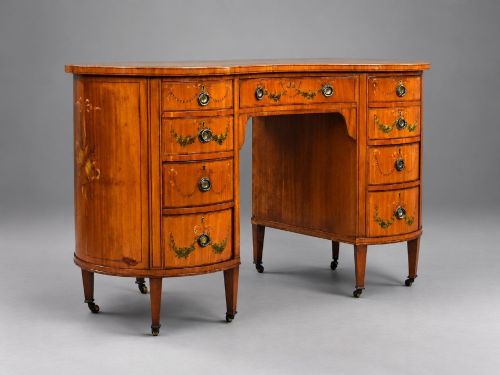
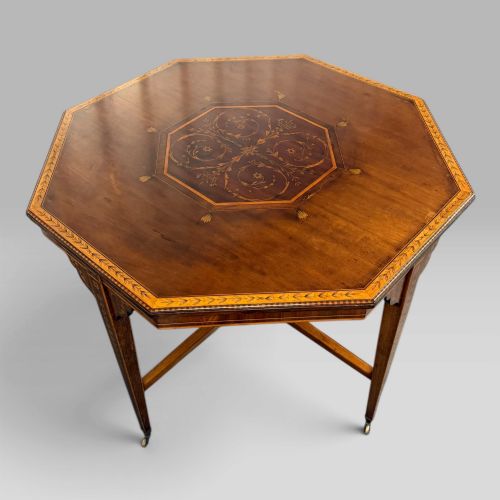
Antique Satinwood Table
When searching for an antique satinwood table, you seek pieces defined by pale, lustrous veneers and refined geometry.
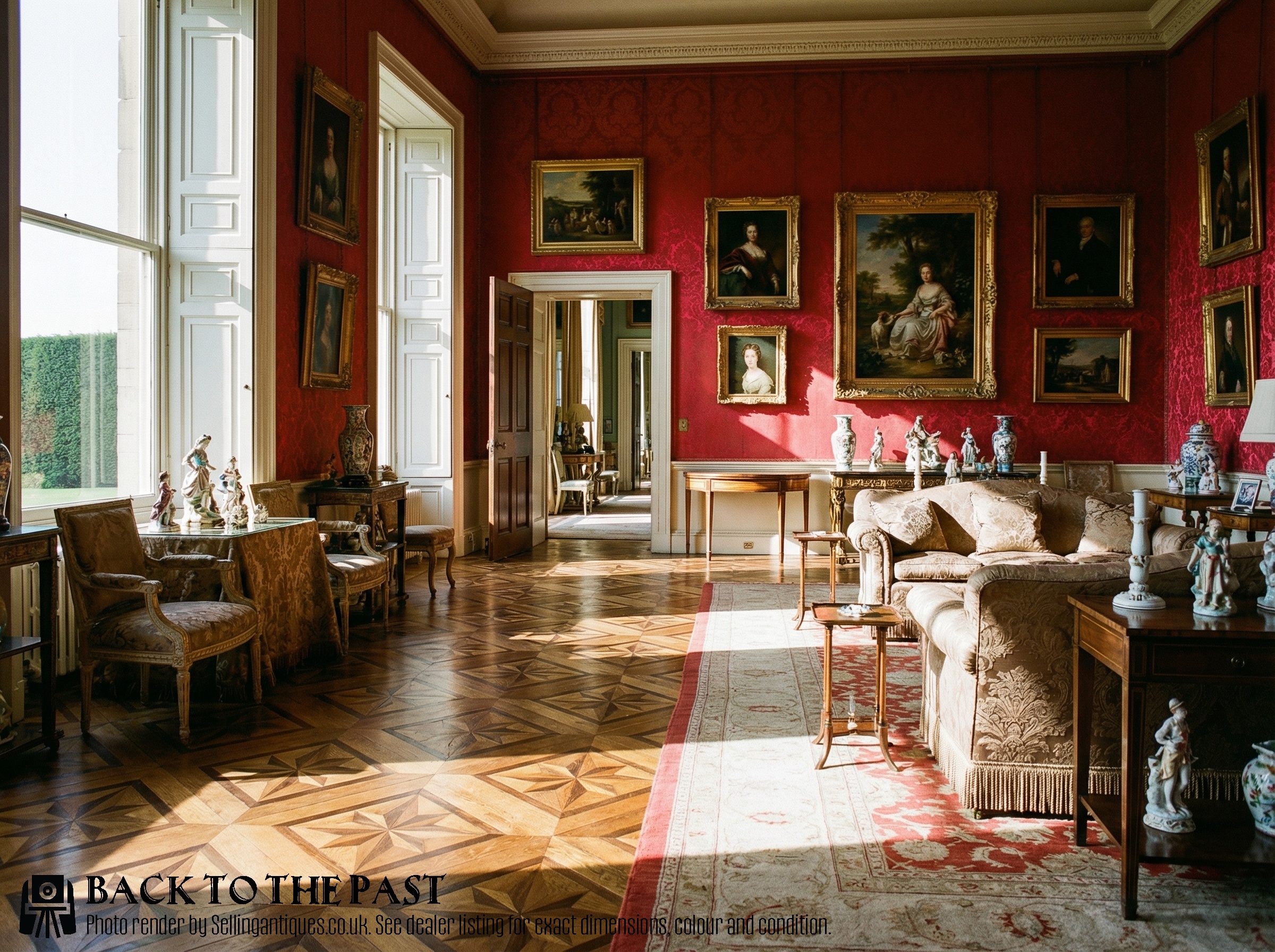
Antique Satinwood Table
An antique satinwood table encompasses a wide variety of domestic furniture forms, ranging from occasional and lamp tables to complex card tables and writing desks. These pieces span several centuries, with particular concentrations appearing from the Georgian period through the Sheraton Revival and Edwardian eras.
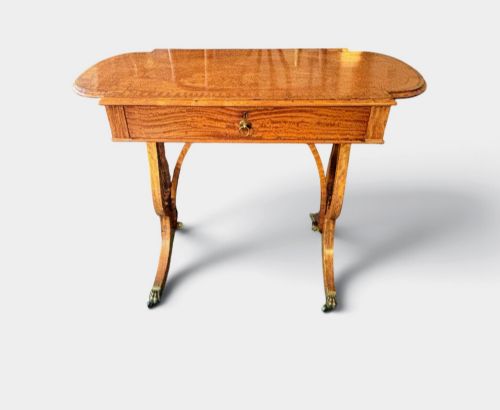
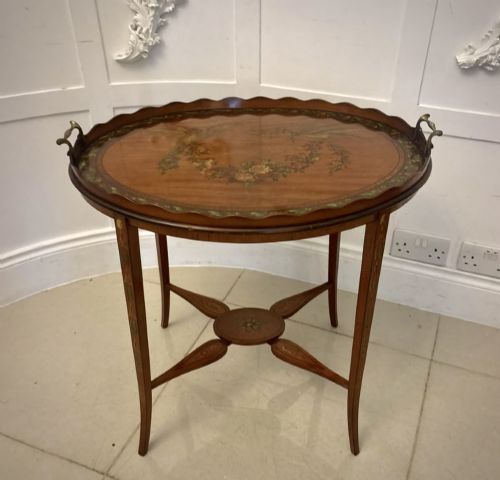
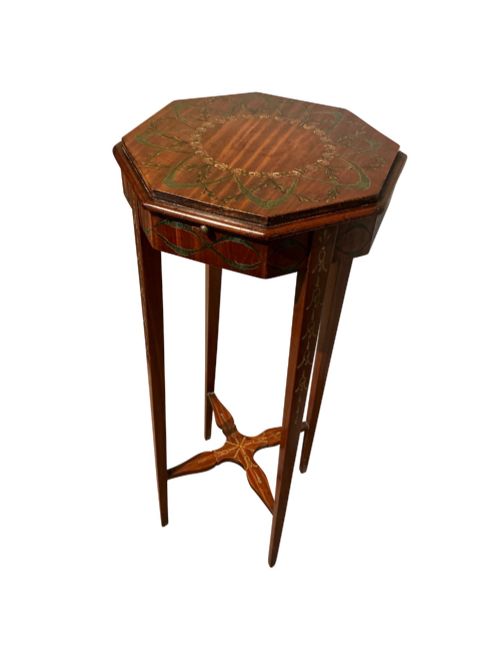
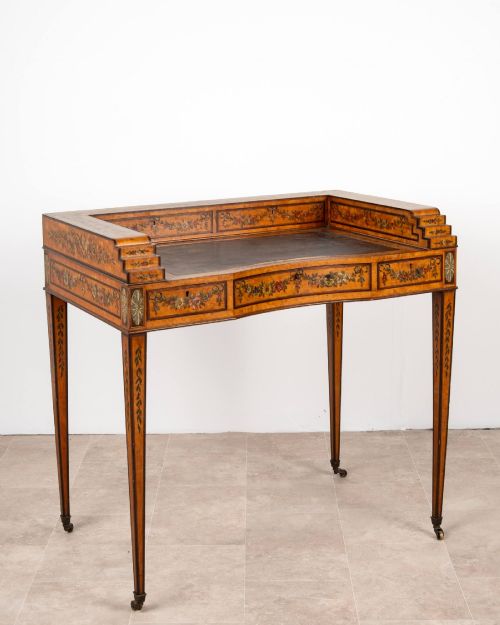
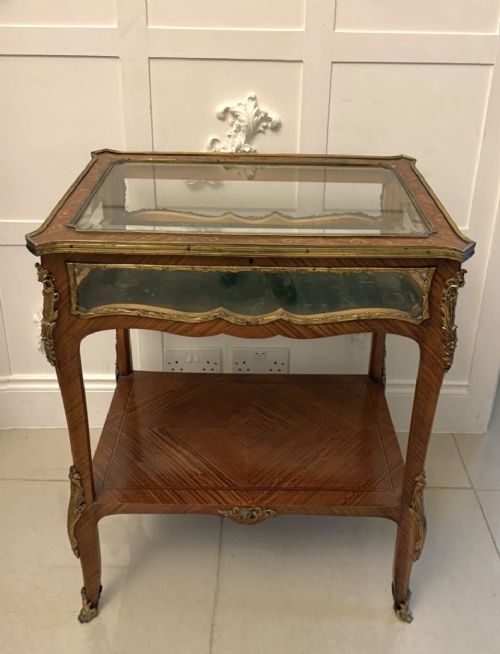
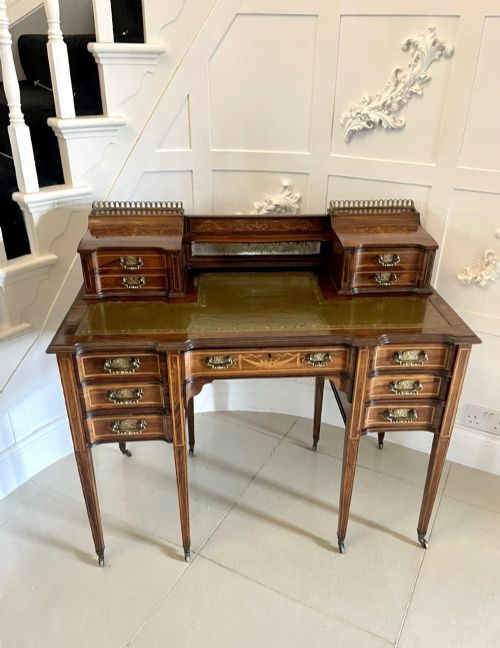
The version most commonly encountered on this page is the Edwardian or late Victorian occasional table, often featuring delicate inlay work and tapered legs. Alongside these, buyers frequently find Georgian and Regency card tables designed with fold-over tops and crossbanded borders.
Makers utilised the dense, tropical timber both for solid construction in earlier decades and primarily as figured veneer over mahogany or pine in later Sheraton Revival interpretations. Surviving forms demonstrate how utilitarian surfaces were elevated into decorative showpieces for drawing rooms and boudoirs.
How they were made
Cabinet makers applied thin veneers of exotic satinwood to stable secondary timbers like mahogany or pine, securing the sheets with animal glues. This technique prevented the prized tropical wood from warping while presenting a continuous, highly figured golden surface.
Surface ornamentation relied on precision marquetry and stringing, incorporating contrasting timbers such as ebony, boxwood, rosewood and harewood to form geometric borders or floral motifs. Workshops also employed hand-painting directly onto the satinwood ground, particularly during the Sheraton Revival period.
Structural joints typically utilised mortise and tenon construction for frames, while drawers incorporated hand-cut dovetails. Timber selection prioritized the natural chatoyancy of the grain, arranging leaves symmetrically to create bookmatched patterns across table tops.
Antique Satinwood Table Retail Price Guide 2026
Typical asking prices for satinwood table among the pieces listed under this phrase on Sellingantiques today, from the lower quarter to the upper quarter. They describe what is for sale here now, not the wider market.
Listings feature satinwood combined with mahogany, rosewood, walnut, and ebony across periods spanning the eighteenth to twentieth centuries.
What varies in quality
The grade of a piece rests heavily on the selection and symmetry of the satinwood veneer, where tight, uniform figuring commands greater visual presence than plain or patchy grain. Master workshops also distinguished their output through the crispness of the boxwood and ebony stringing rather than relying on mass-produced transfers.
Proportion and structural restraint separate utilitarian furniture from high-style examples, particularly in the delicate balance of tapered legs and the tight execution of fold-over hinges on card tables. Original brass hardware, uncompromised secondary woods beneath, and intact hand-painted details further separate standard workshop output from exceptional cabinet work.
Trevor Page & Co·Edwards & Roberts·Gillows·Maple & Co
The Antique Satinwood Table Glossary
- Crossbanding
- A border technique where veneer strips are laid perpendicular to the main grain of the table top. This frames the central panel and provides a crisp geometric edge.
- Marquetry
- The art of forming decorative patterns using fitted pieces of various coloured veneers. Craftsmen assemble these pictorial or geometric designs before gluing them to the carcase.
- Demi-lune
- A half-moon shape commonly utilised for console and card tables designed to stand flat against a wall. These pieces frequently feature fold-over tops revealing baize-lined surfaces.
- Stringing
- Thin lines of contrasting timber inlaid into shallow channels on table legs or borders. It creates delicate linear separation between different wood species.
- Sheraton Revival
- A late nineteenth and early twentieth century design movement that reinterpreted the light, neoclassical forms of the eighteenth century. Pieces from this era often feature painted satinwood and slender tapering supports.
Antique Satinwood Table: Frequently Asked Questions
How do I care for antique satinwood?
Keep these tables away from direct sunlight and strong heat sources to prevent the pale veneers from darkening or drying out. Gentle dusting with a dry cloth and occasional application of appropriate wax maintains the polished finish.
Avoid placing damp items or plastic objects directly onto the polished surface to protect the historic finish from marking or lifting.
Were these tables meant for daily use?
Many smaller examples served specific social functions in period homes, such as holding tea trays, supporting lamps, or providing a stable surface for card games. Their lightweight construction meant servants could easily reposition them around the drawing room depending on the hour.
Larger writing tables and Pembroke forms were built for private correspondence and administrative tasks in studies and bedrooms, featuring integrated drawers for stationery.
How can I distinguish Regency from Edwardian pieces?
Regency items generally date from the early nineteenth century, exhibiting bolder architectural lines, heavy brass mounts, and denser mahogany foundations beneath the satinwood. Their construction reflects strict neoclassical proportions popular during the Regency era.
Edwardian interpretations, built around nineteen hundred, typically present lighter frames, more delicate painted floral garlands, and finer stringing influenced by the Sheraton Revival style.
What is the difference between solid satinwood and veneer?
Solid satinwood means the entire structural component is carved from the heavy tropical timber, a method more commonly encountered on select eighteenth-century and regional items. It yields considerable weight and uniform material depth.
Veneered examples feature thin sheets of figured satinwood bonded over a stable secondary timber like mahogany, which prevented the expensive face wood from splitting while displaying highly decorative grain patterns.