
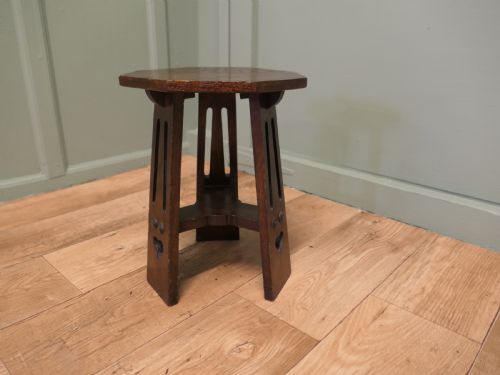
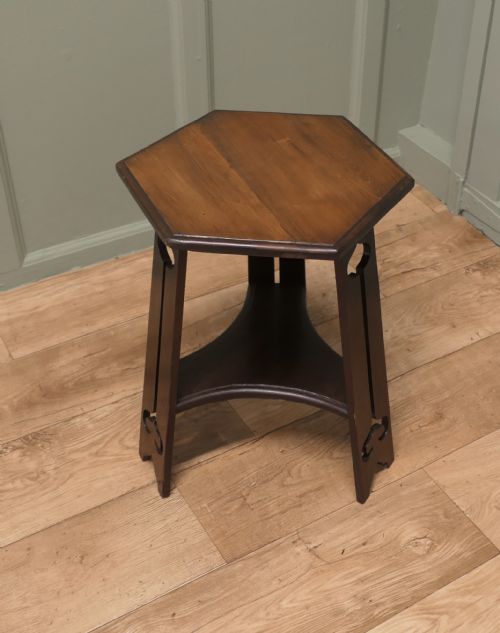
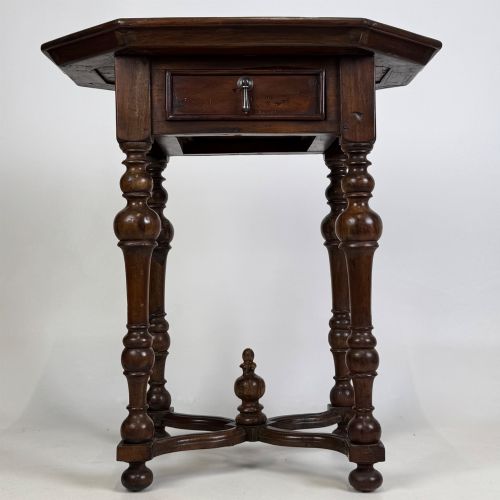
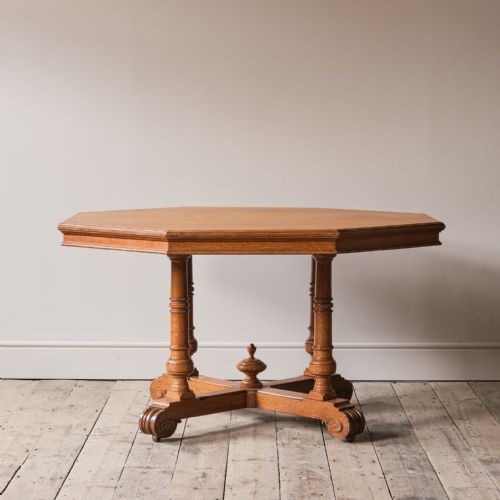
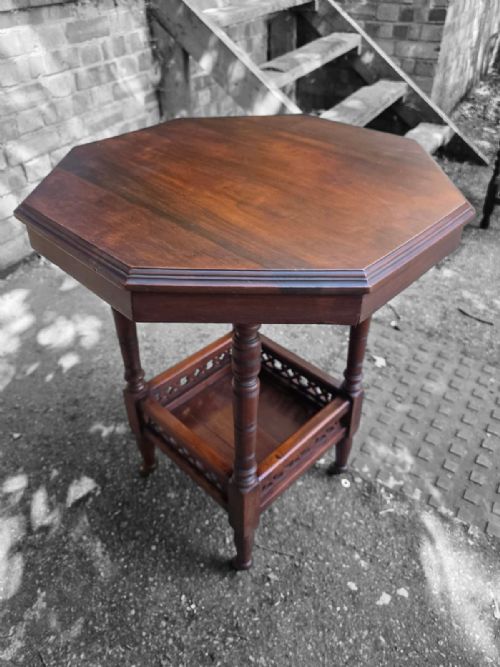
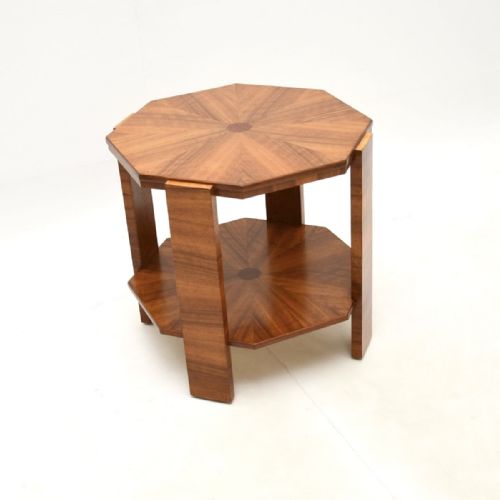
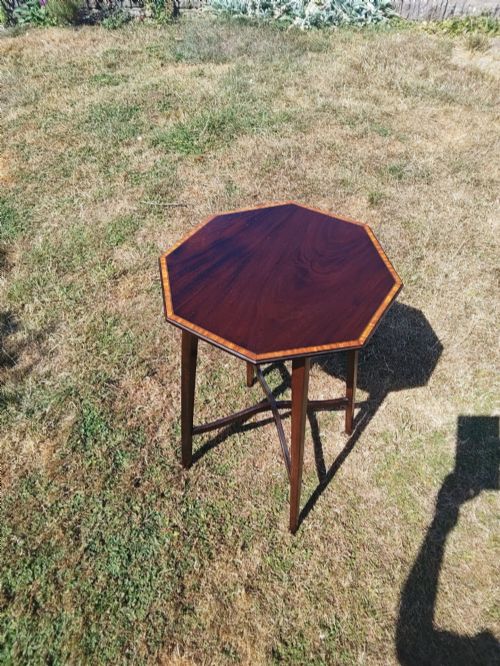
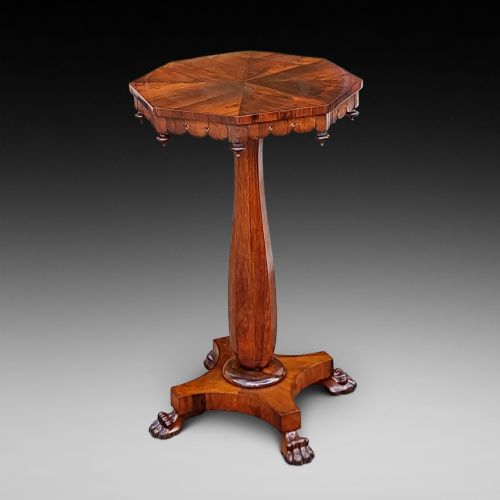
Octagonal Lamp Table
An octagonal lamp table provides a compact eight-sided surface well suited for a corner or beside a chair.
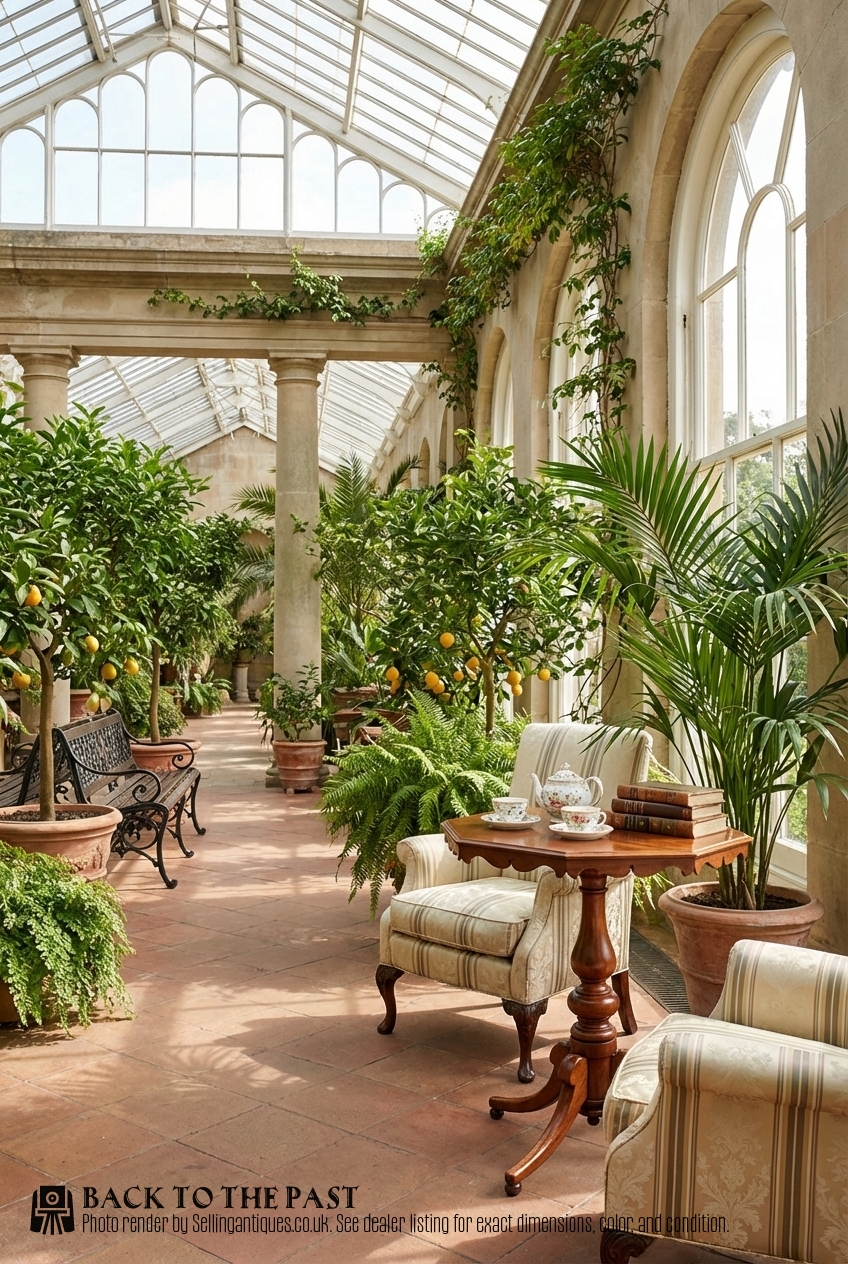
What an octagonal lamp table is
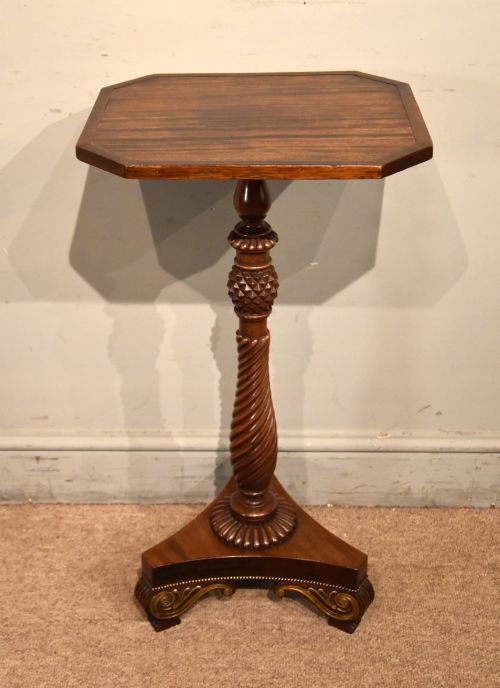
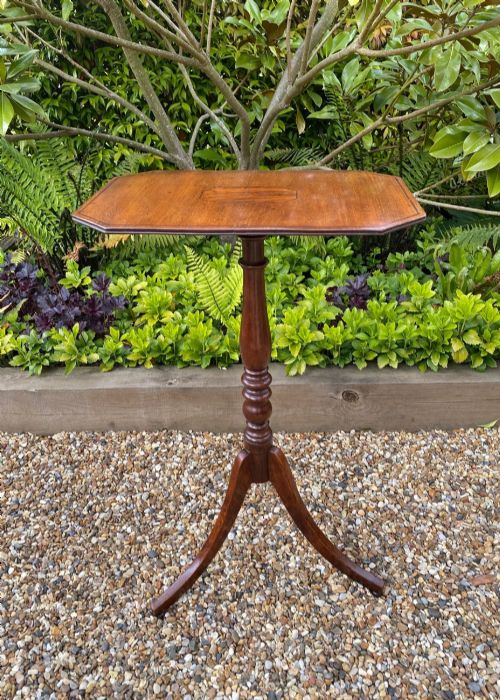
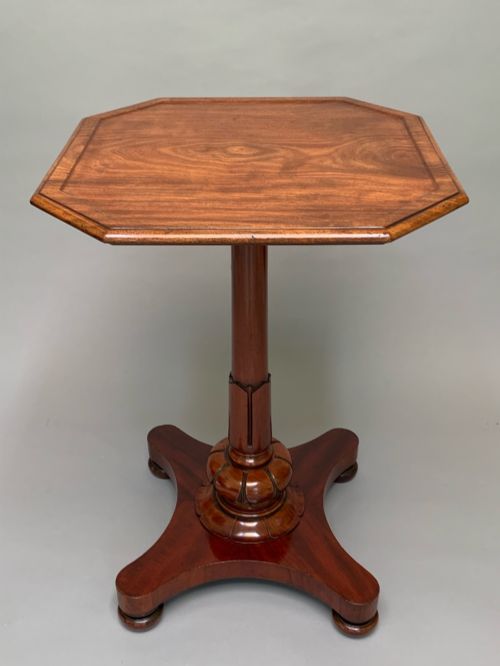
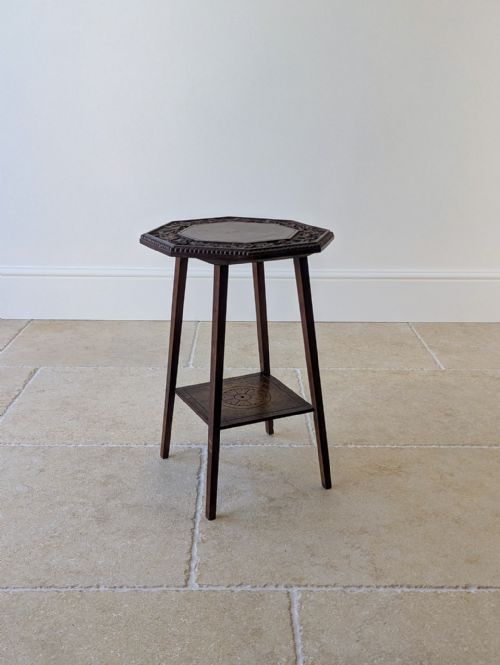
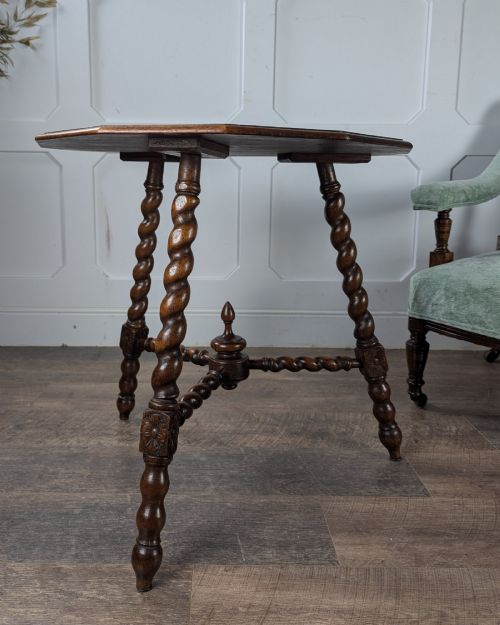
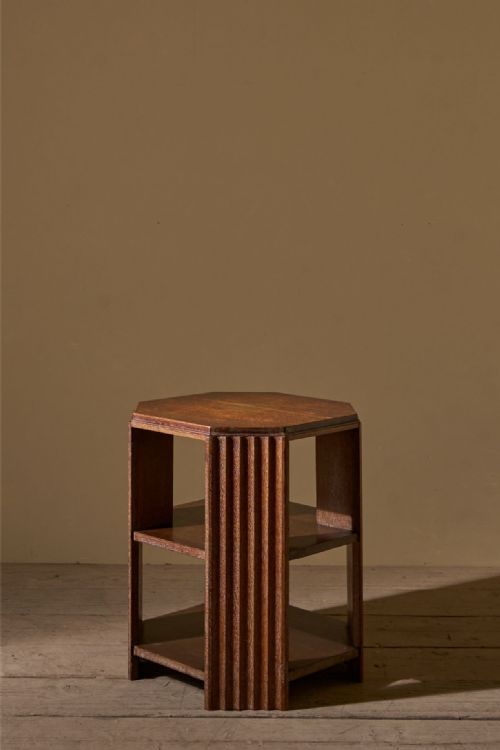
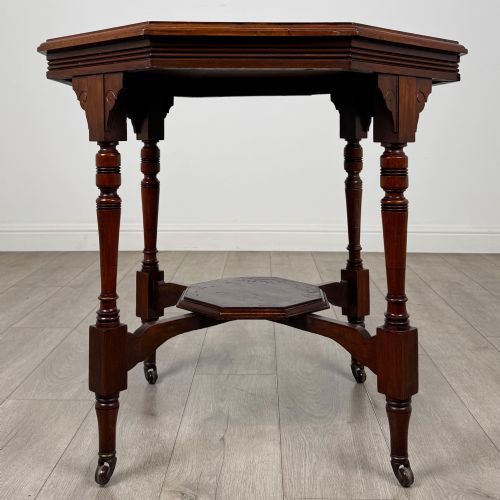
An octagonal lamp table is a small occasional or side piece designed with an eight-sided top, frequently seen from the Victorian, Edwardian, and Arts and Crafts periods. These tables serve as functional stands for lighting or display, appearing in forms ranging from simple tripod wine tables to multi-tiered occasional furniture.
The versions most common on this page date from the nineteenth and early twentieth centuries, constructed in mahogany, walnut, oak, and rosewood. They reflect stylistic shifts from Georgian simplicity through Aesthetic Movement and Edwardian design.
Makers utilised various timbers and decorative techniques to suit domestic interiors, producing side tables, centre tables, and occasional stands with distinct regional or stylistic traits.
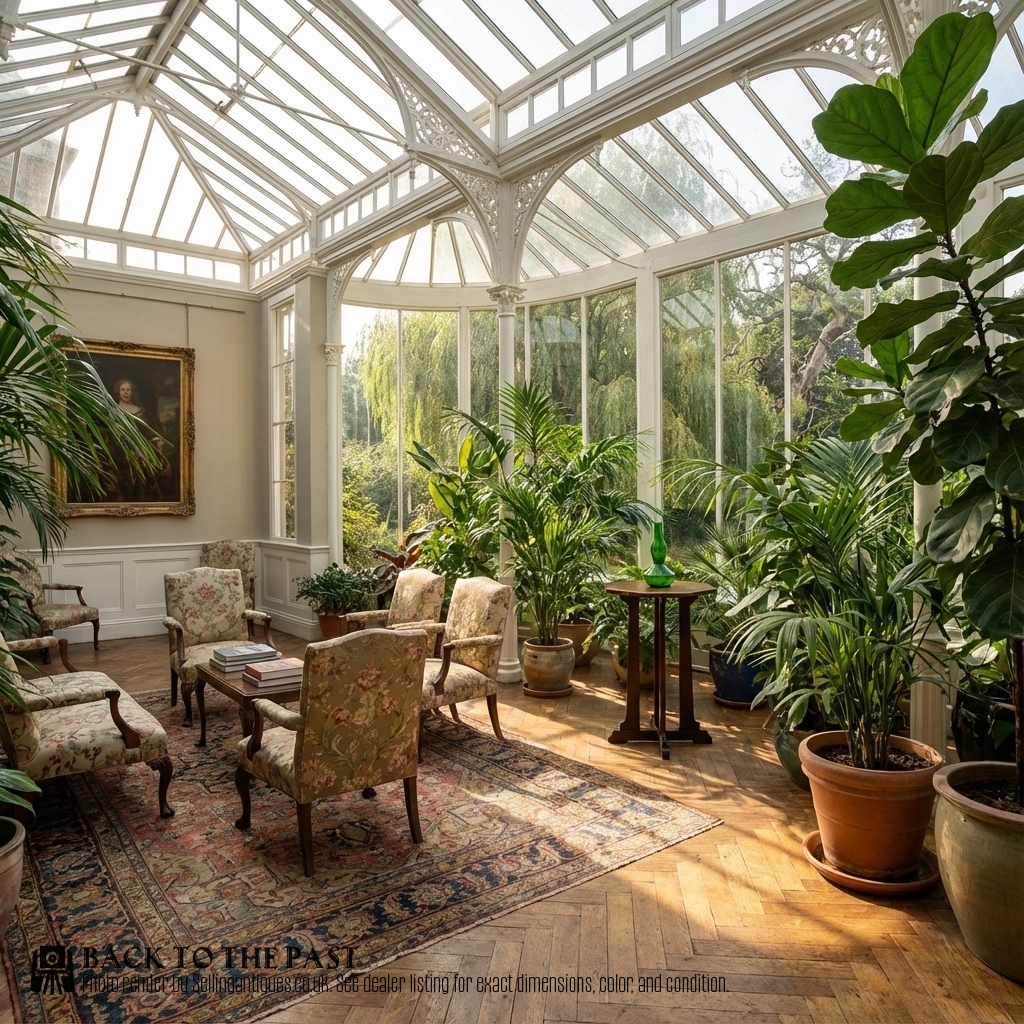
How they were made
Makers constructed these tables using solid hardwoods and veneers such as mahogany, walnut, rosewood, satinwood, and oak. Cabinetmakers employed traditional joinery for frames and pedestals, often mounting tops onto tripod bases or central columns.
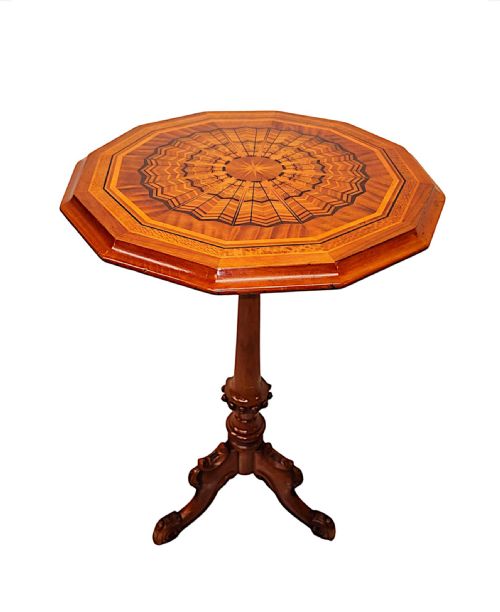
Surface decoration involved hand painting, brass inlay, parquetry, Tunbridge ware, and contrasting stringing. Some examples incorporate carved detailing, tilt-top mechanisms, or multiple tiers linked by turned supports.
Retail Price Guide 2026
Typical UK retail prices for octagonal lamp table, calculated from the Sellingantiques database of over a million retail prices indexed since 2003. This retail price guide relies exclusively on Sellingantiques data; no external sources or auction records are used, so the figures do not describe the wider market.
The selection includes mahogany, rosewood, walnut, and oak examples spanning the Victorian, Edwardian, and Arts and Crafts periods.
What varies in quality
Quality depends on the selection of timber, the precision of the parquetry or inlay, and the stability of the base construction. Dense grains, well-figured veneers, and crisp hand carving distinguish finer examples from standard production pieces.
The integrity of the structural joints, the smoothness of tilt mechanisms where present, and the delicacy of inlaid motifs govern the overall standard of craftsmanship.

Anton Seuffer·Hawksworth Eyre And Co·Gillows of Lancaster
The Octagonal Lamp Table Glossary
- Tilt top
- A table mechanism allowing the octagonal surface to pivot vertically when not in use. This clever design saved domestic floor space in smaller period rooms.
- Parquetry
- Geometric wood inlay forming patterned surfaces across the octagonal top. Craftsmen arranged contrasting timber veneers to create striking visual depth.
- Tripod base
- A three-legged support system commonly found beneath pedestal lamp tables. It provides steady contact on uneven floorboards.
- Occasional table
- A light, movable piece intended for flexible placement around a sitting room. These versatile items held lamps, books, or decorative objects.
- Aesthetic Movement
- A late nineteenth-century design style prioritising visual beauty over strict historical revival. Pieces from this era often feature ebonised finishes, parcel gilt, or exotic woods like calamander.
Frequently Asked Questions
What is an octagonal lamp table used for?
These eight-sided surfaces held portable lighting such as oil lamps or early electric fixtures beside seating areas. They also functioned as wine tables, occasional stands, or display points in Victorian and Edwardian parlours.
Their compact proportions allowed them to fit snugly into corners or beside upholstery where rectangular furniture proved too bulky. Today they serve the exact same purpose beside modern armchairs.
How do I tell Victorian from Edwardian pieces?
Victorian tables often feature darker timbers like rosewood and heavily carved walnut with rich, deep finishes. Inlay work from this era frequently includes floral motifs, brass strings, or elaborate parquetry.
Edwardian examples tend towards lighter woods such as satinwood and lighter mahogany finishes, often displaying simpler lines or restrained Arts and Crafts influence. The overall construction feels lighter and less ornate than mid-nineteenth-century equivalents.
Are these tables sturdy enough for daily use?
Solid hardwood construction and traditional joinery ensure these tables remain robust for everyday placement in a modern home. Tripod bases and central columns provide reliable weight distribution when fitted with modern lamps.
Care should be taken with delicate veneer surfaces and tilt-top mechanisms, but standard occasional use presents no structural difficulty for well-maintained antique examples.
What woods were used for these tables?
Cabinetmakers relied on durable timbers including mahogany, walnut, oak, and rosewood for the primary frames and tops. Exotic woods like satinwood, calamander, and amboyna provided striking contrasting veneers.
Some regional or specialised pieces incorporated native timbers, bamboo, or painted finishes depending on the prevailing style and the maker's workshop.