

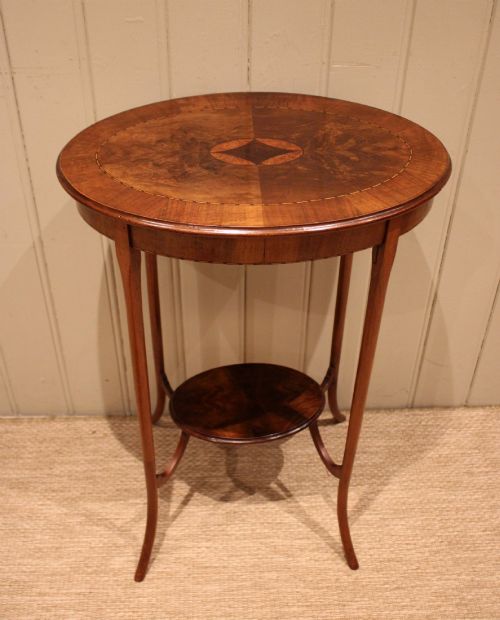

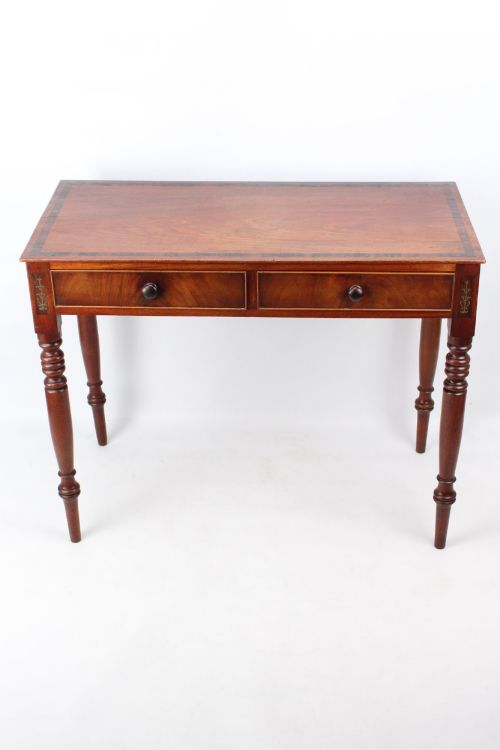
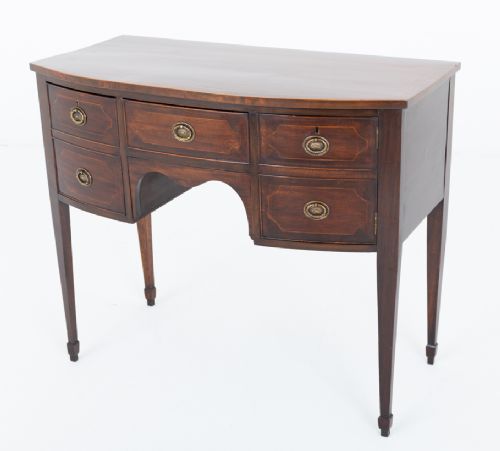
Brown Inlaid Side Table
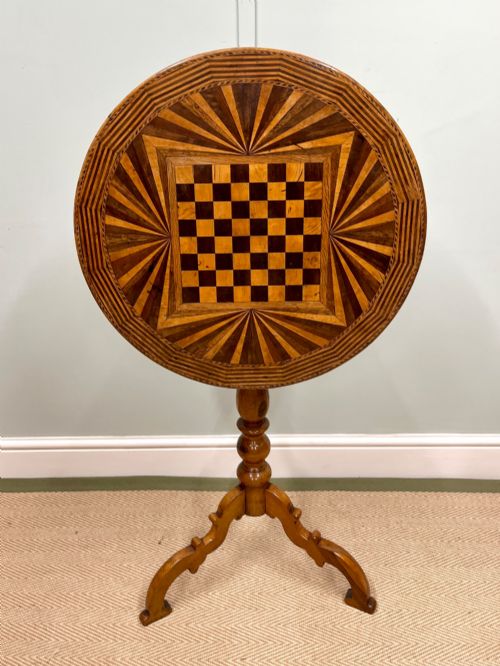
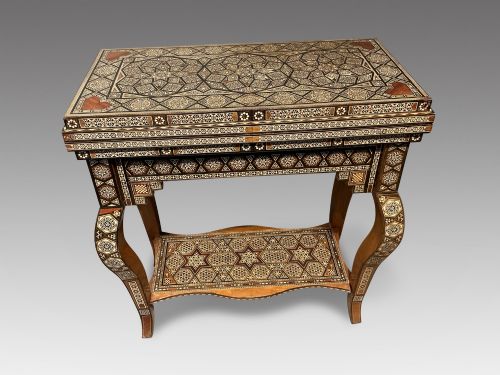
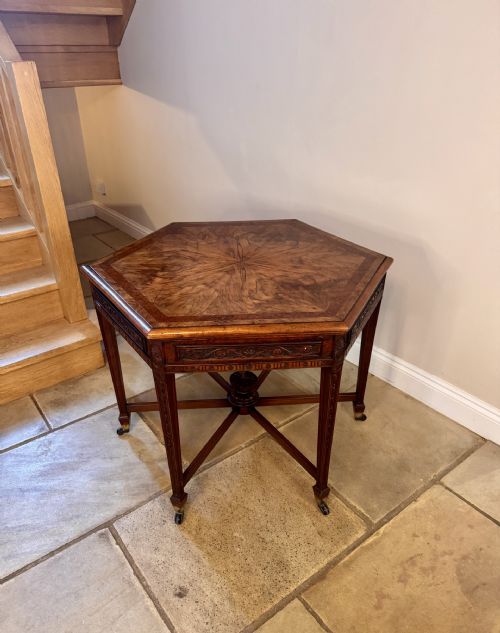
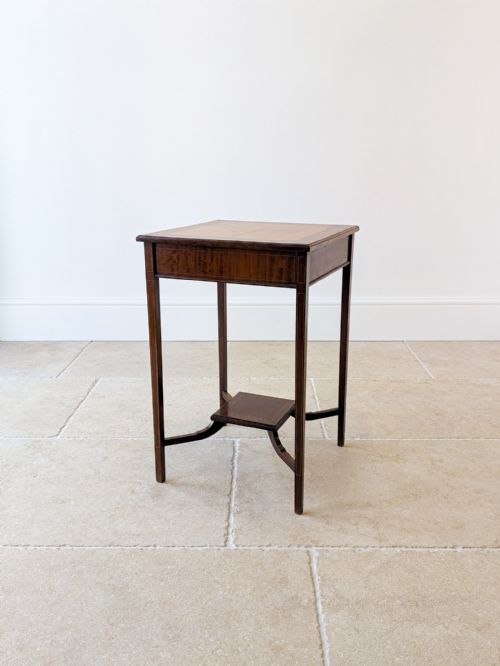
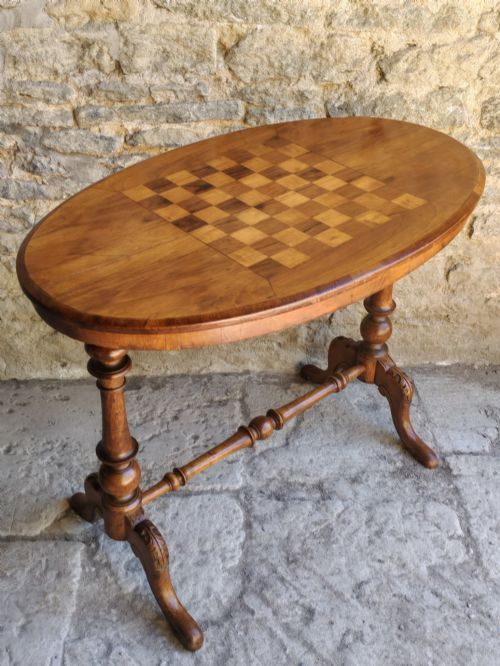
A brown inlaid side table brings tactile warmth and intricate detail to a room, offering surface space paired with decorative marquetry.
Brown Inlaid Side Table
A brown inlaid side table spans numerous historical periods, ranging from the Georgian and 18th Century eras through to Victorian, Edwardian, and 1930s pieces. Buyers searching for a brown inlaid side table encounter diverse forms including occasional tables, lamp tables, console tables, and writing tables.
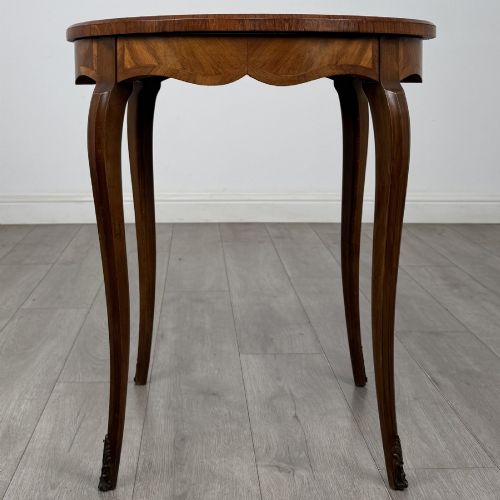
Mahogany and walnut form the structural foundation for the majority of these pieces, frequently paired with lighter contrasting timbers. The selection encompasses English cabinetmaking alongside French Louis XV styles, Dutch marquetry, and Arts & Crafts designs.
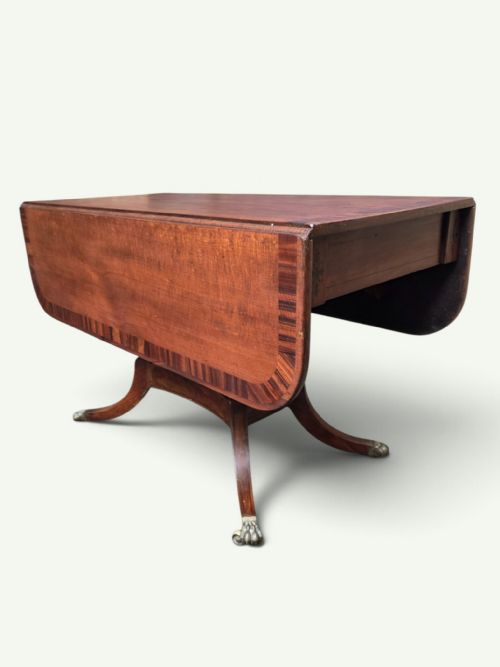
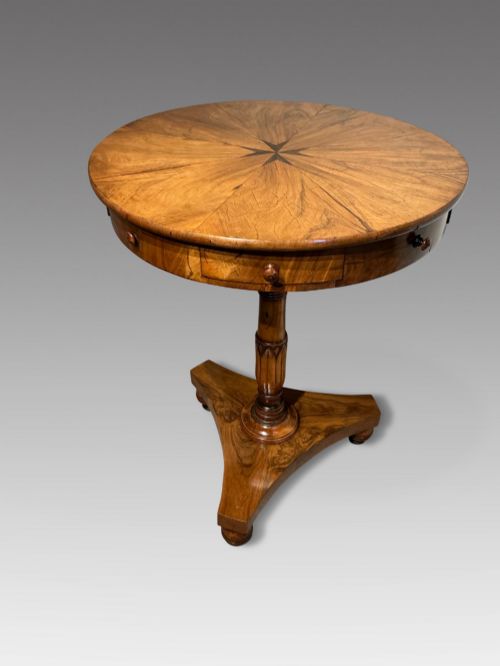
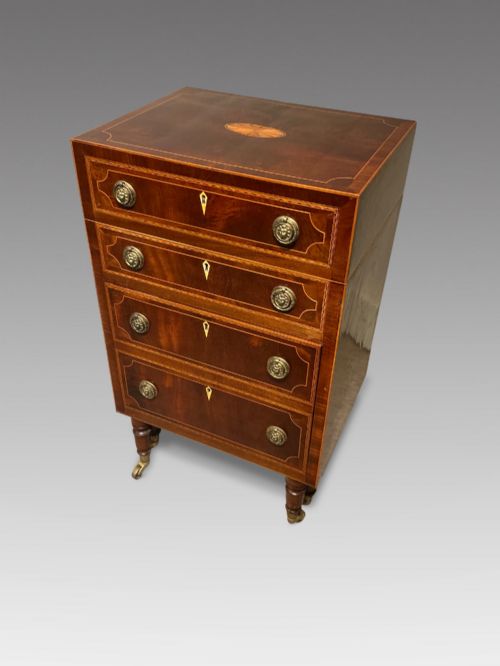
Proportions vary from compact bedside cabinets and oval lamp tables to large centre tables and Pembroke tables. Edwardian mahogany versions and Victorian burr walnut examples appear with notable frequency across the current selection.
How they were made
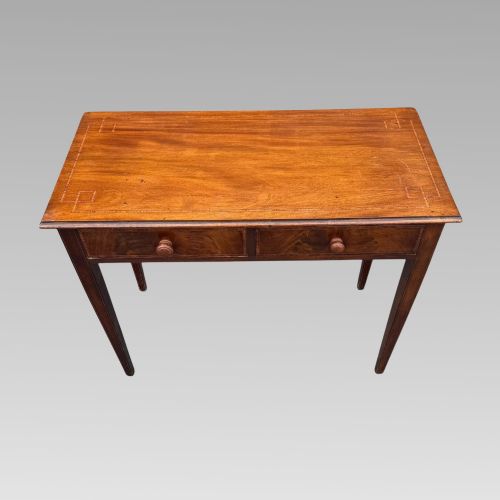
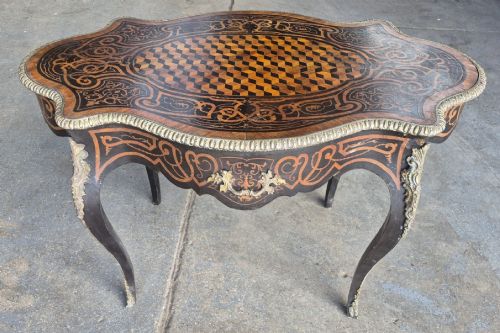
Cabinetmakers constructed the carcases using dense timbers such as mahogany, walnut, rosewood, and kingwood, providing a dark brown ground. Artisans then recessed contrasting light woods including satinwood, boxwood, and harewood into the primary surface to create geometric banding or pictorial marquetry.
Many examples incorporate delicate brass mounts, ormolu details, or drop leaves supported by hinged wooden brackets. Surface finishing relied on traditional polishes that highlighted the natural grain variations of the underlying burr or straight-grained timber.
Brown Inlaid Side Table Retail Price Guide 2026
Typical asking prices for brown inlaid side table among the pieces listed under this phrase on Sellingantiques today, from the lower quarter to the upper quarter. They describe what is for sale here now, not the wider market.
Mahogany and walnut form the primary structural timbers across the available listings, paired with satinwood and boxwood inlay.
What varies in quality
The refinement of the marquetry and the choice of timber figure determine the standing of an individual table. Dense burr walnut or figured mahogany combined with intricate, multi-timber boxwood and satinwood inlay separates standard utility furniture from pieces commissioned for formal reception rooms.
Execution of the joinery, the crispness of the edge banding, and the integration of secondary elements such as ormolu mounts or fitted drawers dictate the overall standard. Pieces retaining their original timber patination and precise veneer alignment demonstrate superior workshop origin.
Trevor Page & Co·Liberty & Co·William Birch
The Brown Inlaid Side Table Glossary
- Marquetry
- Decorative veneer work forming pictorial or geometric patterns on a wooden surface. Craftsmen cut contrasting pieces of wood and fitted them together into a paper-thin sheet before gluing it to the carcase.
- Satinwood
- A durable tropical timber yielding a yellow-gold lustre with a satin-like sheen. Cabinetmakers utilised it extensively for stringing and contrasting inlay against darker walnut or mahogany backgrounds.
- Ormolu
- Gilded bronze mounts applied to furniture edges and corners for decorative effect. French and Victorian workshops frequently incorporated these cast metal ornaments onto high-grade tables and cabinets.
- Pembroke table
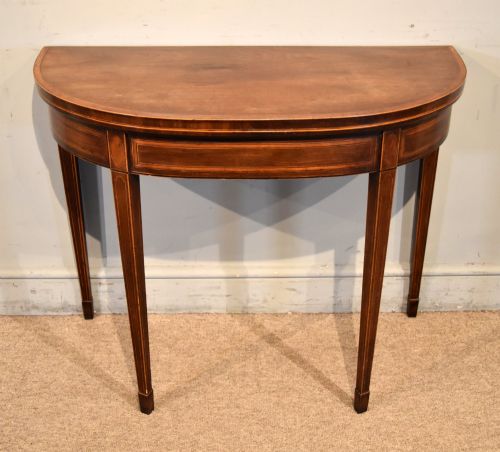
- A small rectangular table featuring two hinged drop leaves on opposing sides. Introduced in the 18th Century, these pieces often included a single drawer and slender legs.
- Stringing
- Thin lines of contrasting timber inlaid into channels cut into the furniture surface. This technique created delicate geometric framing around table tops and drawer fronts.
Brown Inlaid Side Table: Frequently Asked Questions
Where should I place a side table?
A side table fits readily beside a sofa or armchair to hold lamps, books, or drinks. Smaller versions also function effectively as bedside cabinets or display surfaces in hallways.
Their compact proportions allow them to occupy awkward corners or narrow wall spaces where larger furniture items would prove impractical.
How do I clean inlaid wood?
Dust the surface regularly with a soft, dry cloth to prevent dirt accumulation within the fine joints of the marquetry. Avoid chemical sprays and excessive moisture, which can loosen delicate veneers.
Apply a microcrystalline wax periodically to nourish the timber and protect the polished finish from minor scuffs.
What is the difference between an occasional table and a side table?
An occasional table denotes a light, moveable piece intended for sporadic use around a living space. A side table typically remains stationary against a wall or beside seating furniture.
In practice, historical makers used these terms interchangeably, and many pieces share identical forms and structural proportions.
How do I identify an Edwardian table?
Edwardian tables manufactured around 1900 to 1910 frequently utilise lighter mahogany frames combined with satinwood stringing and satin-smooth polished finishes. Their design borrows heavily from 18th-century Sheraton precedents but incorporates simpler internal construction.
Look for slender tapered legs, oval or serpentine tops, and understated floral or ribbon marquetry motifs typical of the period.