



Moorish Side Table
A moorish side table brings geometric complexity and rich surface texture into a room through intricate woodwork and precious inlays.
Moorish Side Table
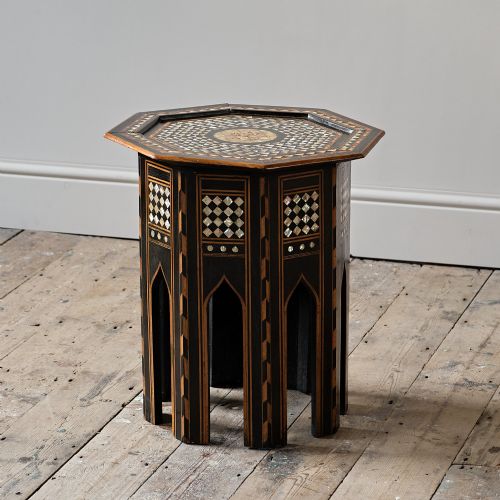
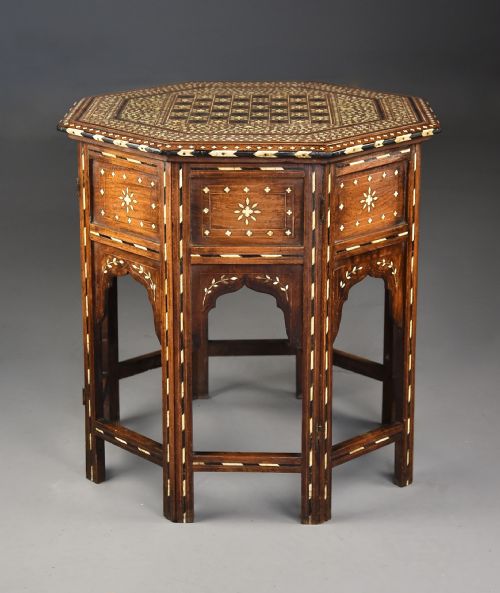
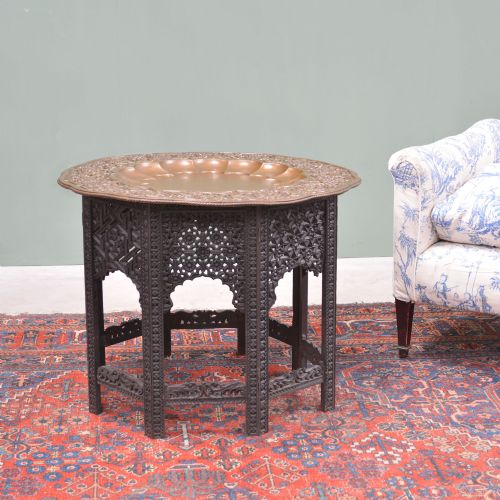
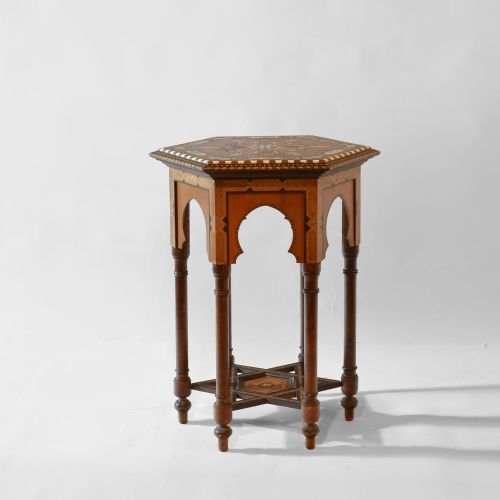
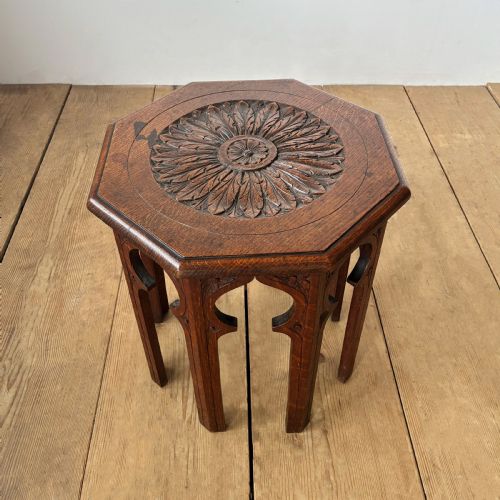
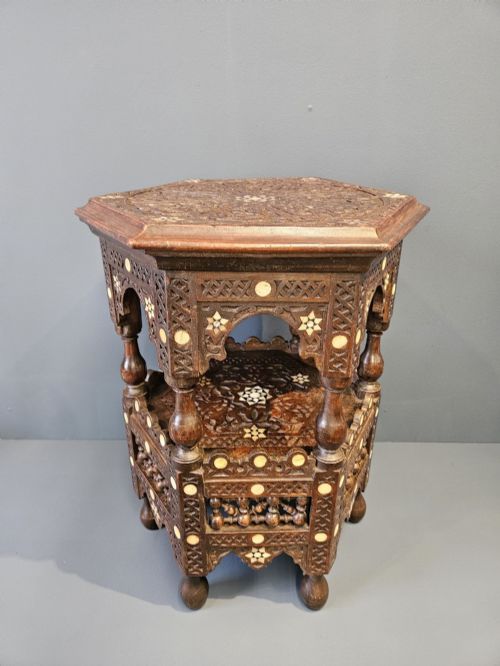
A moorish side table is an occasional, coffee, or lamp table built with distinctive geometric silhouettes such as octagonal or hexagonal tops and folding stands. These pieces emerge primarily from nineteenth and early twentieth century production, spanning Victorian, Edwardian, and arts and crafts periods.
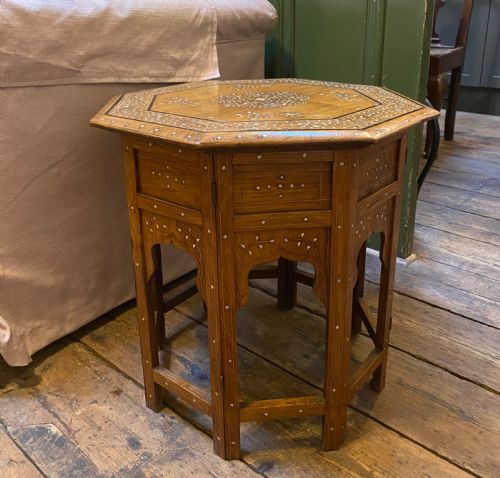
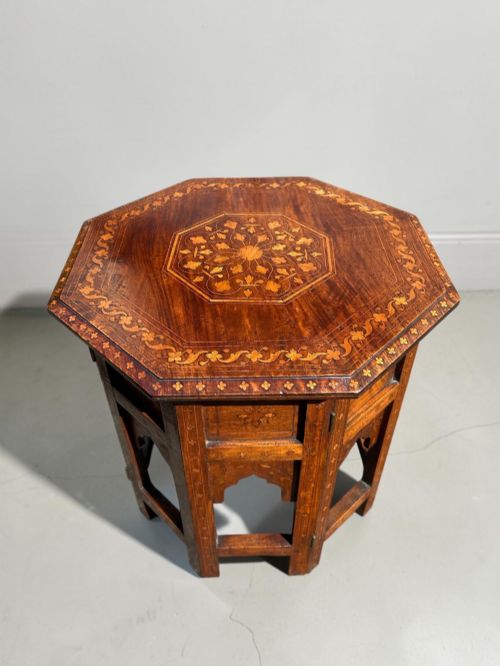
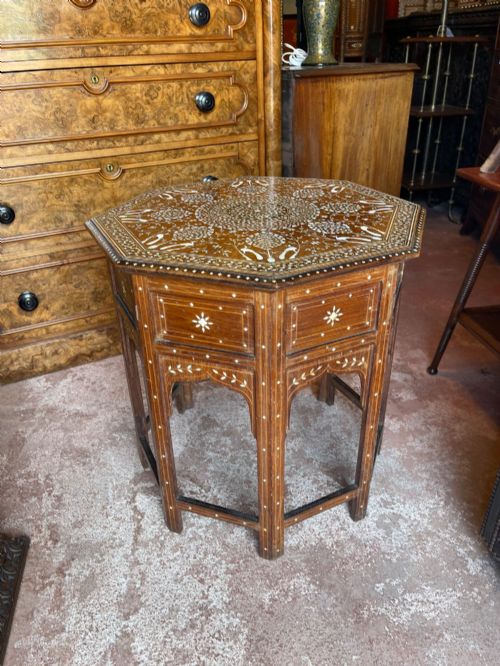
The most common forms on this page include folding Damascus and Syrian tables alongside Anglo-Indian Hoshiarpur pieces. Makers combined regional export traditions with European retail tastes, often producing multi-tiered or drop-flap variants intended for domestic sitting rooms.
How they were made
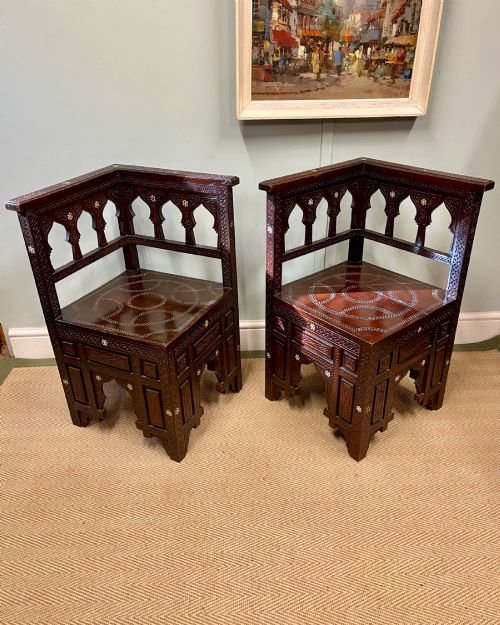
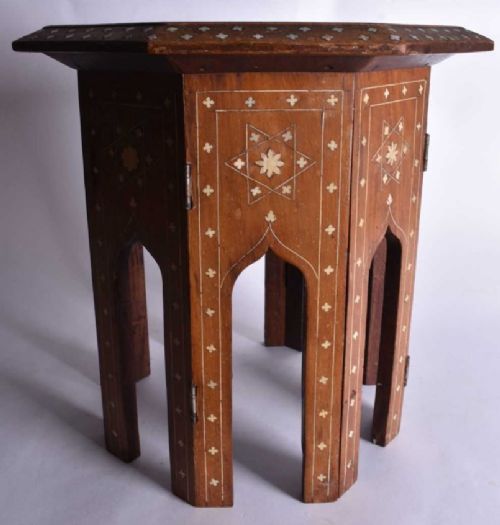
Craftsmen built these tables using dense hardwoods such as walnut, mahogany, rosewood, and ebonised wood as a foundation for elaborate surface decoration. Frameworks frequently incorporated intricate openwork carving and lattice panels designed to fold flat without metal hinges.
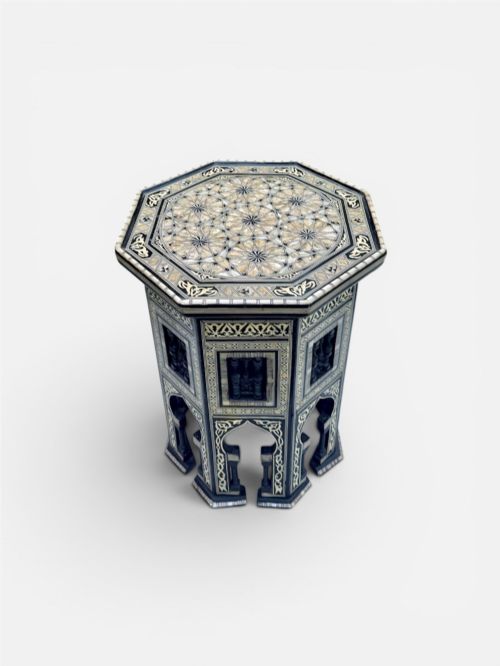
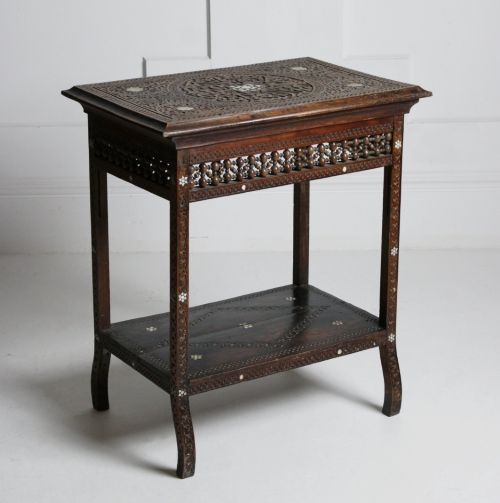
Surfaces received dense geometric mosaics created by hand-cutting tiny pieces of bone, mother-of-pearl, and white metal, which were then pressed into recesses within the timber. Artisans occasionally integrated brass, copper, or lacquered finishes to complete the panels.
Moorish Side Table Retail Price Guide 2026
Typical asking prices for moorish side table among the pieces listed under this phrase on Sellingantiques today, from the lower quarter to the upper quarter. They describe what is for sale here now, not the wider market.
Listings feature pieces spanning the Victorian period through the nineteen-thirties, constructed in hardwoods like walnut, mahogany, and rosewood with bone and mother-of-pearl inlay.
What varies in quality
Quality depends upon the density and precision of the inlay work, where superior examples display tight, uniform geometric tessellation without excessive filler around individual pieces of bone or mother-of-pearl. The crispness of the hand-carved openwork lattice also separates standard export items from finer workshop output.
Structural integrity of the folding bases and the selection of timber foundations dictate the enduring worth of a piece. Finer examples utilise heavier, stable hardwoods that maintain their alignment through decades of use.
Liberty and Co·Carlo Bugatti
The Moorish Side Table Glossary
- Hoshiarpur
- A North Indian city renowned for intricate woodwork where artisans carved detailed plant and geometric motifs into folding tables. These pieces often incorporated dense bone and mother-of-pearl inlay.
- Octagonal
- An eight-sided geometric form that defines the tops of many traditional tables from this design group. This shape allowed craftsmen to showcase symmetrical border patterns.
- Ebonised
- Wood treated with a chemical stain or black finish to simulate the appearance of solid ebony. This technique gained popularity during the nineteenth century to contrast against pale shell inlays.
- Kursi
- A traditional low occasional table or stool form originating from Middle Eastern metalworking and woodworking traditions. These pieces often feature hexagonal plans with intricate copper or brass inlay.
- Damascus
- A Syrian manufacturing centre associated with tables featuring intricate geometric marquetry and mother-of-pearl mosaic work. Items from this region typically utilise walnut or softwood cores.
Moorish Side Table: Frequently Asked Questions
How do I care for inlaid surfaces?
Dust surfaces gently with a soft, dry cloth and avoid applying liquid polishes that can seep beneath loose pieces of bone or mother-of-pearl. Keep the timber away from direct heat sources and dramatic humidity shifts to prevent the wood from warping.
Natural oils in the wood benefit from occasional waxing using high quality beeswax applied sparingly. Buff the surface gently along the grain to maintain a soft sheen without building up residue inside the carved recesses.
Are these folding stands original?
Many tables utilise integrated lattice folding stands designed to collapse flat for transport and storage. These stands rely on interlocking wooden hinges carved directly from the timber frame.
Examine the joints where the lattice crosses to ensure the wooden pins or hinges remain intact and undamaged. Replacements are uncommon due to the precise geometry required for the mechanism to function smoothly.
How do I distinguish regional styles?
Syrian and Damascus pieces typically feature dense mother-of-pearl mosaic work set into walnut or softer regional timbers. Anglo-Indian Hoshiarpur tables showcase deeply carved hardwood surfaces with contrasting bone inlay depicting floral motifs.
European interpretations, such as those associated with Liberty or the aesthetic movement, often pair ebonised or dark mahogany frames with restrained inlay patterns. Examining the choice of timber helps clarify the geographic origin of the workshop.
Where were these tables used originally?
Victorian and Edwardian households placed these decorative pieces in drawing rooms, smoking rooms, and hallways as functional surfaces for lamps or calling card trays. Their compact footprints made them adaptable for smaller sitting spaces.
Folding versions allowed homeowners to reposition furniture easily or store tables when rooms needed to be cleared for entertaining.