

Inlaid Coffee Table
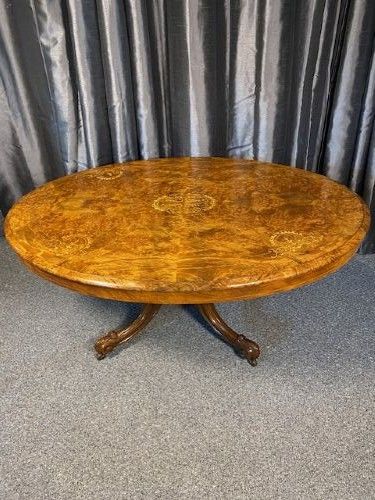
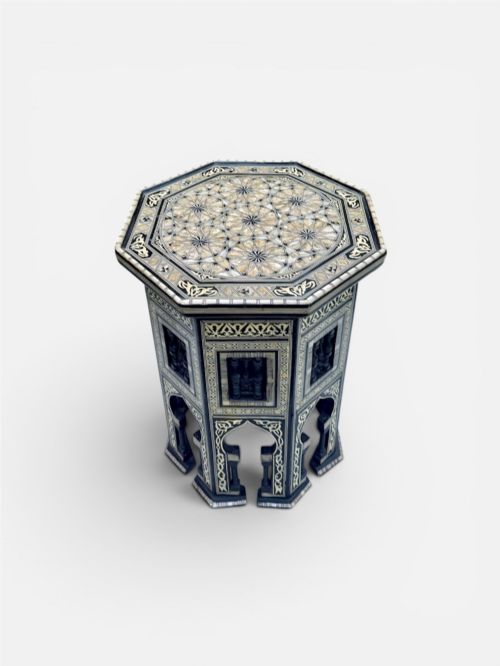
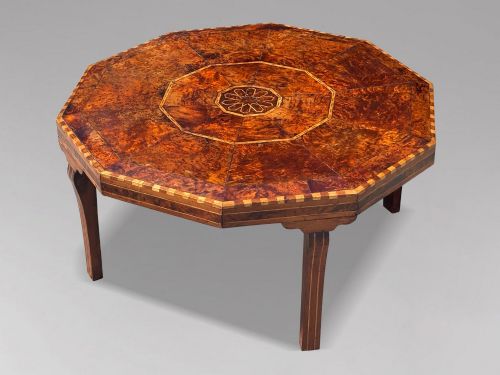
When you want an inlaid coffee table, you are looking at nineteenth-century walnut and mahogany pieces decorated with contrasting woods and metal.
Inlaid Coffee Table
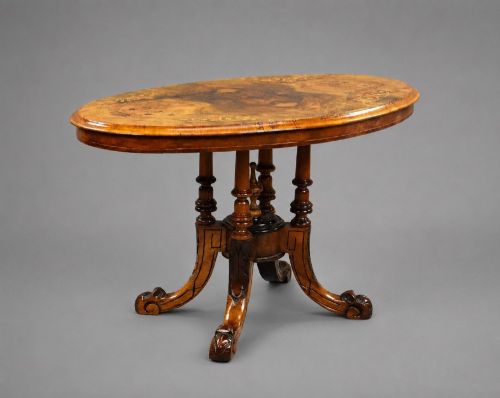
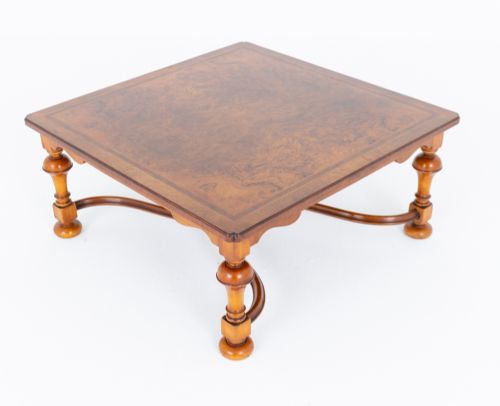
An inlaid coffee table brings together nineteenth-century forms and decorative surface patterns designed to sit low in a modern room. The pieces seen here span Victorian, Edwardian and early twentieth-century periods, alongside French and Anglo-Indian designs.
Most examples originate as occasional, centre or lamp tables rather than purpose-built low tables. Many items arrive in nested sets or octagonal formats, reflecting domestic habits from the Victorian era onward.
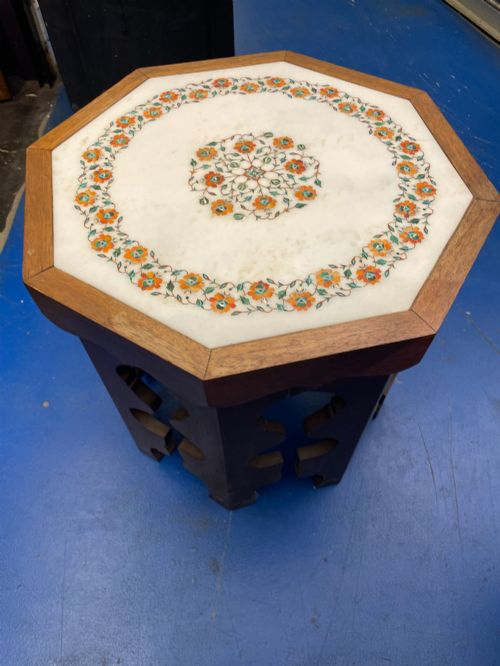
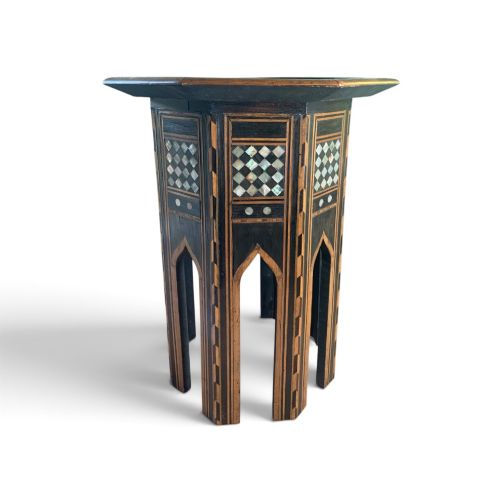
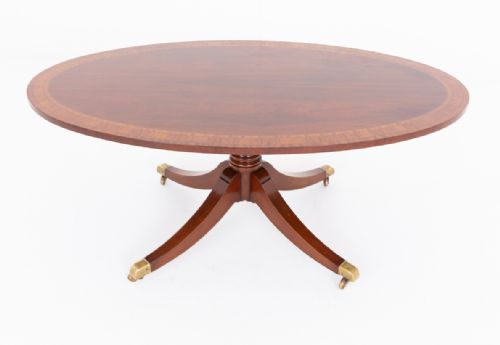
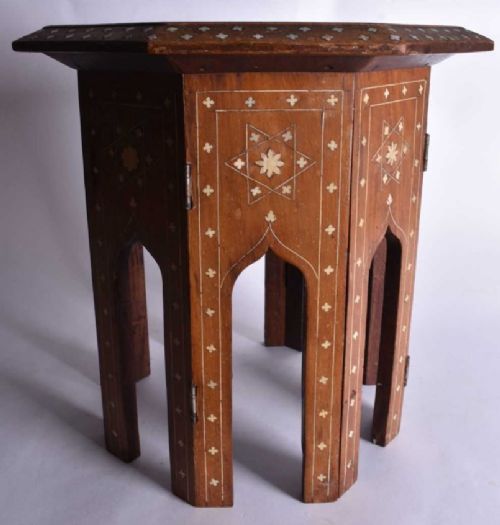
The selection ranges from burr walnut ovals to exotic wood octagons bearing mother of pearl or bone detailing. Buyers find both European marquetry work and British interpretations of global styles.
How they were made
Cabinet makers utilised dense timbers like walnut, mahogany and rosewood as grounds for intricate surface decoration. Artisans inset contrasting materials such as satinwood, boxwood, brass wire and bone directly into the timber surface.
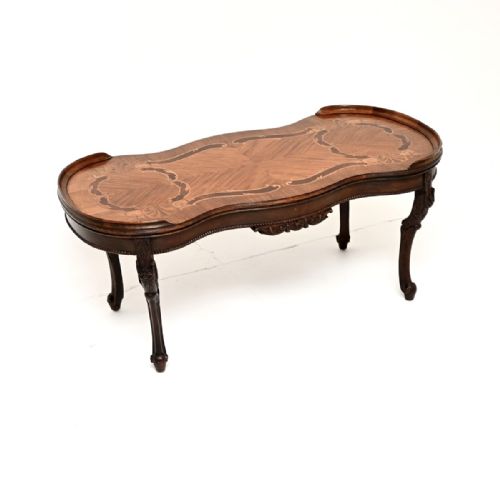
Marquetry compositions use varying wood veneers to form pictorial or geometric motifs, whilst parquetry arranges geometric wood blocks into repeating patterns. Specialised workshops in Britain, France and India employed hand-cut veneers secured with animal glues.
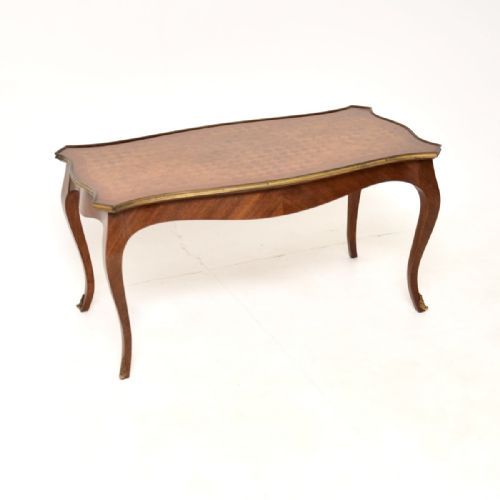
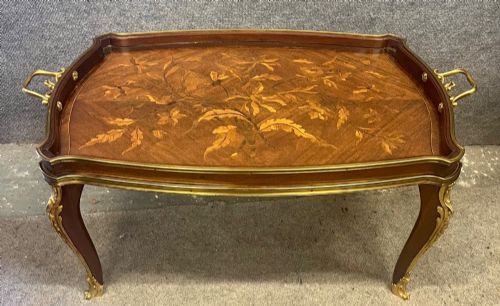
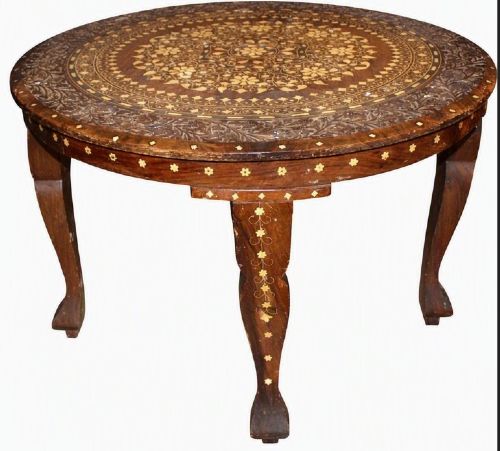
Certain examples incorporate brass ormolu mounts, cast iron supports or marble tops alongside traditional timber joinery. The intricacy of the inlay work often indicates the origin of the workshop, from European revival pieces to Hoshiarpur production.
Octagonal occasional tables from Anglo-Indian workshops frequently incorporate folding bases for storage.
What varies in quality
The precision and complexity of the surface pattern separate standard production from master craftsmanship. Superior examples display tightly fitted veneers and varied natural grain patterns in the underlying burr walnut or mahogany.
The depth of carving on structural elements and the quality of secondary timbers reveal how much time a workshop invested in the piece. Well-balanced proportions and refined edge banding distinguish the finest nineteenth-century furniture from later adaptations.
Liberty and Co·Vortik Potikian
The Inlaid Coffee Table Glossary
- Marquetry
- A decorative technique applying pieces of veneer to a structure to form pictorial designs. Artisans cut various coloured woods to fit together like a puzzle.
- Parquetry
- A geometric mosaic of wood pieces used for floors and tabletops. It relies on repeating shapes rather than pictorial scenes.
- Quartetto
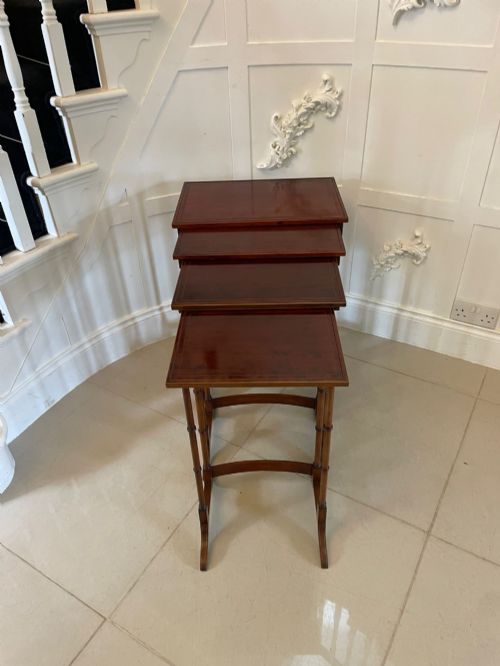
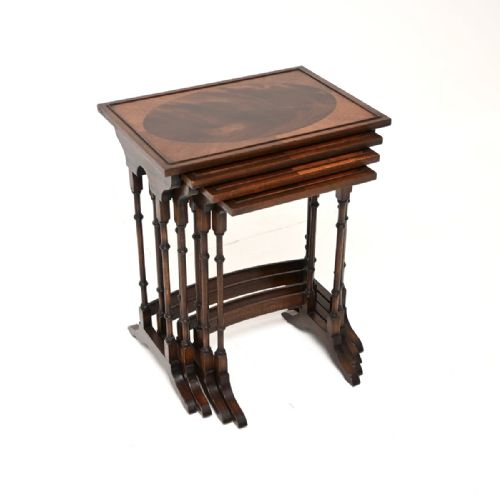
- A set of four nested tables that graduate in size to slide beneath one another. Popular in the Edwardian period for saving space.
- Ormolu
- Gilded bronze mounts applied to furniture for decoration. French makers utilised this technique extensively during the nineteenth century.
- Hoshiarpur
- A North Indian centre known for intricate wooden tables inlaid with bone and resin. These pieces feature dense geometric carving across octagonal surfaces.
Inlaid Coffee Table: Frequently Asked Questions
Are these tables converted from taller ones?
Many nineteenth-century occasional, centre and lamp tables serve as coffee tables today without alteration. Their original proportions suit modern seating heights.
Some nesting and quartetto tables also function effectively in low table arrangements.
How do I care for an inlaid surface?
Keep wooden tables away from direct heat sources and strong sunlight to prevent veneer lifting. Regular dusting with a dry cloth maintains the finish.
A light application of appropriate furniture wax protects older polished surfaces.
What is the difference between marquetry and parquetry?
Marquetry creates pictorial scenes or floral motifs using varied wood veneers. It relies on organic shapes and tonal shading.
Parquetry constructs geometric patterns from uniform wood blocks, such as cubes or chequers.
How can I tell an Edwardian piece from a Victorian one?
Victorian tables often feature heavier burr walnut timbers and rich marquetry panels. Edwardian examples tend to display lighter mahogany frames and Sheraton Revival influences.
Construction details and timber choice usually clarify the period.