




Indian Inlaid Tea Table
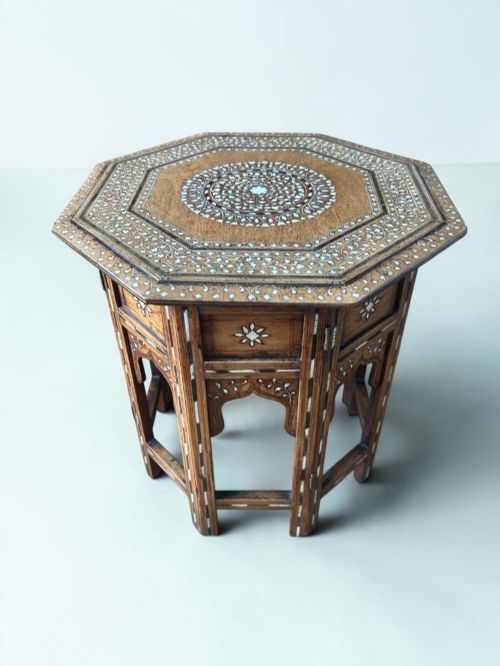
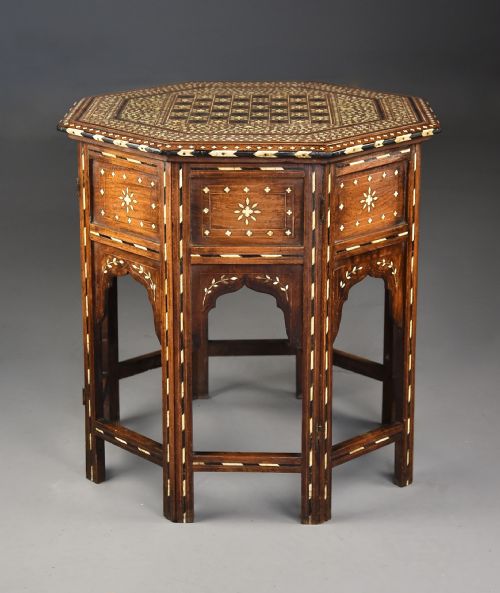
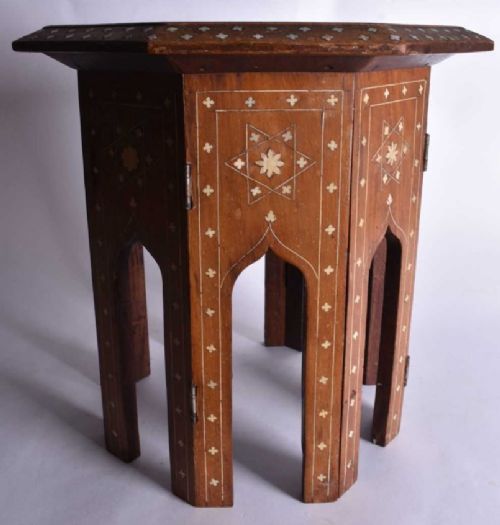
An indian inlaid tea table brings intricate craftsmanship into a room, offering surface space through carved folding frames.
Indian Inlaid Tea Table
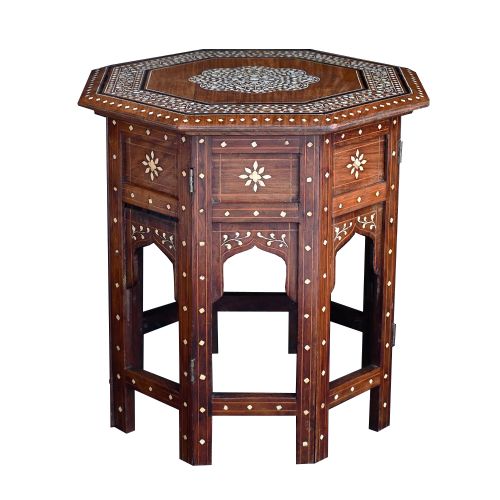
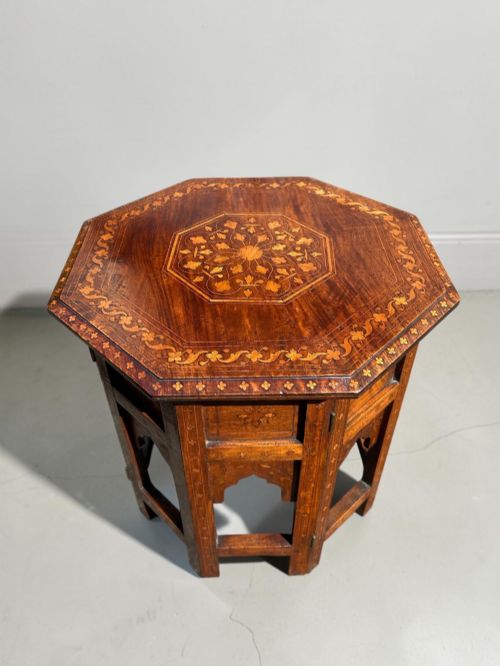
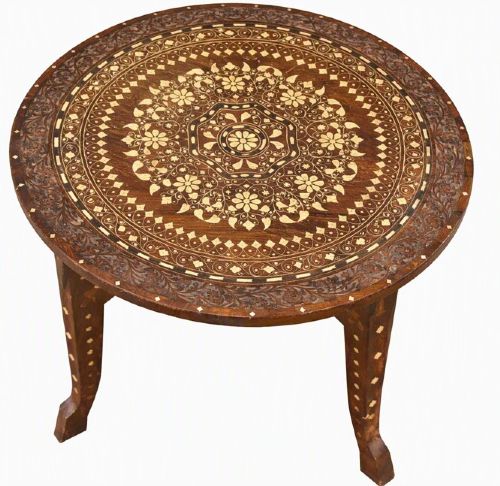
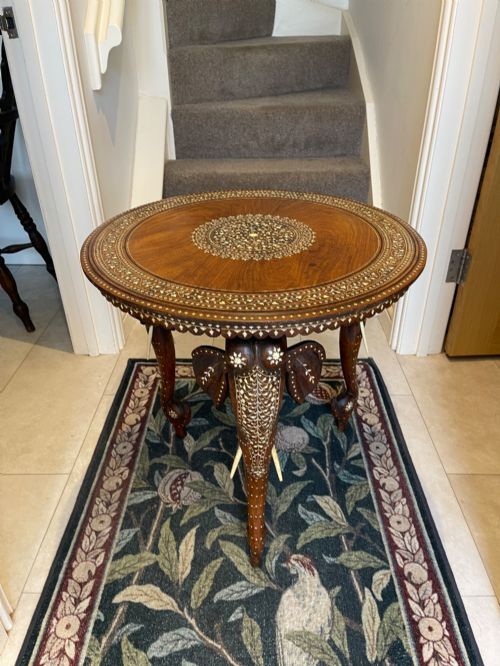
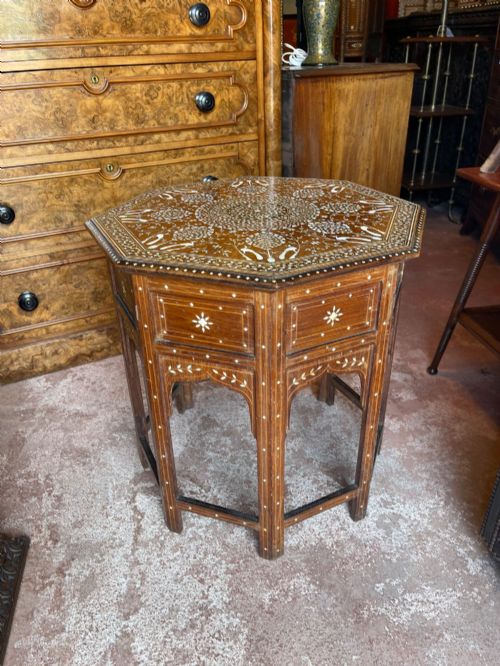
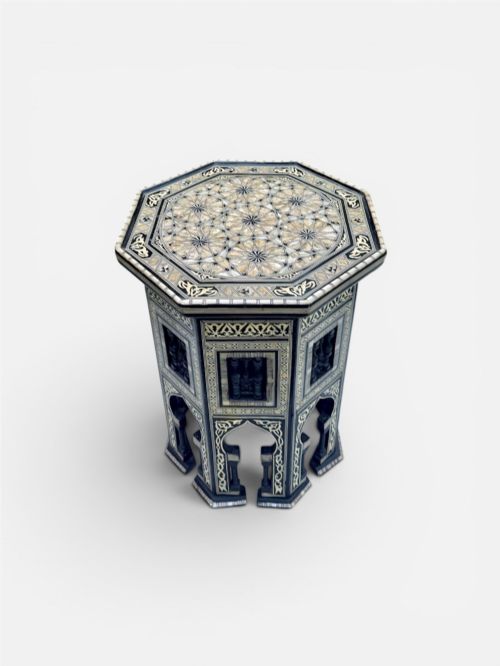
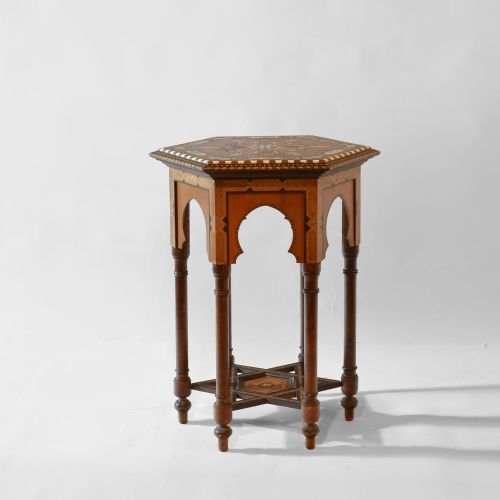
An indian inlaid tea table usually appears as an octagonal, circular, or occasionally hexagonal piece designed for occasional, side, or coffee use. These surfaces frequently rest on collapsible or folding bases that allow the furniture to be moved or stored with ease.
The objects originate primarily from nineteenth-century and early twentieth-century workshops, encompassing Anglo-Indian, Moorish Revival, and Syrian styles. Makers utilised dense woods like teak, rosewood, and padauk to construct portable tables suited to diverse domestic interiors.
Materials and Technique
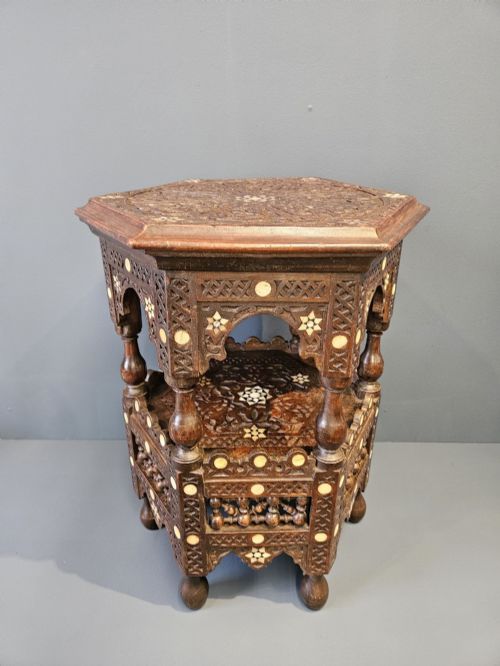
Craftspeople constructed these tables using hardwoods such as teak and rosewood, carved with deep relief patterns across the tops and folding bases. Artisans then meticulously set contrasting materials into the timber surfaces.
The ornamentation relies on bone, brass wire, copper, and mother of pearl, embedded by hand to form geometric and floral motifs. Folding bases frequently employ pierced fretwork hinges that lock together without metal hardware.
Indian Inlaid Tea Table Retail Price Guide 2026
Typical asking prices for indian inlaid tea table among the pieces listed under this phrase on Sellingantiques today, from the lower quarter to the upper quarter. They describe what is for sale here now, not the wider market.
Certain tables feature secret interlocking panels that fold down flat like origami, designed for travellers who refused to sacrifice tea service on the move.
Assessing Execution
The distinction between ordinary and superior examples lies in the density and precision of the surface decoration. Master carvers filled every centimeter with intricate fretwork and secured tightly fitted inlay without excessive gaps or filler.
Better pieces combine multiple contrasting inlay materials, such as bone and mother of pearl together with brass, on stable hardwoods like teak. Structural rigidity in the folding mechanism also separates sturdier examples from weaker items.
Liberty & Co
The Indian Inlaid Tea Table Glossary
- Hoshiarpur
- A town in Punjab renowned for detailed wood carving and inlay work using bone and wire. Pieces attributed here display dense geometric patterning.
- Octagonal
- Having eight sides, which represents the most common shape for table tops in this category. This geometric format allows complex border arrangements.
- Bone Inlay
- The technique of embedding carved animal bone fragments into wooden recesses to create pale contrast against dark timber. This material mellows to a warm tone over time.
- Fretwork
- Pierced woodwork carved entirely through the board to create openwork patterns. It appears frequently on the folding bases of these tables.
- Anglo-Indian
- A descriptive term for furniture made in India during the British period for export or domestic European tastes. These designs blend local craft with familiar Western furniture forms.
Indian Inlaid Tea Table: Frequently Asked Questions
How do I fold these tables?
Most folding tables utilise an interlocking wooden base made of two pierced panels that slot together at right angles. Lifting the top separates the frame elements so they fold flat for storage.
Take care to support the hinges and carved joints when assembling or collapsing the base to prevent strain on the wood.
What woods were used?
Makers primarily selected dense tropical hardwoods including teak, rosewood, padauk, and sandalwood. These timbers provided a stable, dark background for inlaid bone and brass.
Lighter woods like sheesham also appear, offering contrasting natural grain patterns beneath the carved ornamentation.
How do I clean the inlay?
Dust the carved surfaces gently with a soft brush to remove particles trapped between the bone and wood. Avoid liquid polishes that can sink into unsealed joints and stain the inlay.
Microfibre cloths work well for routine maintenance without pulling at delicate brass wire or mother of pearl segments.
Are these tables sturdy?
Tables with folding bases offer reliable support for lamps and cups when properly locked into position. The clever geometric joints distribute weight evenly across the intersecting wooden panels.
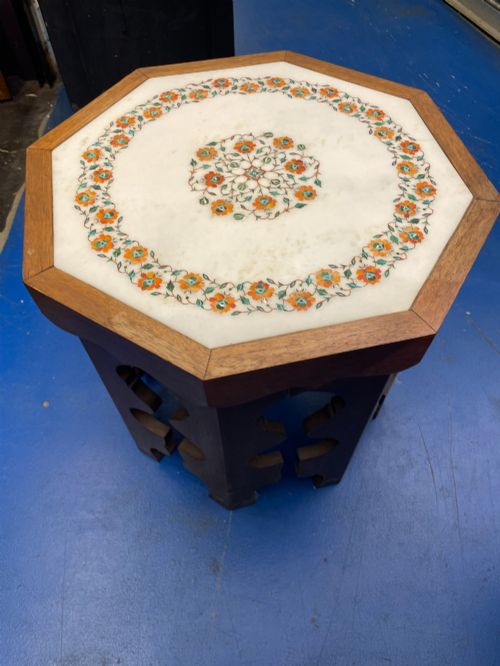
Heavier items featuring marble tops require stationary placement rather than frequent folding and relocation.