


Anglo Indian Folding Table
An anglo indian folding table brings intricate carving and portable craftsmanship directly from colonial workshops into modern living spaces.
Anglo Indian Folding Table
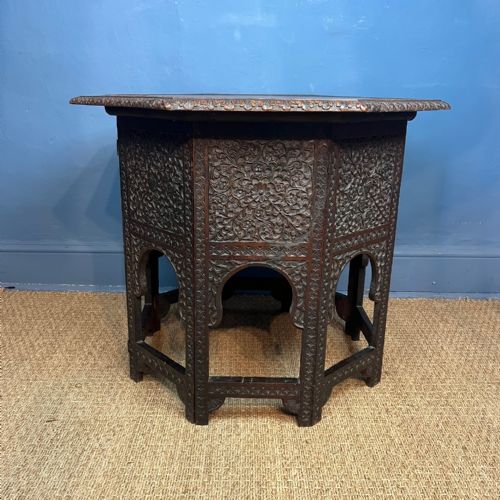
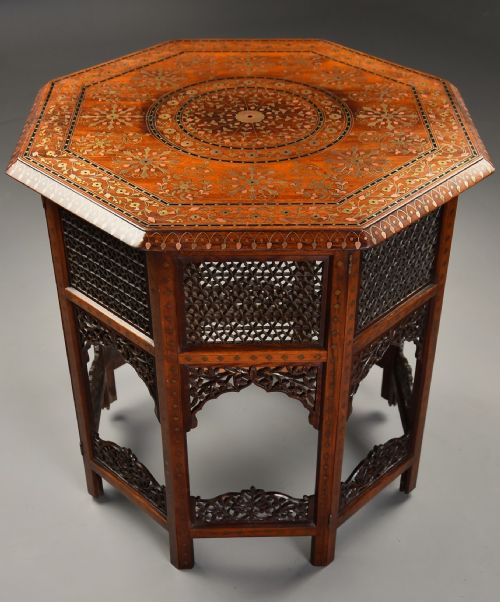
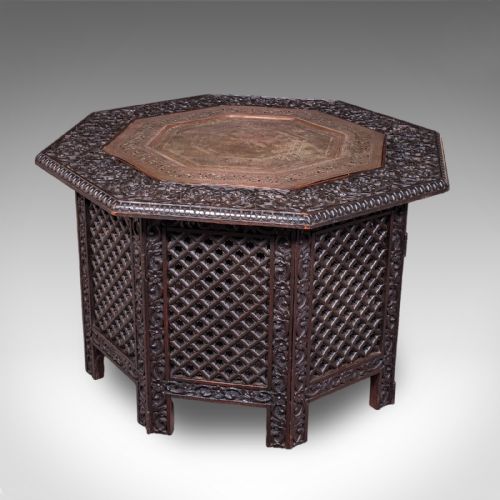
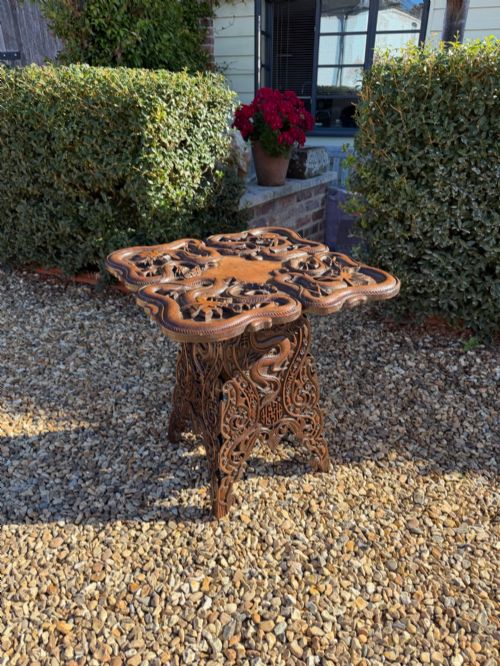
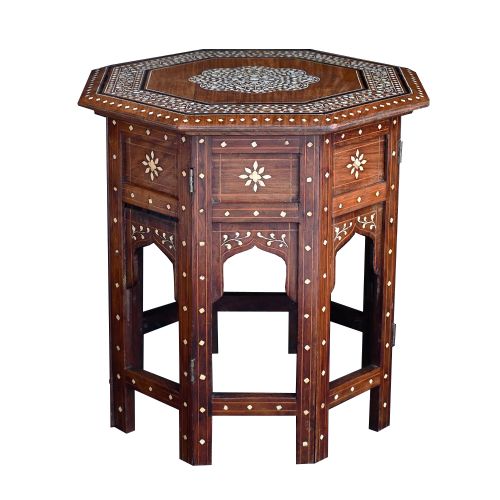
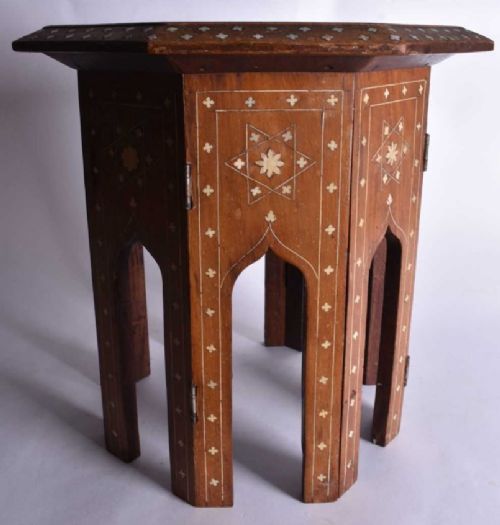
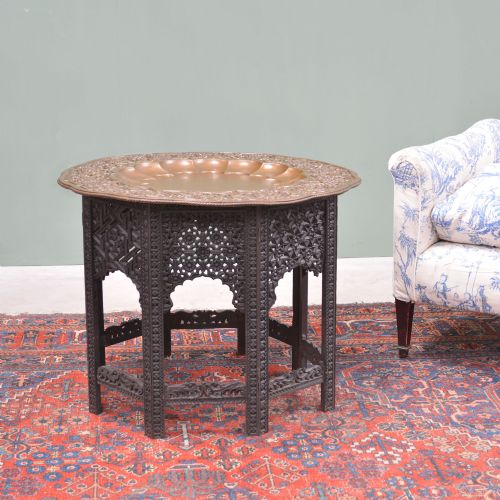
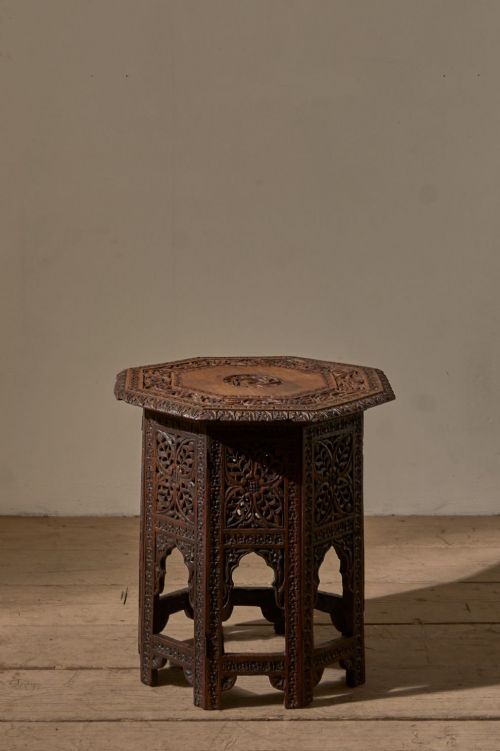
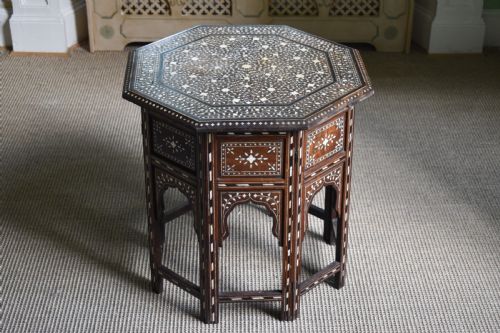
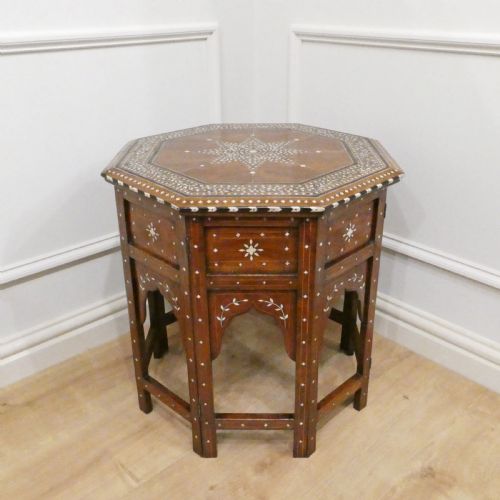
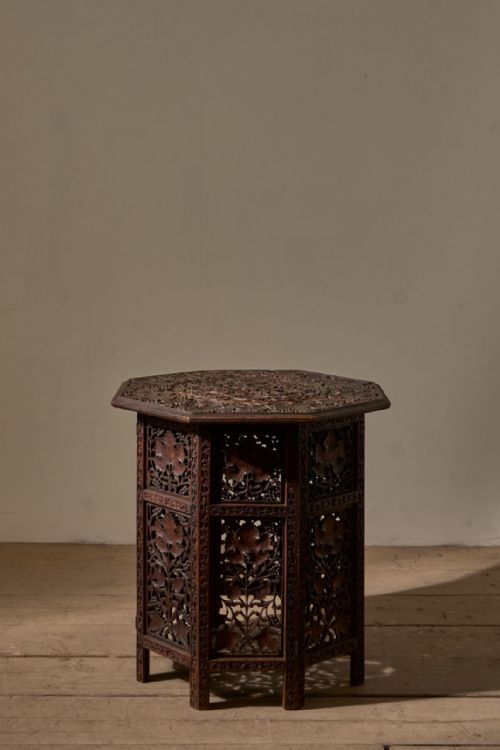
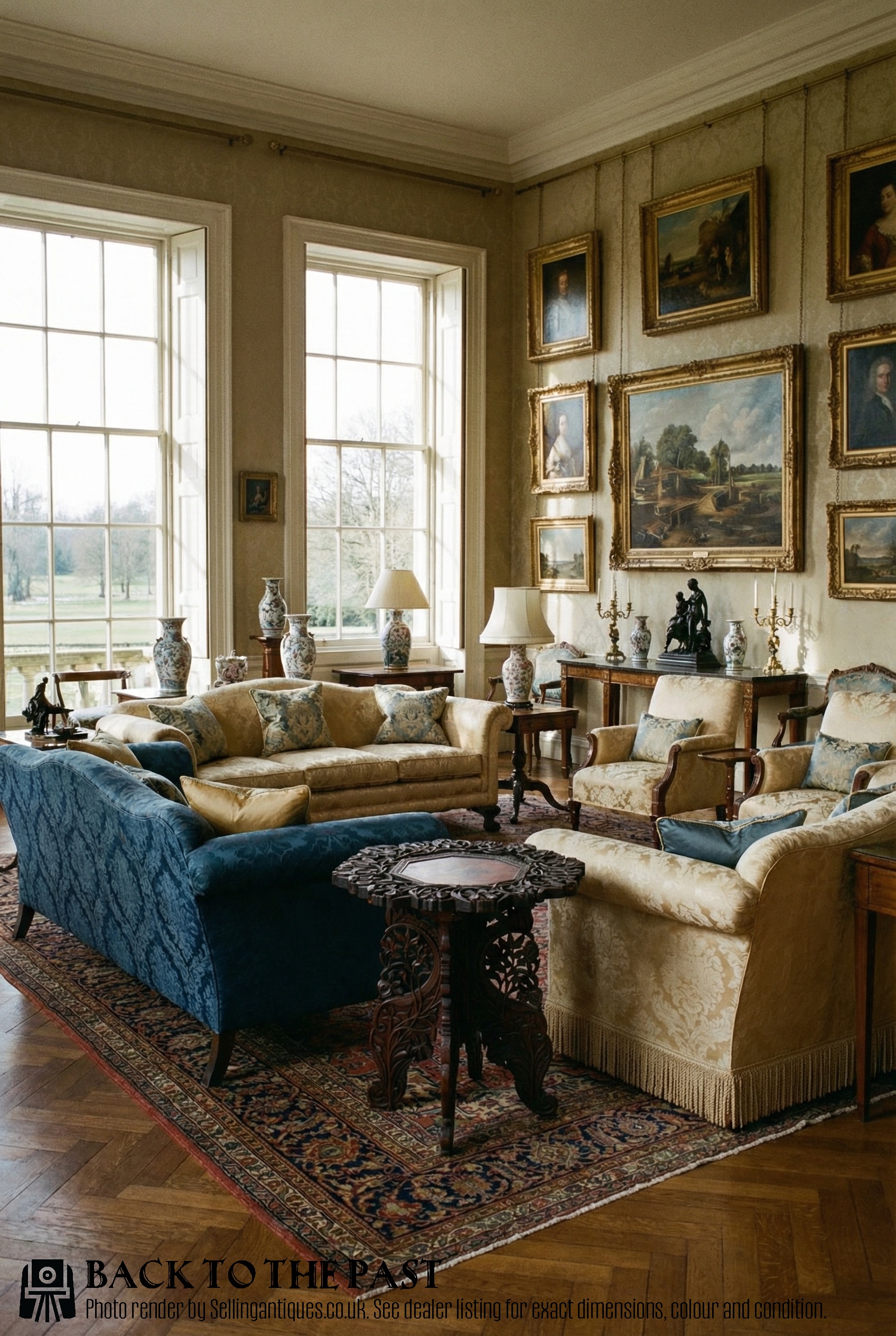
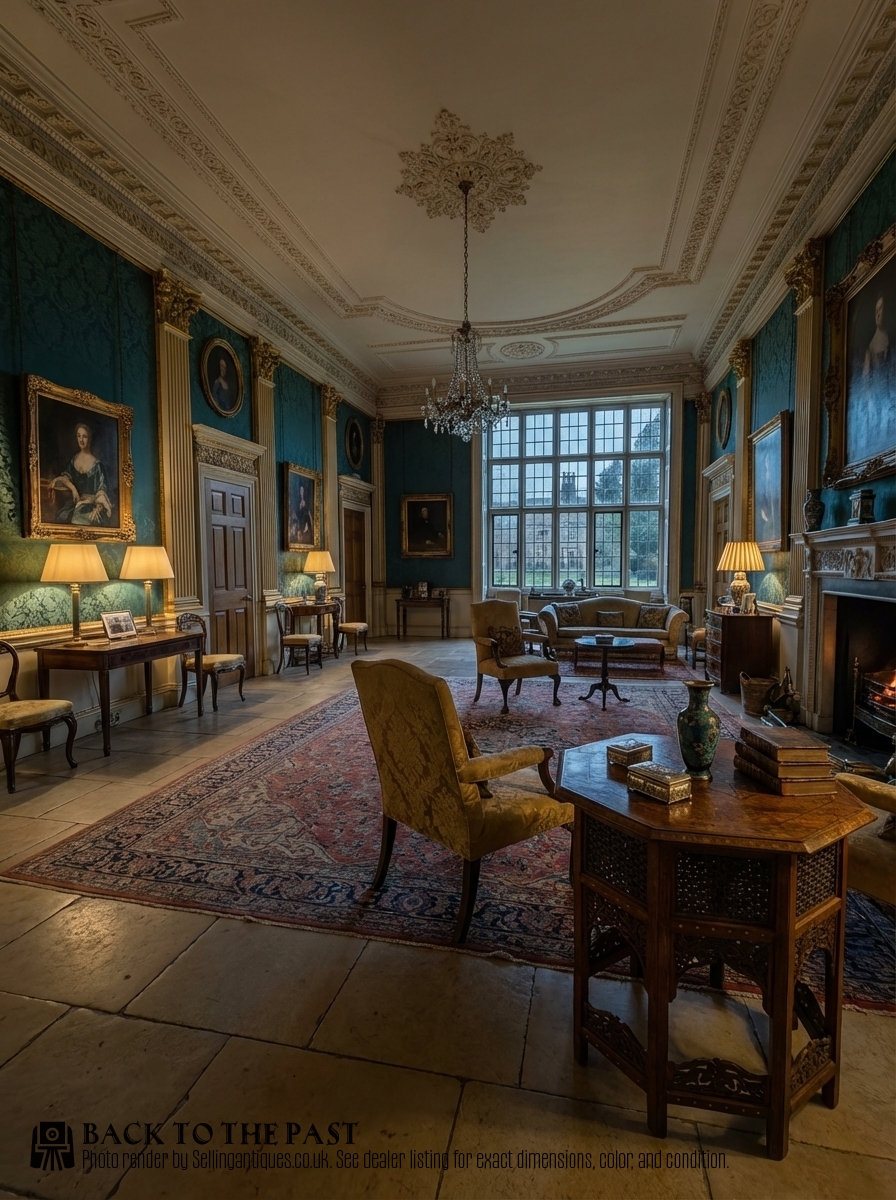
An anglo indian folding table represents a portable piece of furniture designed with a removable or hinged base for easy storage and transport. These items primarily appear as occasional, side, or coffee tables, frequently showcasing an octagonal top supported by a collapsible lattice frame.
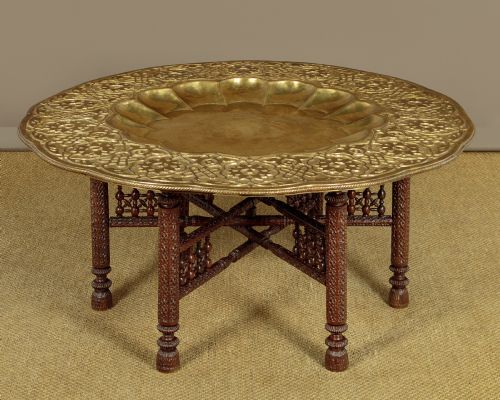
The surviving pieces span the late nineteenth century through to the early twentieth century, originating from regions such as Hoshiarpur, Kashmir, and Burma. Buyers will regularly encounter variations that incorporate tray tops, brass inlay, or deeply carved teak and padauk structures.

Materials and Technique
Cabinetmakers utilised dense timbers including teak, padauk, sandalwood, and assorted hardwoods as the foundational structure for these portable surfaces. These woods provided the necessary durability and stability for intricate surface carving without warping.
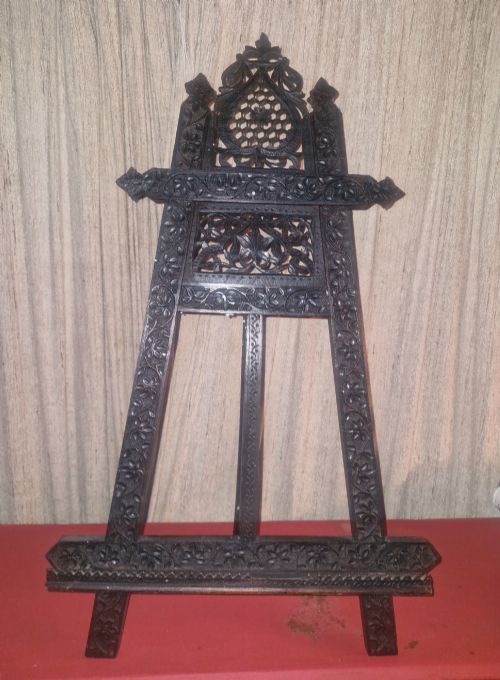
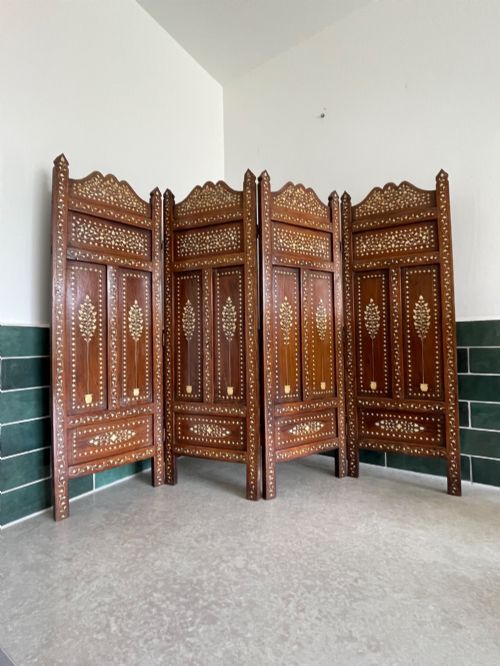
Artisans applied decorative detailing through intricate chip carving, pierced openwork, and contrasting inlays of brass, bone, mother-of-pearl, and copper. The supporting bases were engineered with complex hinged joints that allowed the rigid frames to fold flat.
Anglo Indian Folding Table Retail Price Guide 2026
Typical asking prices for anglo indian folding table among the pieces listed under this phrase on Sellingantiques today, from the lower quarter to the upper quarter. They describe what is for sale here now, not the wider market.
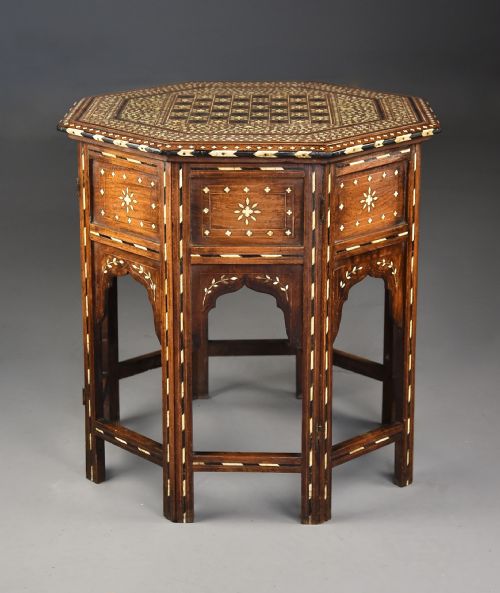
Several folding tables hide clever chess boards within their intricate bone-inlaid surfaces for impromptu matches on campaign.
Assessing Craftsmanship
Quality differentiates itself through the precision and depth of the hand carving, where superior examples exhibit crisp, sharp details rather than shallow or softened edges. The intricacy of the inlay work, particularly the tight integration of bone, brass, or mother-of-pearl into the hardwood surface, dictates the standard of the piece.
The mechanical integrity of the folding mechanism also separates basic utility items from finer commissions, with superior tables maintaining a rigid, level surface when opened despite the collapsible design.
The Anglo Indian Folding Table Glossary
- Hoshiarpur
- A city in Punjab known for producing distinctive inlaid woodwork using brass, wire, and bone set into dense timber. Pieces originating from this centre typically display dense floral and geometric patterns.
- Octagonal top
- A geometric tabletop shape with eight distinct sides frequently utilised on folding tables to facilitate symmetrical carving and inlay work. This layout allows craftsmen to repeat intricate motifs uniformly around the perimeter.
- Tray top
- A removable tabletop featuring a raised rim designed to secure items during transport and serving. These tops lift cleanly off the folding base for independent placement.
- Padauk
- A heavy tropical hardwood prized by colonial craftsmen for its rich red-brown hue and stability under intricate carving tools. It forms the durable structure of many high-end campaign furnishings.
- Bone inlay
- The technique of embedding thin, carved sections of animal bone into recesses cut within wooden surfaces to create striking contrasting patterns. This meticulous process often forms delicate scrolling foliage.
- Campaign furniture
- Portable furniture specifically engineered to be easily dismantled or folded for military officers or colonial travellers. These pieces prioritize robust folding mechanisms and compactness.
Anglo Indian Folding Table: Frequently Asked Questions
Are these tables sturdy enough for daily use?
These tables function well for holding lamps, books, or drinks provided the folding mechanism remains secure and tightly pinned. Their original design balanced portability with everyday domestic service in colonial households.
Placing them on even flooring prevents unnecessary strain on the hinged lattice bases. Heavy loads should be avoided on examples featuring delicate pierced carving or extensive bone inlay.
How do I clean an inlaid top?
Dust the carved surfaces and inlaid sections regularly using a soft, dry brush to prevent debris accumulating in the recesses. Moisture can loosen old bone or brass inlay, so liquids must be kept away from the timber.
Apply a microcrystalline wax sparingly to nourish the hardwood without clouding the contrasting inlay materials. Buff gently with a lint-free cloth to maintain a natural lustre.
How can I tell the age of a table?
Dating relies on examining the timber species, the style of the carving, and the construction methods used in the folding base. Pieces from the Victorian era often feature darker padauk woods and deeper relief carving compared to later twentieth-century iterations.
Hand-cut joinery and signs of ageing on the brass or bone elements provide further clues regarding the period of manufacture. Inscriptions or remnants of trade labels can occasionally confirm an exact timeline.