

19th Century Indian Table
A 19th century indian table brings dense colonial carving and exotic timber into a room, offering both surface utility and decorative presence.
19th Century Indian Table
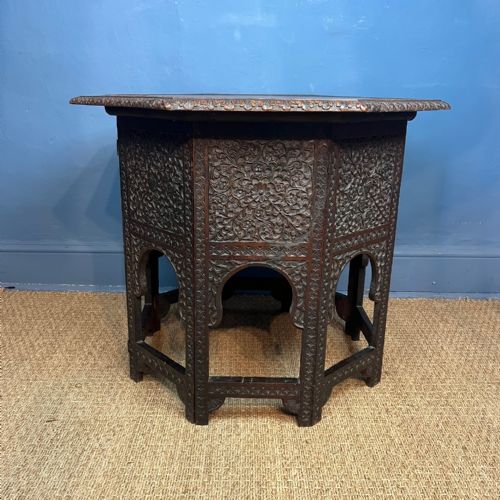
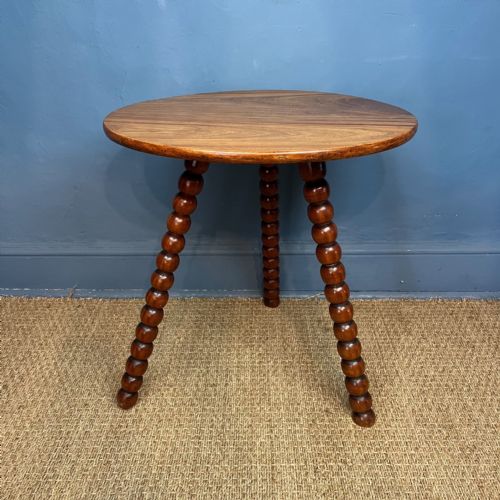
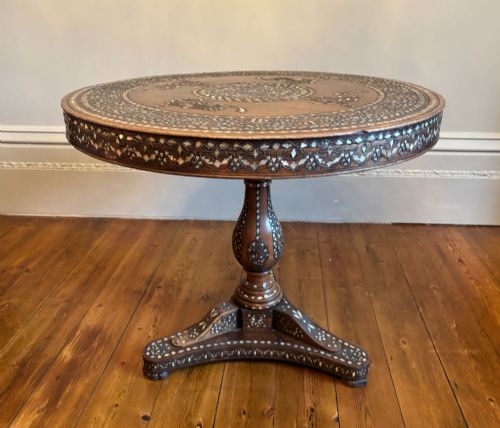
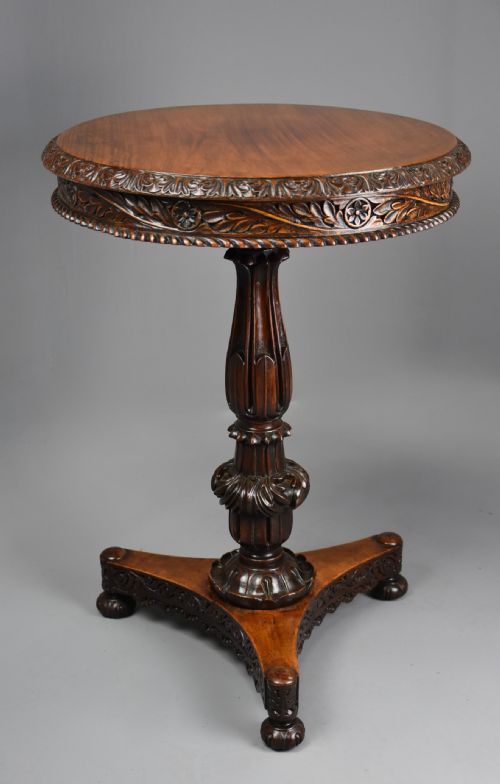
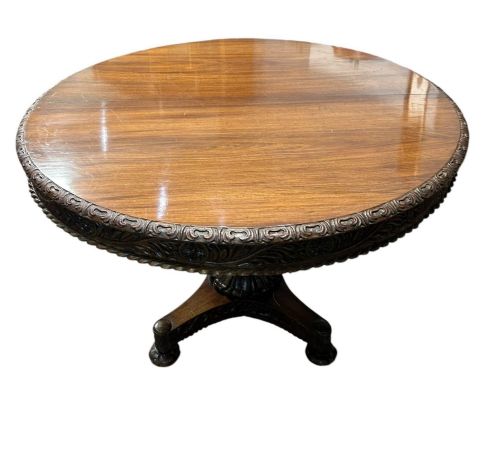
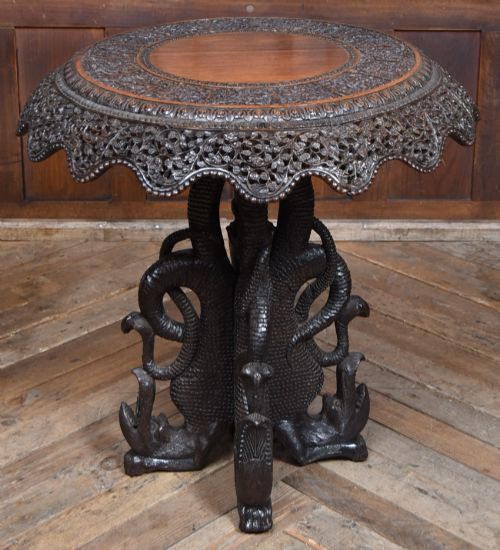
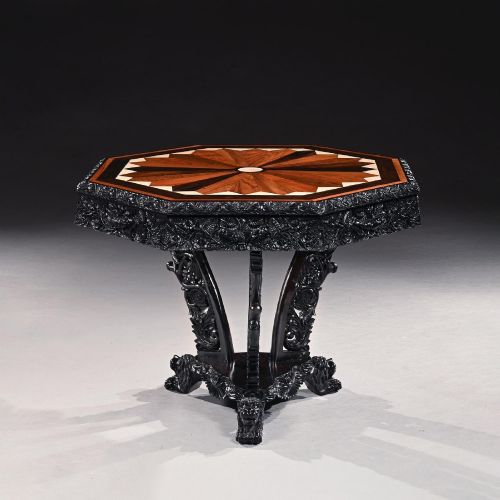
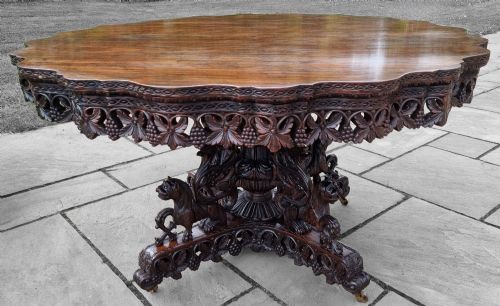
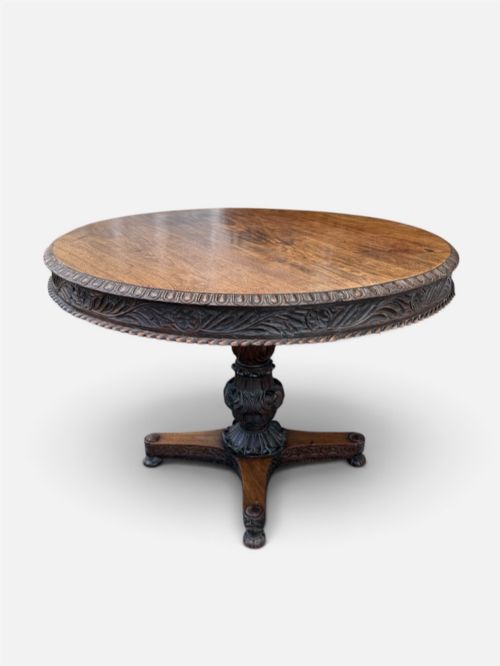
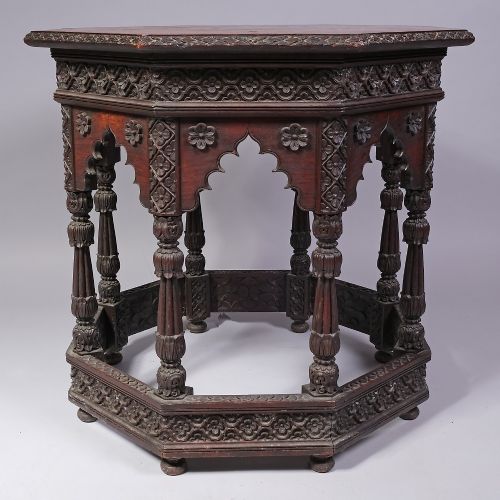
A 19th century indian table encompasses a variety of occasional, centre, and side tables produced during the colonial period for both export and domestic use. These pieces frequently display regional stylistic influences ranging from Anglo-Indian and Burmese to Ceylonese and Moorish Revival designs. Buyers encounter octagonal folding tables, tilt-top tripod tables, and heavy carved centre tables most frequently on this page.
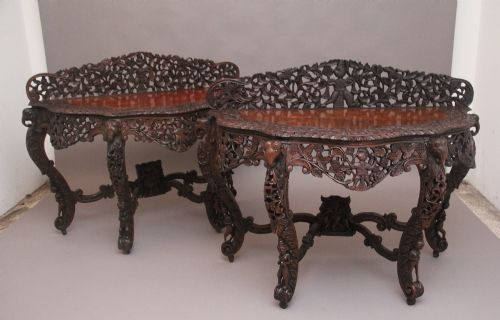
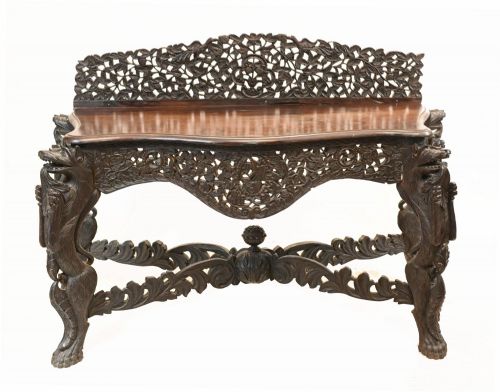
The forms adapt traditional Eastern furniture types to Victorian domestic habits, producing tea tables, work tables, and low coffee tables from opium beds or takhats. Carved animal motifs, particularly elephants and dragons, recur across the selection alongside geometric inlay work. Originating from workshops in regions such as Hoshiarpur and Bombay, the tables reflect the complex exchange of British utility and Indian craftsmanship.
How they were made
Craftsmen utilised dense tropical hardwoods including padouk, rosewood, teak, ebony, and calamander as the primary structural materials. These timbers allowed for deep, crisp relief carving that retained structural integrity across table tops and pedestals.
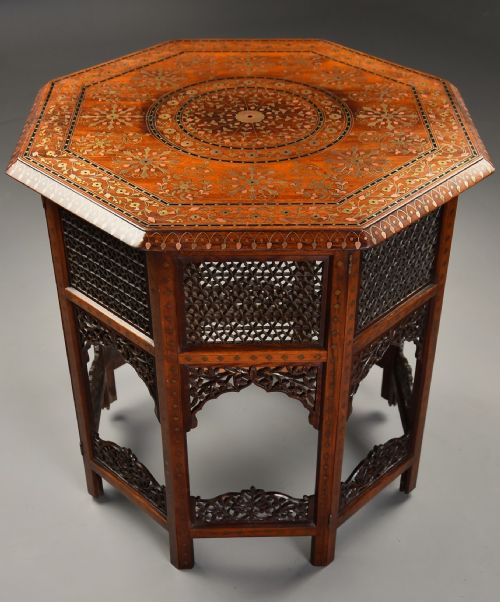
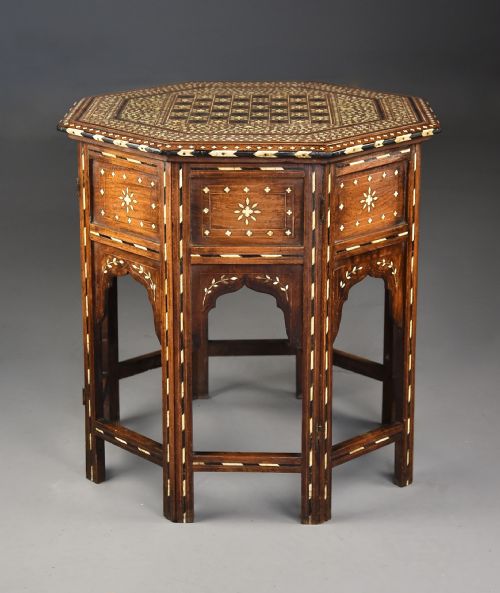
Surface decoration frequently incorporated contrasting materials such as brass wire, bone, and mother-of-pearl embedded into geometric or foliate patterns. Folding octagonal tables relied on intricate pierced fretwork hinges carved from a single piece of wood, demonstrating sophisticated joinery without metal fasteners.
19th Century Indian Table Retail Price Guide 2026
Typical asking prices for 19th century indian table among the pieces listed under this phrase on Sellingantiques today, from the lower quarter to the upper quarter. They describe what is for sale here now, not the wider market.
Listings demonstrate forms spanning occasional side tables, heavy padouk centre tables, folding Hoshiarpur pieces, and low takhat coffee tables.
What varies in quality
Depth and precision of the hand carving separate standard export pieces from exceptional exhibition-grade examples. Tables featuring fully articulated animal figures and dense, unbroken foliate patterns display superior artisan skill compared to shallowly incised surfaces.
The selection and stability of the timber grain also dictate the standing of a piece, with heavy, figured padouk or contrasting calamander woods commanding greater regard. Completeness of delicate inlay work, such as intricate brass or bone sections remaining flush with the hardwood ground, defines the highest tier.
The 19th Century Indian Table Glossary
- Anglo-Indian
- Furniture made in India during the British colonial period, combining traditional local craftsmanship with European forms and room functions. These objects often blend British domestic utility with dense indigenous carving styles.
- Hoshiarpur
- A city in Punjab known for intricate woodwork where artisans specialised in inlaying brass, bone, and mother-of-pearl into shisham or other hardwoods. Tables from this region typically feature folding octagonal structures and dense geometric patterns.
- Padouk
- A heavy, durable tropical hardwood native to Southeast Asia and India, prized for its reddish-brown colour and stability under deep carving. It was extensively utilised for nineteenth-century centre tables and partners desks.
- Teapoy
- A small occasional table designed for holding tea equipment, often incorporating compartmentalised interiors or hinged tops. The form evolved during the nineteenth century to suit colonial drawing rooms.
- Takhat
- A low, heavy wooden platform or couch used in Indian domestic spaces, frequently adapted in the antique market as a low coffee table. These pieces showcase substantial hardwood framing and understated structural joinery.
19th Century Indian Table: Frequently Asked Questions
What is an octagonal Hoshiarpur table?
An octagonal Hoshiarpur table is a folding occasional piece originating from the Punjab region, characterised by intricate brass, bone, or mother-of-pearl inlay.
These tables utilise pierced wooden fretwork panels that collapse flat for transport, reflecting the portable nature of much nineteenth-century campaign and colonial furniture.
How were elephant tables used?
Elephant tables served as decorative occasional or side surfaces, featuring carved elephant heads and trunks forming the structural legs or supports.
They were popular within Victorian households seeking exotic interior accents, combining functional surface space with whimsical regional carving traditions.
How do I distinguish Ceylonese ebony tables?
Ceylonese ebony tables originate from nineteenth-century Sri Lanka and are distinguished by the dense use of heavy, dark ebony combined with contrasting specimen woods like calamander.
They frequently display crisp, low-relief botanical carving characteristic of workshops operating around Galle and other southern districts.