


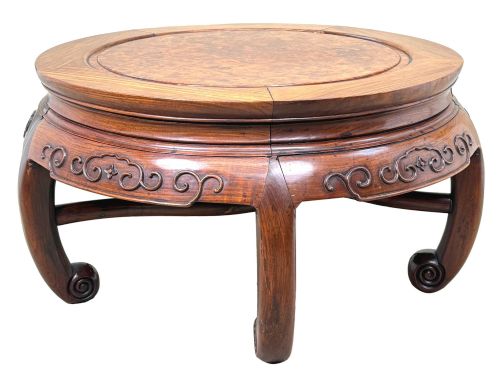
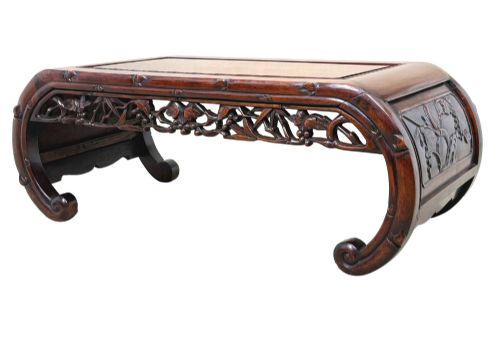
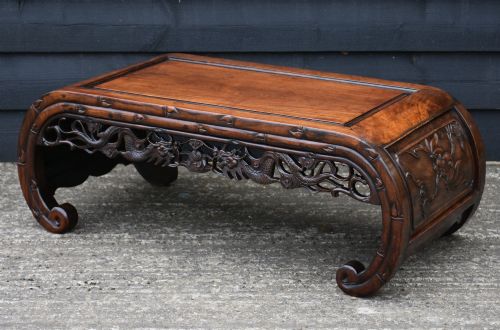
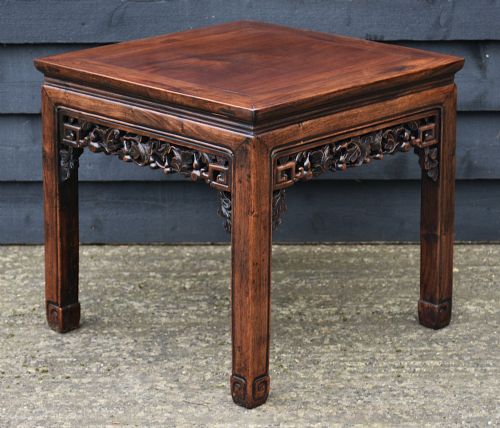

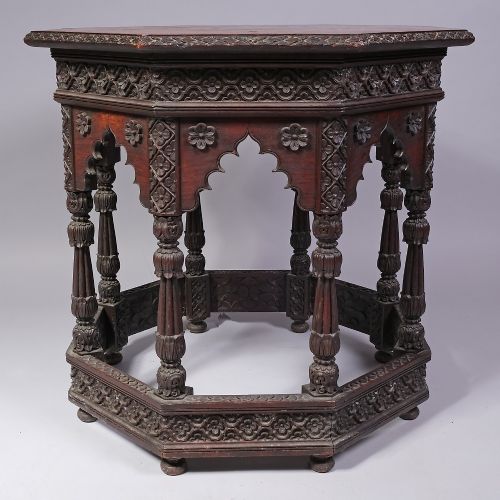
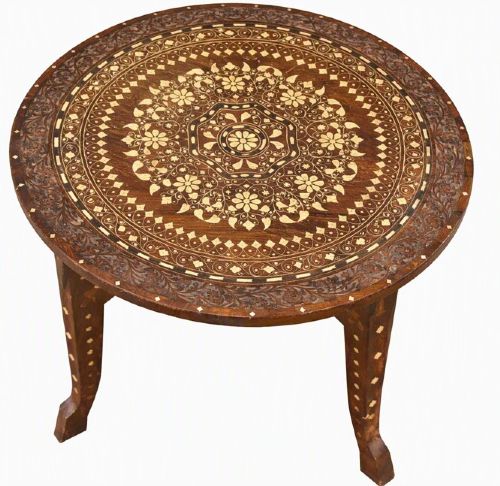
Carved Hardwood Coffee Table
These carved hardwood coffee tables bring dense regional detail and solid timber construction into modern rooms, drawing on centuries of global cabinet-making traditions.
Carved Hardwood Coffee Table
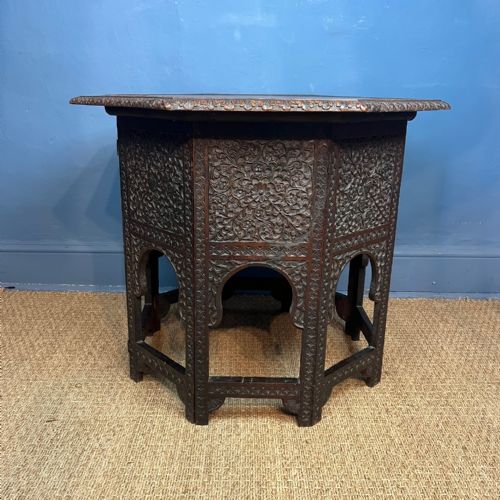
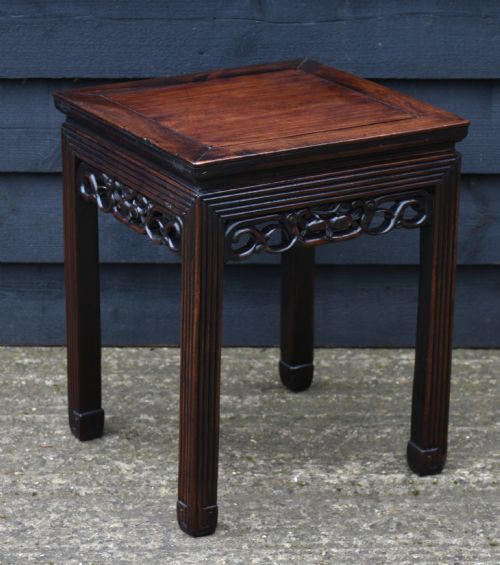
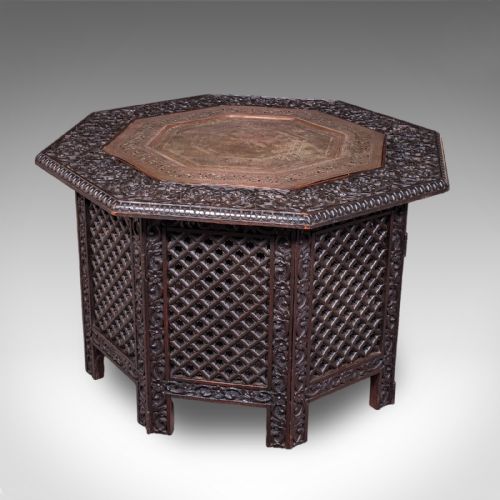
A carved hardwood coffee table combines low proportions with heavily ornamented timber surfaces, frequently drawing on regional traditions from China, India, and the Middle East. When buyers search this phrase, they encounter low tables, opium tables, and occasional furniture adapted from earlier domestic forms.
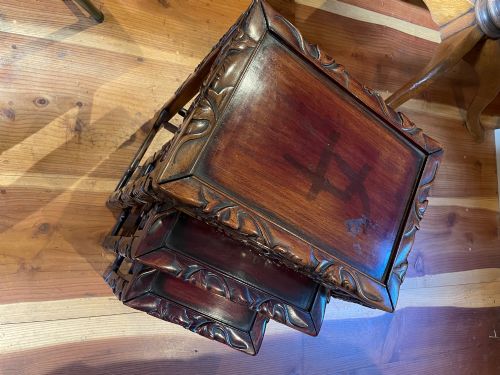
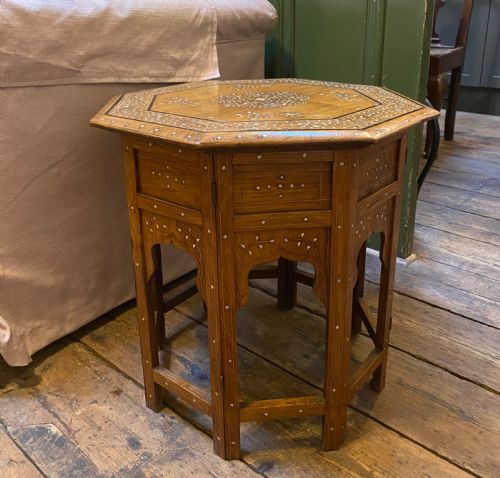
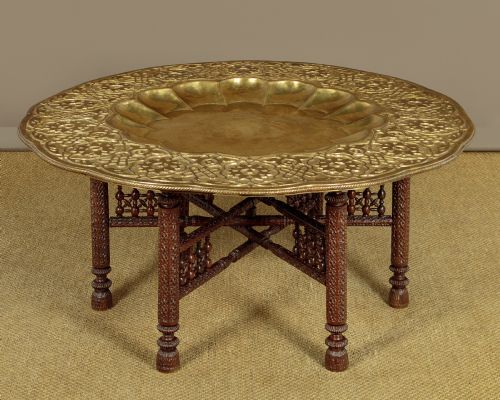
The versions most commonly met on this page date from the nineteenth and early twentieth centuries, spanning Victorian, Qing Dynasty, and Anglo-Indian colonial styles. These low surfaces include octagonal occasional tables, folding campaign tea tables, and low reception furniture designed for practical utility and ornate display.
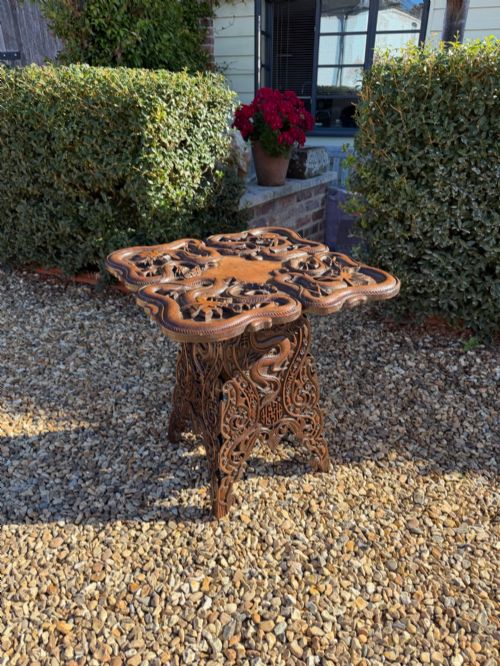
Makers utilised dense timbers such as teak, rosewood, padouk, and general oriental hardwoods to withstand intricate chisel work. Structural forms range from simple rectangular low tables to figural stands carved as elephants, camels, and dragons.
How they were made
Craftsmen built these tables using dense tropical hardwoods like rosewood, padouk, and teak, which allowed for deep, crisp carving without splintering the timber. These heavy woods were joined using traditional framing techniques and finished to show a natural grain or a deep patina.
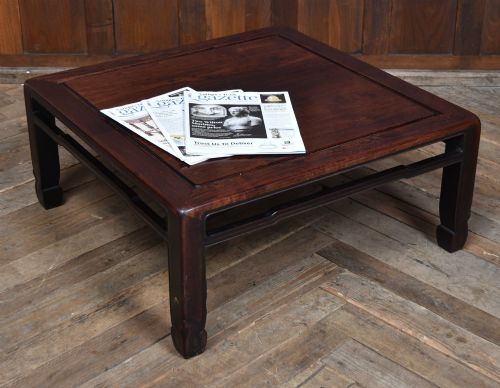
Surface ornamentation frequently incorporates contrasting materials inlaid directly into the wood, including bone, brass, and copper details. Some pieces feature marble inserts or intricate pierced scroll ends characteristic of Qing Dynasty kang tables and Moorish geometric designs.
Carved Hardwood Coffee Table Retail Price Guide 2026
Typical asking prices for carved hardwood coffee table among the pieces listed under this phrase on Sellingantiques today, from the lower quarter to the upper quarter. They describe what is for sale here now, not the wider market.
Listings feature eighteenth to twentieth-century periods, including Victorian, Edwardian, and Qing Dynasty eras.
What varies in quality
The integrity of the construction and the retention of original brass or bone inlay determine the grade of a piece. Examples retaining a good timber patina and solid structural joinery without excessive replacement parts stand at the upper end of the range.
Liberty & Co·Liberty of London
The Carved Hardwood Coffee Table Glossary
- Padouk
- A heavy, durable tropical hardwood with a reddish hue, often utilised in fine Chinese furniture for its stability and rich grain.
- Kang table
- A low domestic table originating in China, traditionally used on a heated platform for dining, resting, or serving tea.
- Anglo-Indian
- A descriptive term for furniture made in India during the British colonial period, combining local carving skills with European furniture forms.
- Huali
- A traditional Chinese term for fragrant tropical hardwoods, frequently associated with high-status Qing Dynasty seating and low tables.
- Benares
- A centre of metalworking in India known for producing engraved brass trays used as table tops on folding wooden stands.
Carved Hardwood Coffee Table: Frequently Asked Questions
How were opium tables used?
Opium tables were built low to the ground so that individuals could sit or recline nearby while partaking in social customs or drinking tea.
Over time, these low timber surfaces transitioned into domestic coffee tables suited for contemporary living rooms.
What is an Anglo-Indian table?
These pieces represent nineteenth-century cabinet-making produced in India for British residents and export markets, blending local motifs with European forms.
They frequently feature dense foliage carvings, animal figures such as elephants, or brass inlay work.
How do I identify Chinese Qing Dynasty tables?
Qing Dynasty tables often display scroll ends, dragon motifs, or framing executed in dense hardwoods like padouk and rosewood.
They rely on traditional joinery and low proportions designed for reception rooms and scholar's studios.
Are these tables sturdy enough for daily use?
Built from dense tropical timbers such as teak and rosewood, these tables offer robust structural integrity suitable for holding everyday items.
Their heavy construction handles regular placement of books and cups while maintaining their carved surfaces.