



Carved Elephant Table
When you search for a carved elephant table, you enter a world of nineteenth and early twentieth century colonial craftsmanship shaped by Indian, Burmese, and Ceylonese workshops.

Carved Elephant Table
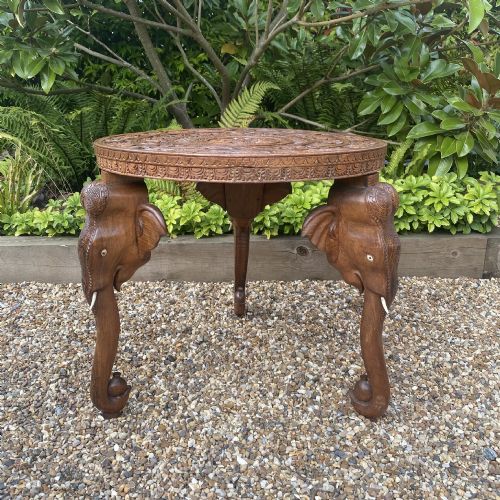
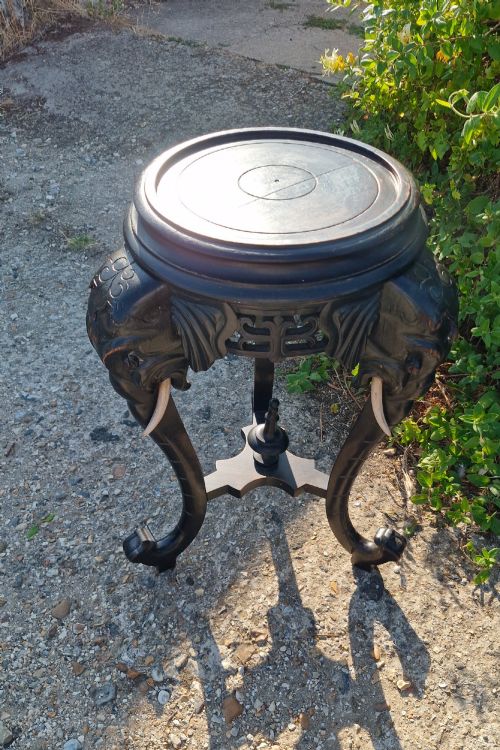
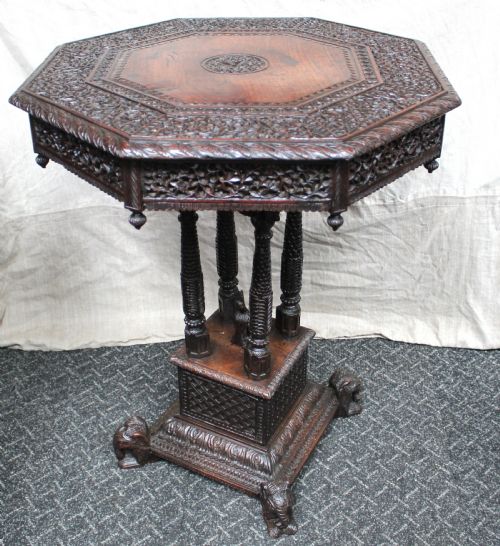
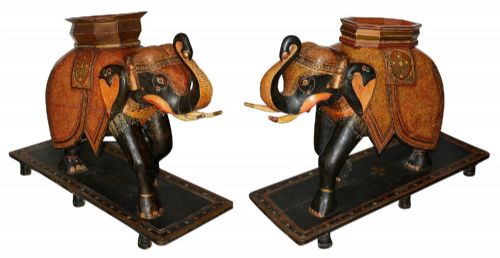
A carved elephant table takes several forms across the inventory, ranging from compact occasional and side tables to larger coffee tables and centre tables supported by elephant legs or heads.
The pieces belong principally to the Victorian and Edwardian eras, spanning from the late nineteenth century into the 1920s, with Anglo-Indian and Anglo-Burmese styles dominating the selection.
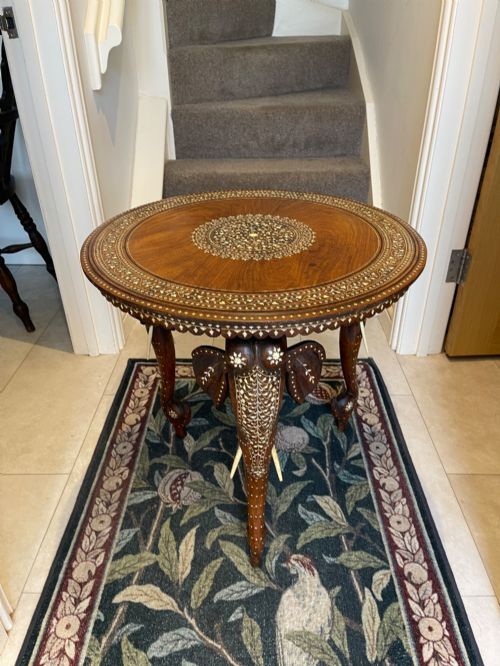
Many originate from specific regional centres such as Bombay or Hoshiarpur, featuring circular, octagonal, or rectangular tops resting upon sculpted wooden or ivory-toned tusks.
How they were made
Artisans utilised dense timbers including teak, rosewood, padouk, ebony, and hardwood to carve the intricate figures and structural supports.
Detailing often incorporated delicate bone inlay or painted wooden elements to accentuate the tusks, alongside intricate surface piercing and relief carving across the tops.
Carved Elephant Table Retail Price Guide 2026
Typical asking prices for carved elephant table among the pieces listed under this phrase on Sellingantiques today, from the lower quarter to the upper quarter. They describe what is for sale here now, not the wider market.
Listings span from the 1870s through the 1920s, featuring teak, rosewood, padouk, and bone inlay across Anglo-Indian and Burmese forms.
What varies in quality
The depth and crispness of the chisel work define the artistry, with finer examples displaying realistic anatomical detailing in the elephants' heads and feet rather than stiff abstraction.
The selection of timber matters greatly, as dense, richly grained solid rosewood or teak holds intricate relief carving far better than softer painted woods.
The Carved Elephant Table Glossary
- Anglo-Indian
- A style describing furniture made in India during the British colonial period, combining traditional local motifs with European room forms. These pieces often feature dense surface carving and exotic hardwoods.
- Hoshiarpur
- A region in Punjab renowned for intricate woodwork. Furniture from here typically incorporates elaborate geometric bone or wire inlay.
- Padouk
- A heavy, durable tropical timber with a reddish hue favoured by Burmese and Indian makers. It provides a stable base for deep relief carving.
- Specimen wood
- Furniture constructed from a variety of contrasting timbers arranged to display natural colours and grains. This technique appears on specific occasional tables in the archive.
Carved Elephant Table: Frequently Asked Questions
Where were these tables made?
The majority originate from South Asia and Southeast Asia during the nineteenth and early twentieth centuries, specifically through Anglo-Indian and Burmese workshops catering to colonial demand.
Craftsmen in regional centres like Bombay and Hoshiarpur produced these works for both local British residents and export to European markets.
What wood are they made from?
Makers relied on durable tropical hardwoods suited to intricate chisel work. Teak, rosewood, and padouk appear frequently across the inventory.
Selected examples also utilise ebony or mixed specimen woods to create contrast across the tabletop and support structure.
How do I date an elephant table?
Dating relies on combining stylistic evidence with construction methods and timber choices. Pieces from the 1880s and 1890s often exhibit deep, dense carving in solid rosewood or teak.
Later examples stretching into the 1920s sometimes shift towards cleaner Art Deco lines or simpler occasional table formats while retaining the animal motifs.
How do I style one at home?
These tables function well as striking occasional or side pieces in a living space, offering a distinct focal point through their carved supports.
Their varied top shapes, from circular to octagonal, allow them to sit comfortably beside contemporary seating or act as stands for lamps and decorative objects.