



Antique Indian Accent Table
An antique Indian accent table brings intricate woodwork, rich timbers, and historical craftsmanship straight into a room.
Antique Indian Accent Table
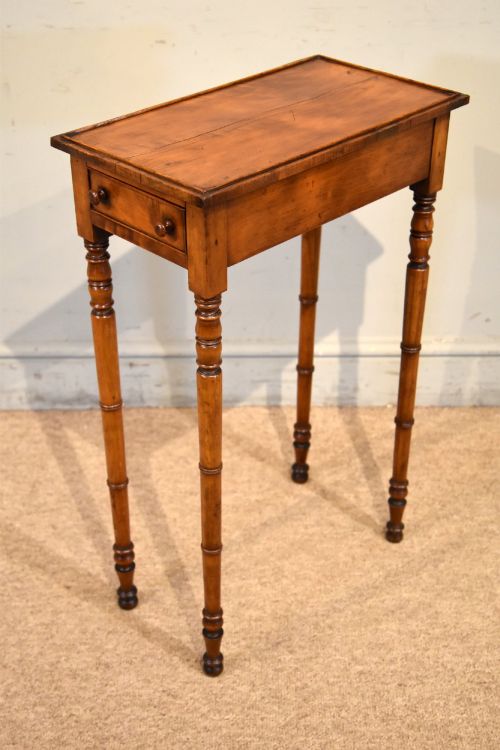
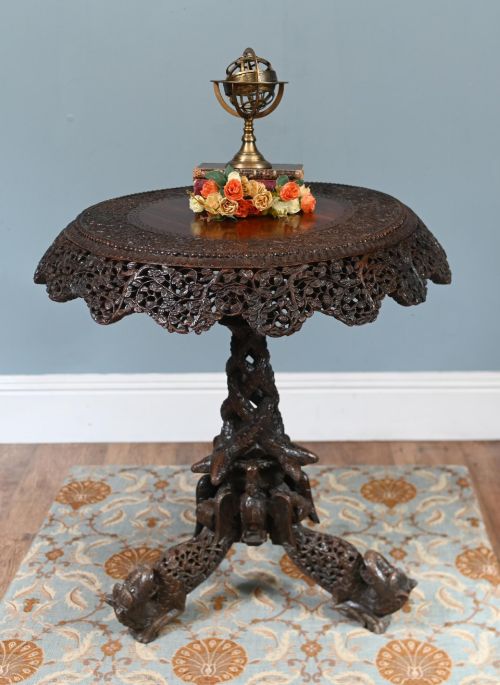
An antique Indian accent table encompasses various functional low pieces, side surfaces, and occasional tables created during the nineteenth and early twentieth centuries. These works reflect both indigenous workshops and colonial tastes, spanning Anglo-Indian, Kashmiri, and Burmese designs.
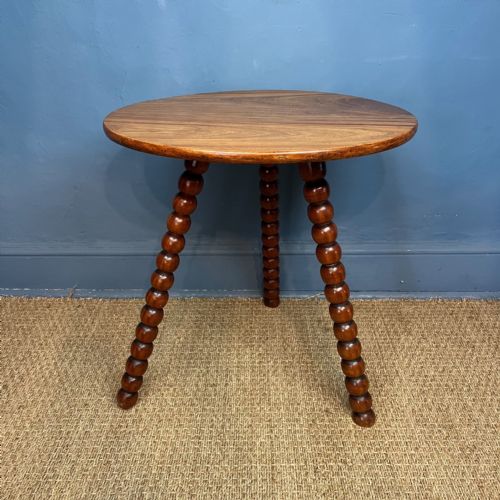
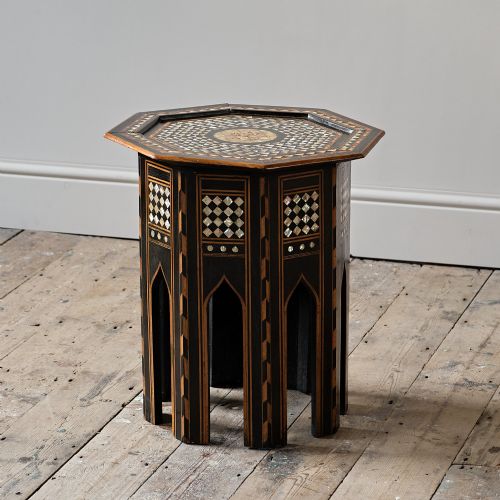
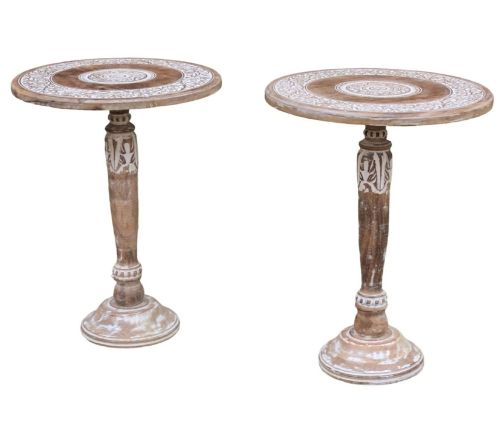
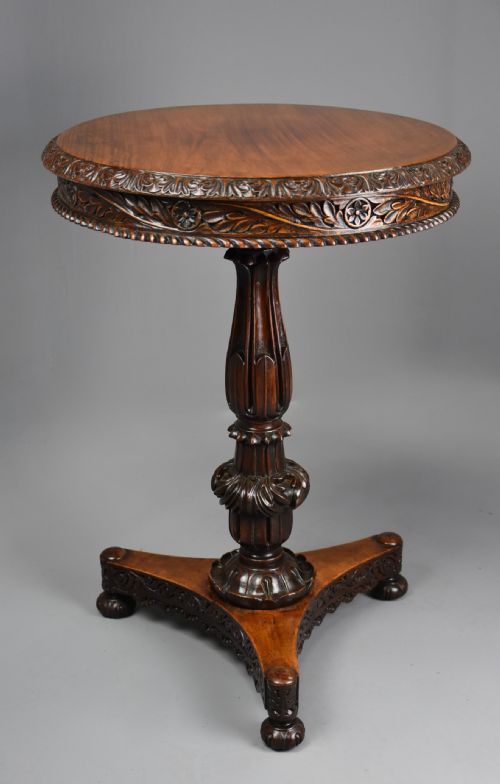
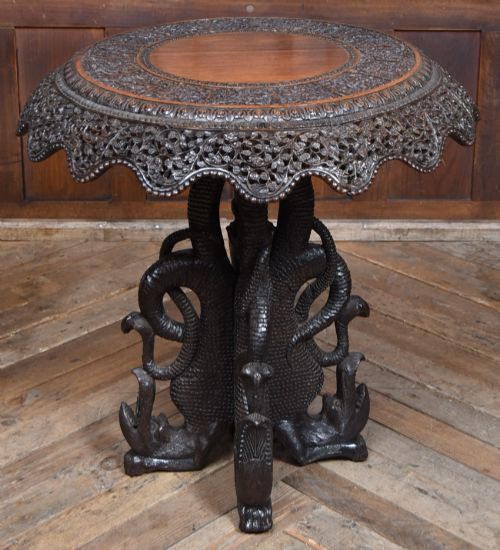
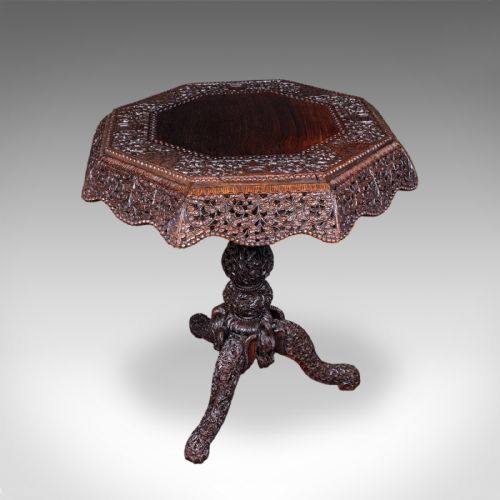
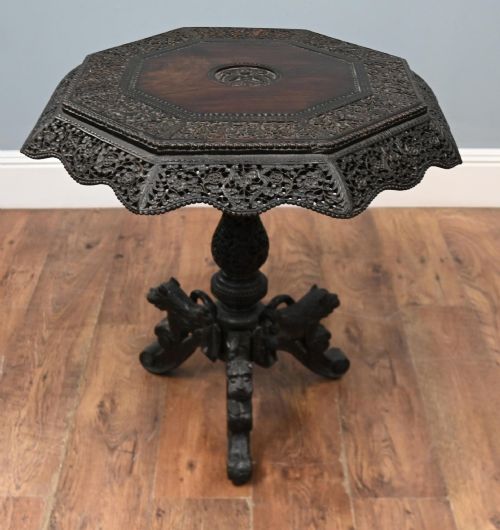
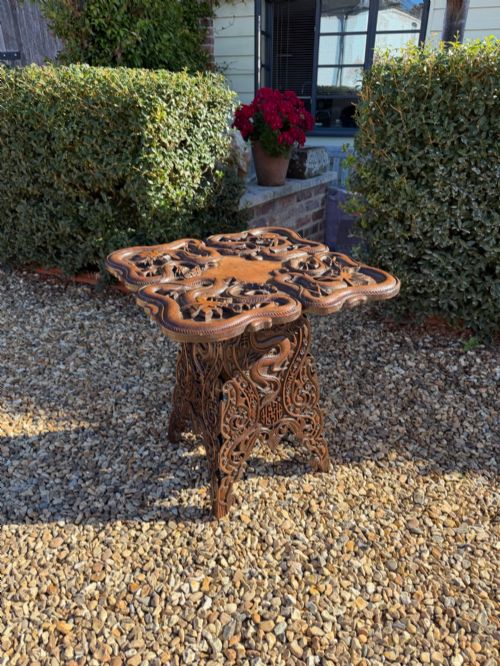
The form appears most frequently as octagonal, square, or circular occasional tables, alongside folding stands, pedestal designs, and nesting sets. Surfaces often feature heavy carving, intricate geometric proportions, or figural motifs such as elephants and dragons.
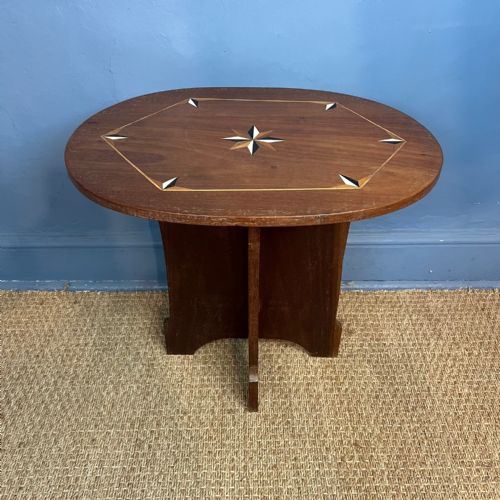
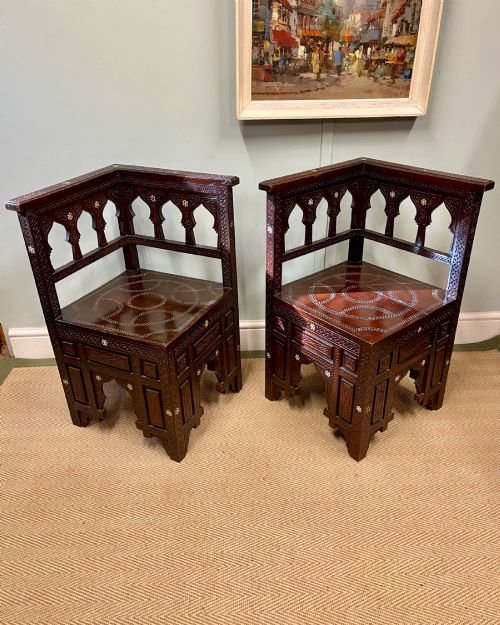
Makers produced these tables from regional timbers like teak, rosewood, and padauk, frequently embellishing the structures with contrasting inlay work. They served European and domestic households as functional furnishings, tea tables, and display stands.
Materials and construction methods
Artisans built these tables using dense hardwoods including teak, rosewood, padauk, and ebony, which provided a stable foundation for deep carving. These timbers were worked by hand, utilising traditional joinery and folding mechanisms suited to domestic mobility.
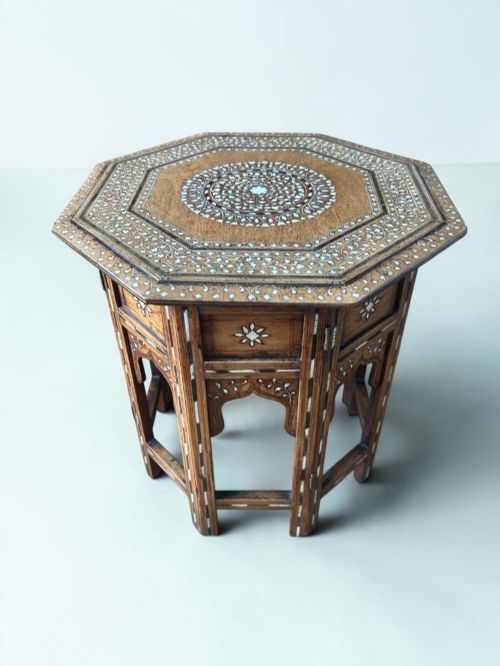
Decoration relied heavily on surface embellishment, notably intricate brass, bone, or mother-of-pearl inlay set flush into the timber. Other workshops employed polychrome lacquer, gilt paint, or raised carving depicting leaf motifs and animal figures.
Antique Indian Accent Table Retail Price Guide 2026
Typical asking prices for indian accent table among the pieces listed under this phrase on Sellingantiques today, from the lower quarter to the upper quarter. They describe what is for sale here now, not the wider market.
Common regional styles on this page include Hoshiarpur, Kashmiri, Burmese, and broader Anglo-Indian colonial designs.
Distinctions in quality and execution
Quality rests in the crispness and depth of the hand carving, where superior examples display sharp undercut details without splintering the dense grain of the padauk or rosewood. Inferior pieces often show shallow, hasty tool marks and simplified floral patterns.
The precision of the inlay work distinguishes finer specimens, requiring exact placement of brass wire, bone, or mother-of-pearl within the wood matrix. Gaps, missing inlay pieces, or crude adhesive repairs indicate lower craftsmanship during manufacture or subsequent restoration.
The Antique Indian Accent Table Glossary
- Anglo-Indian
- A descriptive term for furniture made in India during the British colonial period, combining local cabinet-making traditions with European forms. These objects frequently utilise native hardwoods and dense decorative carving.
- Hoshiarpur
- A town in Punjab known for intricate woodwork and inlay, particularly tables featuring dense geometric patterns in brass, bone, or shisham wood. Pieces from this region are easily recognised by their overall surface decoration.
- Padauk
- A heavy, durable tropical hardwood with a reddish hue, often utilised in nineteenth-century Anglo-Indian furniture. It accepts deep carving exceptionally well.
- Octagonal
- A geometric eight-sided shape common in the top surfaces of Hoshiarpur and regional Indian accent tables. This configuration allows complex borders and symmetrical inlay layouts.
- Marquetry
- The art of applying pieces of veneer to a structure to form decorative patterns and pictures. Specimen wood versions combine multiple contrasting timbers.
Antique Indian Accent Table: Frequently Asked Questions
How do I clean an inlaid wooden table?
Dust gently with a soft, dry cloth to prevent debris from settling into the intricate brass or bone recesses. Avoid liquid cleaners and harsh polishes that can dislodge delicate inlay work.
Apply a micro-crystalline wax sparingly if the timber appears dry, buffing it off completely to maintain the natural sheen of the rosewood or teak.
What rooms suit an antique accent table?
These compact surfaces fit comfortably beside seating in living rooms, serving as practical spots for lamps or small objects. Their detailed carving also allows them to function as standalone decorative focal points in hallways.
Matching the scale of the table to the surrounding furniture ensures the dense ornamentation does not overwhelm a smaller interior space.
Are folding tables sturdy enough for daily use?
Many Anglo-Indian tables utilise clever folding lattice bases designed for portability and easy storage. While structurally sound when fully locked into position, they benefit from careful handling rather than heavy weight loads.
Checking the hinge pins and wooden pivots periodically ensures the folding mechanism operates smoothly without straining the surrounding joints.
How can I identify Kashmiri painted tables?
Kashmiri tables typically feature smooth wooden surfaces decorated with painted floral or botanical motifs rather than deep carved relief. Artisans often utilised bright colours such as green, gold, and red lacquer over the wood.
Examining the paint layer under magnification helps determine whether the finish shows expected age-related crazing or later overpainting.