





Anglo Raj Side Table
An anglo raj side table brings intricate colonial craftsmanship into a room, offering rich woods and detailed bone inlay.
Anglo Raj Side Table
An anglo raj side table represents a distinct fusion of British colonial demand and traditional Indian woodworking, spanning the Victorian era through the early twentieth century. You will encounter various forms here, including occasional tables, coffee tables, and folding tables.
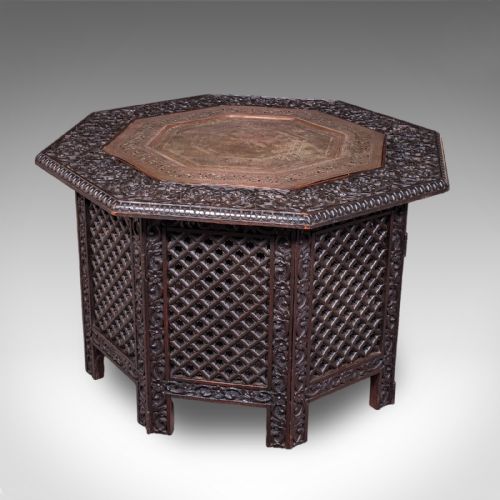
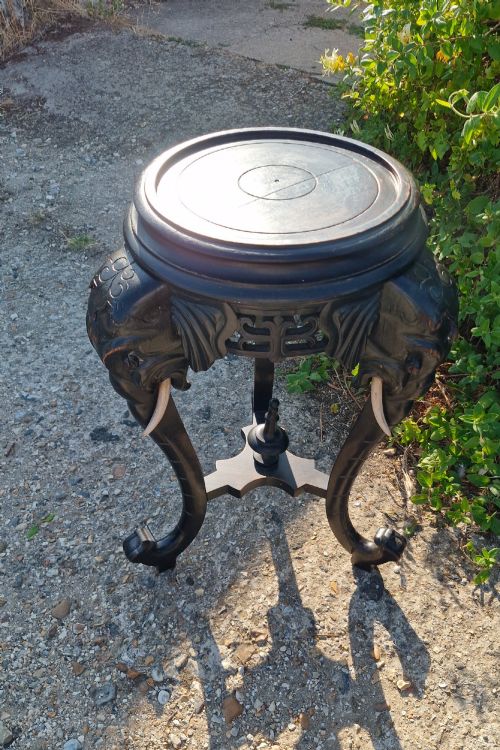
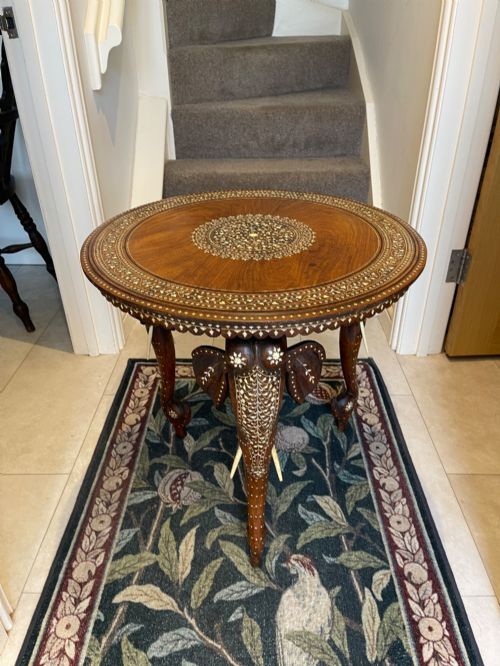
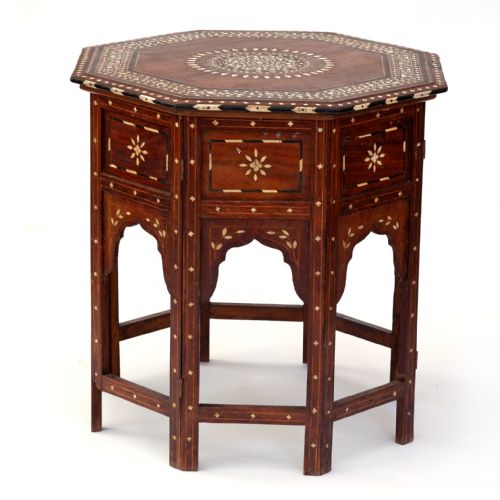
Many examples take the distinctive shape of an elephant table, featuring carved wooden tusks and supports, alongside traditional octagonal silhouettes. These pieces originate from regions such as Hoshiarpur and Kashmir, showcasing regional motifs.
The materials and construction reflect a blend of imported domestic needs and local artisan traditions, utilising native timbers enriched with complex surface decoration. These tables serve as practical small surfaces with a strong decorative presence.
How they were made
Makers constructed these tables using dense timbers like teak, rosewood, sheesham, and general hardwood, providing a stable foundation for intricate surface work. Artisans employed traditional joinery, including folding mechanisms that allowed the structures to collapse flat.
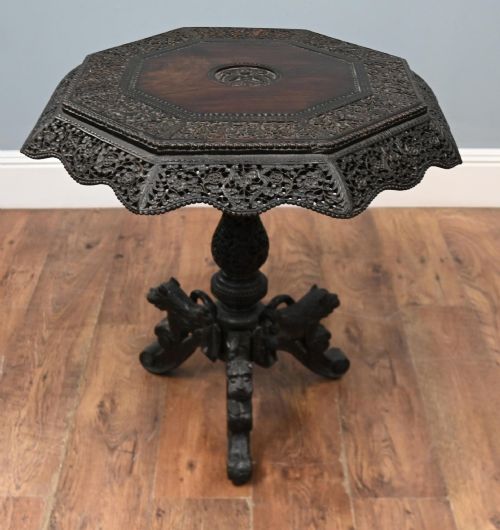
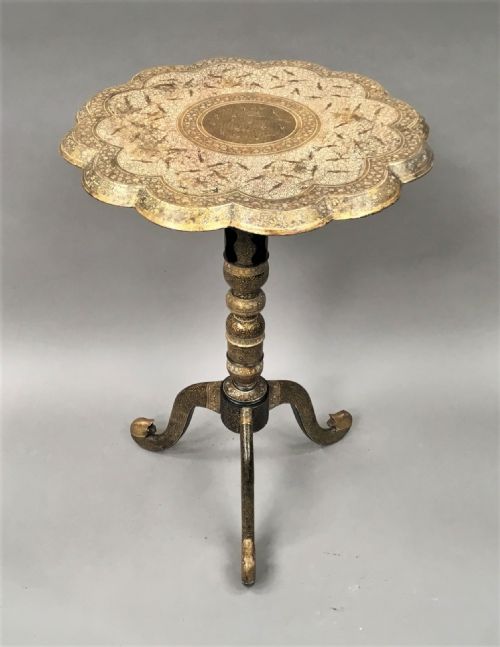
Surface ornamentation defines the group, featuring deep relief carving across the timber alongside delicate bone inlay and brass detailing. Certain examples display fine, detailed painted wood decoration rather than carving, particularly in pieces originating from Kashmir.
Anglo Raj Side Table Retail Price Guide 2026
Typical asking prices for anglo raj side table among the pieces listed under this phrase on Sellingantiques today, from the lower quarter to the upper quarter. They describe what is for sale here now, not the wider market.
Several tables feature hand-painted wooden tusks attached to the elephant supports.
What varies in quality
Quality rests upon the crispness of the carved details and the precision of the bone or brass inlay work. Pieces with deep, sharply defined relief and tightly fitted inlay elements stand apart from simpler, shallower carving.
The complexity of the form and the integrity of the painted or inlaid surfaces dictate the standing of an individual table. Finer examples maintain complete inlay patterns and steady structural joints across folding and fixed frames.
The Anglo Raj Side Table Glossary
- Bone inlay
- A decorative technique where small pieces of animal bone are cut and pressed into carved recesses in the wood to form geometric or floral patterns. This method creates a high-contrast visual effect against dark hardwood.
- Hoshiarpur
- A town in Punjab renowned for its specialised woodwork, particularly tables featuring dense bone and brass inlay work. Pieces from this centre often utilise shisham or teak.
- Sheesham
- A durable Indian hardwood commonly used for traditional furniture production. It provides a rich grain that accommodates intricate carving and inlay.
- Octagonal
- Having eight sides, a common geometry for the tops of these tables. This shape facilitates complex border patterns in inlay and carving.
Anglo Raj Side Table: Frequently Asked Questions
What is an anglo raj side table?
An anglo raj side table is a piece of furniture made in India during the British colonial period for export or use by British residents. They combine traditional Indian carving and inlay techniques with European furniture forms.
You will find forms ranging from octagonal coffee tables to folding occasional tables and figural elephant supports. The style reflects a distinct aesthetic exchange between British utility and Indian craftsmanship.
How do I date an anglo raj side table?
Dating these tables relies on examining the construction methods, materials, and stylistic markers recorded across the nineteenth and early twentieth centuries. Pieces associated with the late Victorian period often display deep relief carving and extensive inlay.
Later examples from the early twentieth century may show different folding mechanisms or simpler painted decoration. Comparing the specific wood types and inlay materials helps narrow down the production era.
Where were these tables made?
These tables were produced across various regions of the Indian subcontinent, with specific centres known for distinct decorative specialisms. Hoshiarpur in Punjab became particularly famous for its intricate bone and brass inlay work on hardwood.
Other examples originate from Kashmir, known for fine painted woodwork, and various North Indian workshops. Local artisan traditions heavily influenced the specific motifs found on tables from each location.
How do I care for a bone inlaid table?
Caring for an inlaid table requires maintaining stable environmental conditions to protect both the timber and the delicate bone or brass elements. Sudden changes in humidity can cause the wood to expand or contract, affecting the inlaid sections.
Dust the surface gently with a soft, dry cloth and avoid using harsh chemical polishes or excessive moisture. Periodic light conditioning of the hardwood helps preserve the finish without harming the inlay.