

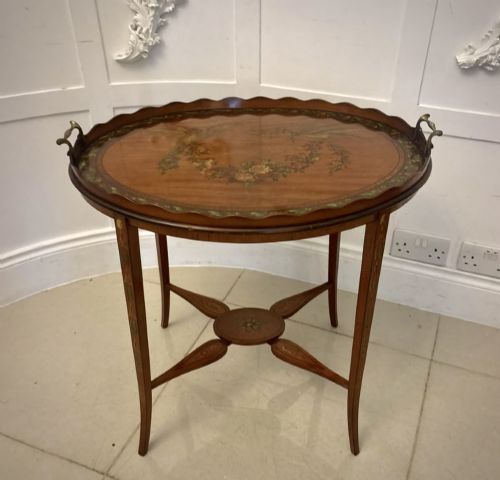
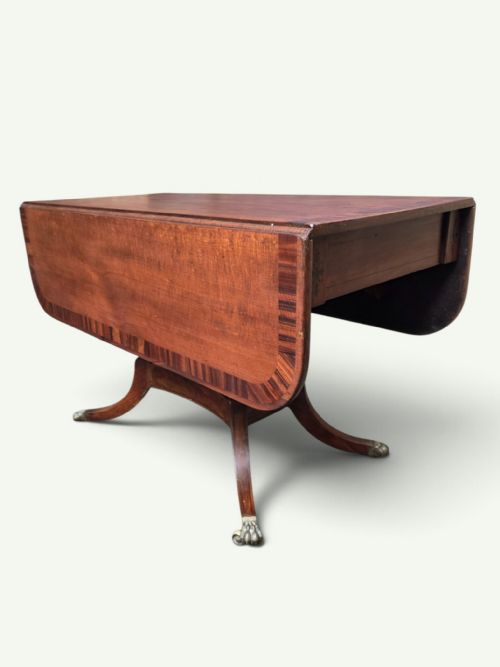

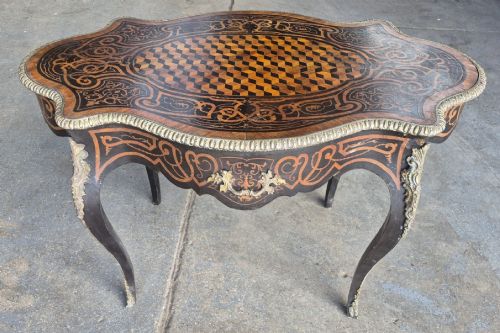
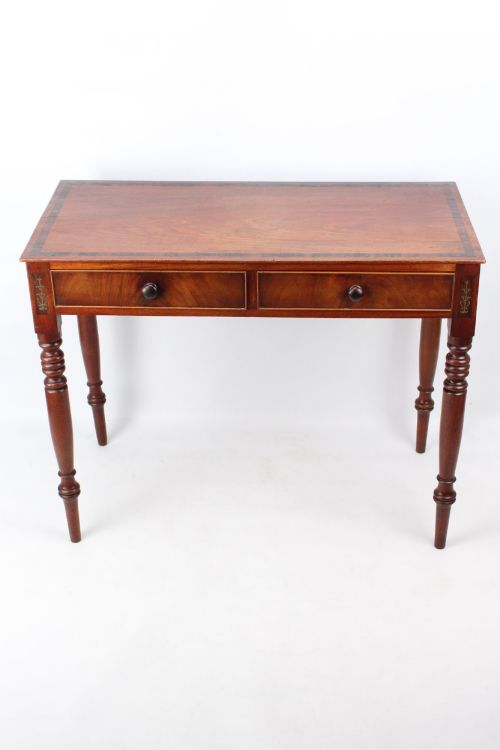
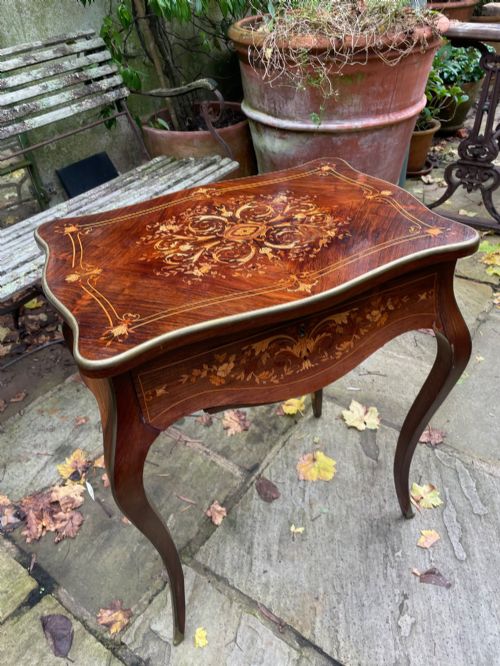
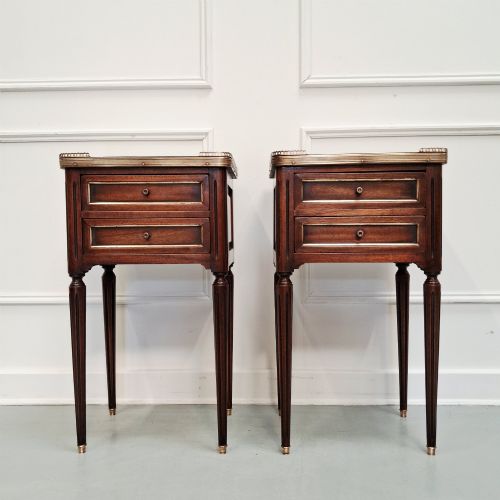
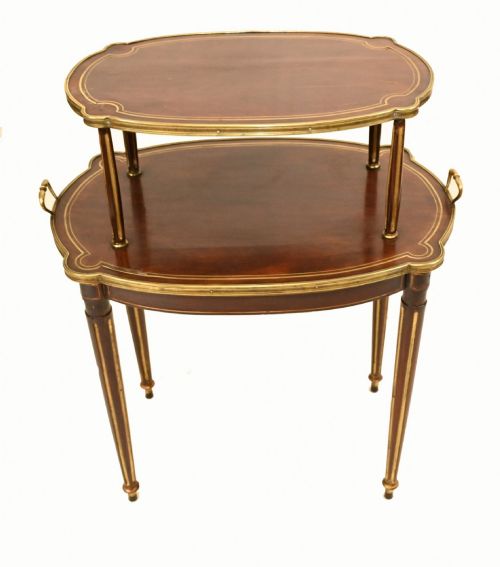
Brass Inlaid Side Table
A brass inlaid side table brings tactile warmth and refined linear detail to a room through contrasting metalwork set into rich timber.
Brass Inlaid Side Table
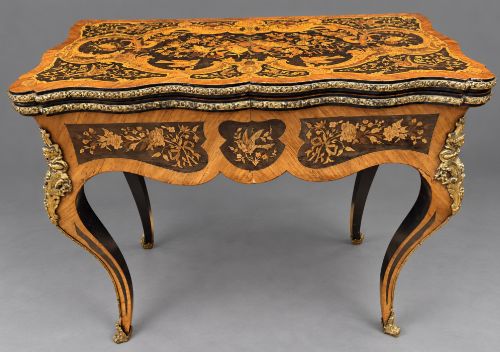
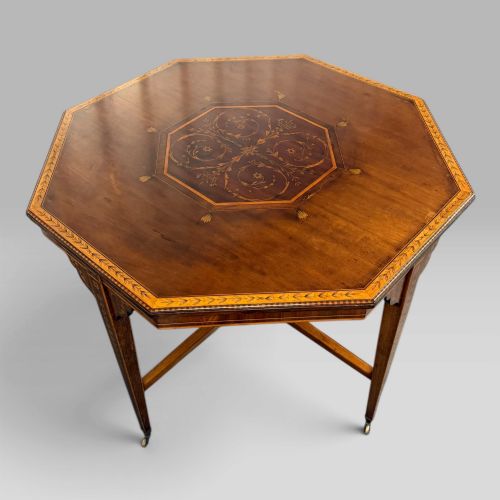
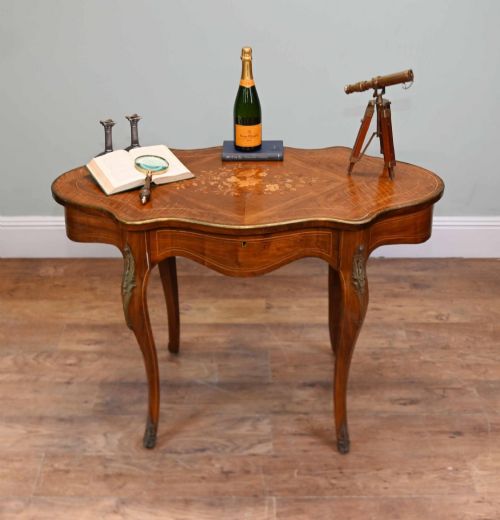
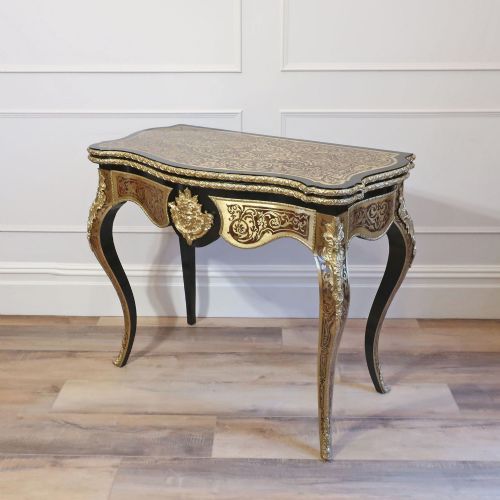
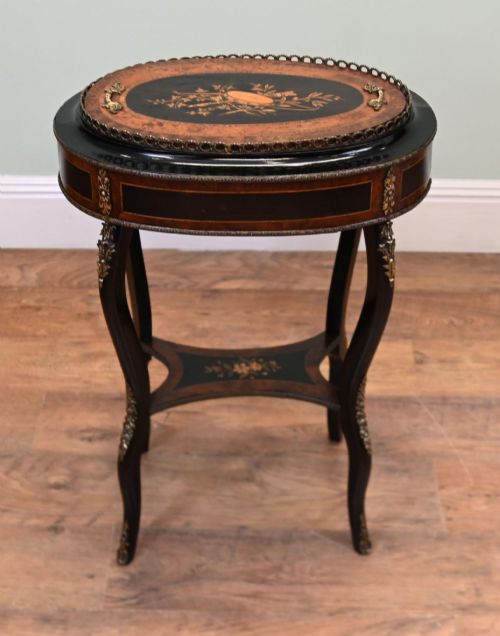
A brass inlaid side table encompasses a variety of support furniture designed for occasional placement, including card tables, sofa tables, console tables, and lamp tables. The selection ranges widely across stylistic traditions, from Regency rosewood examples featuring geometric brass stringing to Anglo-Indian and Cairene occasional pieces displaying intricate openwork and metal inlay.
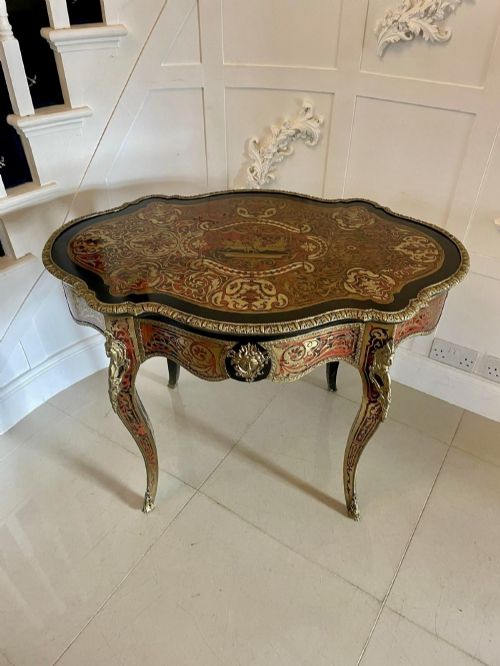
Makers produced these tables across the nineteenth and early twentieth centuries in response to shifting tastes for domestic utility and exotic ornamentation. English Regency pieces often utilise dark hardwoods like rosewood or mahogany paired with precise brass line inlay, whilst continental workshops favoured ebonised finishes, boulle work, or kingwood marquetry.
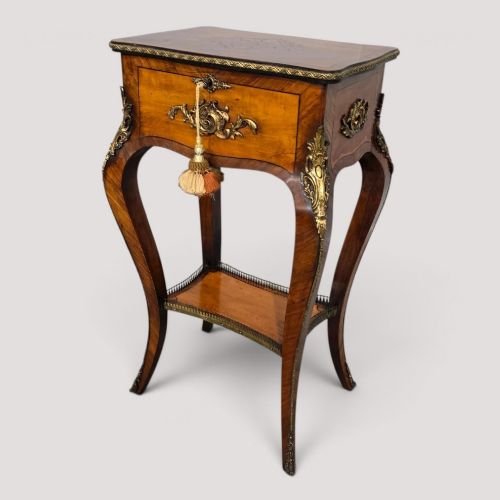
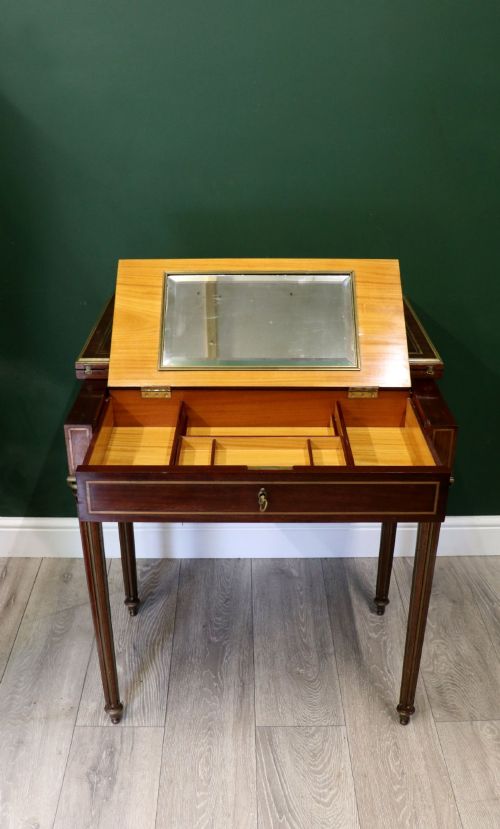
Buyers frequently encounter smaller bedside cabinets, tray top occasional tables, and multi-tiered etagere forms alongside standard rectangular or circular tables. The physical configuration depends heavily on the period of manufacture, moving from formal Georgian and Regency proportions to lighter Edwardian satinwood designs.
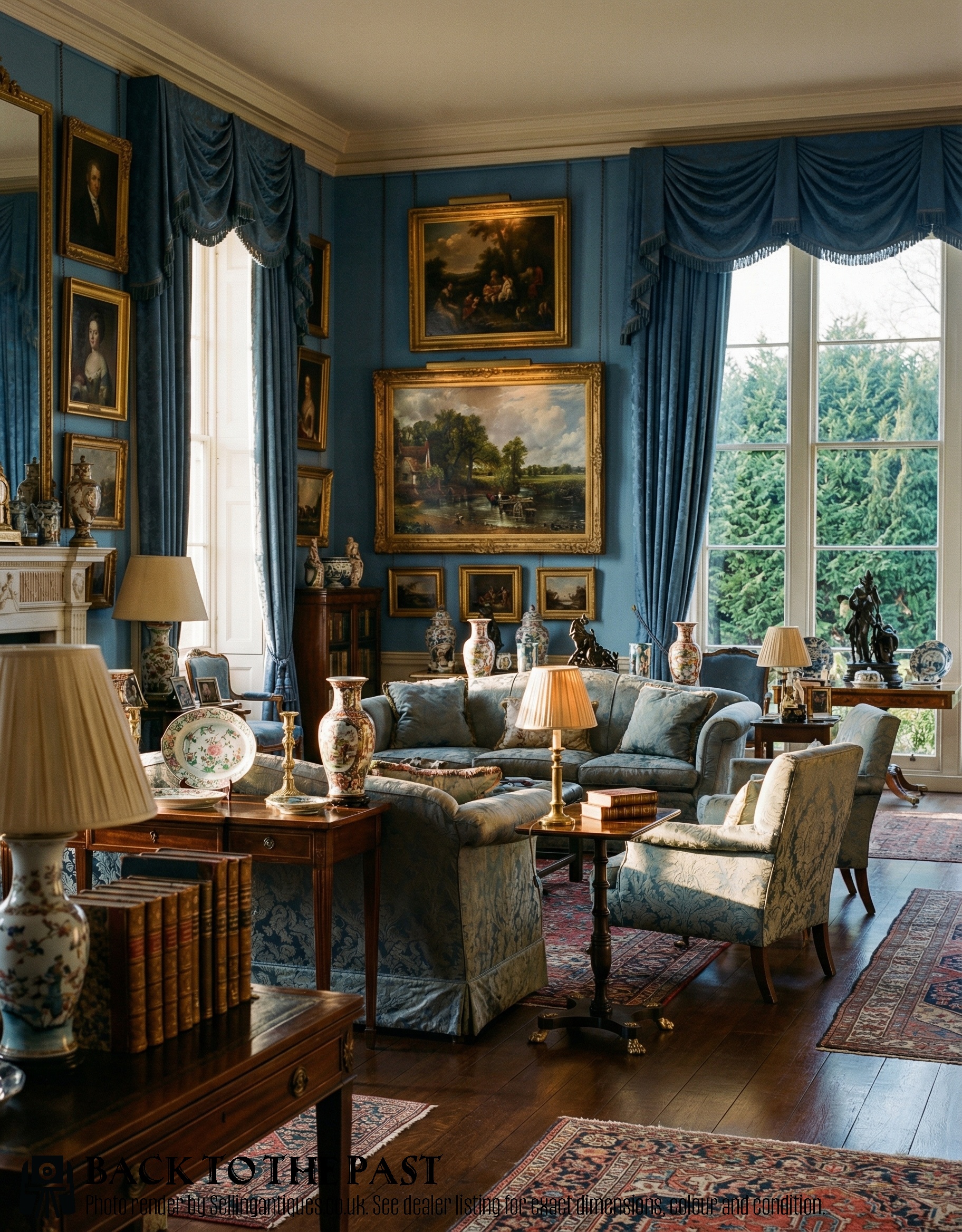
Materials and Construction
Craftsmen built the underlying carcases using dense timbers such as mahogany, rosewood, walnut, satinwood, and kingwood, frequently applying veneers over secondary structural woods. These surfaces received precise hand-cut channels into which brass wire, stringing, or shaped sheet brass was carefully fitted and secured.
French workshops integrated brass alongside tortoiseshell in boulle work or combined it with complex floral marquetry and parquetry patterns. In contrast, Anglo-Indian and Middle Eastern traditions incorporated brass inlay directly into dense teak or cast brass structures, often supplemented by white-metal and copper detailing.
Brass Inlaid Side Table Retail Price Guide 2026
Typical asking prices for brass inlaid side table among the pieces listed under this phrase on Sellingantiques today, from the lower quarter to the upper quarter. They describe what is for sale here now, not the wider market.
Some tables double as card or games boards, revealing hidden green baize surfaces beneath folding tops designed for evening entertainment.
Assessing Craftsmanship
Quality rests upon the precision of the metal inlay relative to the surrounding timber grain, where tighter joints and flush surfaces indicate superior execution. The choice of underlying wood grain, whether richly figured rosewood or carefully matched mahogany veneers, dictates the initial grade of the piece.
The integrity of the structural joinery and the survival of original mounts, castors, and sabots distinguish finer workshop productions from simpler utilitarian items. Tables retaining crisp carved details and undisturbed brass stringing demonstrate greater longevity and fidelity to their original period design.
The Brass Inlaid Side Table Glossary
- Brass Stringing
- Thin threads of brass inlaid into channels cut into the wood surface to create linear borders. This technique defines much of the formal Regency aesthetic.
- Ormolu
- Gilt-bronze mounts applied as decorative feet, handles, or corner accents on furniture. French regional pieces frequently utilise this material.
- Marquetry
- Decorative veneer work forming pictorial or geometric patterns using various coloured woods and metal. It appears extensively on continental cabinet furniture.
- Etagere
- An open tiered piece of furniture used for display or as an occasional table. Multiple shelves provide stepped surfaces for lamps and small objects.
- Boulle
- A method of marquetry using brass and tortoiseshell developed in France. The technique creates rich, reflective surface patterns.
Brass Inlaid Side Table: Frequently Asked Questions
Where should I place a side table?
These compact tables suit living rooms next to seating or hallways where surface space is limited. Their detailed tabletops also allow them to function effectively as lamp or display tables.
Because many examples are finished on all sides, they can stand independently away from walls within an interior scheme.
How do I clean brass inlay?
Dust surfaces regularly with a soft, dry cloth to prevent accumulation in the recesses around the metal. Avoid harsh liquid metal cleaners that might seep into the surrounding wood and lift the veneer.
Applying a traditional microcrystalline wax helps protect both the timber finish and the exposed brass elements from tarnishing.
Are these tables sturdy enough for daily use?
Most antique examples were constructed for active domestic service, though their structural resilience depends on age and original build quality. Solid wood carcases and tight joints handle everyday placement of books and lamps comfortably.
Delicate occasional tables with slender legs require more careful handling than heavier sofa or card tables.
How do I identify a Regency table?
Regency pieces typically feature dark tropical hardwoods like rosewood or mahogany combined with precise geometric brass inlay or stringing. They often incorporate sabots and castors on the feet for mobility.
Stylistic markers include clean architectural lines, classical proportions, and restrained ornamental brass mounts rather than heavy carving.