



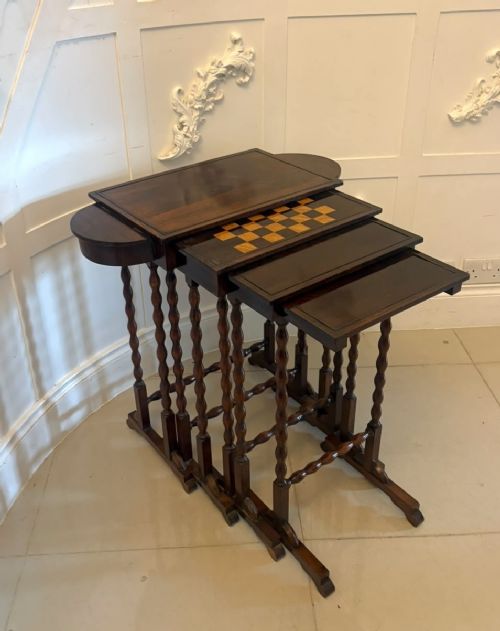

Antique Quartetto Tables
Antique quartetto tables offer a clever space-saving design, grouping four graduated stacking tables into one compact footprint for flexible entertaining.
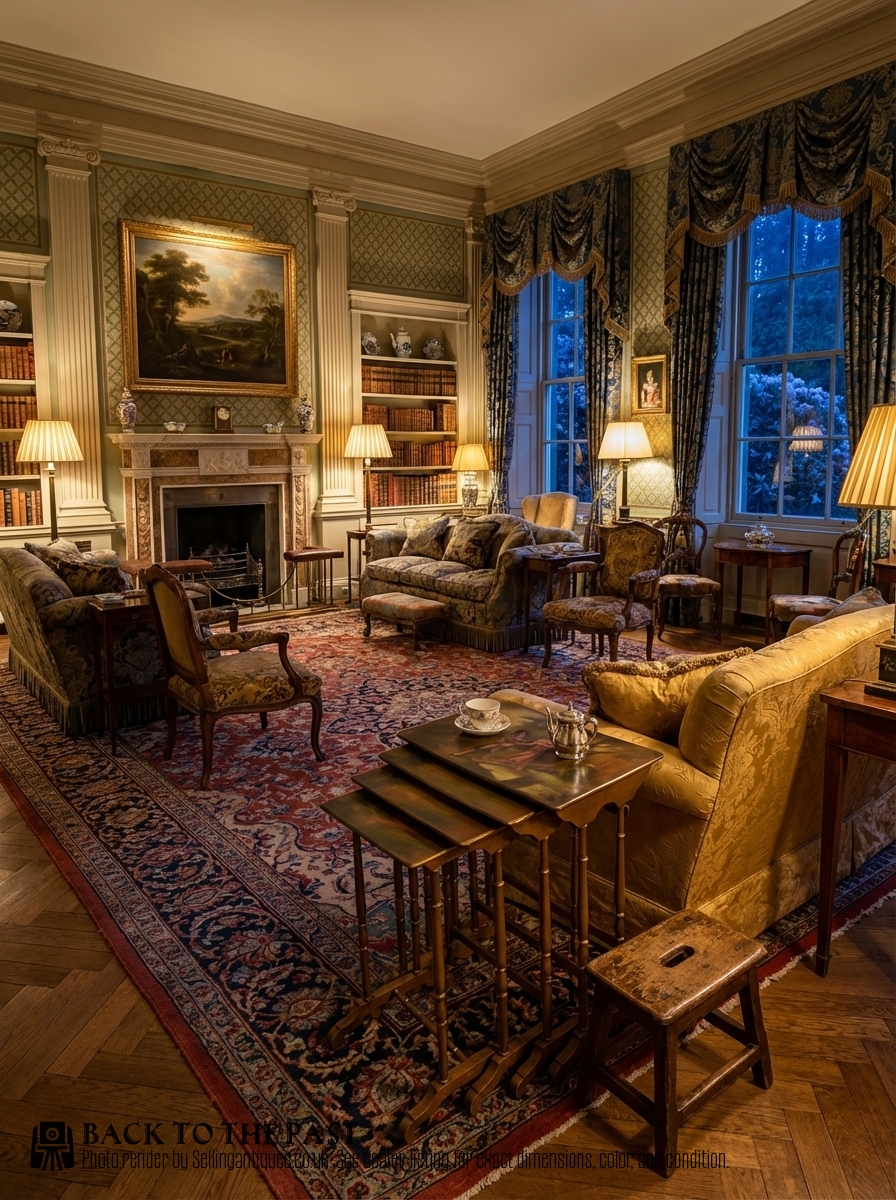
Antique Quartetto Tables
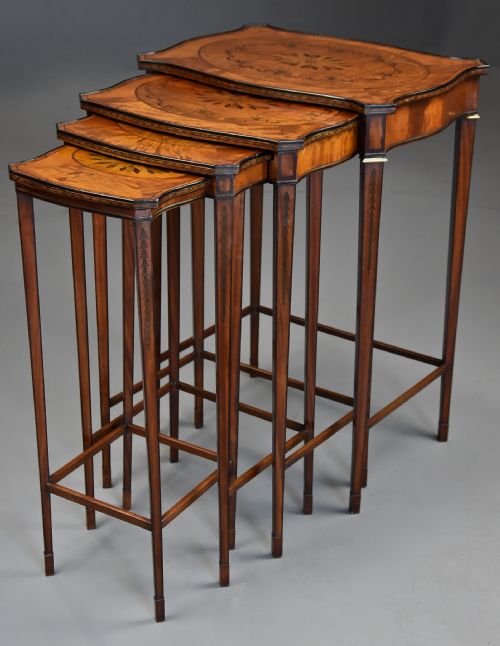
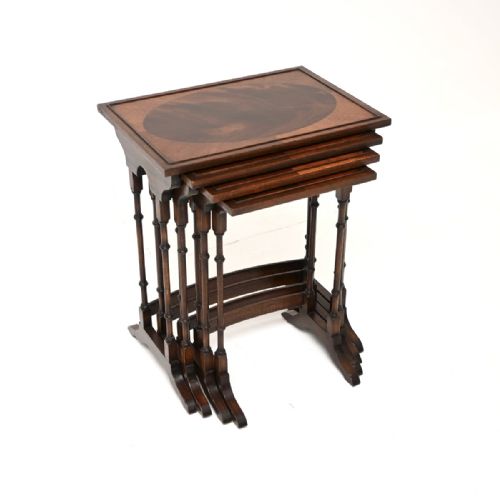
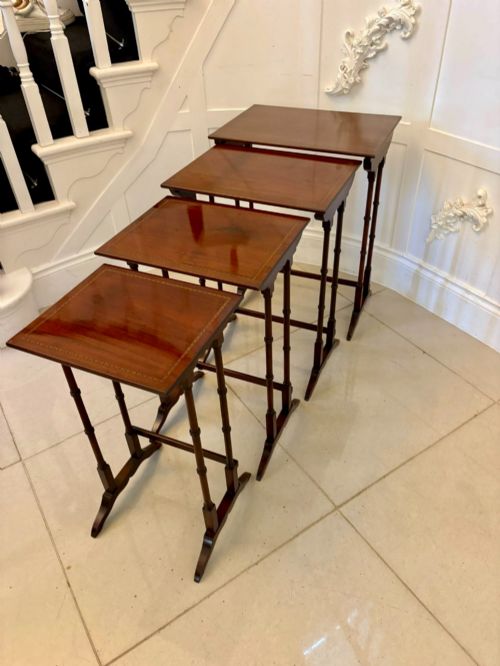
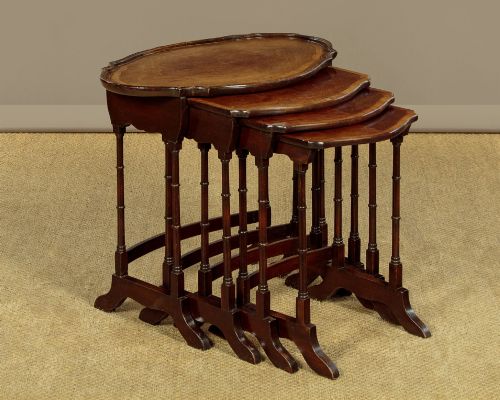
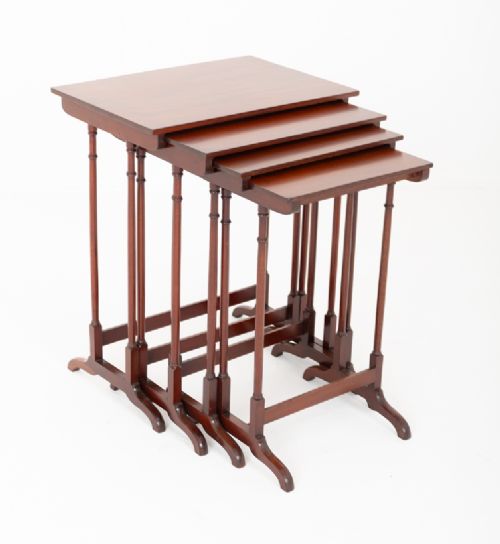
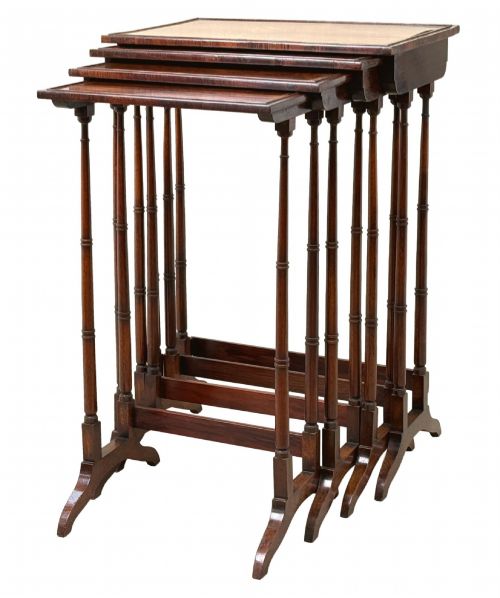
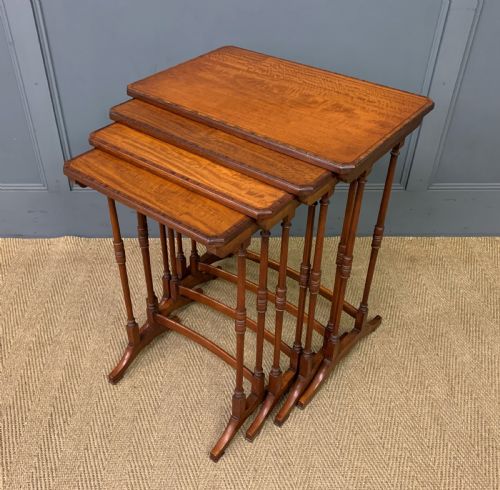
When searching for antique quartetto tables, collectors look at nested sets designed to slide neatly beneath one another when not in use. These versatile pieces function primarily as occasional, lamp, or coffee tables within period drawing rooms and parlours.
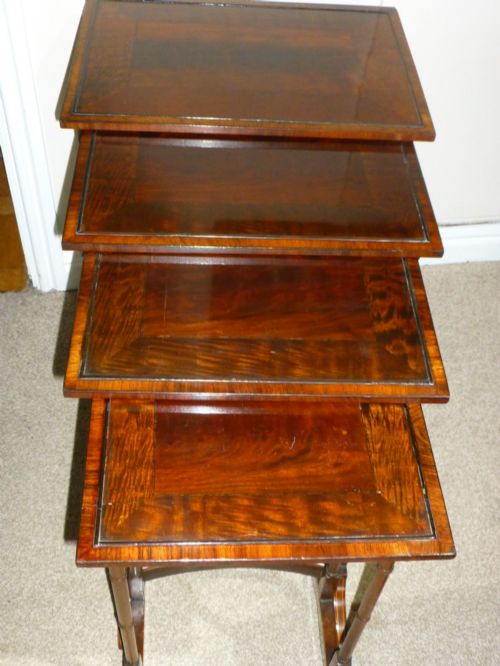
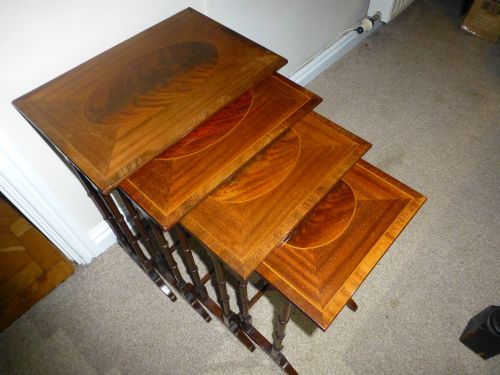
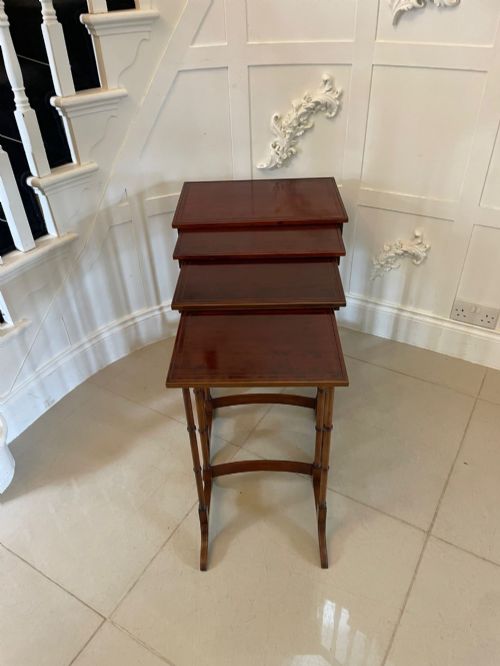
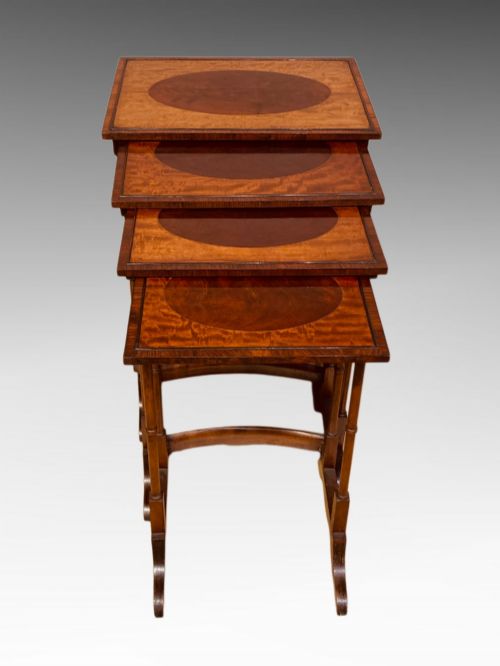
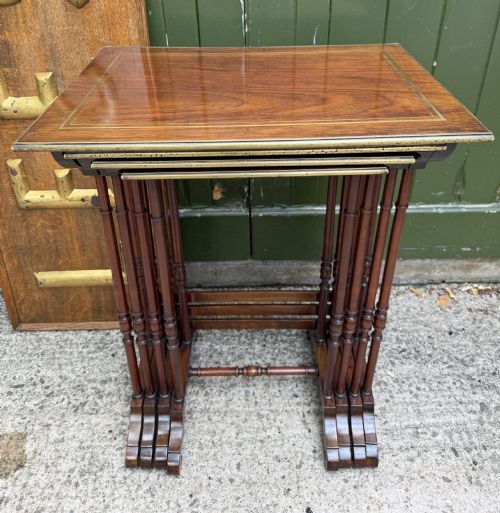
The most common examples on this page date from the Edwardian era and the nineteenth century, often formed of four graduated tables rather than three. Mahogany and rosewood form the majority of the domestic English pieces, frequently enhanced by delicate stringing or cross banding.
Alternative forms also appear in the archive records, including Chinese carved hardwood sets and japanned or ebonised Chinoiserie variants. Despite these diverse stylistic influences, the core domestic form remains a triumph of nineteenth-century and early twentieth-century cabinet making.
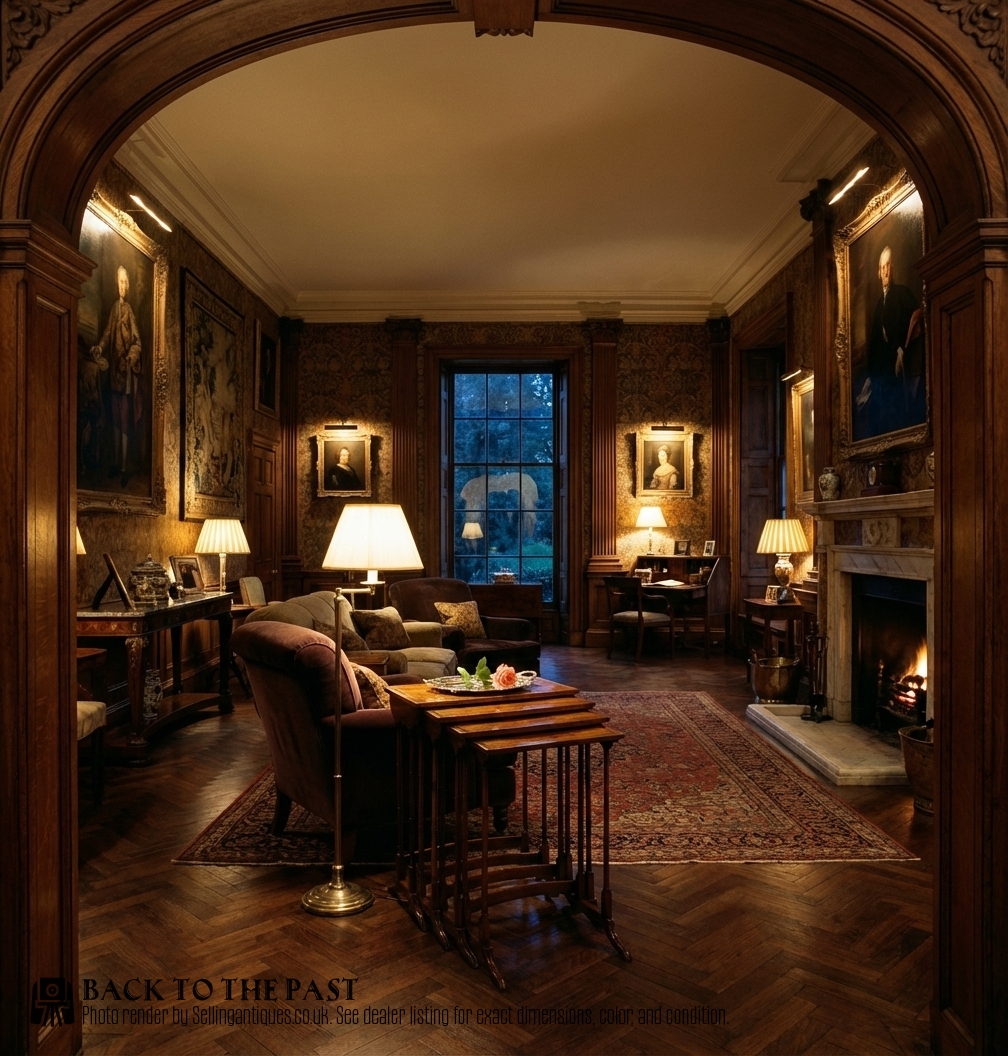
Materials and Construction
Cabinet makers utilised dense hardwoods such as mahogany, rosewood, and walnut to ensure the structural integrity of the slender frames. These primary timbers provide the necessary strength for daily use while supporting delicate decorative elements.
The engineering required to allow four separate tables to stack progressively without jamming demands precise joinery and thin, accurate table profiles. Hardwood variants from overseas workshops additionally employ deep relief carving rather than surface stringing.
Antique Quartetto Tables Retail Price Guide 2026
Typical asking prices for quartetto tables among the pieces listed under this phrase on Sellingantiques today, from the lower quarter to the upper quarter. They describe what is for sale here now, not the wider market.
Listings feature woods spanning mahogany, satinwood, rosewood, burr walnut, boxwood, and padouk across multiple centuries.
Quality Indicators
The distinction between standard utility sets and exceptional examples lies in the selection of timber figures and the crispness of the inlay work. Finer sets display carefully matched grain patterns across all four graduated surfaces rather than plain, unfigured boards.
The Antique Quartetto Tables Glossary
- Quartetto tables
- A set of four tables graduated in size designed to nest one beneath another. This nineteenth-century term derives from the Italian musical quartet.
- Cross banding
- A border of veneer laid perpendicular to the main grain of the table top. It creates a defined frame around the central timber panel.
- Stringing
- Thin lines of contrasting wood inlaid into grooves on the furniture surface. This technique outlines drawers, legs, and table tops on Sheraton Revival pieces.
- Japanned
- European imitation of East Asian lacquerwork using surface finishes and painted decoration. It appears on ebonised occasional furniture from the Victorian period.
- Sheraton Revival
- A late nineteenth and early twentieth century design movement inspired by the furniture of Thomas Sheraton. It relies on satinwood inlay and tapered legs.
Antique Quartetto Tables: Frequently Asked Questions
What is a quartetto table?
A quartetto table is a set of four graduating tables designed to nest together into the space of a single table. They were popular in the nineteenth and early twentieth centuries for entertaining guests.
The word comes from the Italian term for a group of four. Cabinet makers constructed them so each smaller table slides smoothly beneath the one above it.
How were antique quartetto tables used?
Owners used these nested sets as flexible occasional furniture for serving tea, holding lamps, or playing games in the parlour. When floor space was needed, the smaller tables slid away.
They moved easily around the room to accommodate multiple sitters. Some advanced examples even integrated chess boards directly into the primary top surface.
How do I date an antique nest of tables?
Dating relies on timber choice, inlay techniques, and leg shapes corresponding to known design periods. Regency pieces often feature rosewood and brass, while Edwardian sets favour inlaid satinwood and mahogany.
Simpler mahogany frames without cross banding frequently point to the mid-nineteenth century. Finer Sheraton Revival details usually indicate a late Victorian or Edwardian manufacture date.
Are all quartetto tables English?
While the majority of domestic examples found in trade are English or French, records also show significant Asian export pieces. Chinese carved hardwood and Chinoiserie lacquered sets formed a distinct strand of production.
These imported variants utilised native woods like padouk alongside traditional decorative carving and gilt painting. They served the same stacking function within colonial or eclectic Victorian interiors.