


Brown Wood Nesting Tables
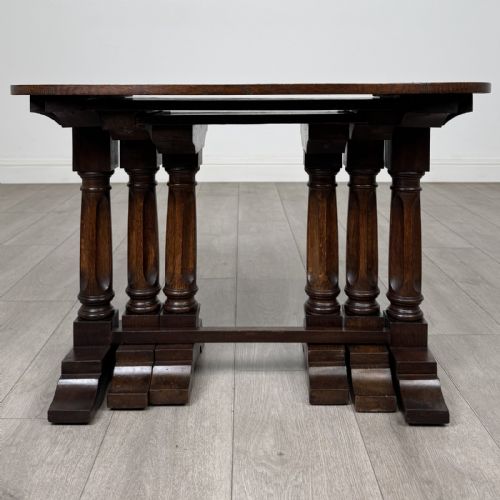
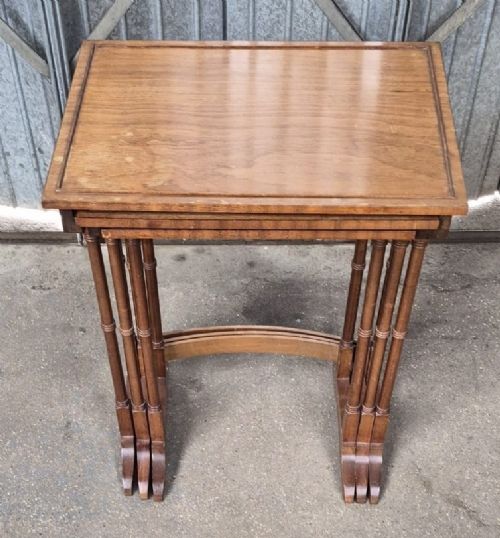
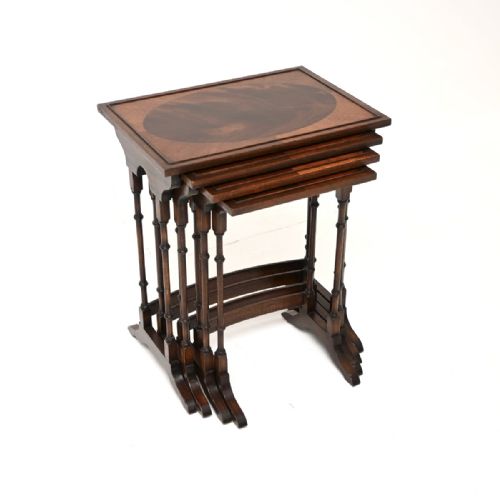
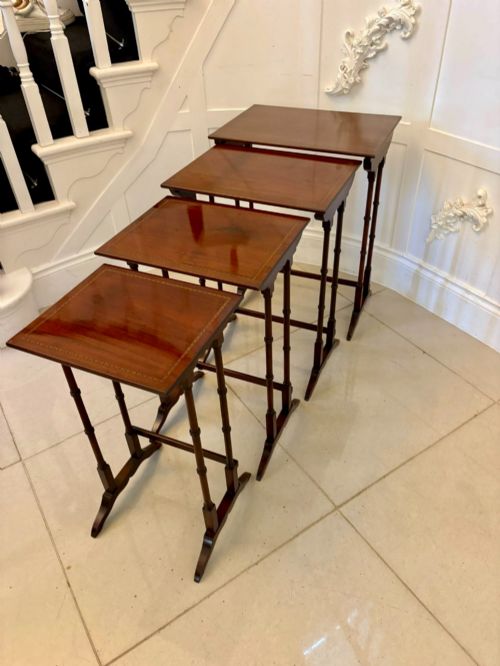
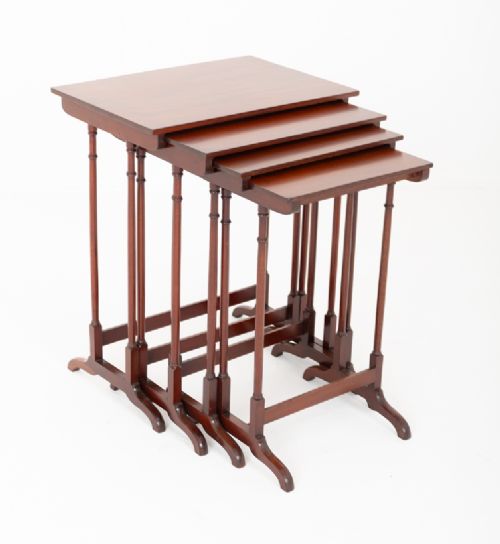
These brown wood nesting tables slide neatly inside one another, offering versatile surface space without crowding a room.
Brown Wood Nesting Tables
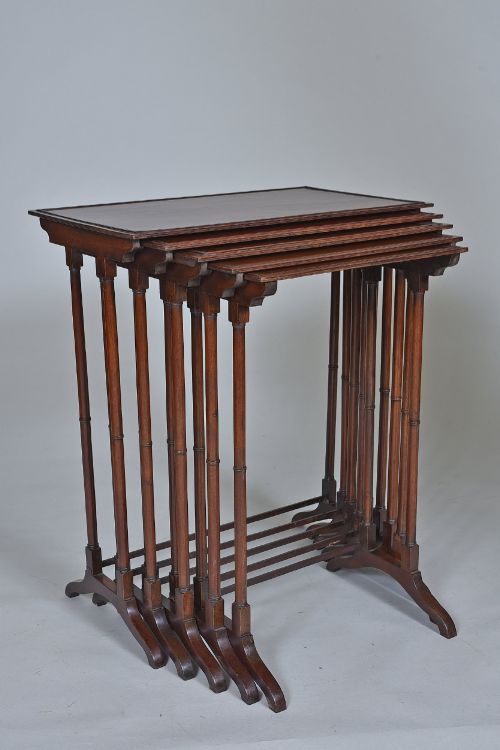
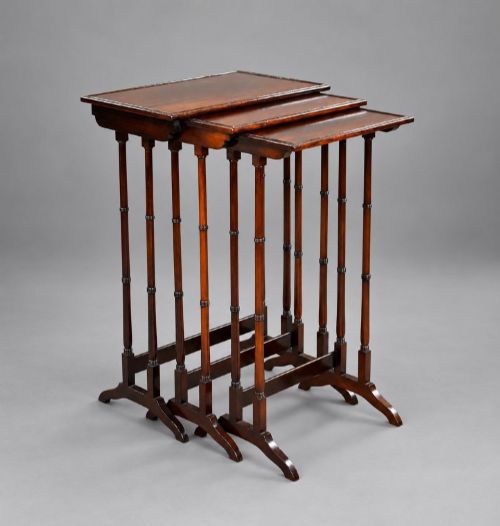
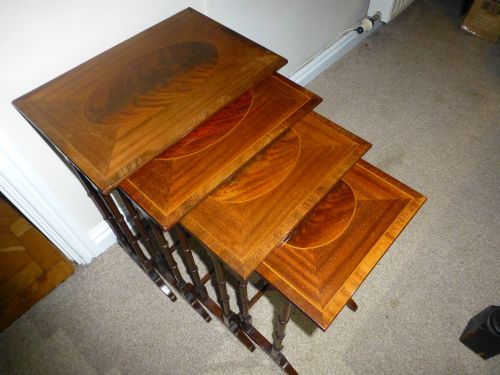
When you search for brown wood nesting tables, you encounter sets of graduated tables designed to tuck neatly beneath the largest surface. The selection spans multiple decades and centuries, ranging from compact Edwardian examples to earlier Victorian pieces.
Most entries on this page consist of mahogany, walnut, or rosewood, constructed as sets of three or four individual tables. These portable pieces served historically as occasional furniture for tea, writing, or needlework, moving easily about the drawing room as required.
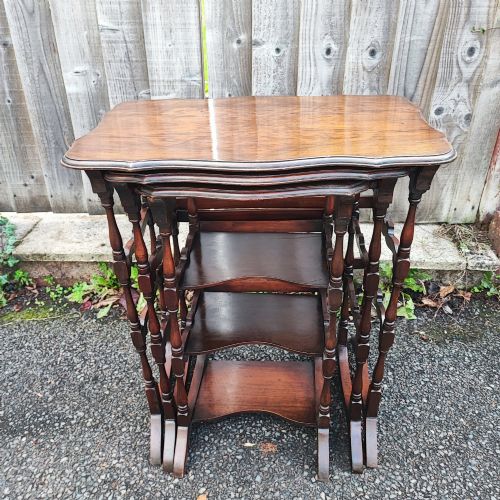
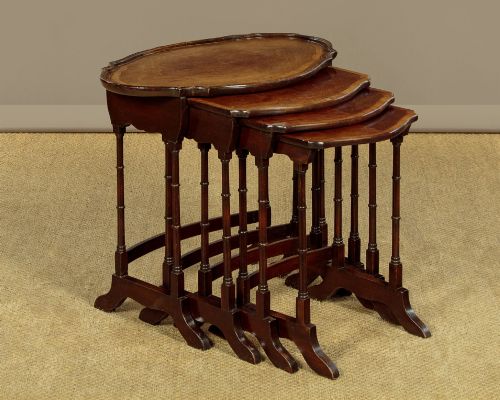
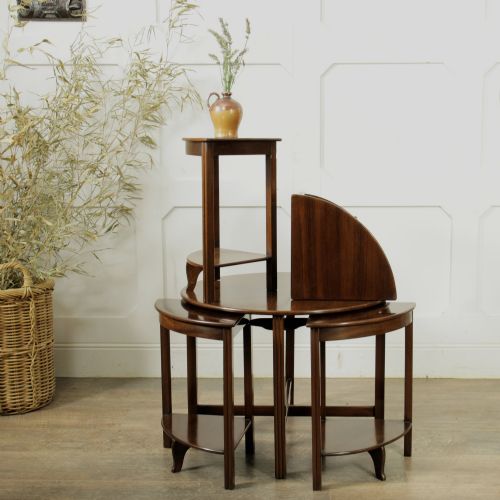
You will frequently meet Edwardian and nineteenth-century variations, alongside occasional Art Deco and Regency revival pieces. They appear in circular, rectangular, and serpentine forms, sometimes utilising exotic woods or intricate inlay work.
Materials and construction methods
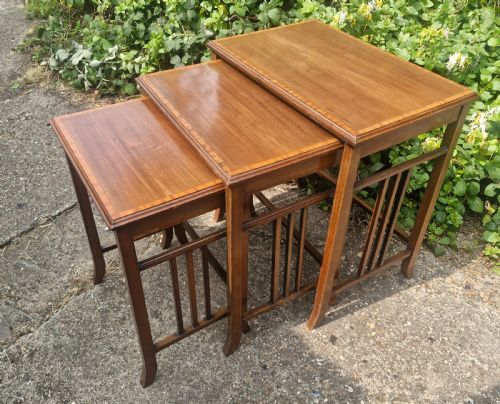
Cabinetmakers relied heavily on dense hardwoods like mahogany, walnut, and rosewood to build sturdy yet slender frames that could withstand daily use. Selected timbers often featured decorative veneers, yew tops, or contrasting boxwood inlay to enhance the visual depth of the primary wood.
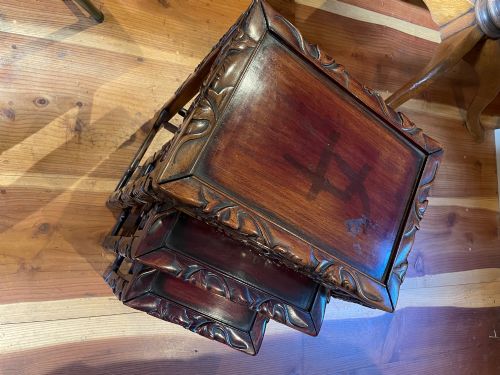
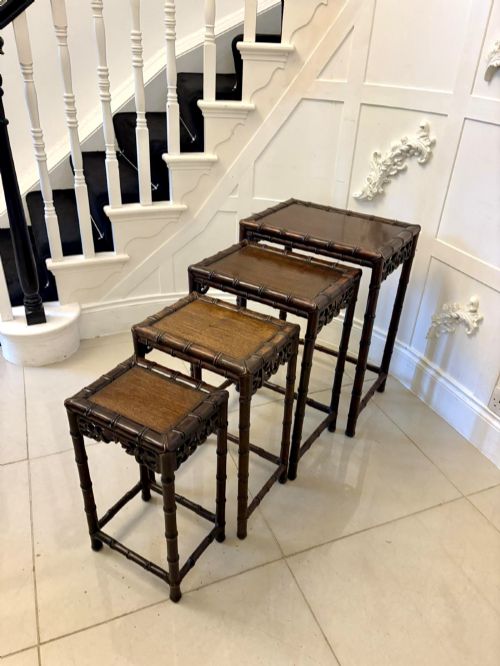
Joinery techniques focused on creating lightweight frames without sacrificing structural integrity, allowing the smaller tables to slide smoothly into their housings. More elaborate examples incorporate hand-carved details, marquetry, or specialised Oriental carving on solid hardwood structures.
Brown Wood Nesting Tables Retail Price Guide 2026
Typical asking prices for brown wood nesting tables among the pieces listed under this phrase on Sellingantiques today, from the lower quarter to the upper quarter. They describe what is for sale here now, not the wider market.
The listings span multiple centuries, uniting Edwardian mahogany designs with nineteenth-century quarterly sets and Art Deco rosewood examples.
Distinguishing standards of craftsmanship
The distinction between ordinary sets and superior examples rests on the crispness of the cabinetwork and the selection of timber. Fine sets display matched grain patterns across the graduated surfaces and retain smooth gliding action as each table slides into position.
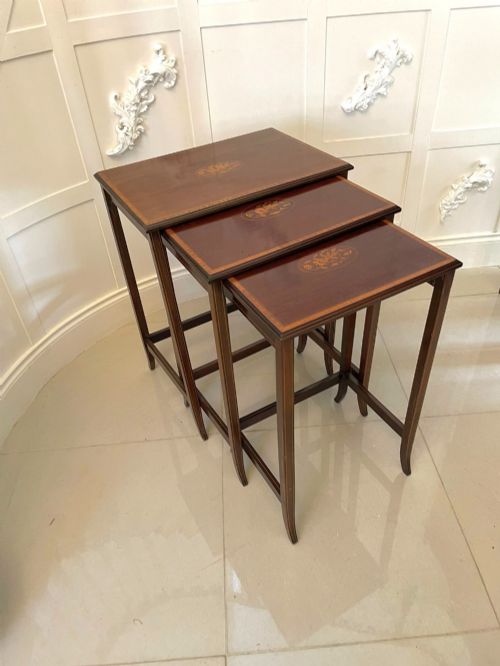
Detailing elevates certain pieces above standard utility furniture, such as precise Sheraton-style inlay, finely executed marquetry, or elaborate serpentine shaping. The integrity of the original polish and the preservation of delicate structural elements also dictate the standing of a set.
Émile Gallé·Heal's·Gillows
The Brown Wood Nesting Tables Glossary
- Quartetto
- A matched set of four graduated tables designed to nest together. This term appears frequently in nineteenth-century and Edwardian descriptions.
- Marquetry
- The art of applying pieces of veneer to a structure to form decorative patterns and pictures. It often utilises various tinted woods to create contrasting pictorial scenes on tabletops.
- Inlay
- A technique where contrasting materials are inserted into depressions in the base wood to form a flush decorative surface. Boxwood lines frequently accent mahogany frames in this manner.
- Serpentine
- A curved line or shape featuring a convex centre flanked by concave sides. This undulating form appears on the edges of finer occasional tables.
- Faux bamboo
- Wood turned and carved to imitate natural bamboo stalks. This decorative treatment is typical of nineteenth-century Orientalist furniture.
Brown Wood Nesting Tables: Frequently Asked Questions
How were nesting tables used historically?
These tables served as versatile furniture in Victorian and Edwardian drawing rooms, kept stacked until guests required extra space for tea or writing.
Servants moved the individual tables about the room independently, returning them to the stacked position when the gathering concluded.
What woods are most common?
Mahogany forms the foundation of the majority of pieces on this page, often paired with satinwood or boxwood for decorative inlay work.
Walnut and rosewood also appear frequently, alongside occasional exotic timbers like teak and Chinese hardwood.
How do I identify an Edwardian set?
Edwardian tables often feature light mahogany frames with delicate string inlay, sometimes following Sheraton revival designs popular at the turn of the twentieth century.
They frequently come in sets of three or four, maintaining a lighter visual weight than their bulkier Victorian predecessors.
Can I use them as coffee tables?
While historic nesting tables were designed as occasional or side tables, the largest piece in a set often functions well beside a modern sofa.
The smaller tiers remain ideal for holding drinks or books within arm's reach without dominating the floor space.