



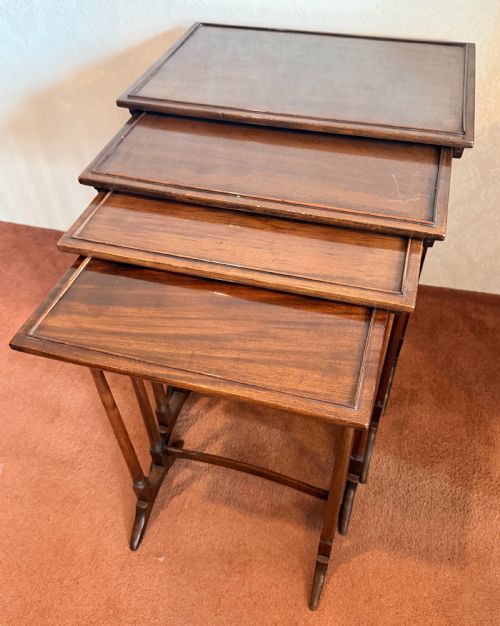
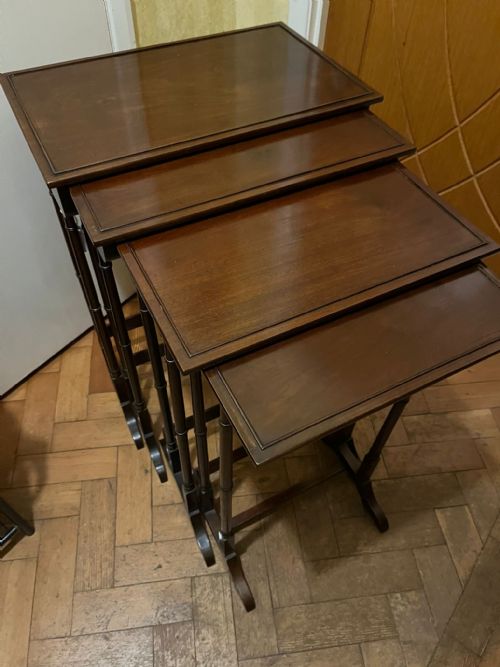


Mahogany Quartetto Tables
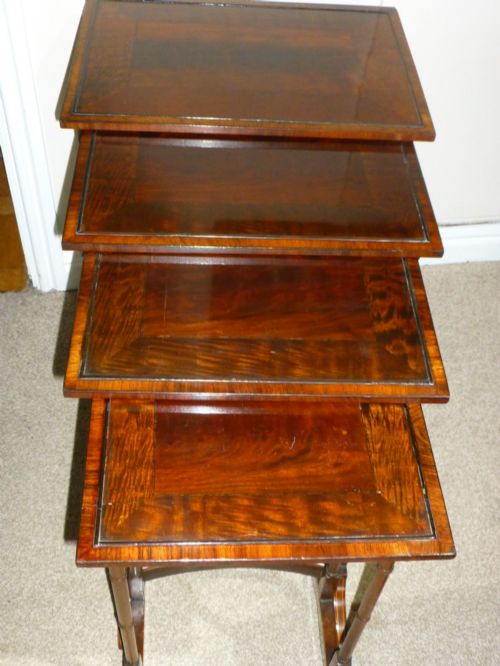
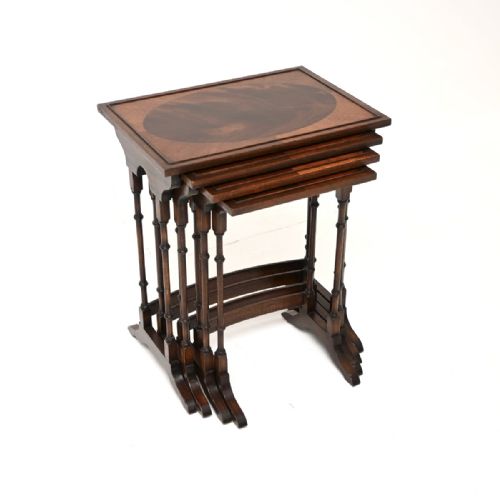
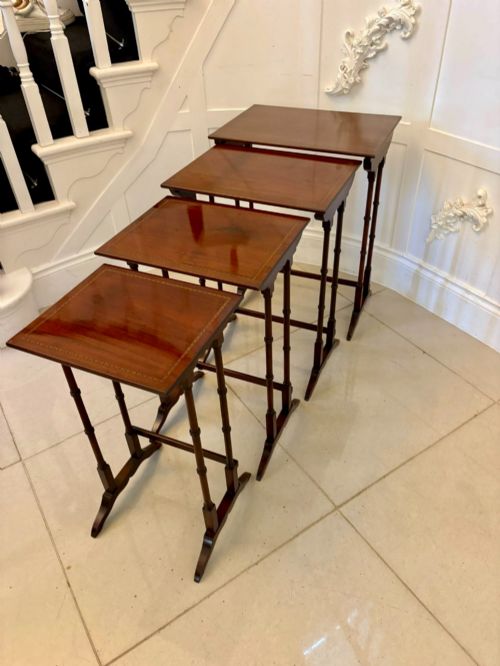
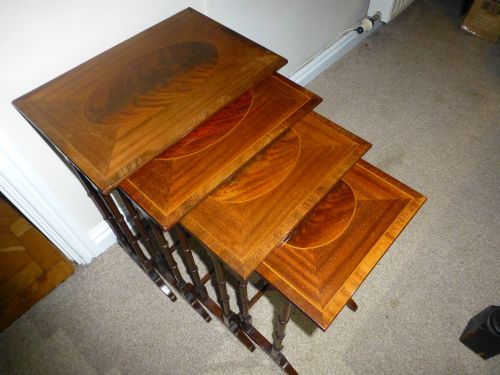
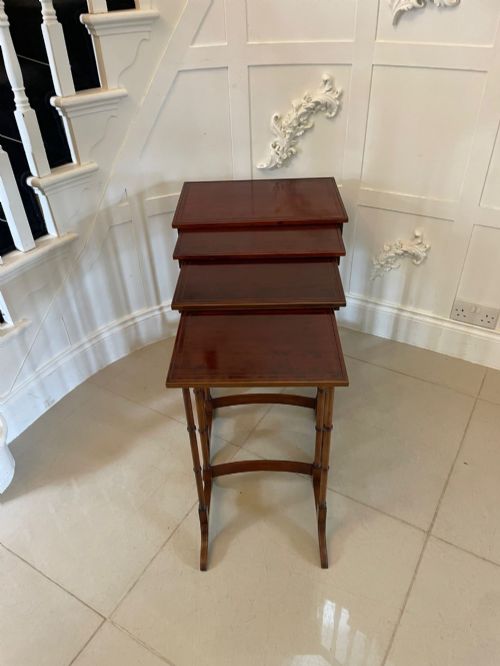
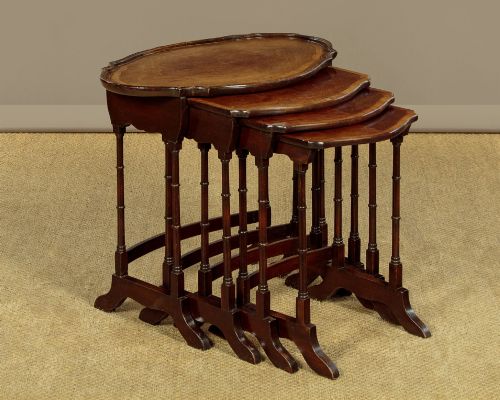
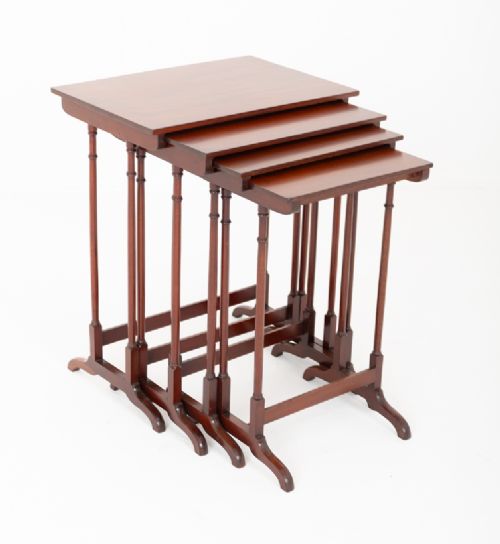
Mahogany quartetto tables are sets of four graduated stacking occasional tables designed to slide neatly beneath one another.
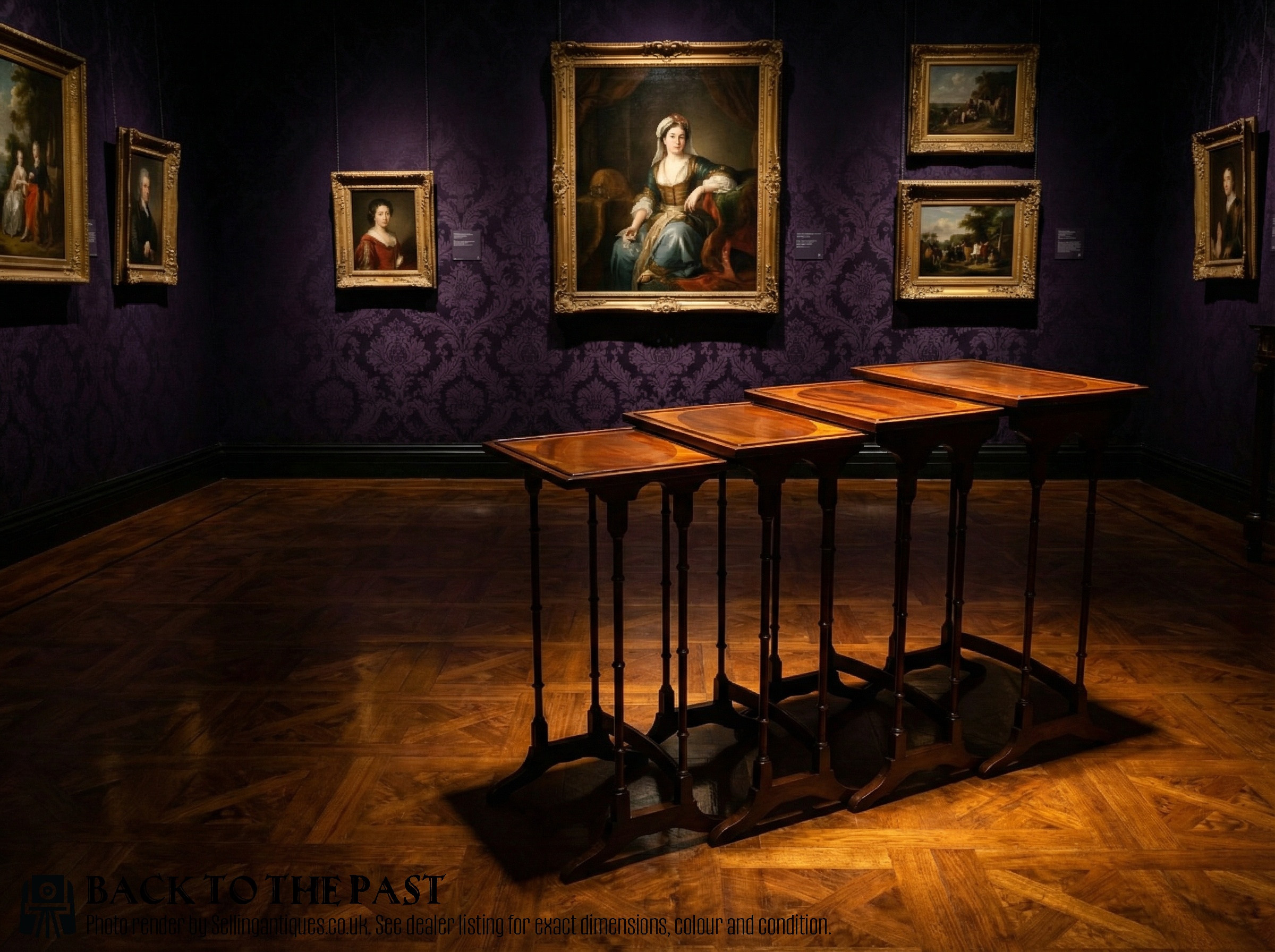
Mahogany Quartetto Tables
Mahogany quartetto tables comprise sets of four occasional tables designed to stack together in a graduated sequence. They appear frequently in Edwardian and Victorian forms, often displaying Sheraton influence through delicate proportions and slender framing.
The layout allows the smallest table to sit inside the next, culminating in the largest outer frame. This space-saving design makes them practical for serving tea or placing beside seating before sliding away compactly.
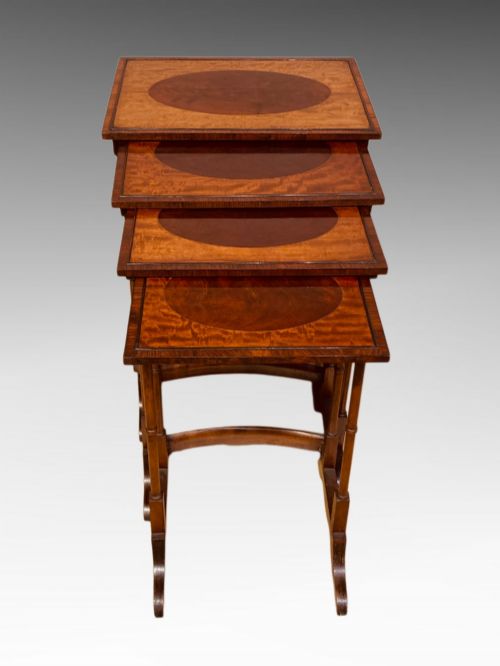
Examples on this page span the late nineteenth century through to the early twentieth century, alongside revival interpretations referencing Georgian and Regency aesthetics. They appear in both plain timber finishes and decorated versions featuring contrasting stringing.
How They Were Made
Cabinet makers utilised solid mahogany and applied fine veneers to construct the main surfaces and frames. Timber selection favoured rich grain patterns, particularly figured mahogany and occasional walnut selections.
Inlaid decoration relied on contrasting woods such as satinwood, boxwood, and ebony, shaped into delicate banding and geometric stringing. These decorative elements highlight the edges of the tabletops and frame the structural joints.
Mahogany Quartetto Tables Retail Price Guide 2026
Typical asking prices for mahogany quartetto tables among the pieces listed under this phrase on Sellingantiques today, from the lower quarter to the upper quarter. They describe what is for sale here now, not the wider market.
The smallest table in the stack often hides completely beneath its siblings, creating a game of hide-and-seek for anyone unfamiliar with nested furniture.
What Varies in Quality
The sophistication of the timber preparation and the precision of the nesting mechanism dictate the standing of individual sets. Superior examples display carefully matched veneer grains across all four graduated tops and smooth sliding tolerances.
Detailing in the marquetry and inlay work separates standard production from finer cabinet work. Crisp boxwood and satinwood stringing, combined with balanced proportions in the tapered or turned supports, marks the higher tier of these tables.
The Mahogany Quartetto Tables Glossary
- Quartetto
- A matched set of four stacking tables designed to fit progressively inside one another. This traditional term appears frequently in nineteenth and early twentieth-century descriptions.
- Satinwood
- A lustrous, hard timber native to Ceylon and India, utilised for contrasting inlay and crossbanding. Its pale yellow colour provides a sharp visual distinction against darker mahogany.
- Stringing
- Thin lines of contrasting wood inlaid into channels cut into the table surface. This technique outlines tabletops and legs on decorative Edwardian pieces.
- Crossbanding
- A strip of veneer applied perpendicularly to the grain of the main surface. It creates a formal border around the perimeter of the tabletop.
Mahogany Quartetto Tables: Frequently Asked Questions
How do quartetto tables work?
These sets consist of four individual tables built in descending sizes. Each smaller table slides beneath the frame of the next largest one.
This arrangement enables all four surfaces to occupy the floor space of a single small table when stored.
What period are most tables from?
The majority of surviving examples date from the Edwardian era and the late Victorian period. Cabinet makers also produced Regency and Georgian revival versions during the early twentieth century.
Earlier nineteenth-century pieces occasionally appear alongside these later interpretations.
Where were these tables used?
Owners placed them in drawing rooms and reception spaces as versatile occasional furniture. They served as convenient surfaces for drinks, reading material, or needlework.
Users pulled out individual tables as needed and returned them to the stacked column afterwards.
How do I identify satinwood inlay?
Satinwood appears as a pale, golden-yellow decorative element set into darker mahogany fields. Craftsmen used it for banding, floral motifs, and edge framing.
This timber creates a bright contrast against the reddish-brown tones of the primary wood.