





Victorian Nesting Tables
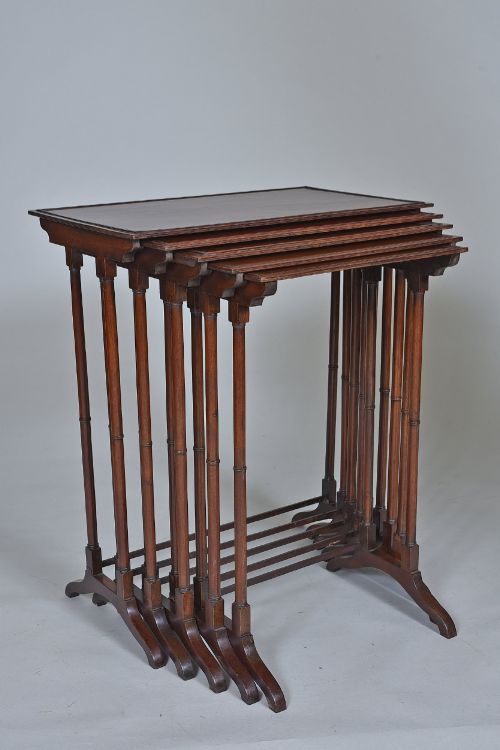
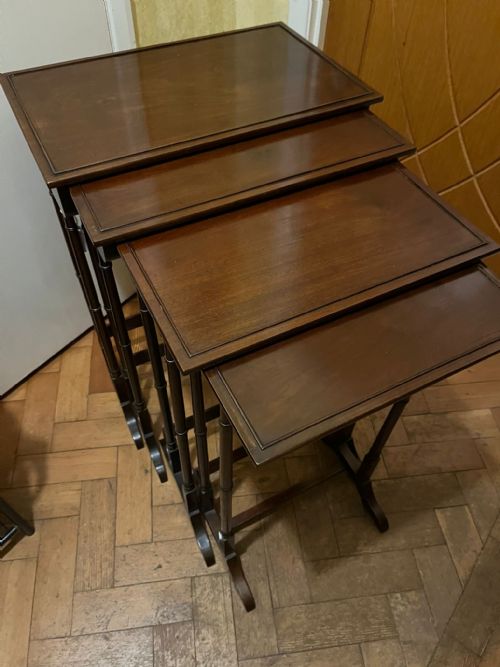
Victorian nesting tables are space-saving sets of graduating occasional tables that slide neatly inside one another.
Victorian Nesting Tables
Victorian nesting tables are graduating sets of occasional tables designed to slide neatly beneath one another when not in use. The search phrase covers pieces predominantly from the nineteenth century, including standard Victorian and Edwardian examples.
You are most likely to encounter sets of three or four tables, often referred to in period terms as quartetto tables. These take various forms, from simple rectangular tops to square shapes and occasional coffee tables.
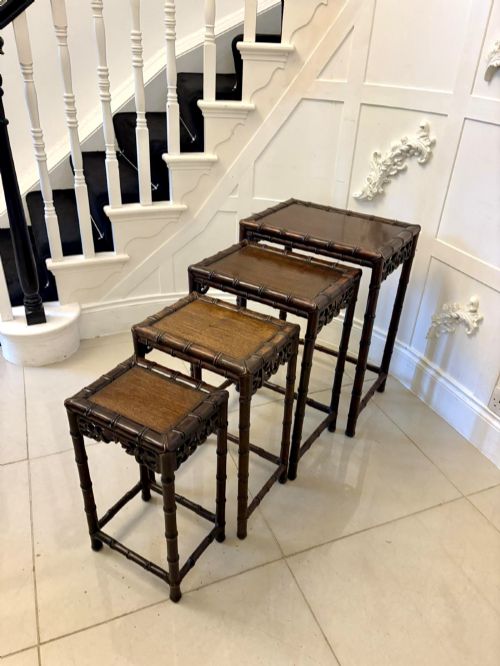
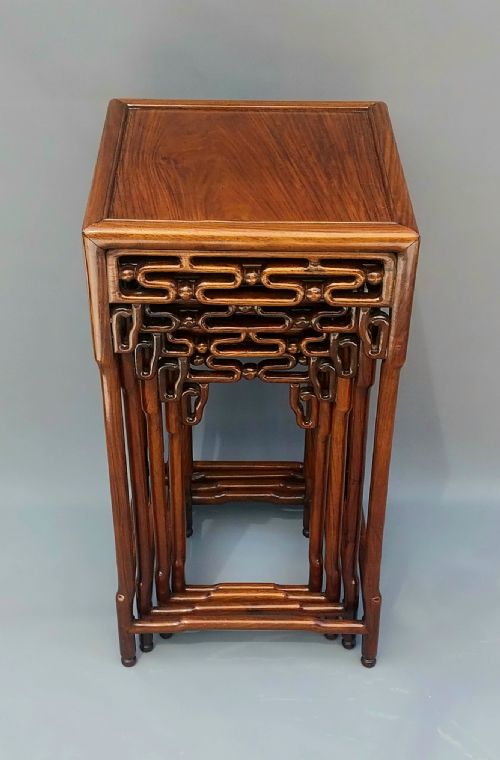
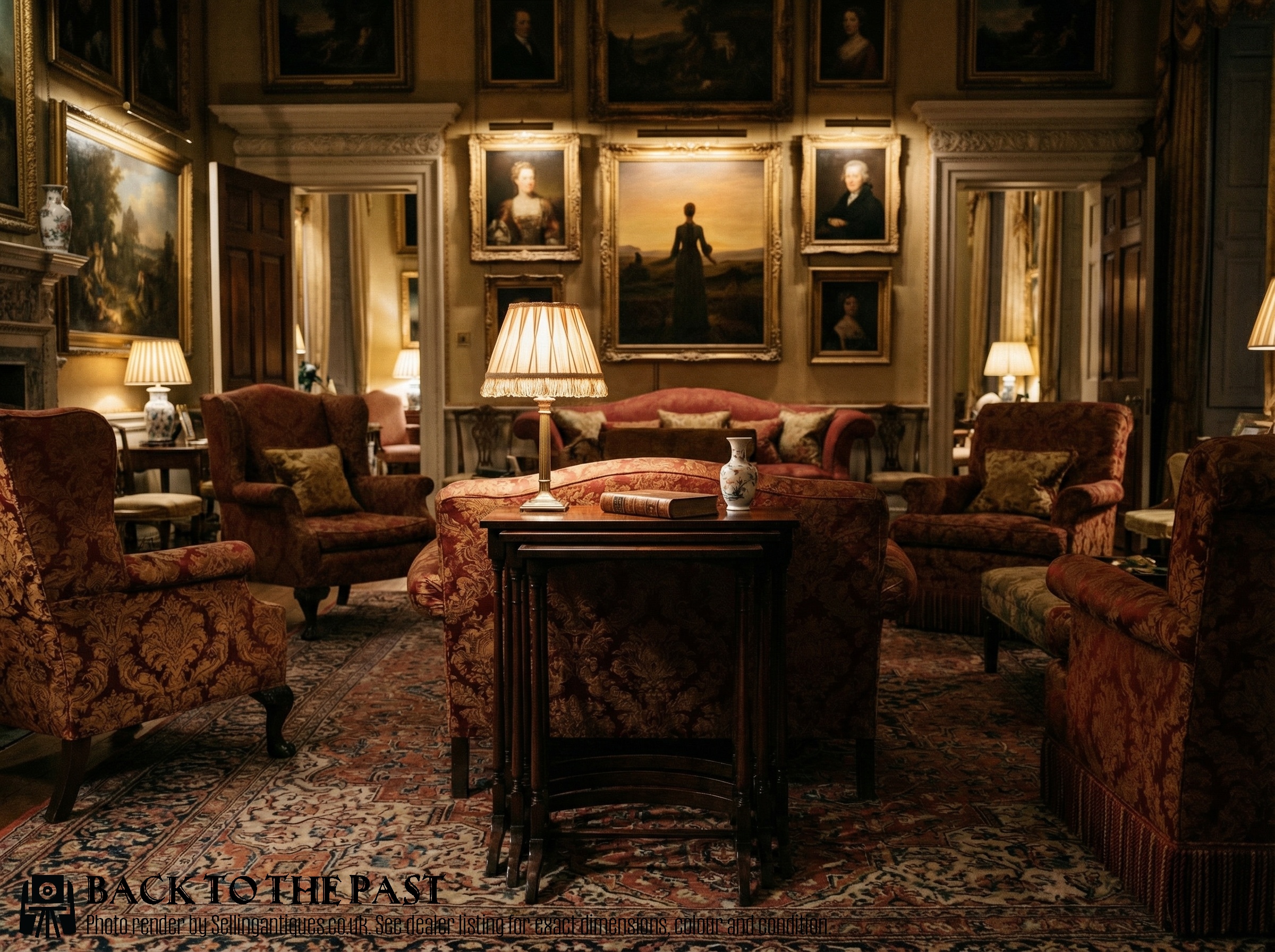
The materials and styles span traditional British timbers alongside imported influences such as Chinoiserie lacquer and Chinese rosewood. They serve as practical furniture for parlours and sitting rooms, offering surface space on demand without cluttering the room.
How they were made
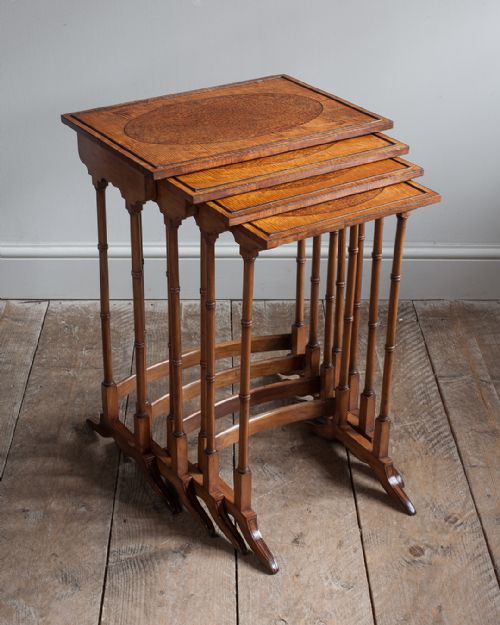
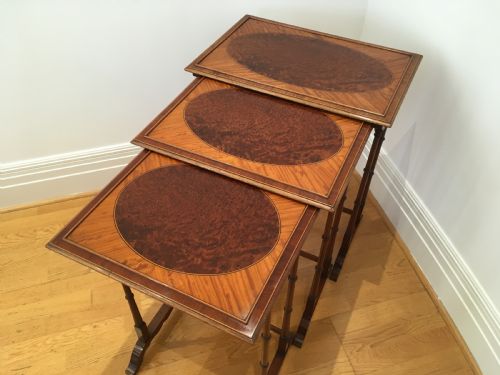
Cabinet makers utilised a range of dense timbers, relying heavily on mahogany, oak, and rosewood for structural integrity. Finer examples incorporate decorative veneers and timber contrasts including satinwood, yew, amboyna, and burr walnut.
Surface decoration involved meticulous techniques such as satinwood inlay, marquetry, and intricate Chinoiserie black lacquer work. Some specialised pieces also featured carved faux bamboo or boulle-work details to achieve their distinct appearance.
Victorian Nesting Tables Retail Price Guide 2026
Typical asking prices for victorian nesting tables among the pieces listed under this phrase on Sellingantiques today, from the lower quarter to the upper quarter. They describe what is for sale here now, not the wider market.
Materials recorded across the inventory include teak, lacquer, satinwood inlay, and burr walnut.
What varies in quality
The standard of timber selection largely dictates the quality of a set, with well-figured grain and thoughtful matching of veneers marking out superior work. Lesser examples utilise plain secondary woods with minimal attention to the grain.
Construction methods and the precision of the graduating fit define the craftsmanship. Top tier pieces slide together smoothly with tight joints and refined inlay, whereas ordinary items show simpler joinery and basic finishing.
The Victorian Nesting Tables Glossary
- Quartetto
- A set of four graduating tables designed to fit one beneath another. This term appears frequently in nineteenth-century descriptions of nesting tables.
- Marquetry
- The art of applying pieces of veneer to a structure to form decorative patterns. Killarney ware often employs this technique with local timbers.
- Chinoiserie
- European interpretation of Chinese and East Asian artistic traditions. It appears on black lacquer nesting tables with painted decorative motifs.
- Hongmu
- A category of dense and heavy Asian hardwood, often translated as red wood. These pieces frequently date to the late nineteenth century.
Victorian Nesting Tables: Frequently Asked Questions
What is a quartetto table set?
A quartetto set consists of four graduating tables built to slide neatly into one another. They were popular in nineteenth-century sitting rooms for serving tea or holding small objects.
Each table diminishes in size so the set occupies the floor space of only the largest piece. This design offered maximum utility with minimal footprint.
How do I distinguish mahogany from rosewood on these tables?
Mahogany generally displays a warm reddish-brown hue with straight or ribbon-like grain patterns. It is robust and forms the basis of many standard British nesting sets.
Rosewood tends to be heavier and darker with pronounced black or purple veining. Hongmu and other exotic variants exhibit even denser figuring and deeper colouration.
Where were these tables typically placed in a Victorian home?
They sat in parlours and drawing rooms where flexible surface space was necessary. Hosts pulled out individual tables as needed for guests during tea or card games.
When not in use, the stacked tables occupied a corner or stood beside a chair as a single occasional table. This versatility made them enduringly popular throughout the period.