




19th Century Nest Tables
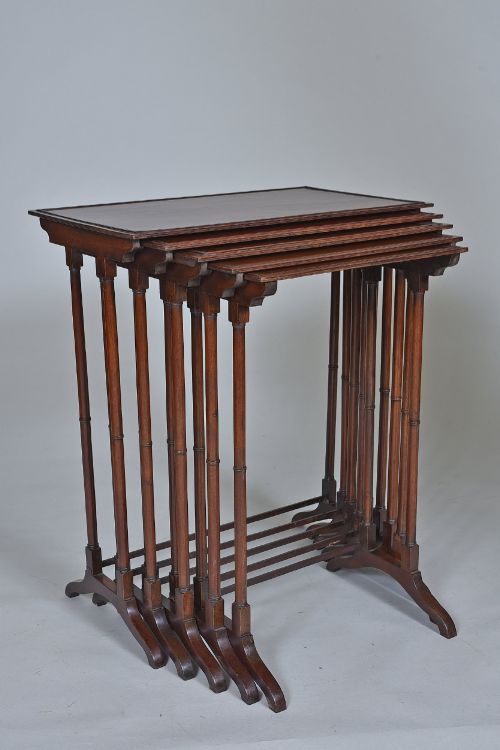
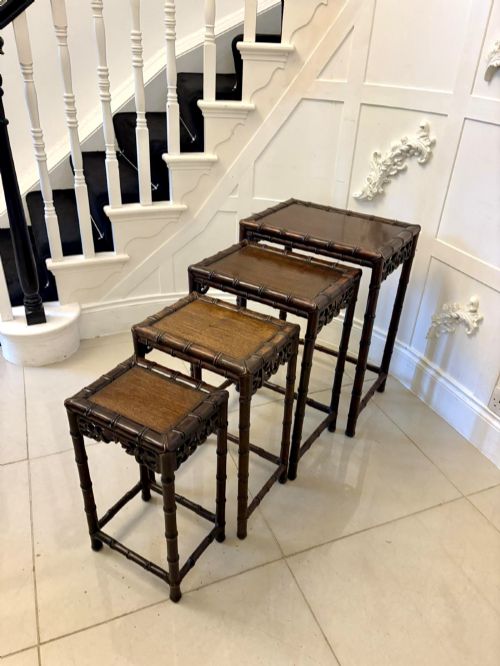
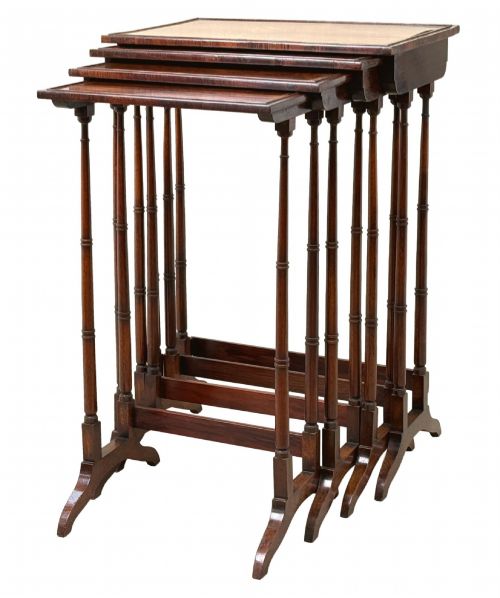
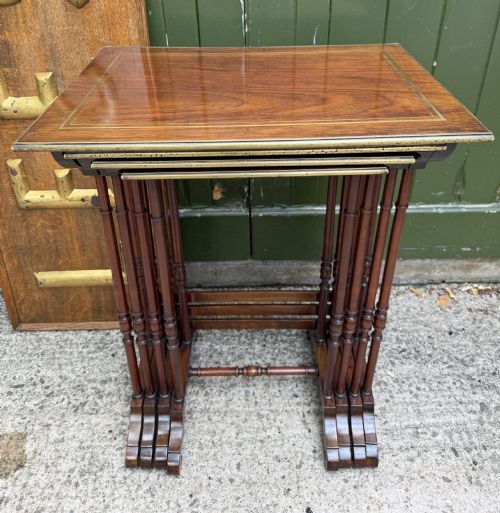
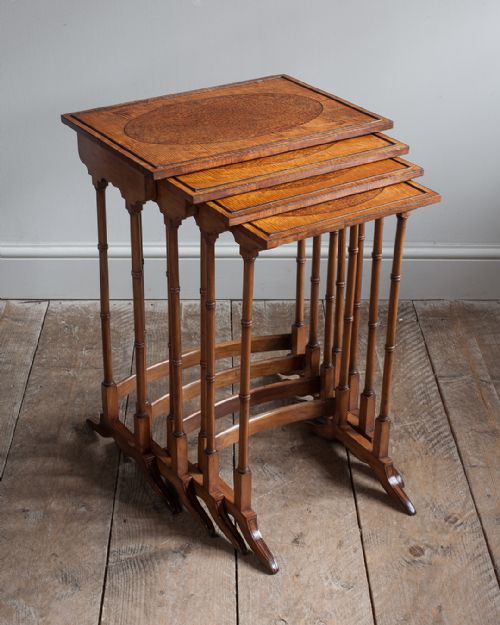
These 19th century nest tables offer a clever space-saving arrangement of graduated surfaces that slide neatly together when not in use.
19th Century Nest Tables
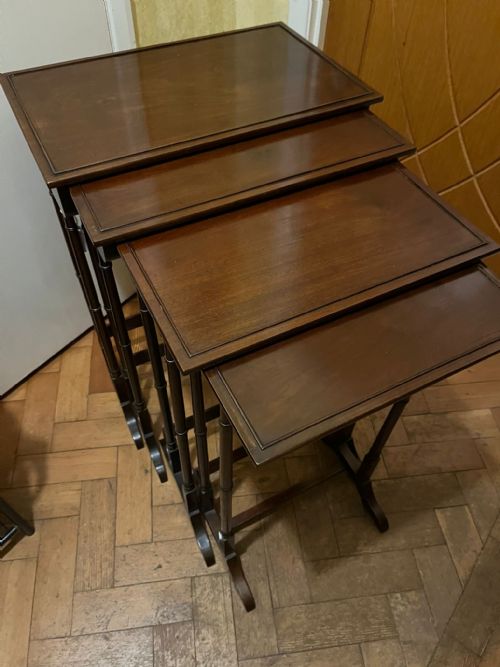
When you search for 19th century nest tables, you encounter sets of graduated tables designed to slide one beneath another into a single compact footprint. The records show these groupings primarily as sets of three or four individual pieces, known traditionally as quartetto tables.
The materials span native timbers like mahogany, oak, walnut, and satinwood alongside exotic imported hardwoods such as rosewood, teak, and Chinese hardwood. Many sets originate from British Regency and Victorian workshops, while others arrive from Chinese workshops working in rosewood and hardwood.
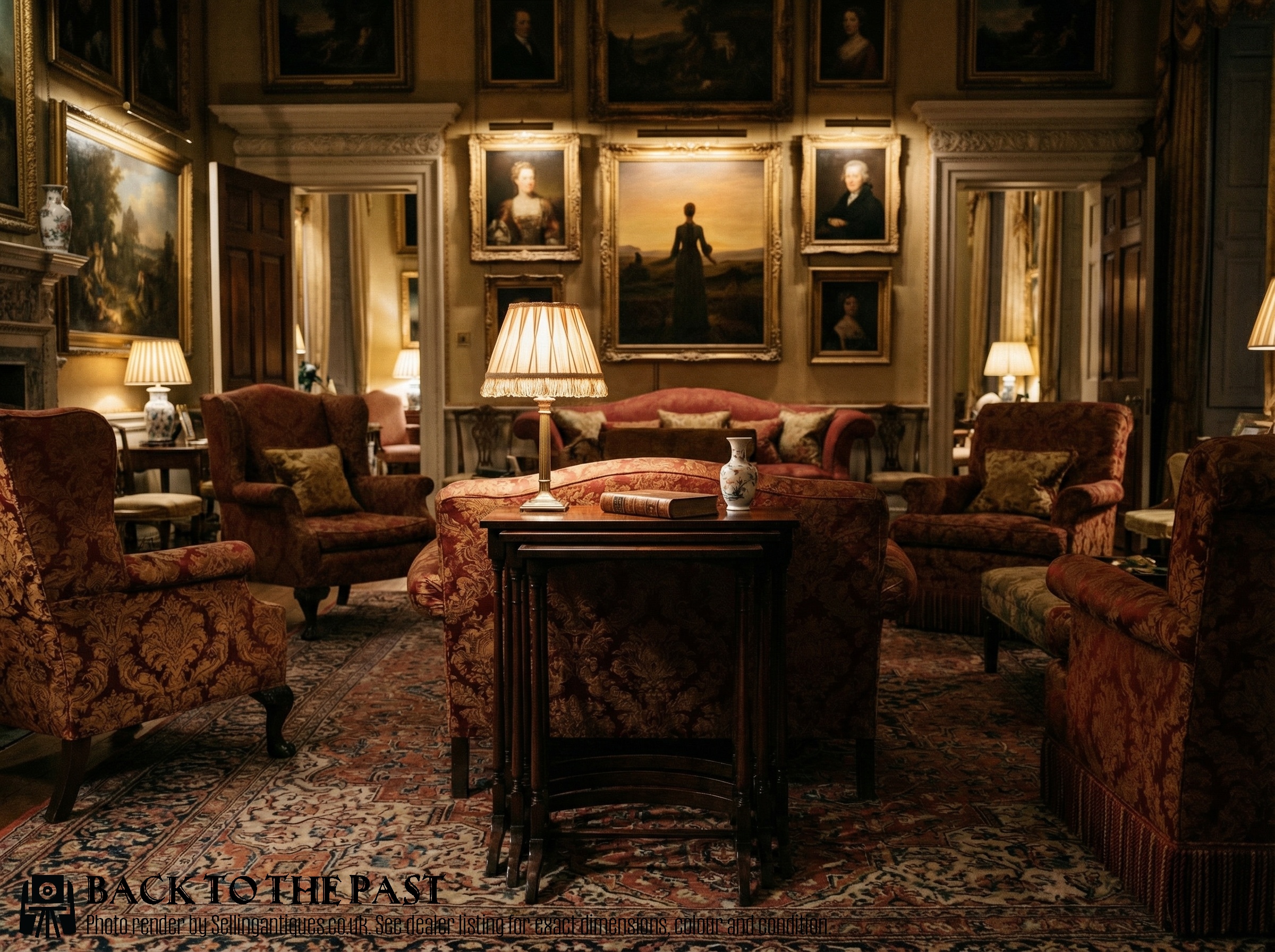
The forms function as occasional, coffee, or side tables that pull out easily for entertaining or writing and pack away compactly against a wall. This practical utility made them a staple in sitting rooms and drawing rooms throughout the nineteenth century.
How they were made
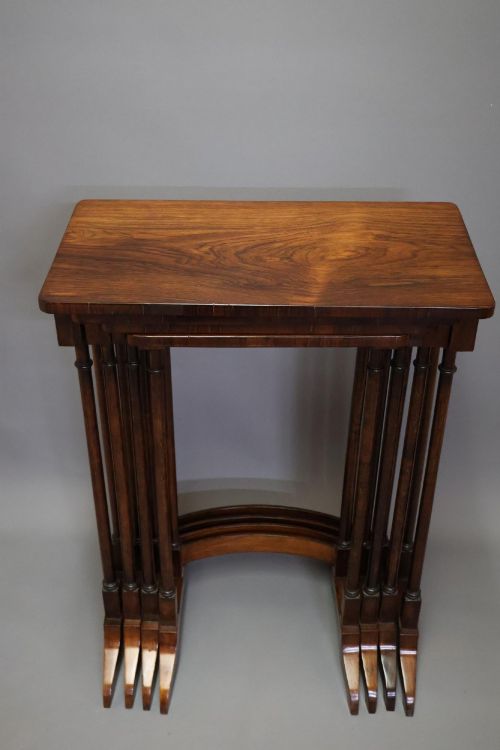
Cabinetmakers constructed these tables using solid timbers and decorative veneers applied to secondary woods, utilising traditional joinery to keep each nested frame light yet rigid. Rosewood and mahogany dominate the British pieces, often enhanced with brass inlay, satinwood banding, or yew veneer tops.
Chinese pieces rely on dense native hardwoods, sometimes featuring carved details or faux bamboo turnings, whilst continental and British lacquer examples display Chinoiserie decoration in gold leaf. French workshops contributed floral painted surfaces and marquetry, employing kingwood and walnut for rich colour variation.
Turned legs, ring-turned supports, and trestle bases provide stability across the graduated sizes, ensuring the smaller tables clear the inner aprons of the larger frames as they slide home.
19th Century Nest Tables Retail Price Guide 2026
Typical asking prices for 19th century nest tables among the pieces listed under this phrase on Sellingantiques today, from the lower quarter to the upper quarter. They describe what is for sale here now, not the wider market.
Listings demonstrate a strong presence of rosewood and mahogany across both British and Chinese 19th century nest tables.
What varies in quality
The distinction between standard utility sets and the finest examples rests upon the selection of timber and the precision of the cabinetwork. High-grade sets employ intensely figured rosewood, satinwood, or burr walnut veneers matched across all four surfaces, maintaining a cohesive aesthetic when separated.
Construction details separate workshop tiers, visible in the graduation tolerances, the delicacy of the leg turnings, and the integration of brass inlay or hand-painted Chinoiserie lacquer. Simpler oak or mahogany versions intended for everyday domestic service contrast with elaborate quartetto suites built for formal reception rooms.
Gillows
The 19th Century Nest Tables Glossary
- Quartetto
- A set of four tables graduated in size to nest together. This term appears frequently in nineteenth-century cabinet makers' records for stacking occasional tables.
- Chinoiserie
- European imitation or evocation of Chinese artistic traditions and motifs. These decorative surfaces often incorporate gold leaf lacquer and oriental scenes.
- Marquetry
- The art of applying pieces of veneer to a structure to form decorative patterns and pictures. Makers utilised varied timbers like satinwood and walnut to create contrasting designs.
- Faux bamboo
- Wood turned and painted to simulate the joints and texture of natural bamboo. This decorative technique appears on nineteenth-century occasional and oriental-style furniture.
- Boulle-work
- Elaborate inlay of tortoiseshell and brass or other metals. Named after a French cabinet maker, it adds reflective surface pattern to black lacquer bodies.
19th Century Nest Tables: Frequently Asked Questions
How many tables are in a set?
Most matching sets comprise either three or four graduated tables designed to slide neatly underneath the largest piece.
Historical records show that four-table configurations were frequently referred to as quartetto sets by contemporary cabinet makers.
What is a quartetto table?
A quartetto is a matched group of four tables built in graduated sizes so the smaller ones slip under the next largest.
This term was standard nomenclature in the nineteenth century for nesting occasional or coffee tables.
How do I identify a Regency set?
Regency pieces often utilise figured rosewood, delicate brass inlay, and slender turned supports characteristic of the early nineteenth century.
They frequently employ the quartetto format, presenting a refined profile intended for formal drawing rooms.