






Rosewood Nesting Tables
Rosewood nesting tables bring together versatile multi-tiered utility and rich timber grain, offering a practical surface set that slides neatly away when floor space matters.
Rosewood Nesting Tables
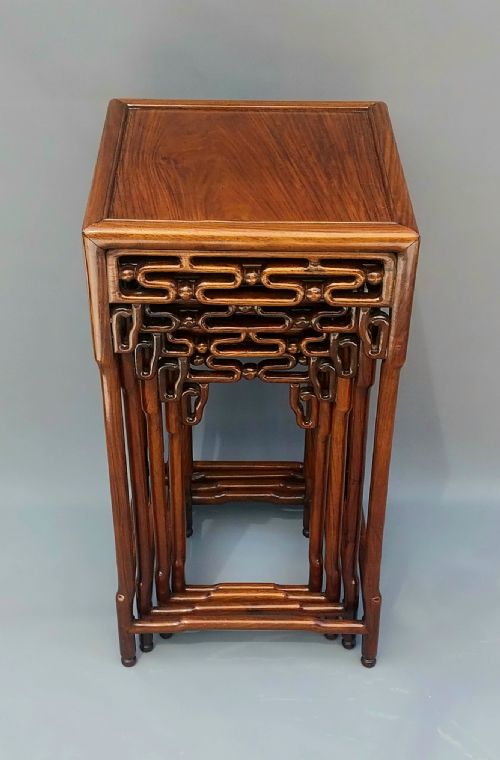
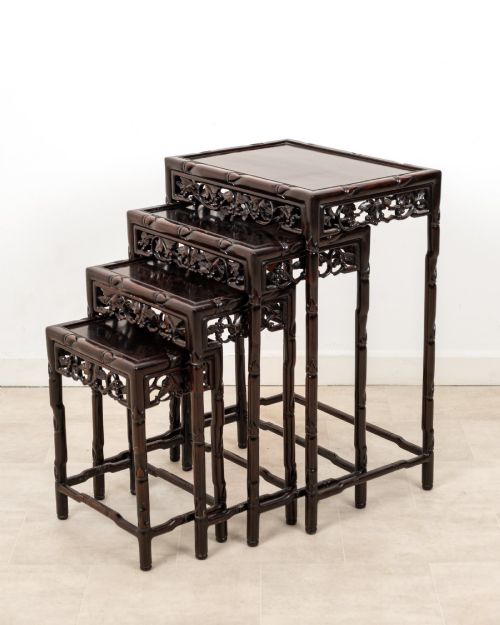
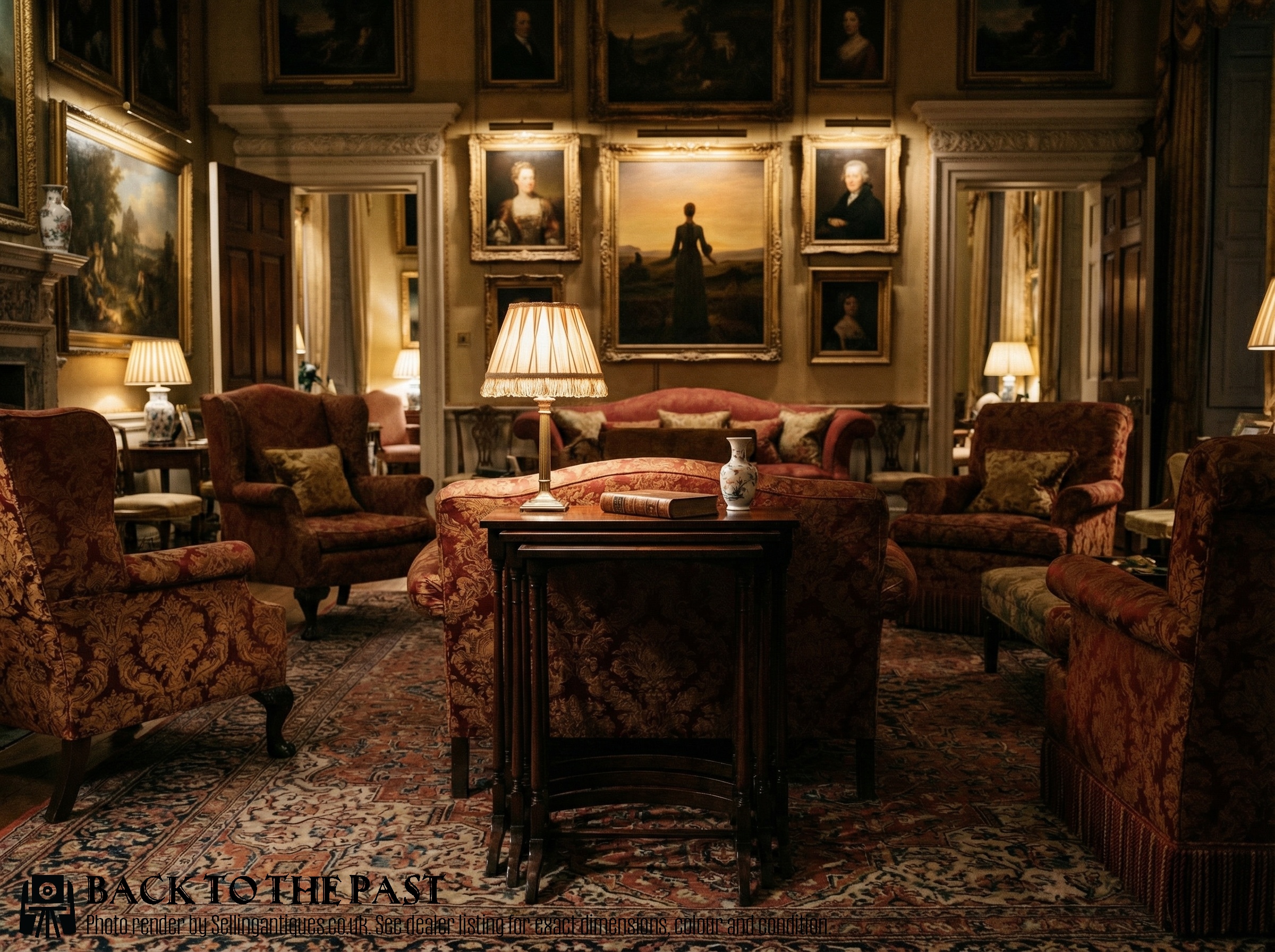
When searching for rosewood nesting tables, a buyer encounters sets spanning the nineteenth century through the early twentieth century, including Regency quartetto sets and Chinese export pieces in hongmu and hardwood. These graduated tables fit one beneath another, serving as occasional surfaces that adjust to the room as needed.
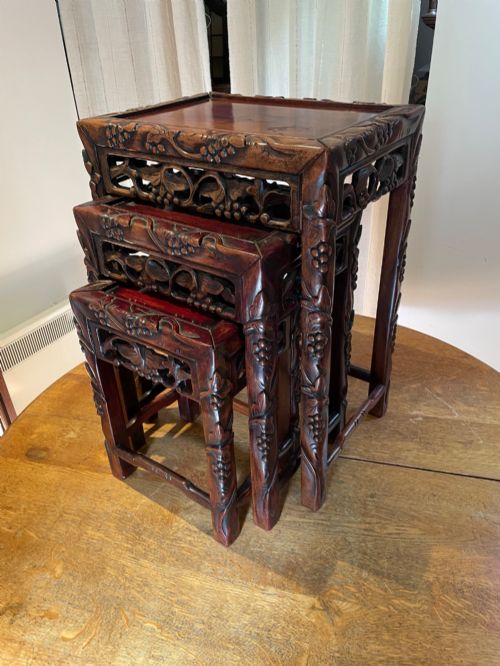
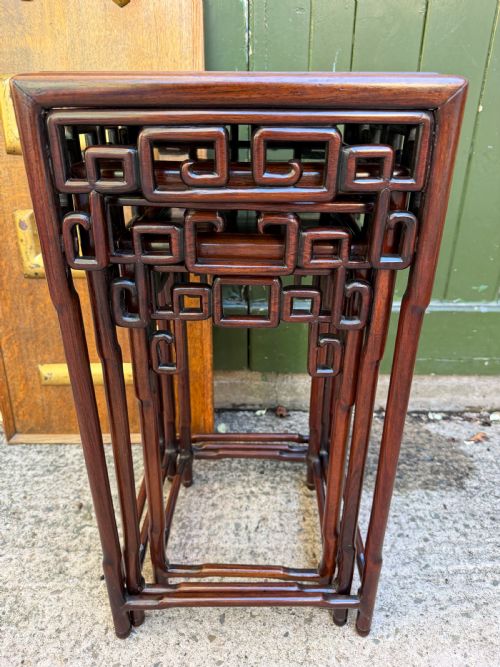
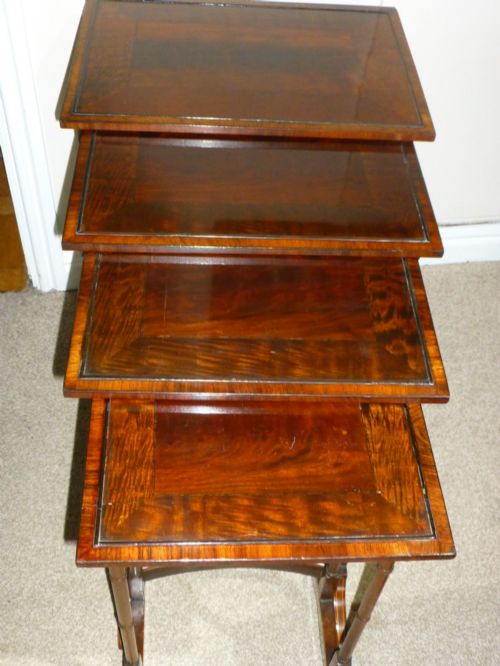
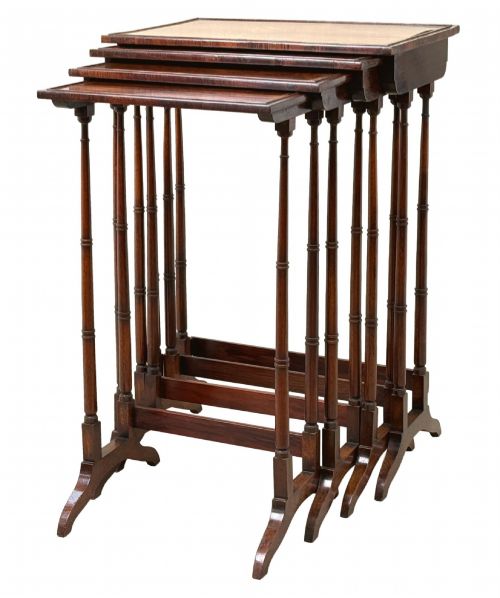
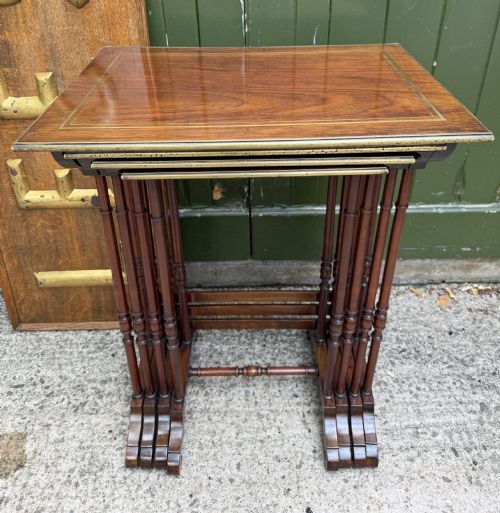
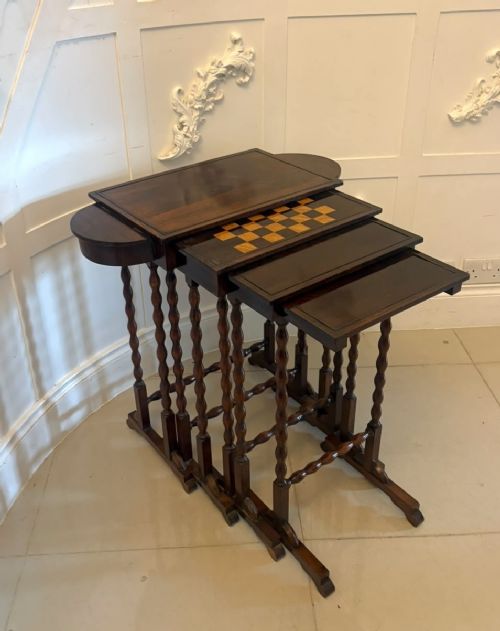
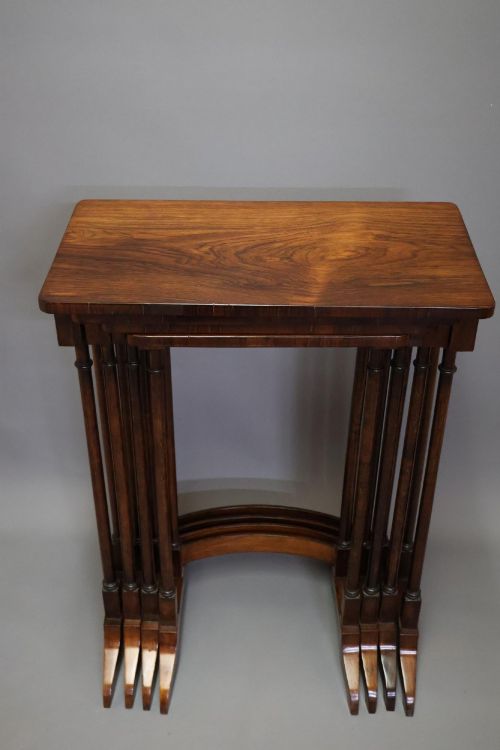
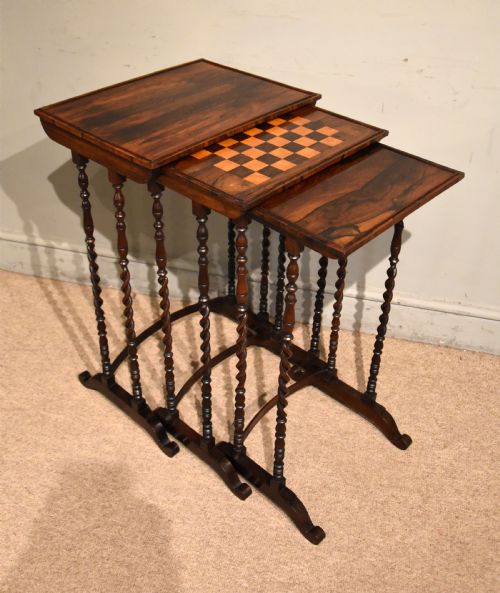
The Regency examples frequently appear as quartetto sets with slender turned columns and rectangular tops, sometimes incorporating brass inlay or integrated chess boards. Alongside these, Chinese Qing Dynasty and later nineteenth-century sets feature carved hardwood or hongmu frames with graduated proportions.
French Art Nouveau and later Art Deco interpretations also surface, utilising specialised timbers such as Indian rosewood or incorporating marquetry. Most items function as side tables or coffee tables within sitting rooms and parlours, preserving floor area while providing multiple tiers for daily use.
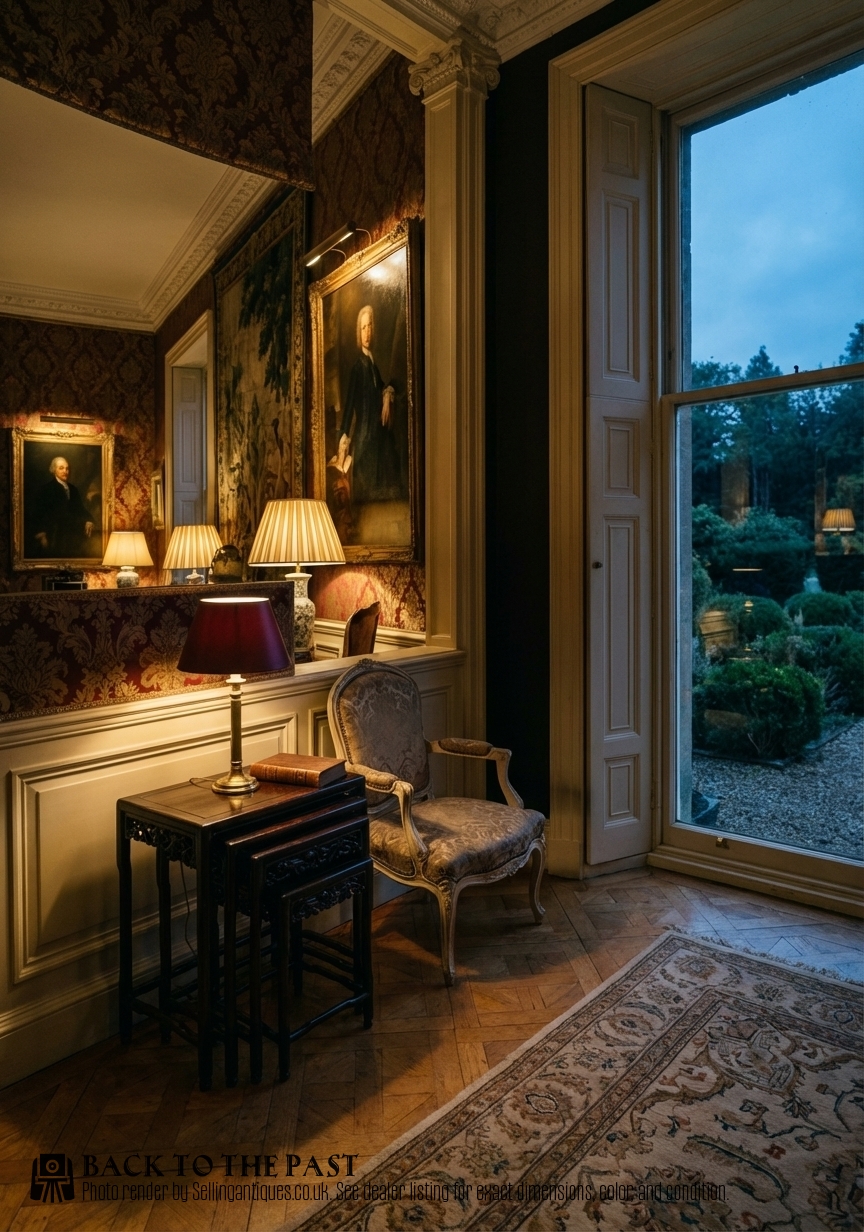
Judging Quality
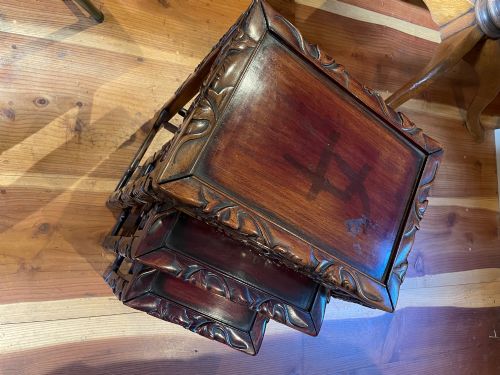
Quality rests in the harmony of the graduating proportions and the stability of the nested stack, ensuring each smaller table tracks smoothly without binding or rocking. Superior sets display carefully matched grain across the tops and robust joinery at the leg junctions that withstand repeated daily extraction.
Finer examples distinguish themselves through crisp carving on Chinese hardwood frames or precise brass stringing and inlay on Regency quartetto tables. The integrity of the timber surface and the retention of original polish separate standard utility sets from exceptional cabinet work.
Rosewood Nesting Tables Retail Price Guide 2026
Typical asking prices for rosewood nesting tables among the pieces listed under this phrase on Sellingantiques today, from the lower quarter to the upper quarter. They describe what is for sale here now, not the wider market.
Listings feature rosewood, hongmu, and assorted hardwoods across periods spanning the nineteenth century through the 1930s.
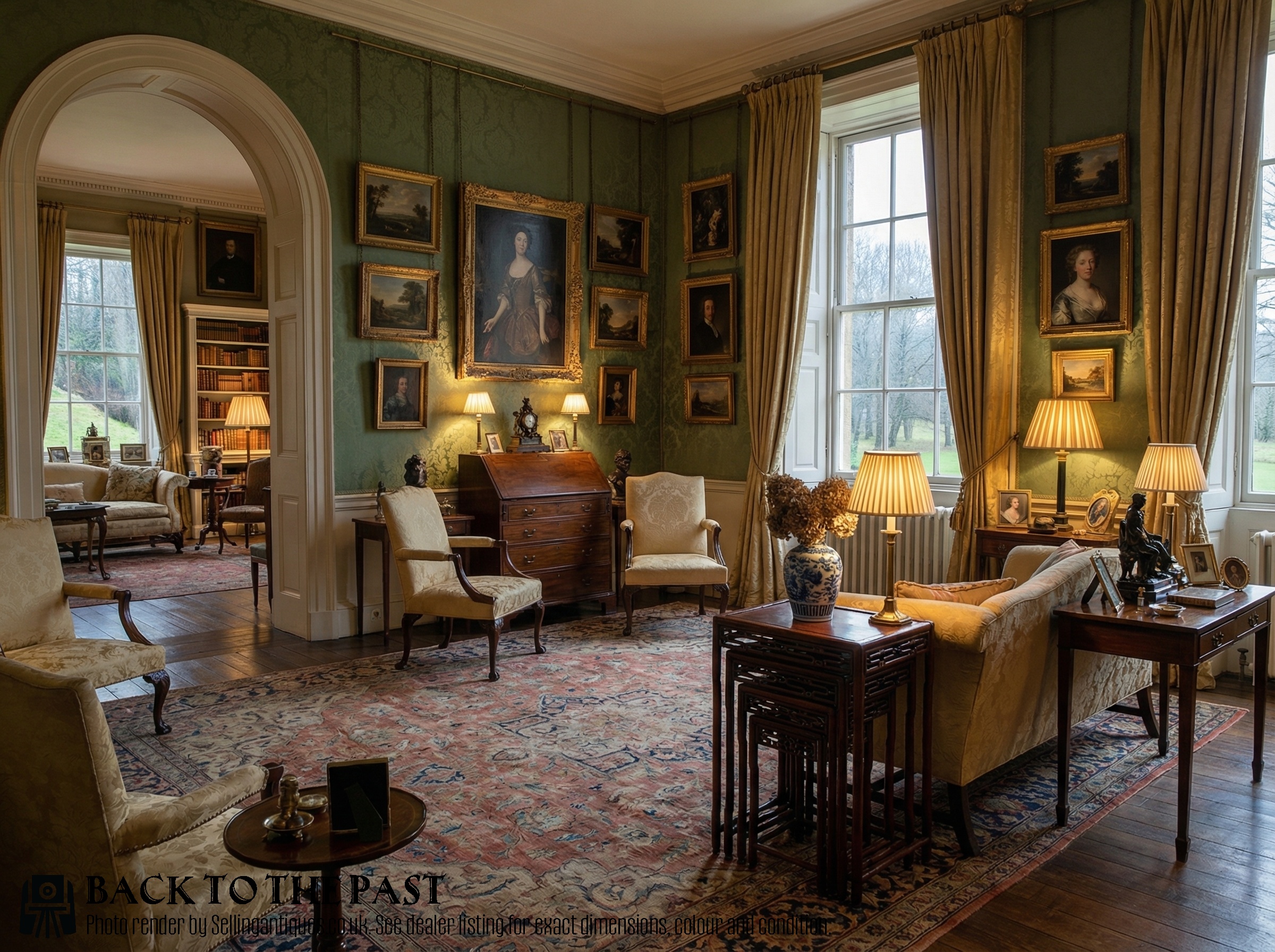
Émile Gallé·Gillows·W&C Wilkinson London
The Rosewood Nesting Tables Glossary
- Quartetto
- A set of four graduated tables designed to nest together. This term appears frequently in Regency furniture descriptions.
- Hongmu
- A traditional Chinese term for dense hardwoods, encompassing various rosewood species used in export furniture. These timbers are valued for their heavy weight and deep colour.
- Graduated
- Describing a set of tables where each tier diminishes in height and width to fit beneath the preceding one. This scaling ensures the entire group occupies the footprint of a single table.
- Vener
- A thin layer of fine wood applied to a base structure to provide a decorative surface. Cabinet makers utilised this technique to display dramatic timber grain.
- Inlay
- A technique where contrasting materials such as brass or boxwood are inserted into recesses within the timber surface. It creates geometric or linear ornamentation.
Rosewood Nesting Tables: Frequently Asked Questions
How do I care for rosewood?
Keep the timber away from direct heat sources and strong sunlight to prevent the polished surface from drying out or fading over time. Regular dusting with a soft, dry cloth maintains the lustre without requiring heavy polishes.
Avoid placing wet glasses or hot cups directly onto the wooden top to protect the vintage finish from water rings and heat marks.
Were these always sold in sets of four?
While many period suites comprise four graduated tables, sets of three appear with equal frequency across both Regency and twentieth-century examples. The size of the nest depended on the maker's design and the intended function within the room.
Individual tables occasionally became separated over generations, but complete nests remain the standard configuration found in these listings.
How do I distinguish Regency from later pieces?
Regency tables generally exhibit specific characteristics such as slender turned uprights, sabre legs, or brass stringing typical of early nineteenth-century British cabinet making. The proportions tend to be rigorous, focusing on architectural lines and polished timber.
Later twentieth-century versions introduce different structural cues, such as Art Nouveau floral motifs or Art Deco geometric framing, reflecting the aesthetic of their respective decades.
Can these tables support heavy items?
Nesting tables were designed for light occasional use, such as holding books, tea cups, or small decorative objects rather than heavy lamps. The smaller tables in the set have delicate frames and lighter underpinnings to fit beneath the larger tiers.
Distributing weight evenly and using the largest table for heavier items preserves the structural integrity of the smaller nested frames.