



Regency Quartetto Tables
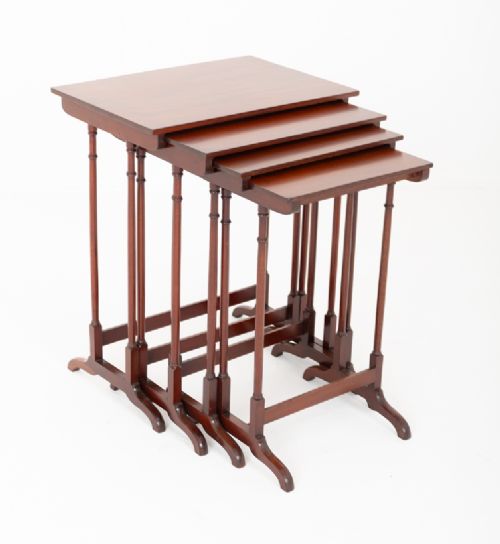
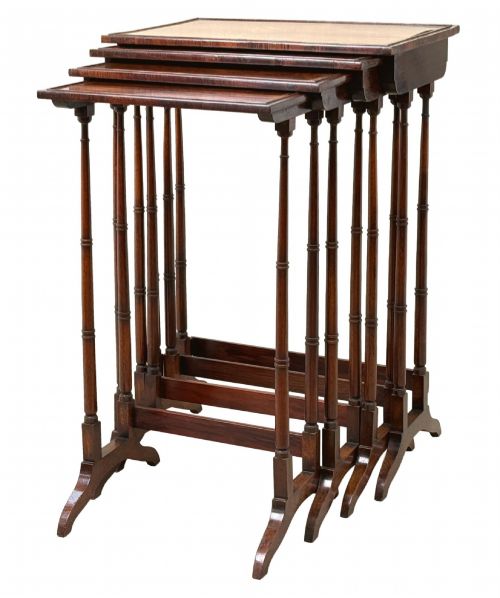
Regency quartetto tables are graduated nests of four stacking surfaces designed for versatility in the elegant drawing rooms of the period.
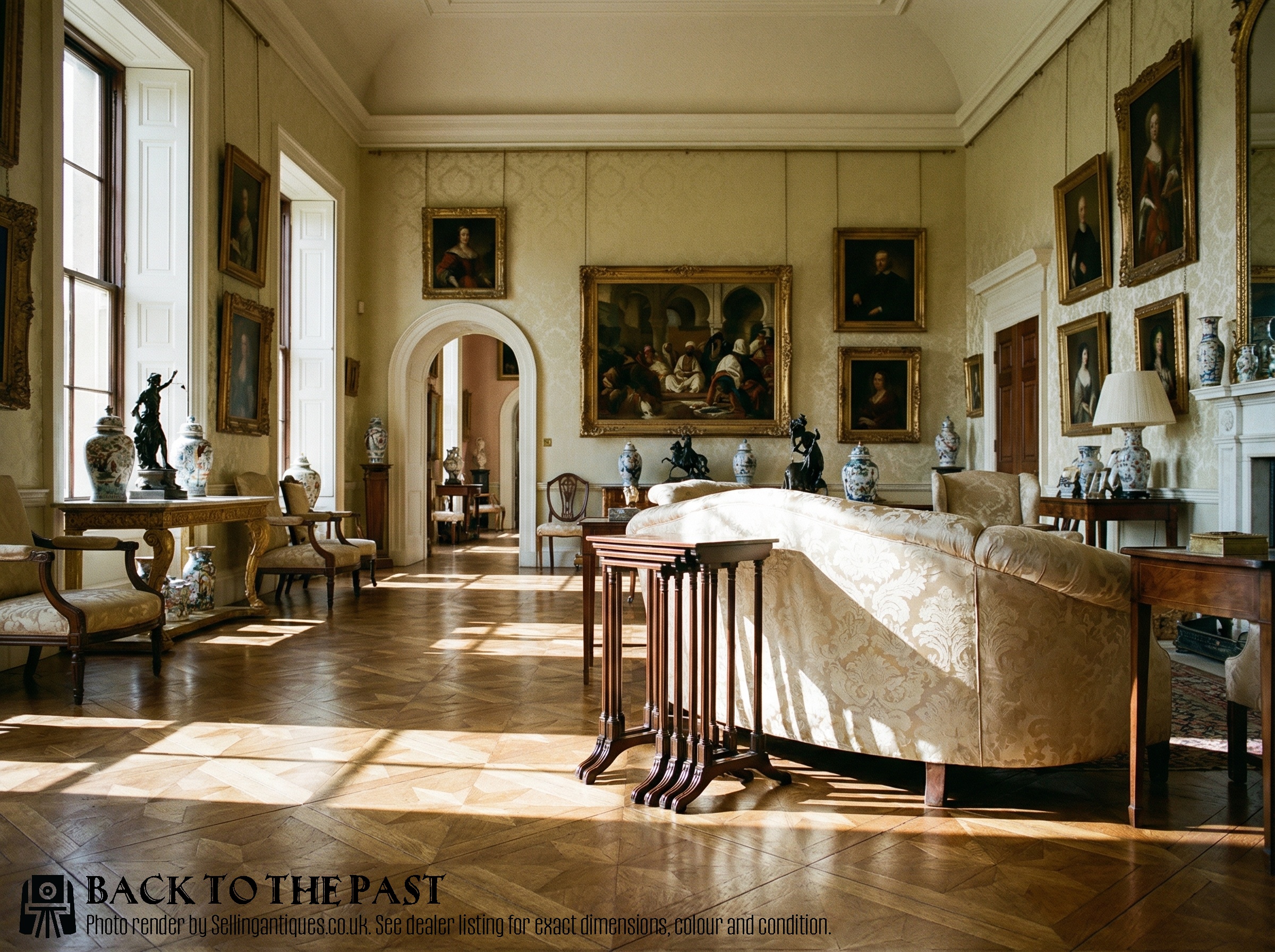
Regency Quartetto Tables
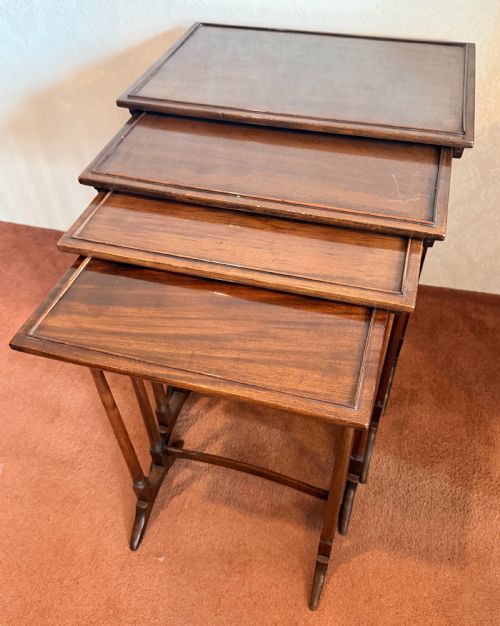
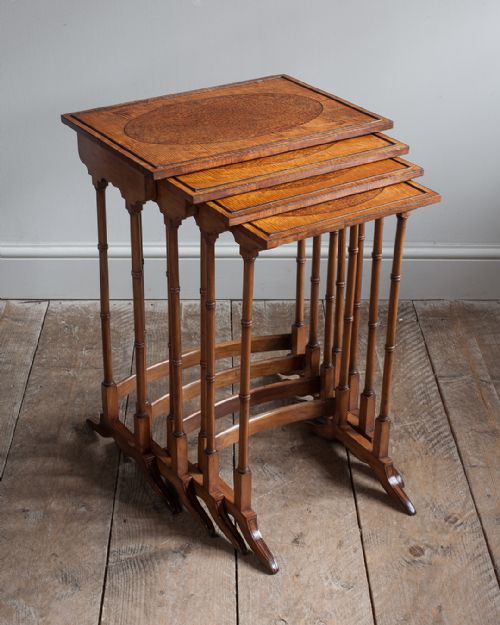
These pieces are clever nests of four tables designed to slide neatly into one another when not in use. When searching for regency quartetto tables, a buyer finds stacking sets primarily from the nineteenth century and the Regency period, alongside later interpretations from the Edwardian era and the nineteen-twenties.
Most examples encountered on this page originate from the Regency period or nineteenth century, constructed as low lamp, wine, or occasional coffee tables. Makers of the time utilised classic timbers like mahogany and rosewood, ensuring these stacking sets combined practicality with refined aesthetics.
Materials and Construction
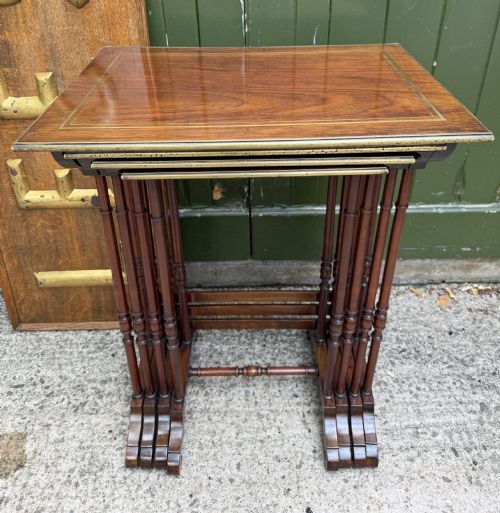
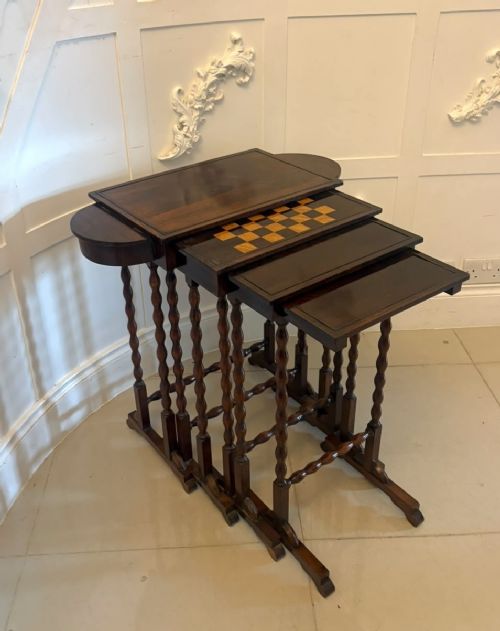
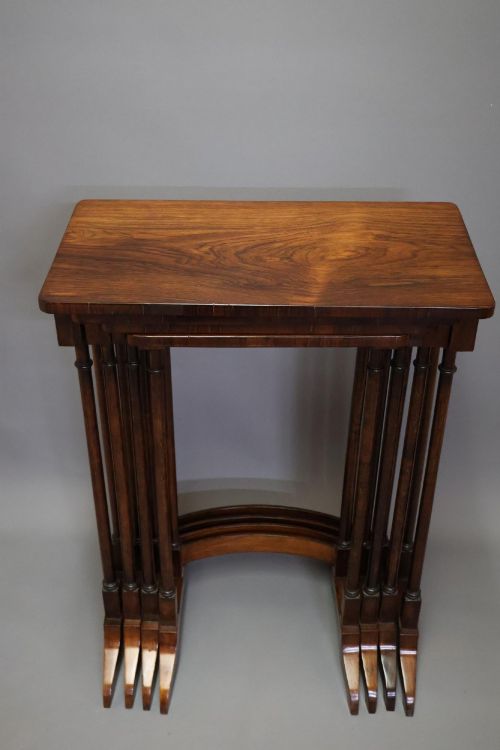
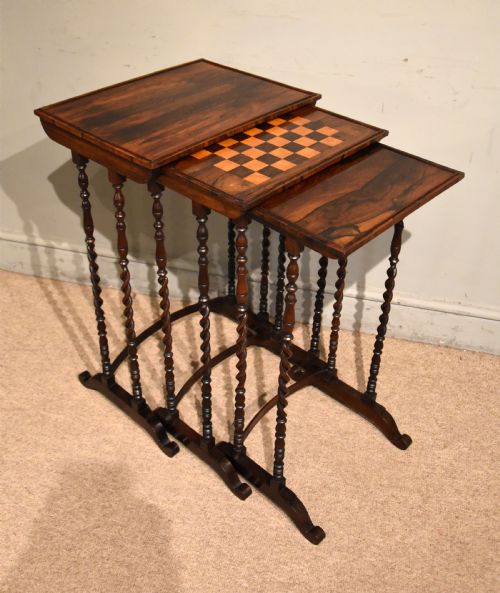
Cabinetmakers constructed these tables using dense timbers such as mahogany, rosewood, and satinwood, often embellishing the surfaces with boxwood stringing or delicate inlay. The timber selection dictated the visual weight of the piece, with richly figured rosewood and polished mahogany dominating the period output.
Joinery focused on creating stable yet exceptionally slender frames so the tables could graduate smoothly in size without binding. Craftsmen shaped individual timber boards to form four distinct stacking tiers, balancing structural integrity with the lightness required for frequent moving.
Regency Quartetto Tables Retail Price Guide 2026
Typical asking prices for regency quartetto tables among the pieces listed under this phrase on Sellingantiques today, from the lower quarter to the upper quarter. They describe what is for sale here now, not the wider market.
Rosewood, mahogany, and satinwood appear frequently across the documented materials.
Assessing Quality and Execution
Quality in a nest of tables rests upon the precision of the graduated scaling and the stability of the frame when all four tiers are free-standing. Superior examples display seamless timber matching across the surfaces and crisp execution of inlaid boxwood details.
W and C Wilkinson London·Gillows
The Regency Quartetto Tables Glossary
- Quartetto tables
- A set of four tables designed to graduate in size so they stack together compactly. This form gained popularity during the Regency period for serving tea or holding small items.
- Nest of tables
- A group of several small tables built to fit one beneath another. They provide flexible surface space in living areas without cluttering the room.
- Boxwood
- A dense, pale yellow wood frequently utilised for stringing and contrasting inlay on dark timbers like mahogany and rosewood. It adds sharp linear definition to tabletop edges.
- Satinwood
- A lustrous, yellowish timber valued for its fine grain and reflective quality. Cabinetmakers used it extensively for decorative veneering on high-status occasional furniture.
- Stringing
- Thin inlay lines of contrasting wood set flush into the surface of a panel or table top. This decorative technique frames the primary timber and accentuates the geometry of the piece.
Regency Quartetto Tables: Frequently Asked Questions
What is a quartetto table?
A quartetto table is one of a set of four graduated stacking tables designed to fit neatly inside one another. The form allows multiple surfaces to occupy the floor space of just one small table.
Originating in the nineteenth century, these pieces provided flexible accommodation for tea drinking, writing, or holding lamps in principal rooms.
How were these tables used?
These tables served primarily as versatile occasional surfaces that could be drawn out individually when guests visited. They functioned as small tea tables, lamp stands, or portable desks.
When not in use, the smaller tables slid beneath the largest one to save floor space in the drawing room or parlour.
How do I spot a Regency period set?
Regency sets typically feature rich timbers like rosewood or mahogany, often accented with fine boxwood inlay or delicate framing. The proportions remain slender and balanced to maintain ease of movement.
Later Edwardian and early twentieth-century interpretations often echo these Regency design characteristics while utilising slightly different construction methods.
Can I use them as coffee tables?
The largest table in the nest often functions well as a low lamp or occasional table, while the smaller tiers suit placement beside seating. Their original nineteenth-century height is lower than standard dining tables but well-suited to occasional use.
Living with them involves separating the stack around a room or keeping them nested together as a decorative accent piece.