




Quartetto Nest of Tables
When you select a quartetto nest of tables, you choose a set of graduated occasional tables that stack neatly inside one another to save floor space.
Quartetto Nest of Tables
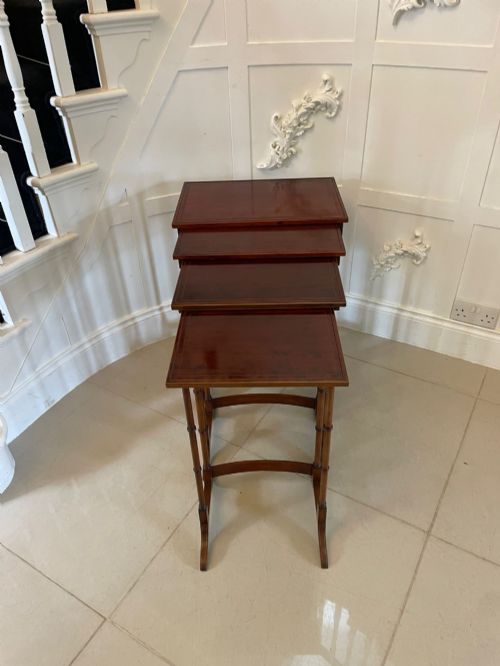
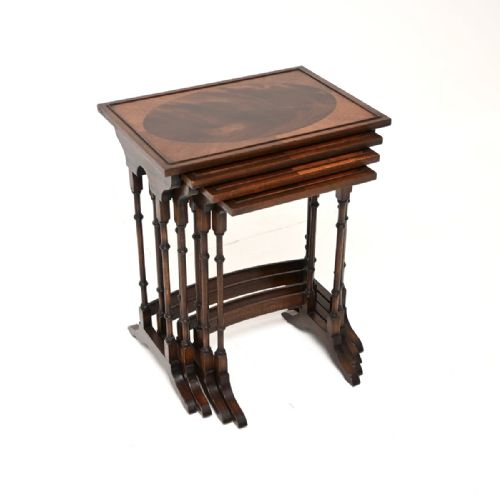
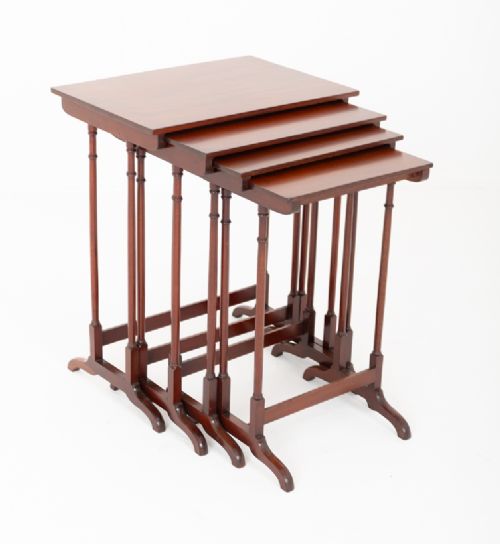
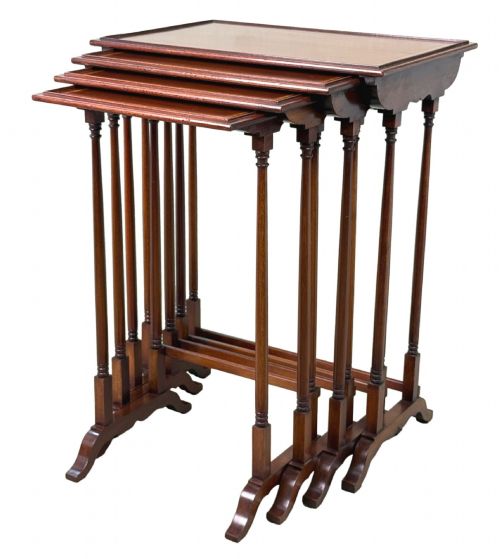
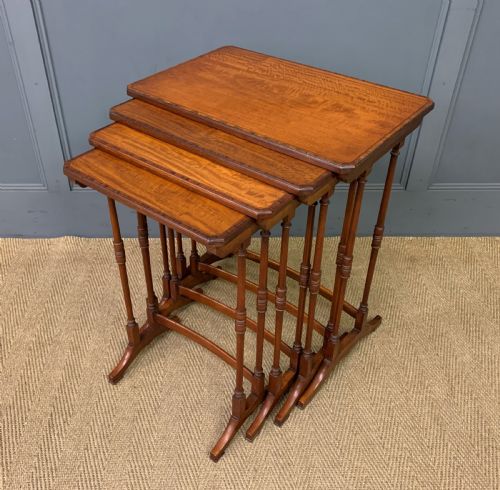
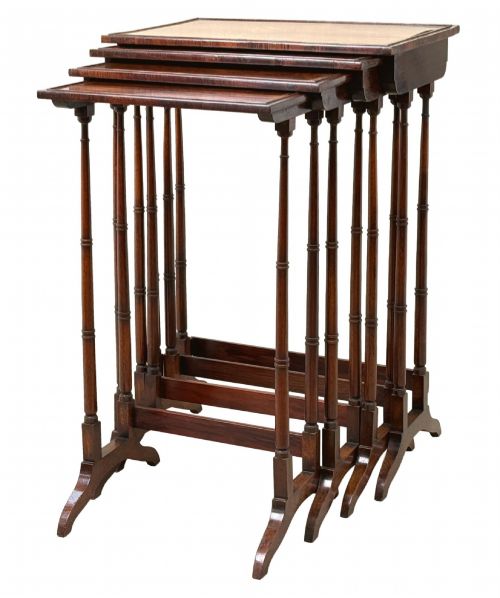
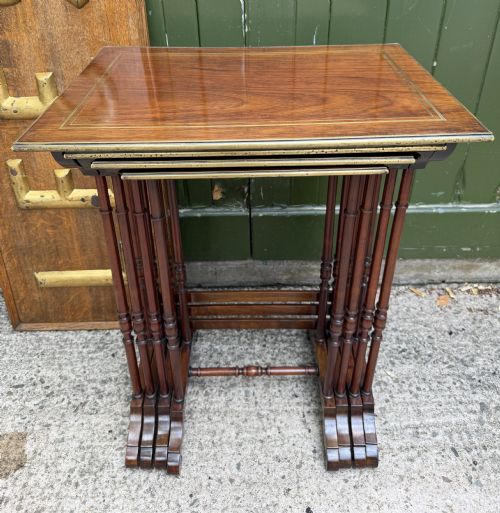
A quartetto nest of tables consists of four graduated tables designed to slide together into the footprint of the largest single piece. These space-saving suites appear frequently in nineteenth-century and early twentieth-century designs, spanning the Regency, Victorian, and Edwardian eras.
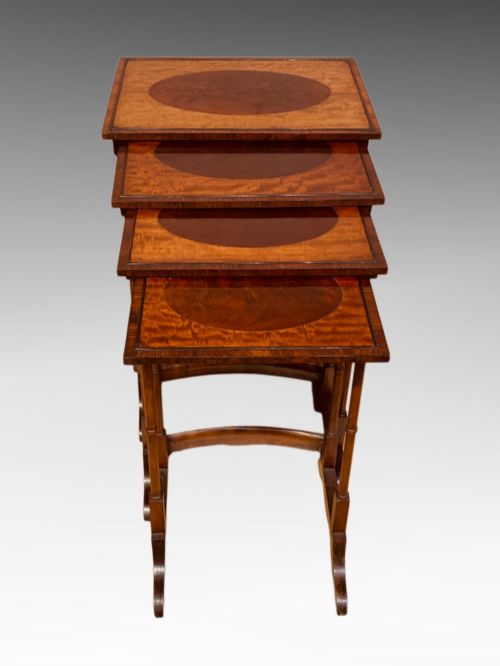
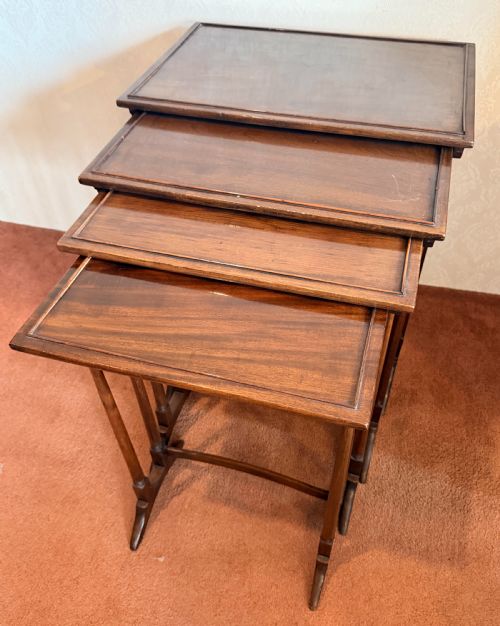
Makers produced these tables in forms ranging from plain mahogany frames to elaborate satinwood inlay and serpentine shapes in the Sheraton style. Buyers seeking a quartetto nest of tables will find many examples from the Edwardian period alongside nineteenth-century iterations.
Materials and Construction
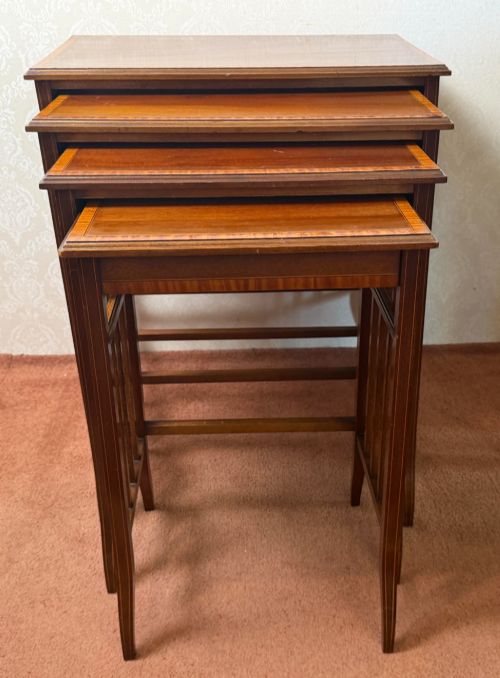
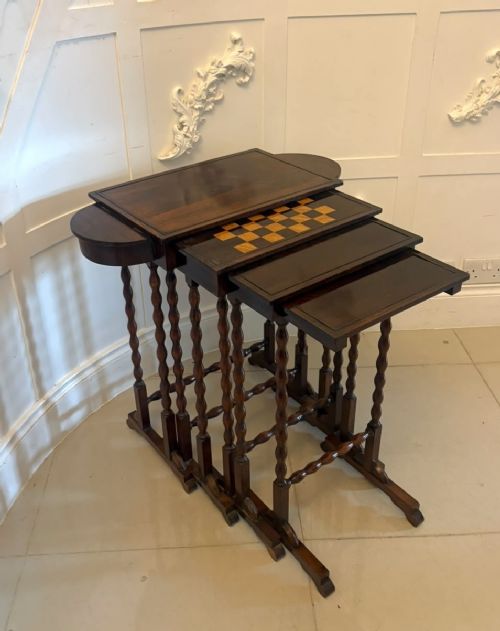
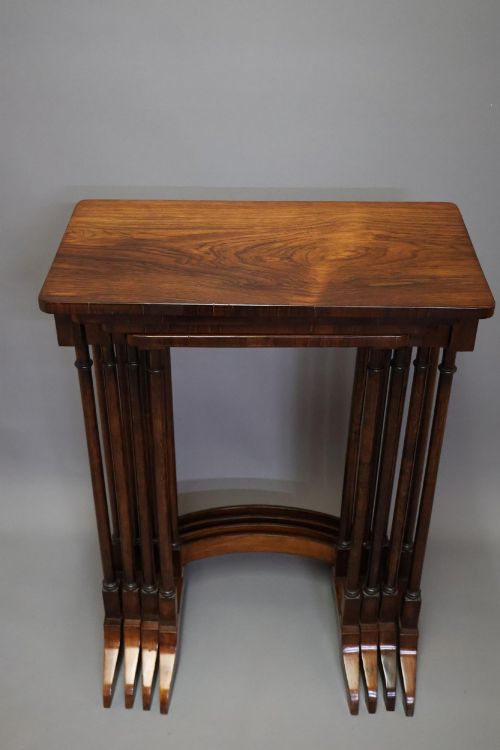
Cabinetmakers utilised dense timbers such as mahogany, rosewood, and walnut for the structural frames and tabletops, often employing boxwood and satinwood for contrasting stringing and decorative inlay. Some Regency pieces incorporate brass inlay or integrated chess boards into the sliding tops.
The framing relies on slender square tapered legs or turned supports designed to clear the aprons of the smaller tables as they nest. Carpenters built each tier with slight dimensional differences to ensure smooth stacking without surface friction.
Quartetto Nest of Tables Retail Price Guide 2026
Typical asking prices for quartetto nest of tables among the pieces listed under this phrase on Sellingantiques today, from the lower quarter to the upper quarter. They describe what is for sale here now, not the wider market.
Some nineteenth-century tables hide a complete chess board within the sliding top, ready for an impromptu match.
Distinctions in Quality
Quality rests in the precision of the graduated sizing and the crispness of the timber selection, such as figured mahogany or rich rosewood grain. Superior examples display tight joinery at the corners and finely executed crossbanding or inlay that aligns across all four pieces.
Lesser pieces feature thick, heavy frames that compromise the elegant proportions intended for a stackable occasional set. The handling of secondary timbers on the undersides and the smoothness of the sliding action mark the difference between standard workshop output and fine cabinet work.
Gillows
The Quartetto Nest of Tables Glossary
- Quartetto
- A set of four nesting tables designed to stack within one another. The term derives from Italian and appears frequently in nineteenth-century trade records.
- Cross banding
- A narrow strip of veneer laid across the grain of the main tabletop. This decorative border frames the central panel.
- Serpentine form
- A gently undulating tabletop edge with alternating convex and concave curves. Cabinetmakers applied this shape to enhance visual movement.
- Stringing
- A thin inlay of contrasting wood inserted into channels cut into the tabletop. It creates delicate linear patterns on the surface.
Quartetto Nest of Tables: Frequently Asked Questions
What is a quartetto nest of tables?
A quartetto nest of tables is a set of four stackable occasional tables designed to fit inside each other. They provide multiple surface areas while occupying the floor space of a single small table.
Cabinetmakers produced these sets primarily during the nineteenth and early twentieth centuries. They served practical functions in drawing rooms for tea, reading, or games.
How were quartetto tables used originally?
These tables were deployed around sitting rooms when guests visited and needed places for cups or books. When not in use, the smaller tables slid into the largest frame to clear the room.
Certain specialised versions included integrated chess boards or writing surfaces. This adaptability made them popular in formal English drawing rooms.
How do I identify a Regency quartetto set?
Regency sets typically feature rosewood or mahogany timbers, sometimes accented with brass inlay or delicate turning. They often exhibit classical proportions and clean structural lines.
Later Victorian and Edwardian examples tended to introduce lighter satinwood veneers and more decorative inlay work. Examining the timber grain and secondary woods helps confirm the period.
Are all nesting tables called quartetto?
Not all nesting tables carry the quartetto designation, which specifically denotes a set of four graduated tables. Other configurations include nests of three or pairs of tables.
The term quartetto appears explicitly in nineteenth-century and early twentieth-century descriptions for four-tier stacking suites.