


Dark Wood Nesting Tables
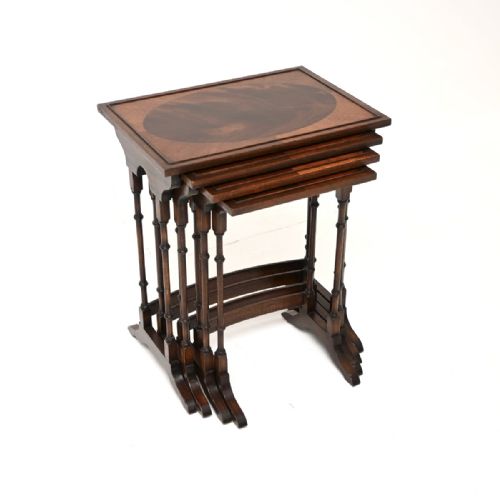
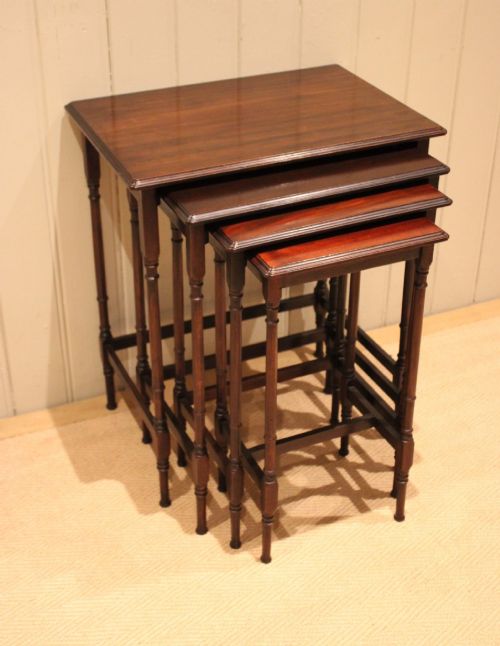
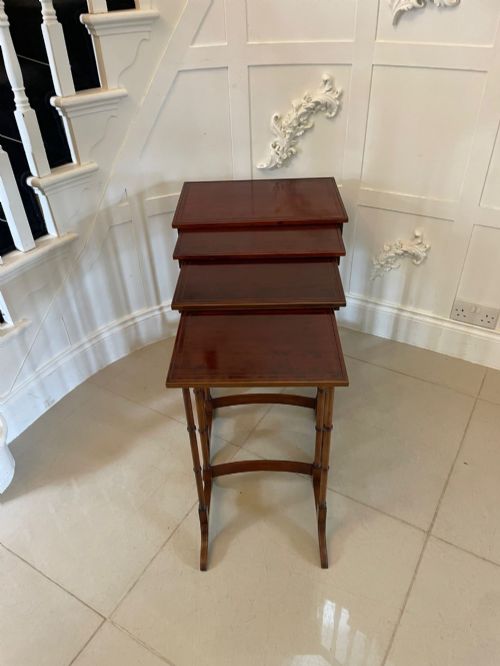
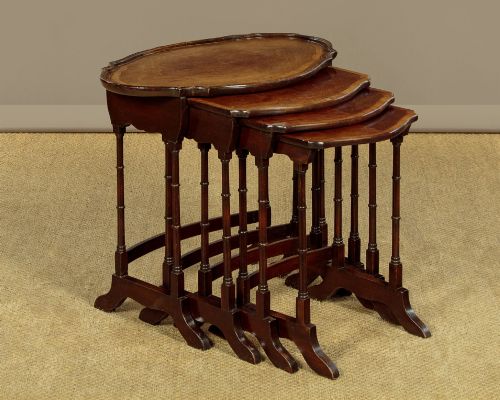
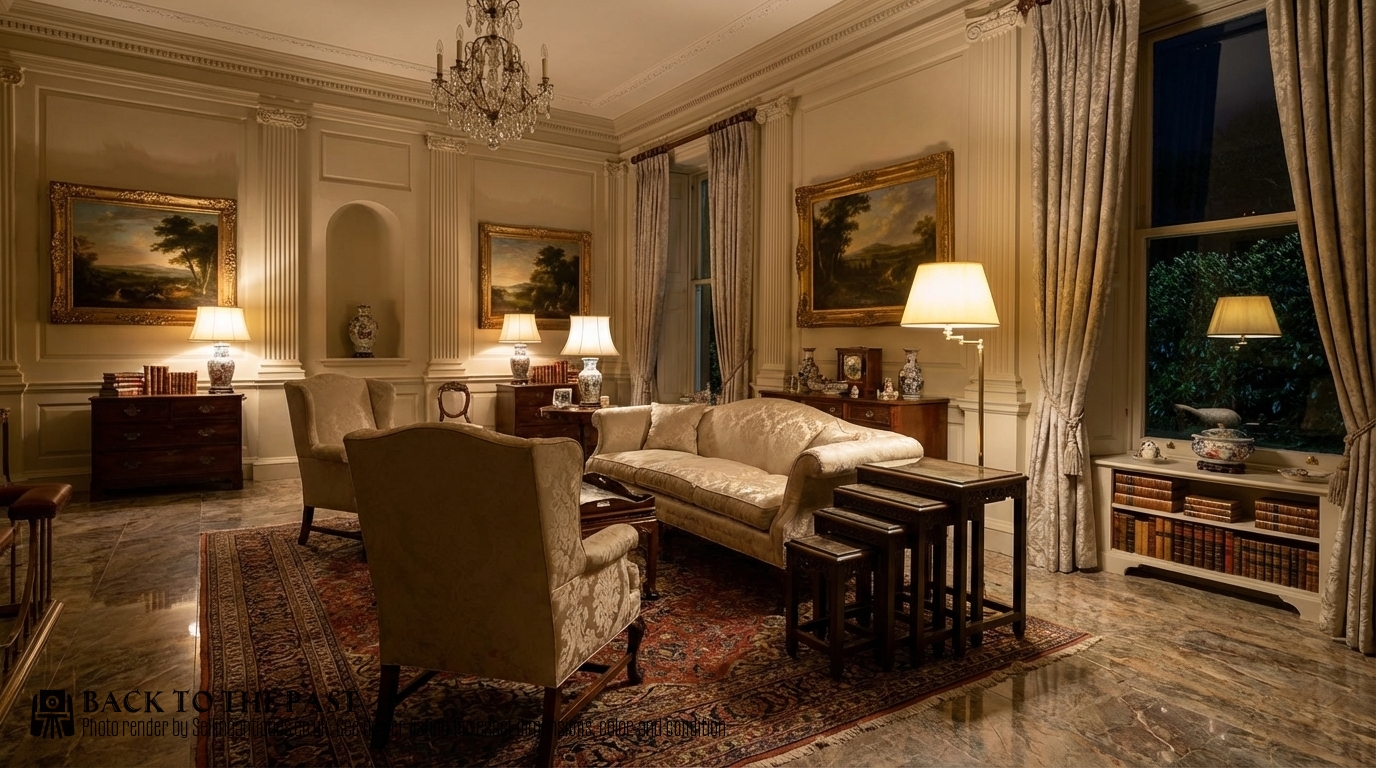
These dark wood nesting tables slide neatly together to save space while offering multiple surfaces for lamps, tea or books.

Dark Wood Nesting Tables
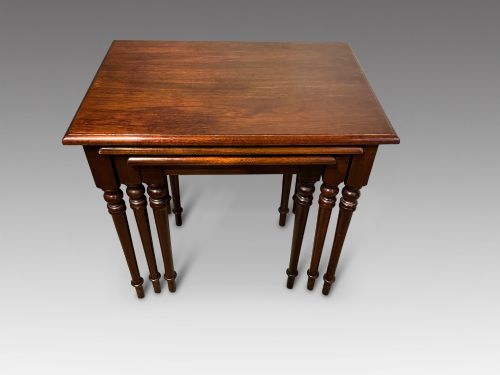
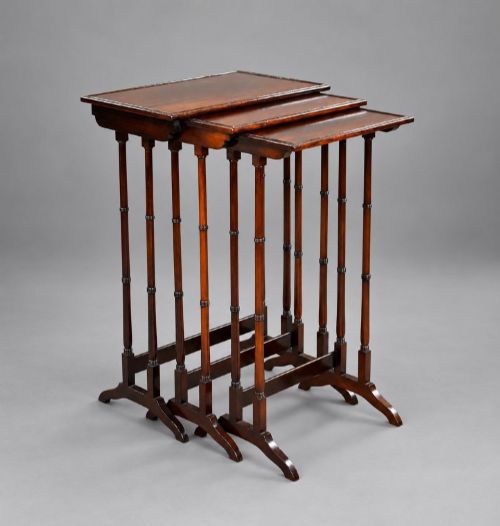
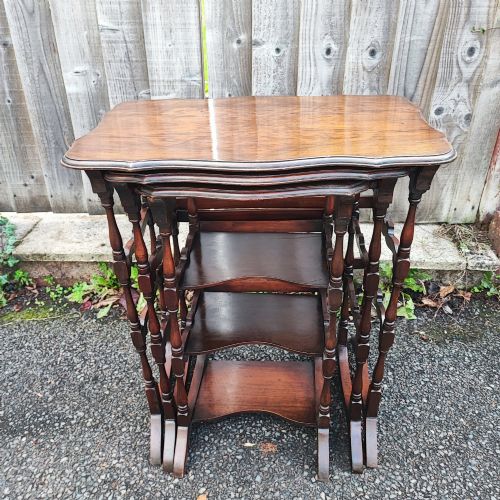
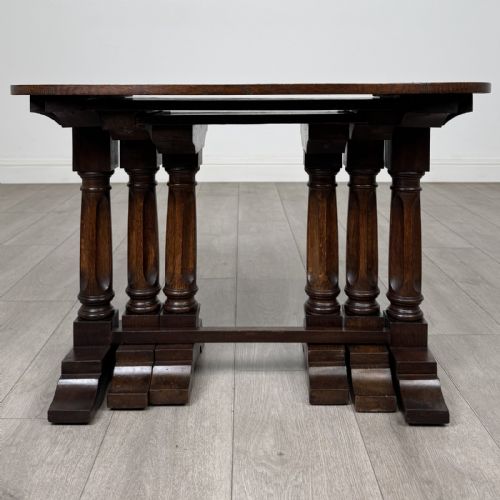
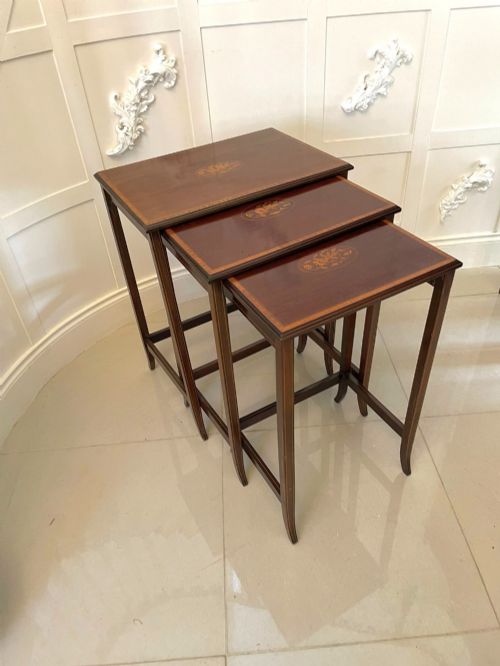
Dark wood nesting tables comprise sets of graduated tables designed to fit one beneath another when not in use. You will most frequently encounter mahogany and rosewood examples dating from the nineteenth and early twentieth centuries.
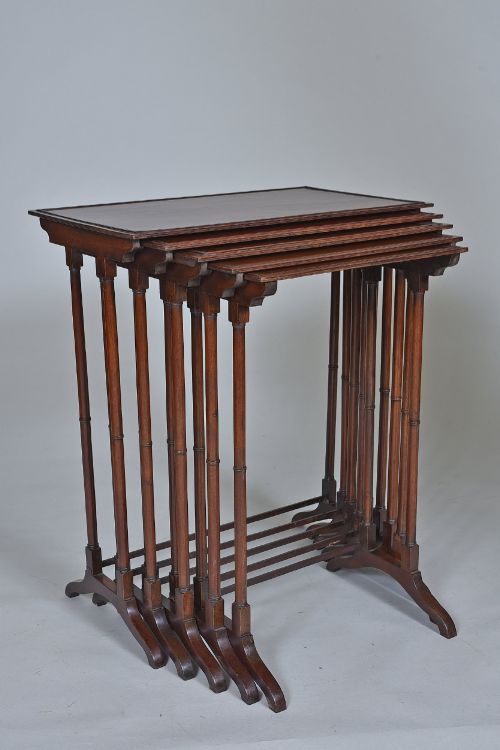
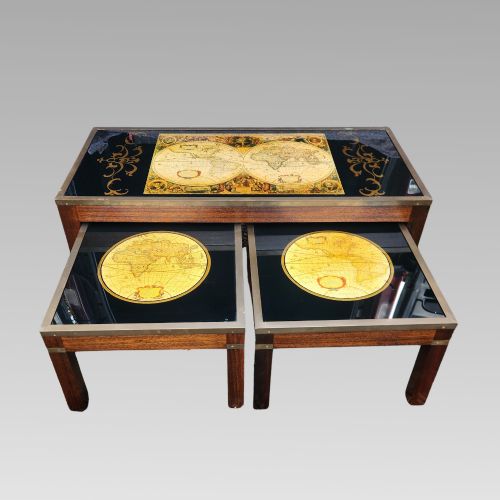
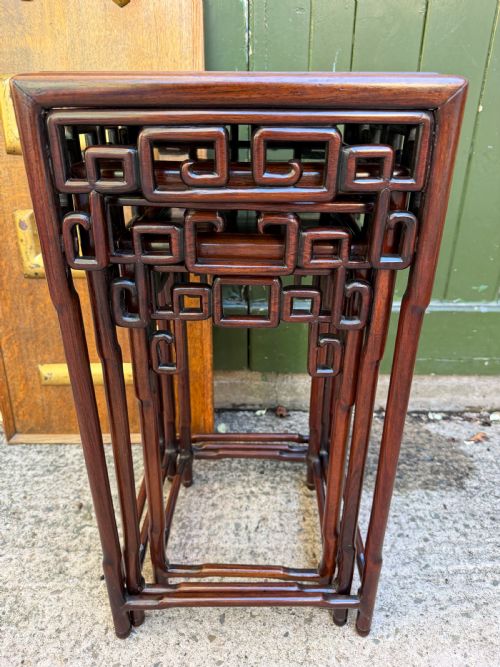
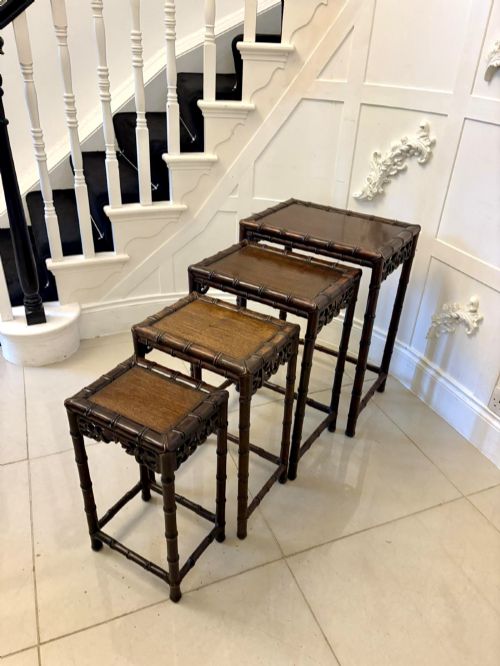
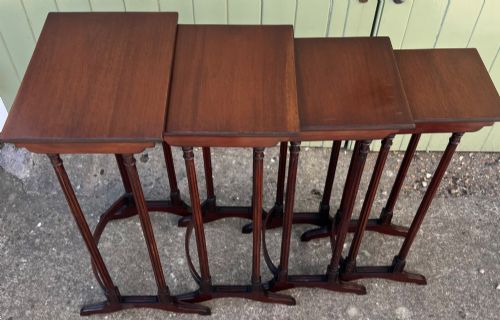
The form spans straightforward Edwardian and Victorian four-table sets, often called quartetto tables, alongside Chinese export and Qing Dynasty hardwood pieces. Occasional and coffee table variants appear regularly across the selection.
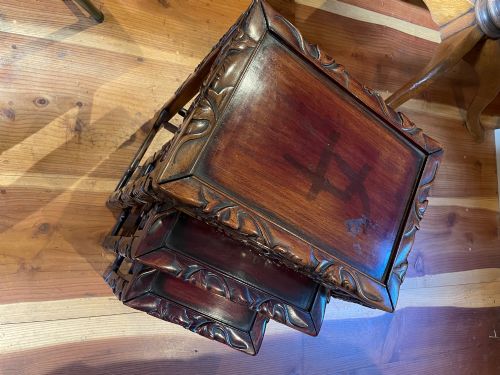
Originating largely from British workshops influenced by Regency and Georgian styles, these sets also encompass Anglo-Indian and Chinese production in teak, hongmu and lacquered finishes.
Materials and construction
Cabinetmakers utilised dense timbers such as mahogany, rosewood and hardwood, frequently pairing them with contrasting satinwood or boxwood inlay. Lacquer and carved teak also appear among Asian export pieces.
Construction relied on sturdy joinery to ensure each smaller table slid smoothly into its neighbour without jamming. Faux bamboo carving, brass inlays and hand-carved oriental motifs demonstrate the diverse decorative techniques applied to the wood.
Dark Wood Nesting Tables Retail Price Guide 2026
Typical asking prices for dark wood nesting tables among the pieces listed under this phrase on Sellingantiques today, from the lower quarter to the upper quarter. They describe what is for sale here now, not the wider market.
One exceptional nineteenth-century rosewood set cleverly conceals an integrated chess table within the top surface for impromptu matches.
Assessing quality and finish
Quality rests primarily on the selection of timber grain and the precision of the graduated sizing. Superior sets maintain structural stability across all four tables while permitting a smooth, effortless glide into the frame.
Fine examples display crisp inlay work, undisturbed polish and harmonious proportions rather than heavy, clumsy joints. The integrity of the secondary timbers and the crispness of any hand carving further separate standard production from exceptional pieces.
The Dark Wood Nesting Tables Glossary
- Quartetto
- A matching set of four graduated tables designed to nest together. This term appears frequently in nineteenth-century British furniture descriptions.
- Hongmu
- A traditional Chinese term for dense hardwoods used in furniture making. These heavy, dark timbers often show rich natural grain.
- Satinwood
- A light-coloured, lustrous timber frequently utilised for decorative stringing and inlay on dark wood furniture. It provides a sharp visual contrast against mahogany.
- Chinoiserie
- European imitation and adaptation of Chinese artistic traditions. This style manifests in lacquered surfaces and oriental motifs on British-made tables.
- Faux bamboo
- Wood turned and carved to imitate natural bamboo stalks. Victorian makers adopted this decorative technique for occasional and tea tables.
Dark Wood Nesting Tables: Frequently Asked Questions
How were nesting tables used historically?
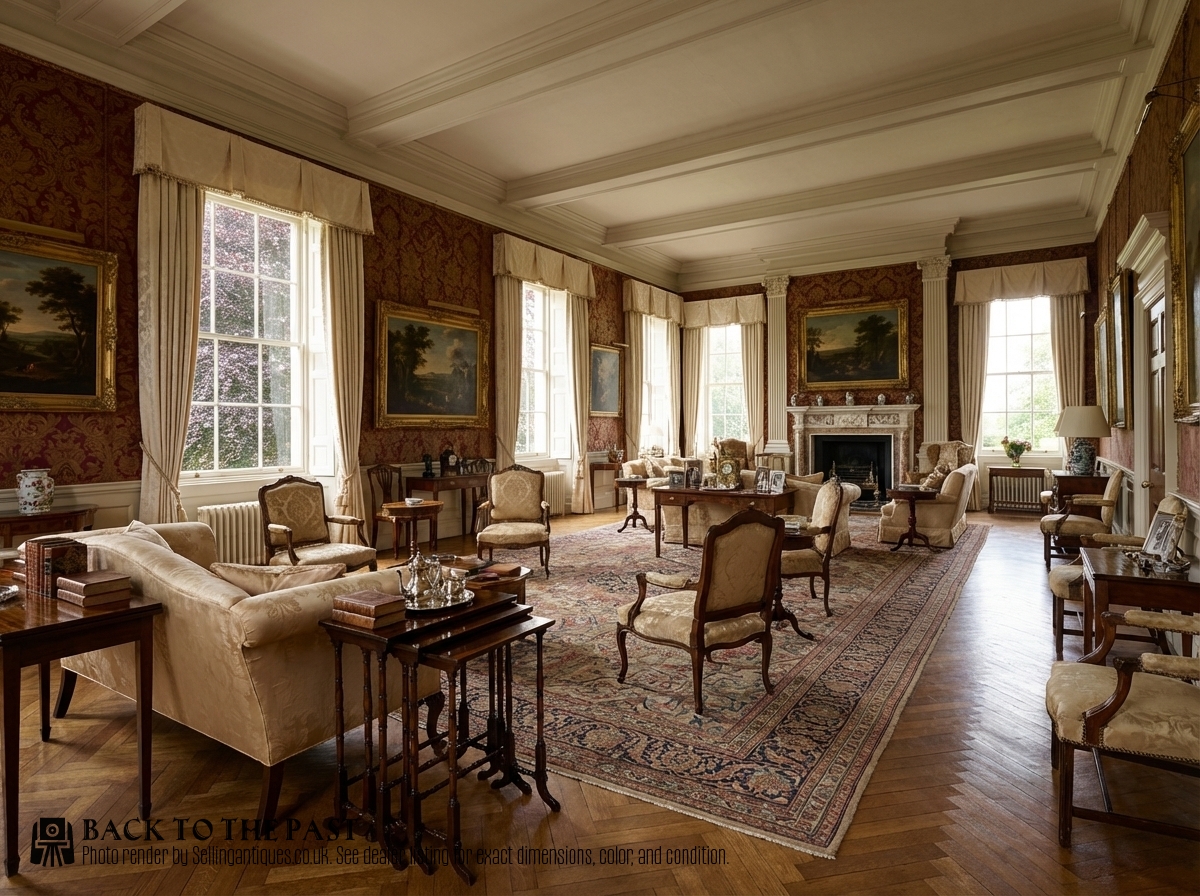
Historically, these tables served as occasional furniture for taking tea, holding reading material or supporting portable lighting. Servants would deploy them around a drawing room as needed.
Some specialised Regency variants even integrated chess boards into the top surface, combining surface utility with parlor games.
How do I identify a Victorian nest of tables?
Victorian examples frequently utilise solid mahogany or rosewood, often featuring hand-turned legs and robust structural joinery. They commonly present as quartetto sets of four tables.
Look for honest patination on the timber and traditional construction methods beneath the top surfaces to confirm the period origin.
Are Chinese export nesting tables different from British ones?
Chinese export pieces generally employ dense Asian hardwoods like hongmu or feature intricate hand carvings and lacquer work. They reflect Qing Dynasty traditions adapted for Western markets.
While British sets lean towards Regency, Victorian or Edwardian stylistic restraint, Asian examples often showcase deeper relief carving and distinct regional joinery.
How should I care for antique dark wood tables?
Keep these tables away from direct sunlight and steady heat sources to prevent the dark wood from drying or splitting. Dust them gently with a dry cloth.
Avoid modern silicone sprays, relying instead on traditional beeswax occasionally to nourish the polish and maintain the natural lustre of the timber.