

Vintage Nesting Side Tables
Vintage nesting side tables offer clever multi-tiered surface space that tucks neatly away when floor area is at a premium.
Vintage Nesting Side Tables
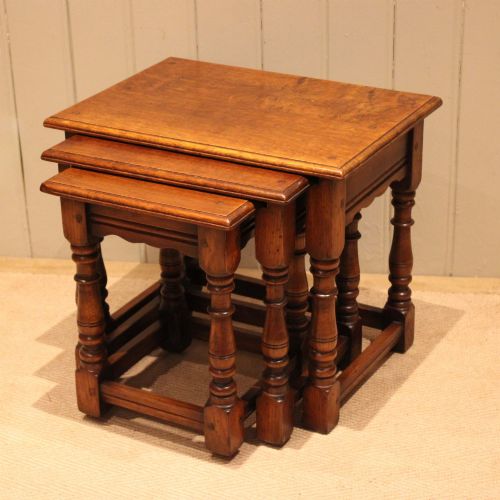
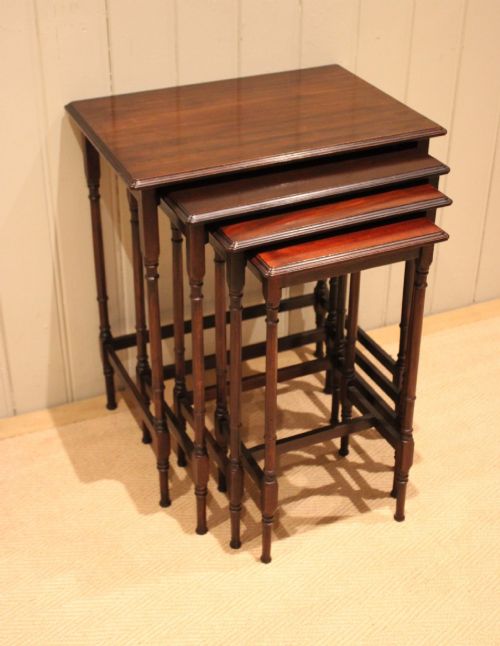
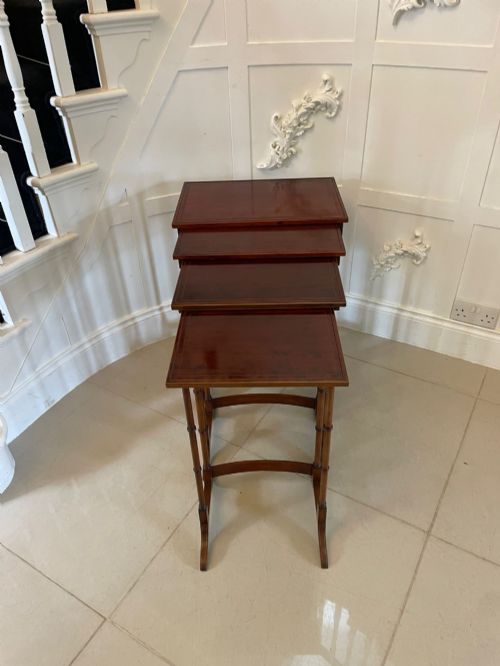
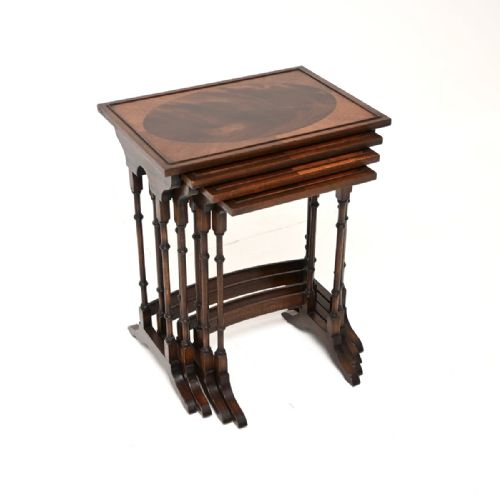
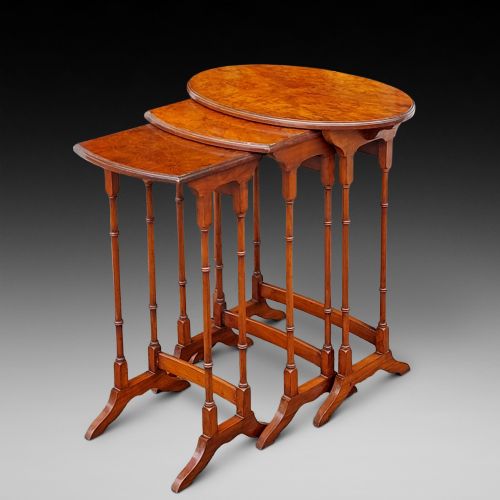
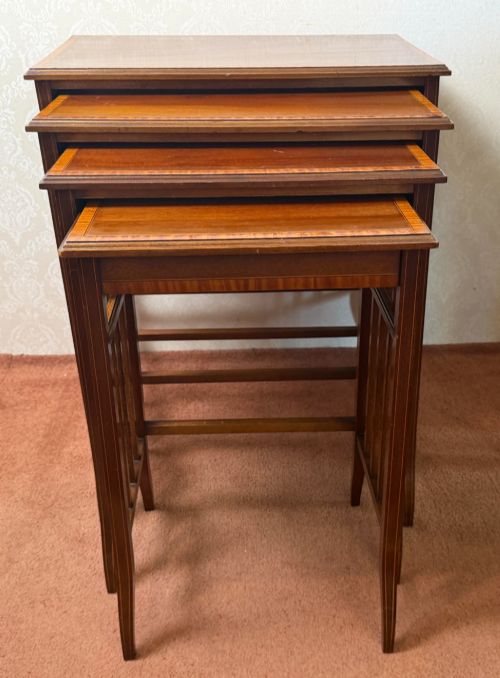
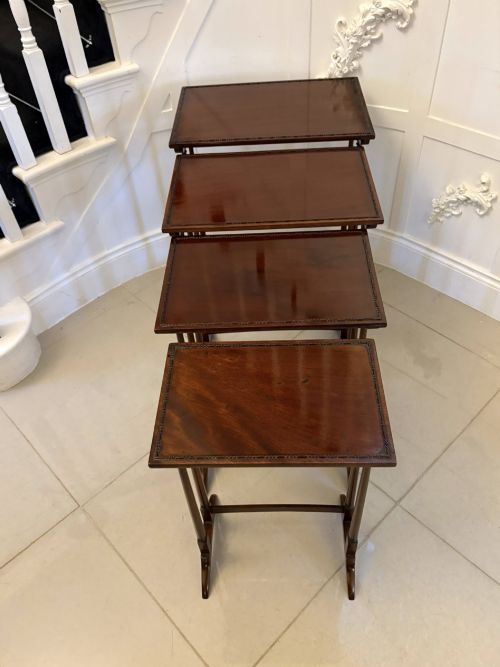
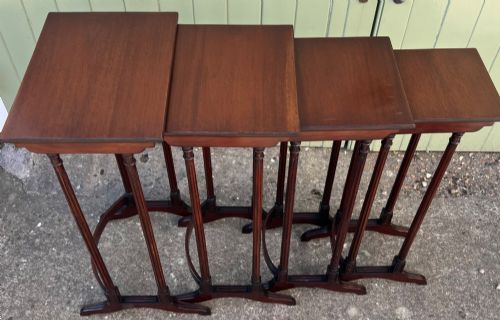
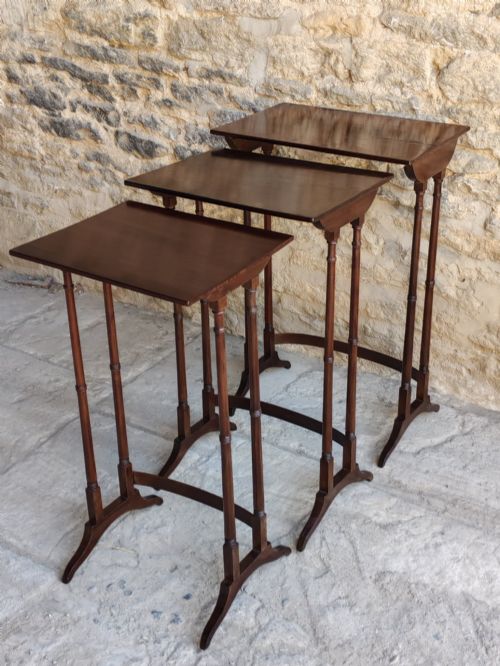
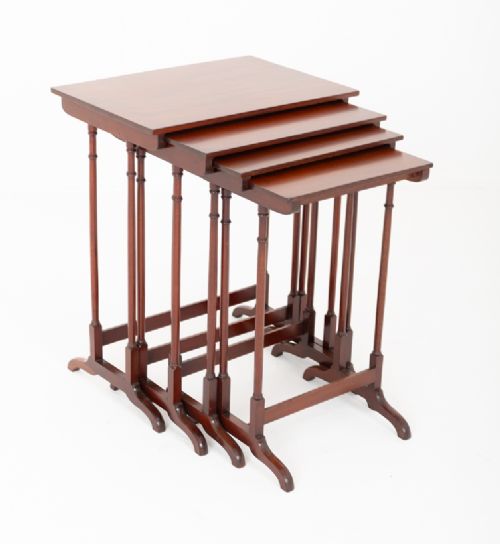
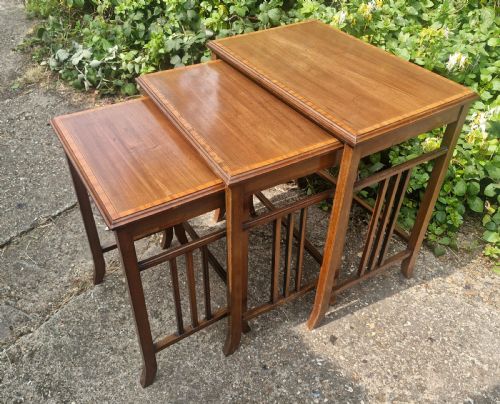
When you search for vintage nesting side tables, you encounter sets of graded tables designed to slide one beneath another into a single compact footprint. The most frequently met examples on this page are Edwardian mahogany sets, often featuring inlaid details or satinwood banding across three or four graduating tiers.
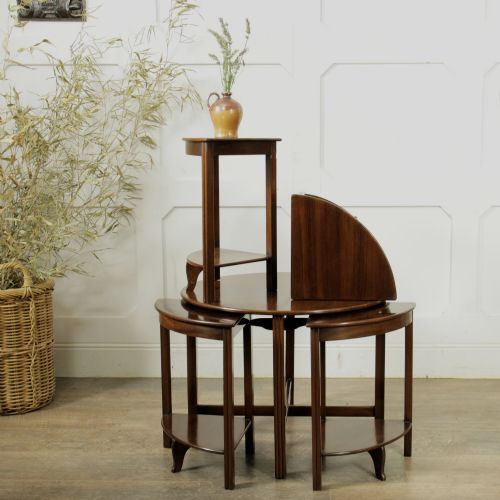
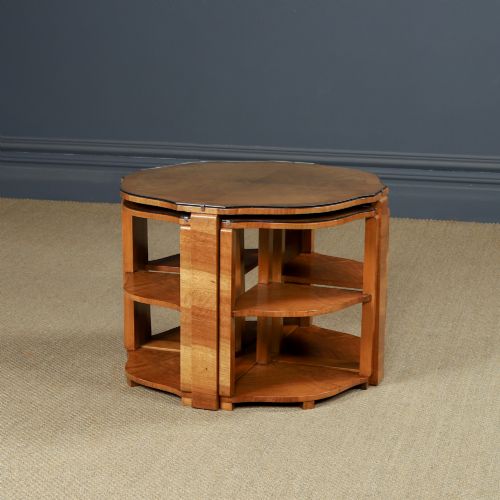
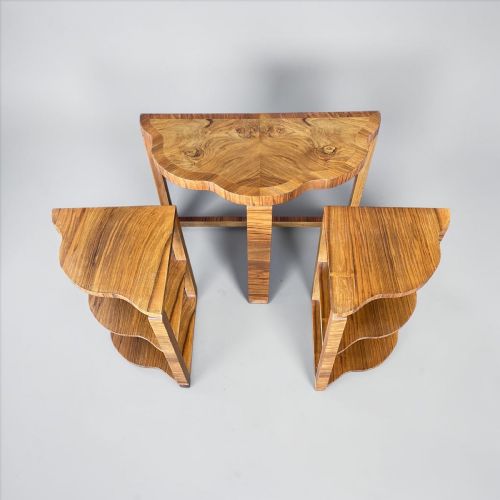
Beyond Edwardian iterations, the selection spans periods from the nineteenth century through the Art Deco era of the 1930s. Forms vary from circular nests and rectangular quartetto sets to specialised occasional tables incorporating chess boards or Chinoiserie decoration.
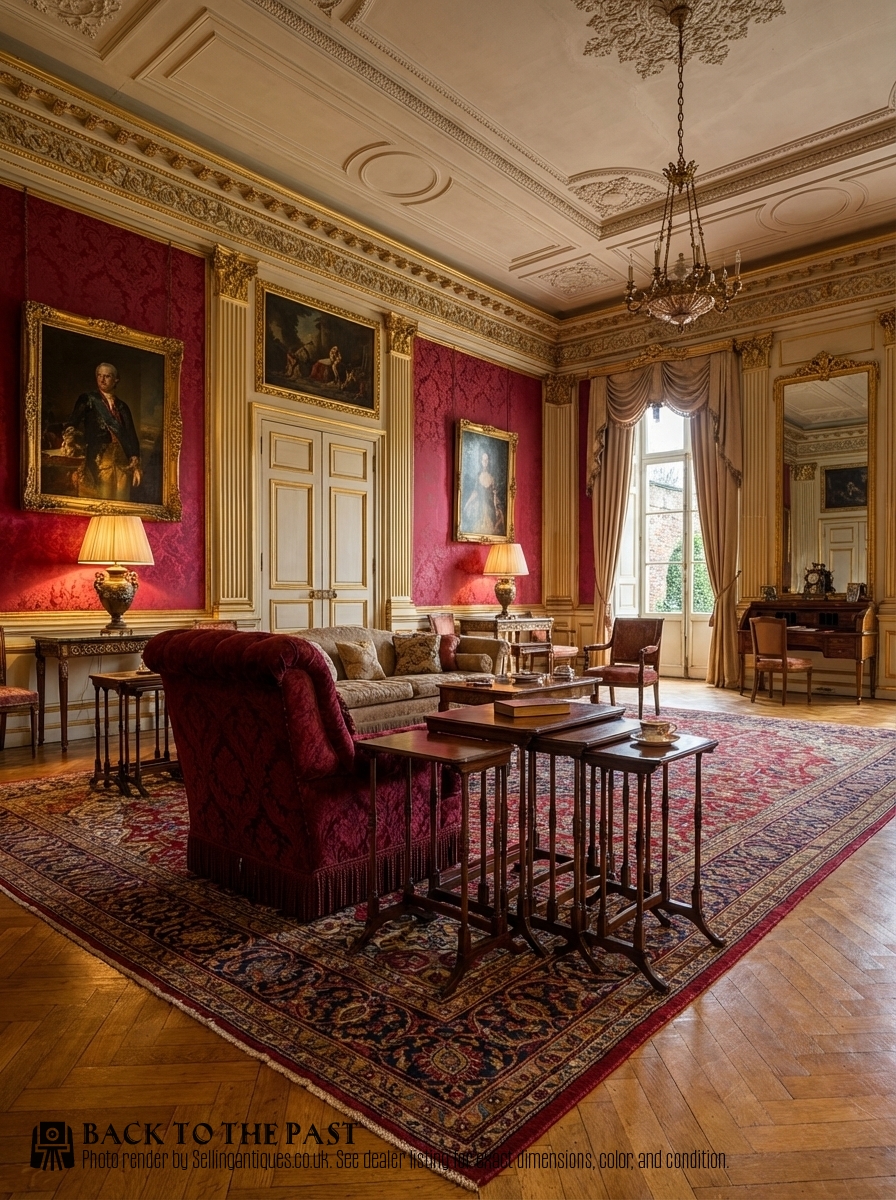
These items served practical domestic roles in drawing rooms and parlours where space required flexible furniture arrangements. Today they remain functional accents that provide multiple surfaces for lamps or cups without cluttering a room.
Materials and construction methods
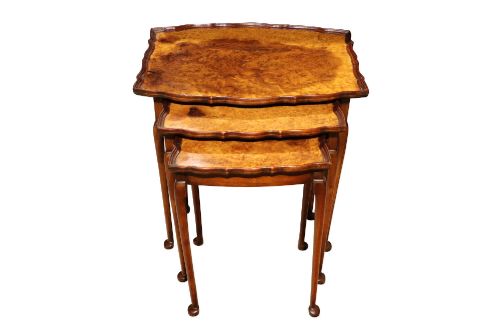
Cabinet makers utilised solid timbers and decorative veneers such as mahogany, walnut, burr walnut, and rosewood. These woods were frequently enhanced with contrasting stringing, boxwood lines, or satinwood cross banding along the tabletops.
Construction relied on stable frame joints and slender tapered or turned legs to ensure each smaller table slid smoothly into place beneath the main surface. Specialised decorative techniques included hand lacquering, Chinoiserie motifs, and brass inlay set directly into the timber.
Vintage Nesting Side Tables Retail Price Guide 2026
Typical asking prices for vintage nesting side tables among the pieces listed under this phrase on Sellingantiques today, from the lower quarter to the upper quarter. They describe what is for sale here now, not the wider market.
One unusual twentieth-century set comes carved with elephants.
Distinguishing quality across the range
The primary distinction between standard examples and top-tier pieces lies in the choice of timber and the precision of the cabinet work. Sets utilising burr walnut, finely figured mahogany, or rosewood alongside complex inlay demonstrate superior workshop origins.
Structural integrity also dictates worth, as higher quality sets maintain smooth sliding tolerances between tiers without sagging or binding. Maker attribution to notable firms such as Epstein, Hille, Heal's, or Émile Gallé elevates a set significantly above anonymous production.
Émile Gallé·Harry and Lou Epstein·The Hille Furniture Company·Heal's
The Vintage Nesting Side Tables Glossary
- Quartetto
- A matched set of four graduating tables designed to nest together. This term appears frequently in nineteenth and early twentieth century descriptions.
- Cross banding
- A narrow strip of veneer applied to the border of a tabletop with the grain running perpendicular to the centre. It creates a defined visual frame.
- Inlay
- A decorative technique where contrasting materials are embedded into recesses cut into the solid wood surface. Common examples utilise satinwood or boxwood.
- Chinoiserie
- European decorative style reflecting Chinese artistic motifs, often rendered in lacquer or hand-painted designs. This finish appears on select twentieth-century nests.
- Stringing
- Thin inlaid lines of contrasting timber used to outline panels or edges on tabletops and legs. It provides subtle linear definition.
Vintage Nesting Side Tables: Frequently Asked Questions
How do I spot an Edwardian nest?
Edwardian sets typically feature lighter mahogany frames, slender tapered legs, and delicate satinwood stringing or inlay around the top edges. They prioritize refined proportions suitable for parlour use.
These pieces usually comprise three or four tables that slide smoothly into a tiered stack, reflecting the period's taste for versatile, space-saving furniture.
What defines an Art Deco nest?
Art Deco sets showcase bolder geometric forms, exotic woods like Indian rosewood or teak, and simpler silhouettes without traditional inlay. They often utilise circular formats or carved details.
Such tables reflect the modernist shift of the 1930s toward sleek, functional design that remained compact yet visually striking in contemporary interiors.
Were these always used as side tables?
Historically, these tiered surfaces served multiple domestic functions including tea service, card playing, or holding decorative lamps. Their mobility allowed servants or hosts to deploy them as needed.
Today they function flexibly across sitting rooms as lamp tables, occasional surfaces, or individual drink stands that store compactly when floor space is required.
What is a quartetto nest?
A quartetto specifically designates a set of four graduating tables designed to interlock completely. The term derives from nineteenth-century forms popularised during the Regency and Edwardian eras.
These sets require precise woodworking so that each progressively smaller table clears the frame of the next without scraping the polished surfaces.