

1930s Coffee Table
A 1930s coffee table brings low, clean lines and rich figured woods to a room, offering both practical surface space and distinct period character.
1930s Coffee Table
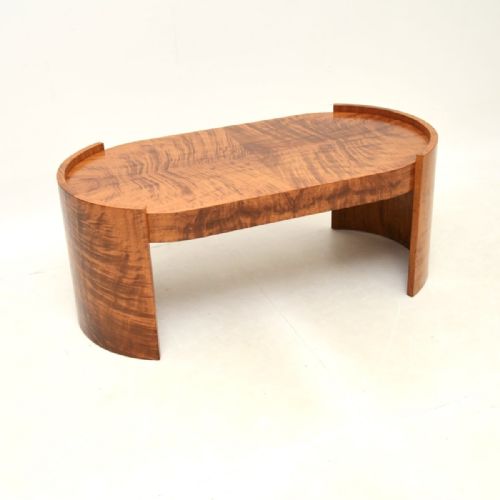
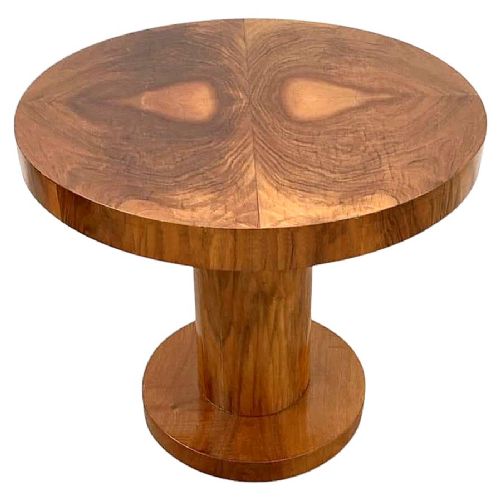
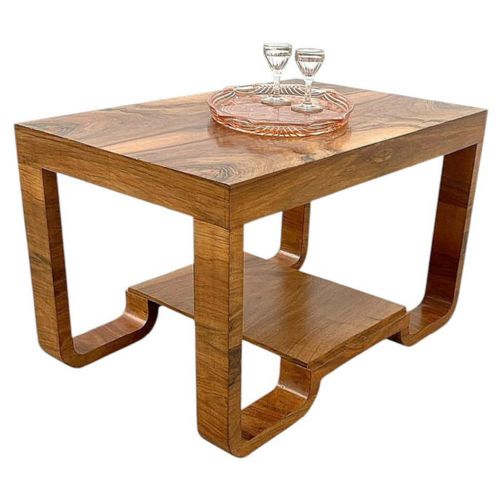
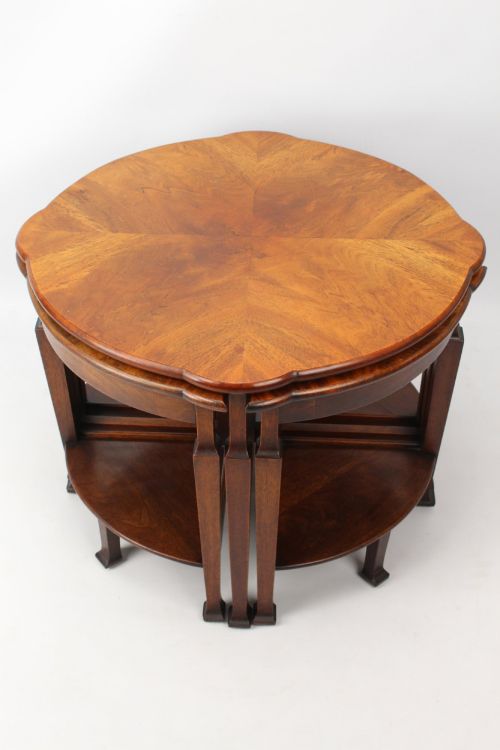
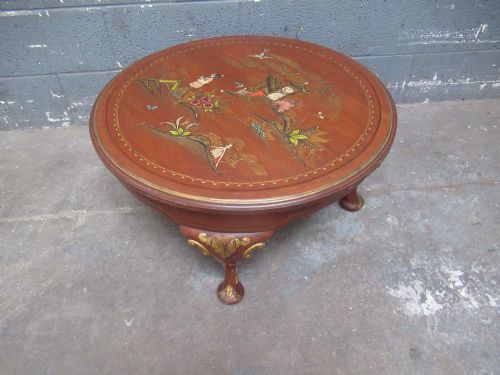
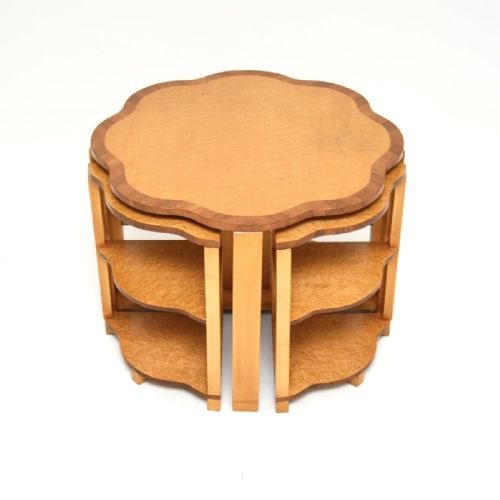
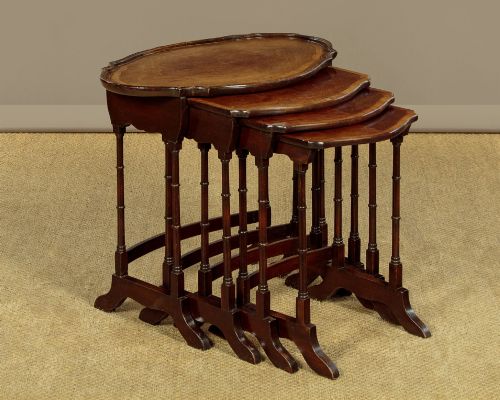
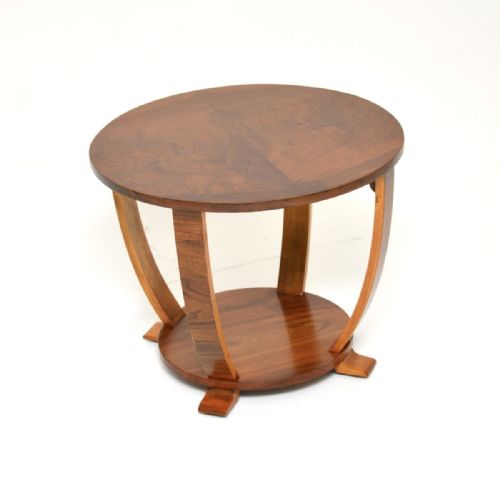
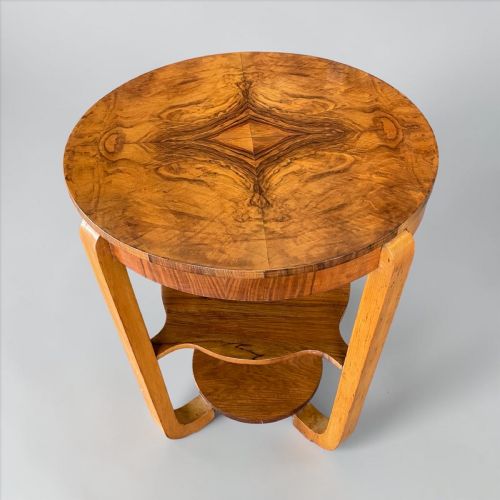
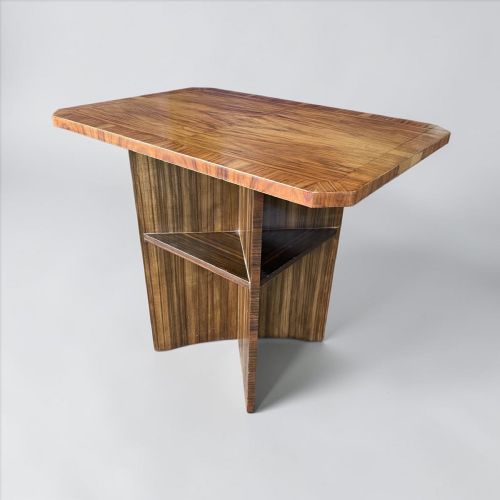
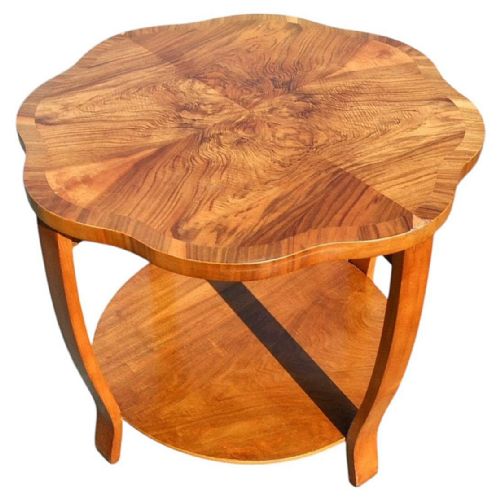
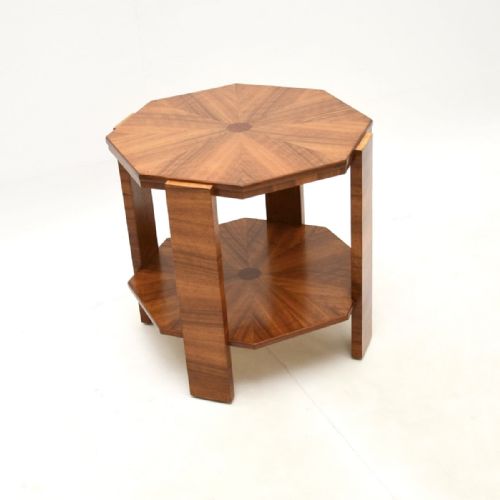
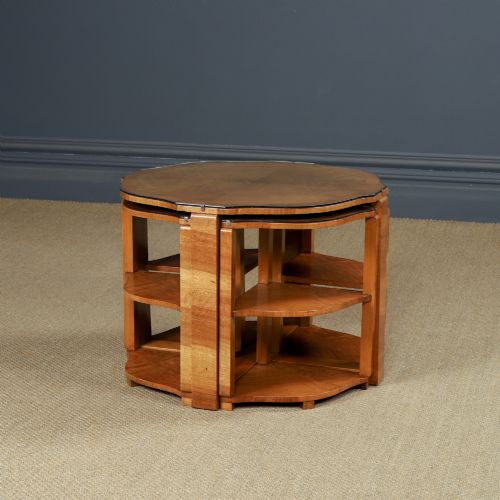
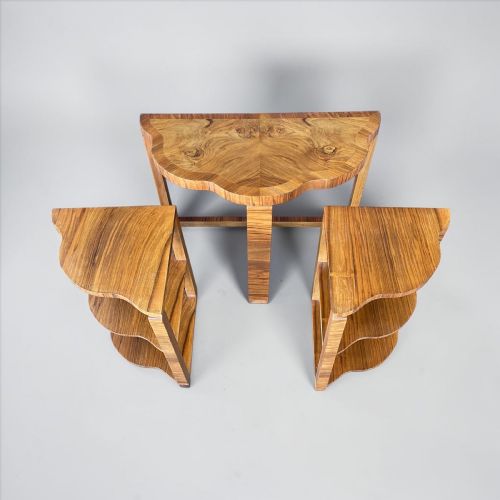
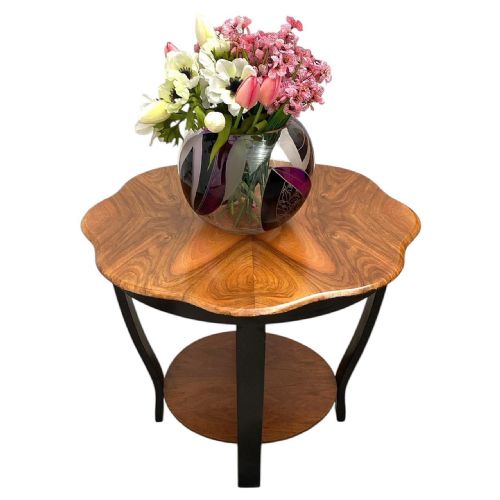
A 1930s coffee table spans low-slung designs, nests of multiple surfaces, and occasional or book tables originating primarily from the Art Deco period. Walnut and figured walnut dominate the selection, often taking form in round, square, or two-tier shapes designed for modern living.
Makers and workshops utilised exotic veneers alongside oak, maple, and ebonised wood, pairing timber with glass, marble, and chrome. English and French workshops produced the majority of pieces, ranging from simple occasional tables to elaborate multi-tiered nesting sets.
Materials and construction
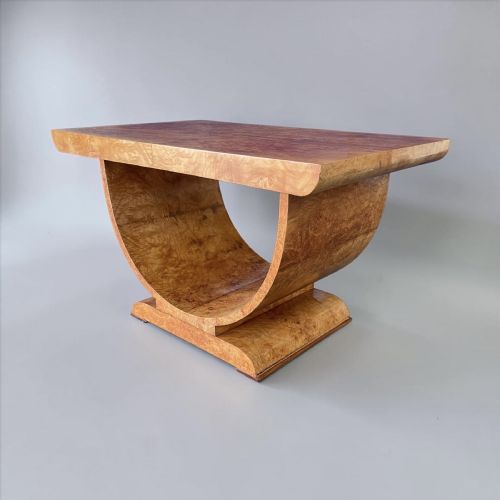
Cabinet makers applied fine veneers of burr walnut, birds eye maple, and karelian birch over sturdy carcass timbers, creating striking grain patterns across flat tops. French and English pieces frequently incorporate contrasting inlay work, polished glass inserts, or solid marble slabs.
Structural elements rely on traditional joinery alongside metal components, utilising wrought iron, brass, and chrome to support heavy glass or wooden tiers. Ebonised wood and bleached walnut finishes provide alternative surface treatments that define the era's aesthetic.
1930s Coffee Table Retail Price Guide 2026
Typical asking prices for 1930s coffee table among the pieces listed under this phrase on Sellingantiques today, from the lower quarter to the upper quarter. They describe what is for sale here now, not the wider market.
Some multi-tier tables offer hidden storage spaces that make tidying away evening reading material remarkably satisfying.
Factors of quality
Selection of the veneer grain distinguishes standard production from high-end pieces, with symmetrical burr walnut and birds eye maple commanding greater visual impact. The depth of the polish and the crispness of edge banding reveal the underlying standard of cabinet making.
Complexity of form elevates a design, separating simple single-surface tables from elaborate two-tier structures, multi-part nesting sets, and pieces integrated with book storage. The integration of auxiliary materials like original glass, marble, or chrome accents alters the character and execution of the table.
Harry and Lou Epstein
The 1930s Coffee Table Glossary
- Burr walnut
- A prized timber harvested from the wart-like growths on walnut trees, yielding intricate, swirling grain patterns. Cabinet makers slice this wood into thin veneers for decorative table tops.
- Nesting tables
- A set of graduated tables designed to fit neatly beneath one another. They provide flexible surface space that stores compactly when not in use.
- Art Deco
- A design style characterised by sleek geometric shapes, streamlined forms, and rich materials. It reached peak popularity during the interwar period.
- Ebonised wood
- Timber treated with a dark stain or chemical process to resemble ebony. It offers a dense, black finish seen on modernist and revival frames.
1930s Coffee Table: Frequently Asked Questions
How do I identify a genuine period piece?
Examine the timber species, construction methods, and hardware used beneath the surface. Original pieces display period veneers, traditional joinery, and patination consistent with interwar production.
Compare the proportions and stylistic markers against documented examples from English and continental workshops. Authentic items carry the specific geometric or revival traits typical of the era without modern alterations.
Where should I place a nest of tables?
Position nesting sets beside a main sofa or armchair to provide accessible surfaces for drinks and books. They function well in smaller reception rooms where space requires flexible placement.
Spread the smaller tables around the room when entertaining, then slide them back together to clear floor space. Their tiered design keeps multiple surfaces available within a compact footprint.
What is the difference between a coffee table and an occasional table?
Coffee tables are specifically manufactured with a low profile to sit comfortably in front of seating upholstery. They prioritise stable surface area for everyday items.
Occasional tables stand slightly taller and serve versatile functions around a room, acting as lamp tables, side tables, or display surfaces. Their dimensions suit placement beside chair arms or against walls.