






Round Art Deco Table
A round art deco table brings genuine geometric rhythm and clean, sophisticated lines to any interior.
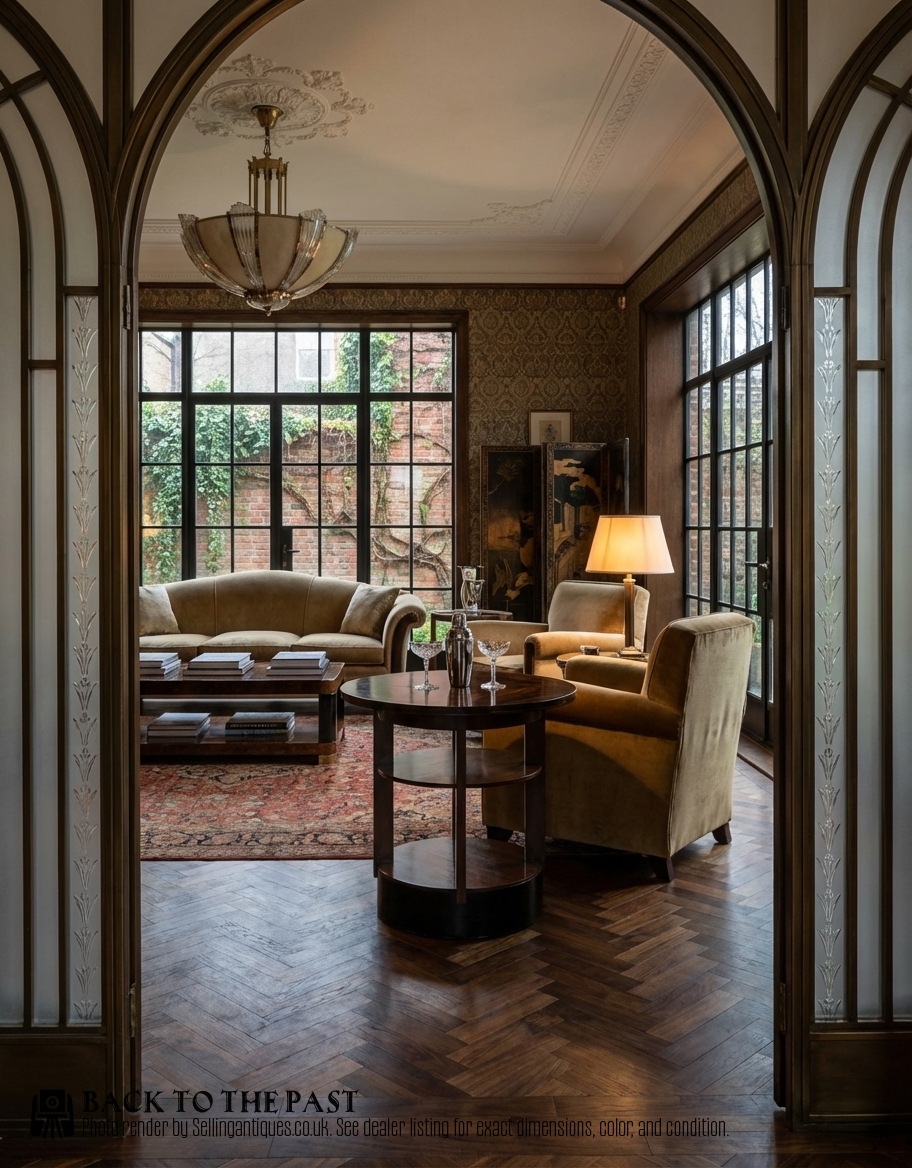
What They Are
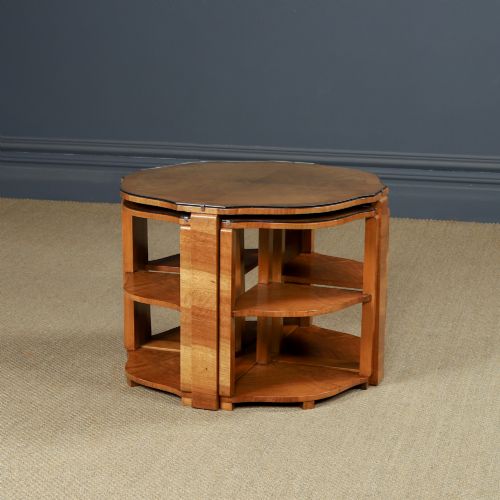
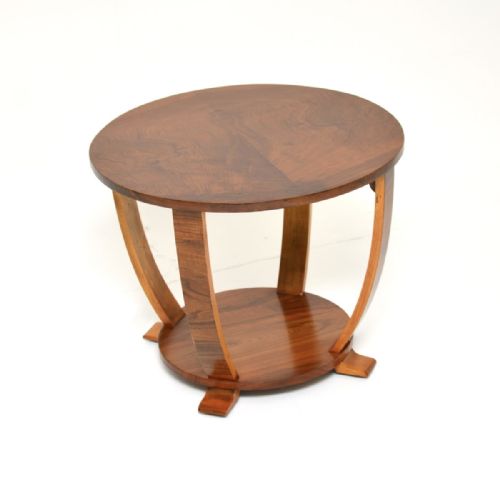
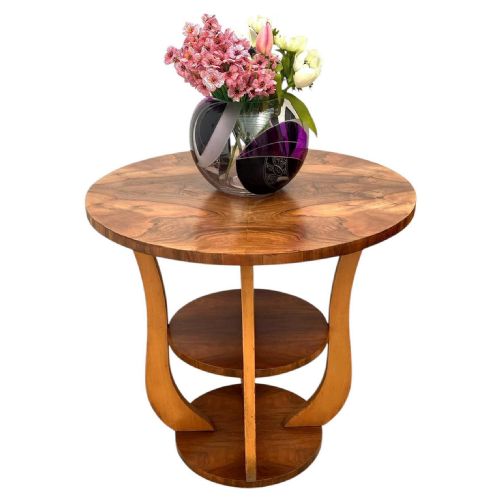
A round art deco table represents a specific focus within twentieth-century design, appearing across coffee tables, games tables, and occasional forms. These pieces date predominantly from around nineteen thirty, alongside examples from nineteen twenty, originating from English and Scandinavian workshops.
How They Were Made
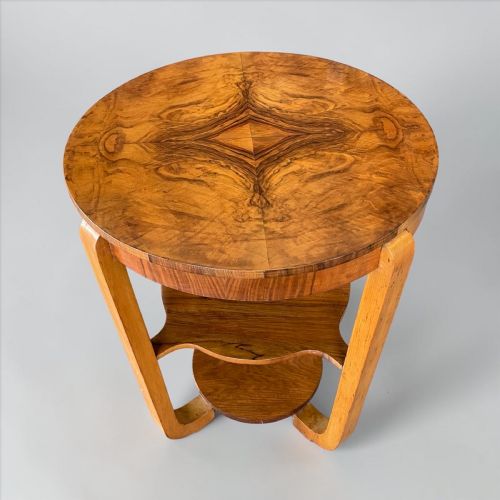
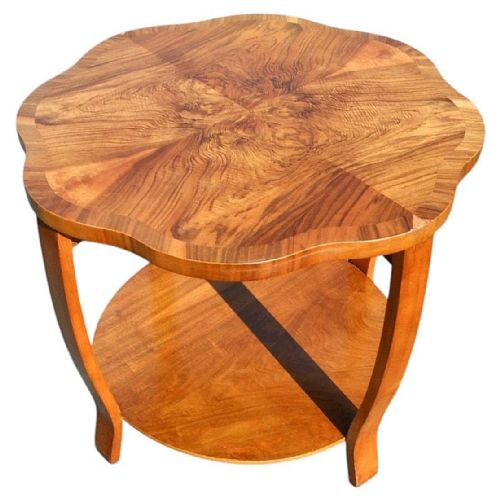
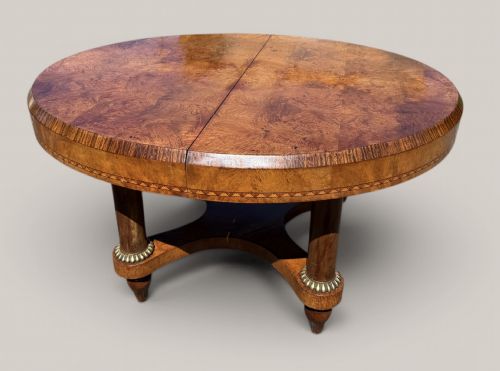
Cabinet makers utilised solid timbers alongside finely selected veneers, pairing walnut, burr veneer, birch veneer, and rosewood veneer over robust carcases. These surfaces were finished to highlight the natural grain patterns and rich tones inherent to each wood type.
Construction methods met the demands of both fixed occasional surfaces and complex metamorphic functions, allowing some tables to transform from coffee tables to card tables.
Retail Price Guide 2026
Typical UK retail prices for round art deco table, calculated from the Sellingantiques database of over a million retail prices indexed since 2003. This retail price guide relies exclusively on Sellingantiques data; no external sources or auction records are used, so the figures do not describe the wider market.
Some tables transform into card tables, ready for an impromptu evening of bridge right in the middle of the living room.
What Varies in Quality
The distinction between tiers of quality rests upon the selection and matching of veneers, where book-matched burr walnut or exotic rosewood elevates the visual impact. Construction integrity of multi-tiered structures and metamorphic mechanisms also dictates the standing of each piece.
Subtle differences in timber choice, from blonde oak to satin birch, alongside the crispness of the geometric lines, separate standard production items from finer workshop examples.
The Round Art Deco Table Glossary
- Art Deco
- A design style emerging in the early twentieth century characterised by sleek geometric shapes, streamlined forms, and modern materials. This aesthetic dominated the furniture and architecture of the period.
- Veneer
- A thin layer of superior wood glued to a base timber to provide an ornamental surface. Burr veneer and rosewood veneer are typical examples found on these tables.
- Metamorphic
- Furniture designed to transform from one form or function to another, such as a coffee table converting into a card table. These pieces incorporate concealed hinges and folding leaves.
- Occasional table
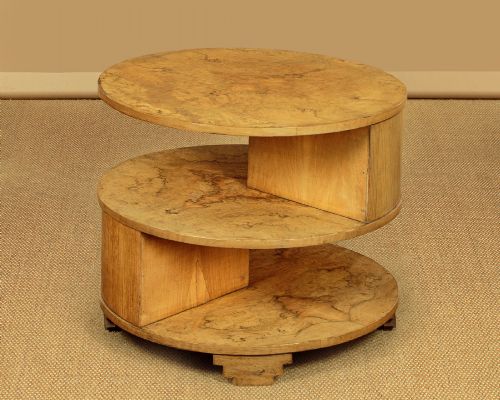
- A small, movable table designed for specific, intermittent use within a room. Common forms include coffee tables and three-tiered centre pieces.
Frequently Asked Questions
What rooms suit these tables?
These tables fit comfortably into living rooms, studies, and reception spaces where compact surfaces are required. Their circular footprints help soften rooms dominated by linear architecture.
They serve effectively as coffee tables, centre pieces for display, or functional card tables depending on the specific mechanism.
How do I identify the wood types?
Examining the grain patterns and colour variations helps distinguish between walnut, oak, birch, and rosewood veneers. Walnut often displays rich brown tones with dark figuring, whilst burr veneer exhibits swirling knot formations.
Satin Birch and blonde oak present lighter, honeyed hues typical of Scandinavian and English production from the era.
Are metamorphic tables difficult to operate?
The folding and pivoting mechanisms are engineered for smooth daily transformation between configurations. Careful handling ensures the wooden hinges and joints remain undamaged over time.
Regular, gentle use prevents undue strain on the internal hardware concealed within the walnut frames.
How do I date these tables?
Dating relies on stylistic markers associated with the nineteen twenty and nineteen thirty periods, alongside construction methods and material choices. Pieces from this era often bear distinct geometric proportions.
Comparing the specific tiered or pedestal forms with documented workshop production helps narrow down the decade of manufacture.