
Vintage Tier Table
A vintage tier table offers stacked surfaces for display and holding objects, spanning Edwardian mahogany to Art Deco walnut.
Vintage Tier Table
A vintage tier table provides multiple levels of surface area within a compact footprint, suiting rooms that require functional display spaces. These pieces appear in forms such as etagères, dumb waiters, plant stands, and occasional tables with stacked tiers.
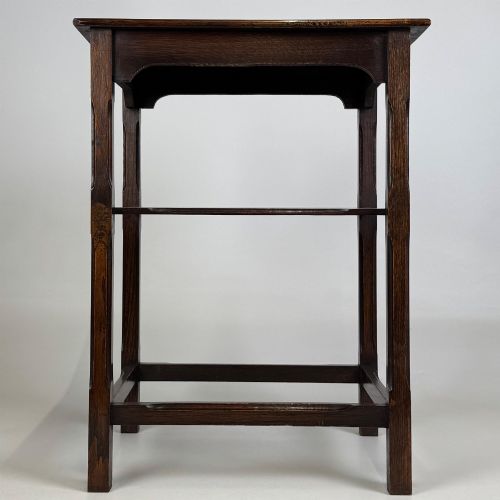
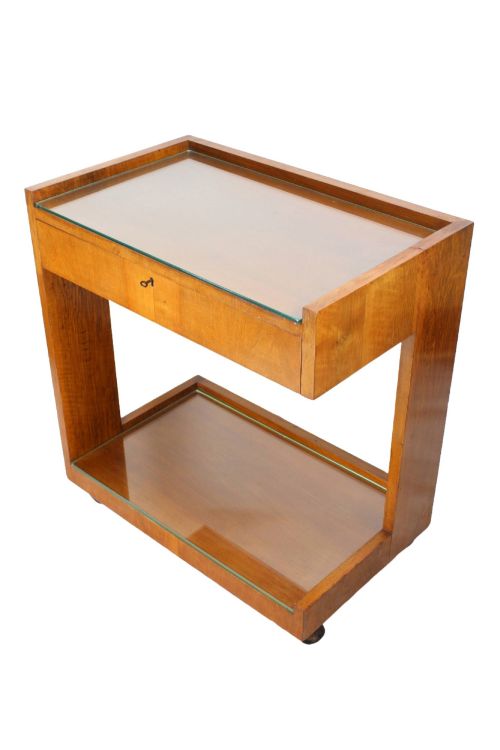
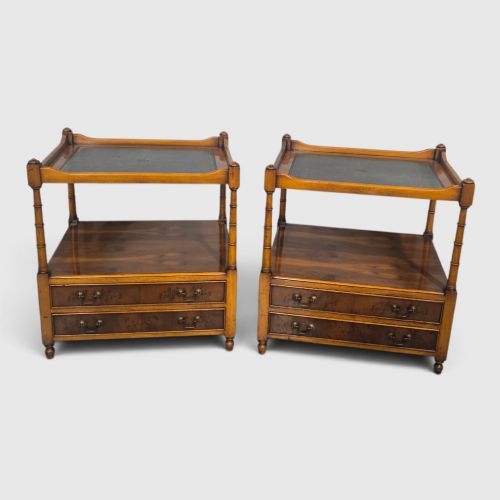
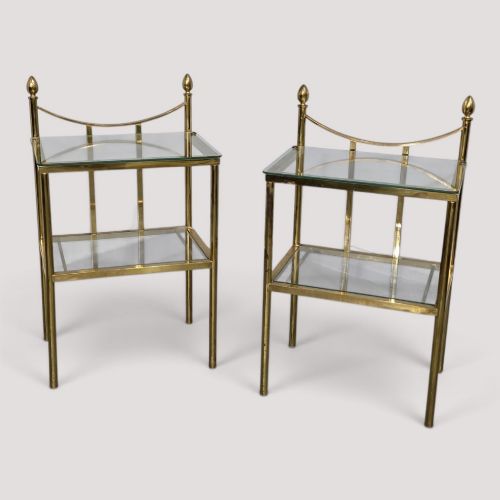
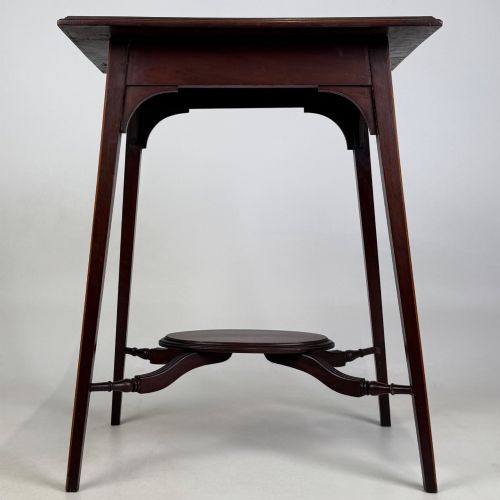
The selections span periods from the nineteenth century through the Edwardian era and into the Art Deco period of the 1930s. Oak, mahogany, and walnut dominate the offerings, occasionally featuring bamboo or brass and glass structures.
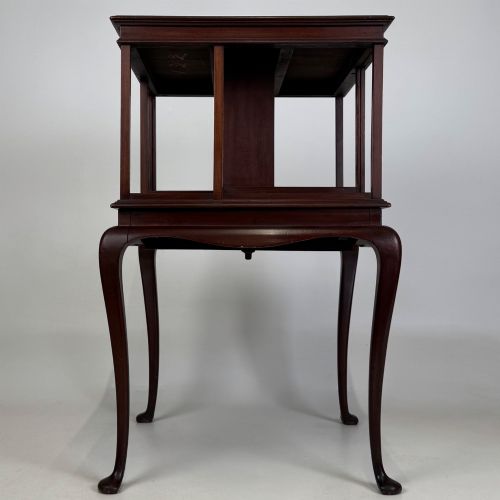
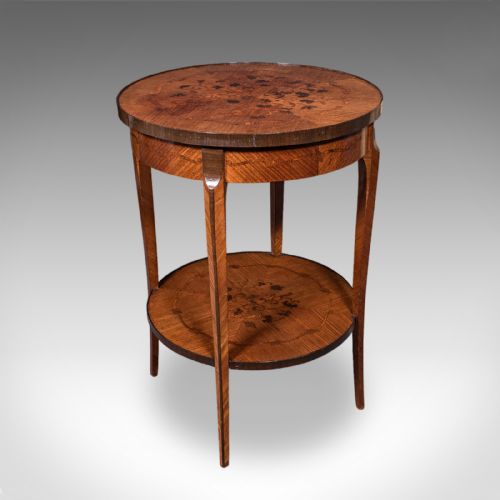
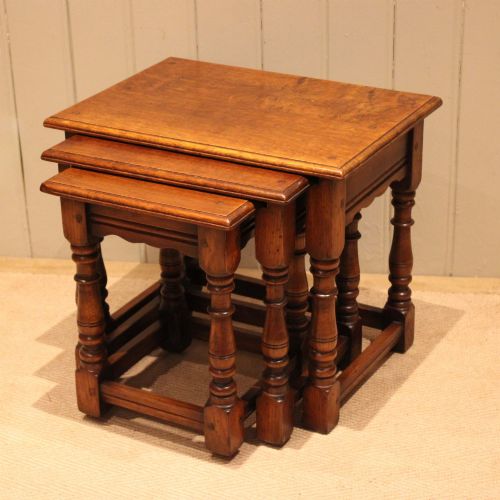
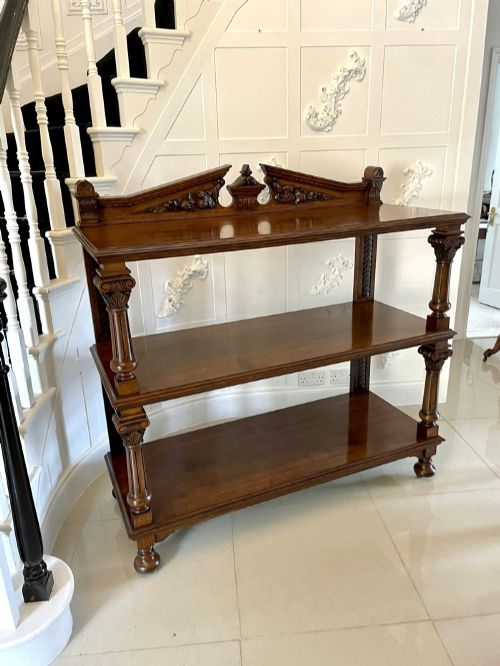
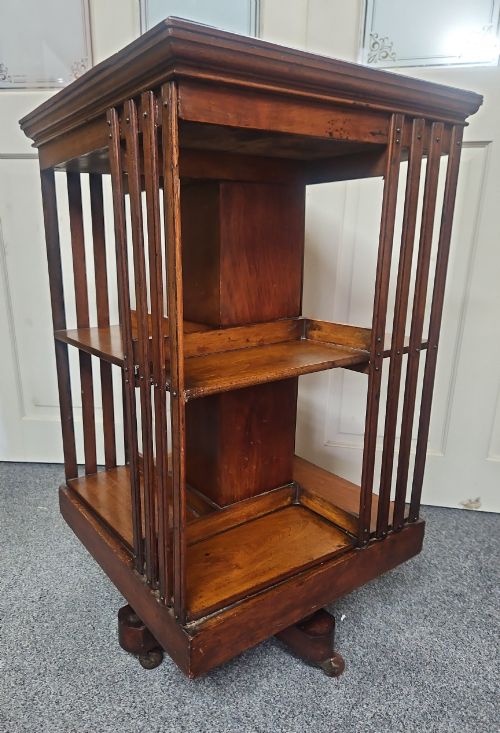
Buyers meet variations ranging from simple two-tier oak side tables to elaborate inlaid rosewood etagères and multi-level revolving bookcases. Each design serves specific domestic tasks, from holding lamps to displaying decorative items.
Materials and construction
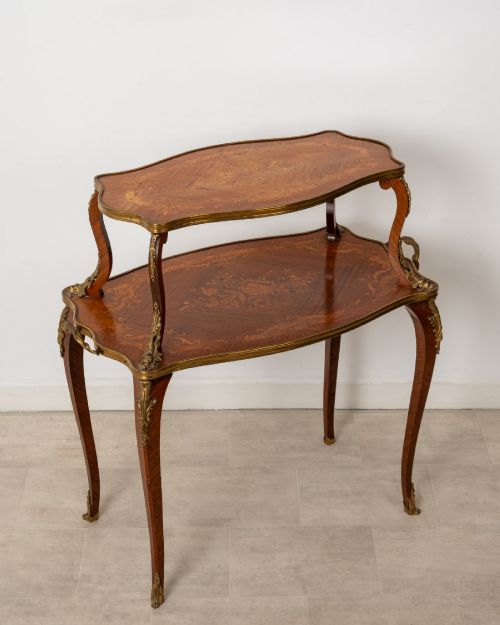
Cabinet makers utilised solid hardwoods such as oak, mahogany, and walnut alongside decorative veneers like burr walnut and kingwood. Surfaces frequently incorporate marquetry inlay, polished finishes, or painted treatments.
Structural elements combine traditional timber joinery with brass fittings, bamboo framing, and glass inserts. Construction methods reflect the stylistic demands of periods from Georgian dumb waiters to Arts and Crafts oak stands.
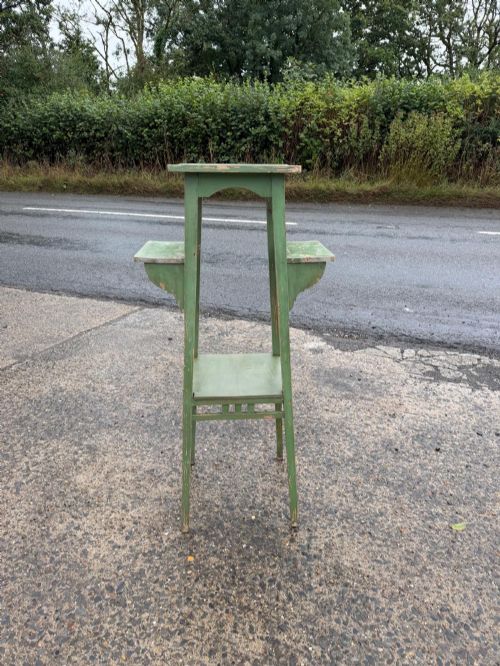
Some Victorian plant stands come in original paint, proving that even modest household greenery once enjoyed a colourful stage.
Judging quality in tiered furniture
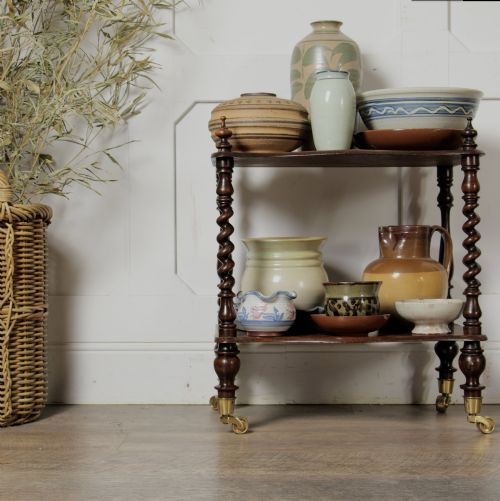
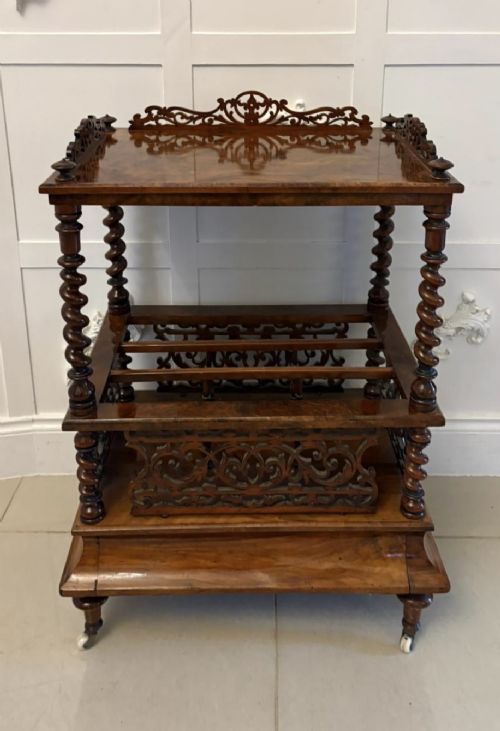
The refinement of timber selection dictates visual appeal, with figured veneers and carefully chosen solid grains setting finer items apart from plain stock. Superior examples demonstrate precision in inlay work, joinery, and the execution of turned elements like barley twist supports.
Proportion and structural integrity distinguish exceptional tier tables, where multiple shelves remain level and stable without wobble. Original finishes and authentic hardware contribute significantly to the standing of a piece.
The Vintage Tier Table Glossary
- Etagere
- A piece of furniture consisting of a set of open shelves for displaying small objects. These tiered stands date across the Victorian and Edwardian periods.
- Dumb waiter
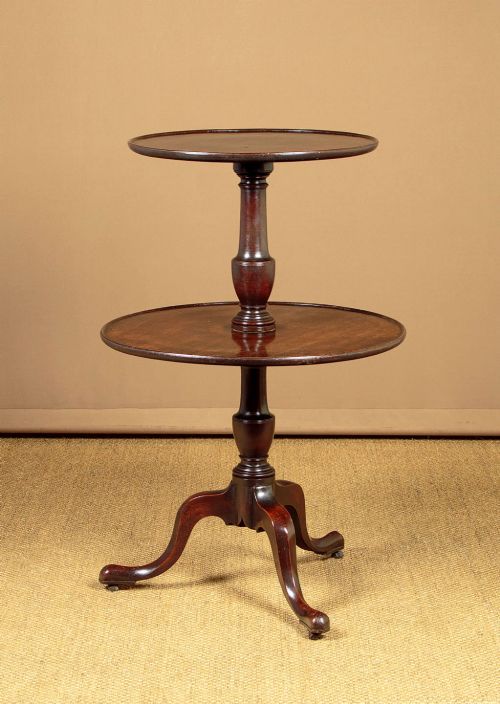
- A multi-tiered stand traditionally used for serving food or holding tableware. Georgian and Victorian examples often feature graduated circular trays on a central column.
- Whatnot
- An open set of shelves used for books or ornaments. Victorian iterations frequently incorporate turned uprights and multiple tiers.
- Marquetry
- Decorative patterns formed by the insertion of small pieces of wood into a veneered surface. This technique appears on finer tables from the Edwardian period and earlier.
- Barley twist
- A type of turning shaped like a spiral, commonly seen on the legs and uprights of Victorian and Edwardian stands.
Vintage Tier Table: Frequently Asked Questions
What is a tier table used for?
These pieces function as versatile surfaces in living spaces for holding lamps, books, or plants across multiple levels.
Their stacked shelves maximise display space without requiring a large floor footprint.
How do I identify an Edwardian tier table?
Edwardian examples often feature lighter timbers such as mahogany or satinwood, sometimes with delicate inlay work.
Common forms from this era include revolving bookcases and two-tier plant stands.
What is the difference between an etagere and a whatnot?
An etagere typically refers to a multi-tiered display piece that often adopts French styling or decorative metal and glass elements.
A whatnot is generally associated with Victorian tiered shelving designed for general display and storage.
Are Art Deco tier tables common?
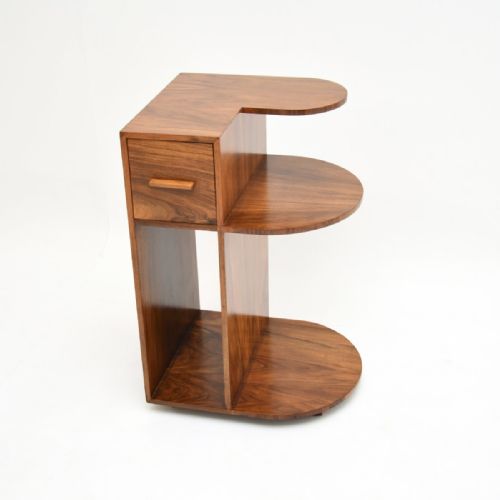
Art Deco versions frequently utilise figured walnut, oak, or rosewood with clean lines and geometric proportions.
These 1930s pieces often take the form of occasional coffee tables or tea trolleys.