


Three Tier Coffee Table
A three tier coffee table brings tiered practicality and period warmth to a room, offering multiple surfaces in compact footprints.
Three Tier Coffee Table
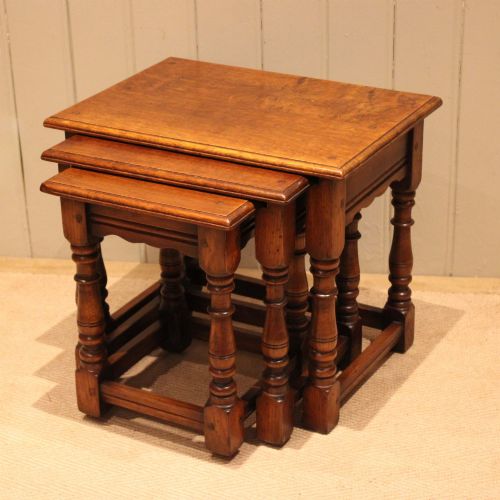
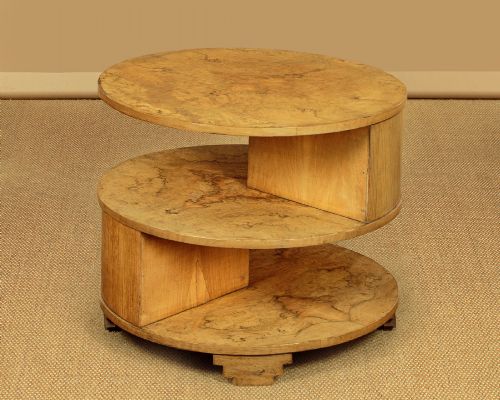
When searching for a three tier coffee table, buyers encounter tiered designs spanning nests of tables, occasional pieces, and revolving book tables. These forms date primarily across the Edwardian period, nineteen-ten, nineteen-twenty, nineteen-thirty, and nineteen-forty, reflecting early twentieth-century domestic needs.
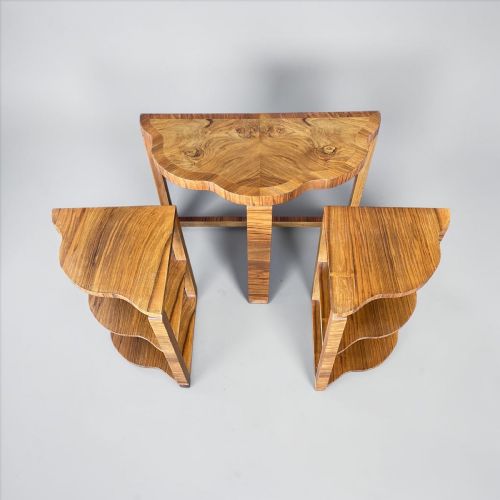
The version most commonly met on this page is the walnut or mahogany nest of three tables, often featuring shaped or oval tops. Alongside these sit distinct Art Deco three-tier occasional pieces and round or oval oak designs.
Makers and designers utilised English country, Art Deco, and Louis XVI revival styles to shape these timber constructions. Each form provides layered display space without dominating the floor plan.
How they were made
Cabinet makers constructed these pieces predominantly using mahogany, walnut, oak, and mixed timber. Figured veneers, burr veneer, and walnut veneer provide decorative grain patterns across table surfaces.
Makers applied parquetry details and incorporated brass and ormolu mounts to accent the timber frames. Construction techniques focus on stability across multiple levels, supporting the tiered structure of nests and revolving book tables.
Listings feature items from the Edwardian era through to nineteen-forty, constructed in mahogany, walnut, oak, and burr veneer.
What varies in quality
The standard of a piece rests upon the selection of timber and the execution of veneer work, such as figured walnut or burr veneer. Grain matching across the tiers distinguishes finer examples from simpler utilitarian builds.
Subtleties in edge shaping, such as shaped tops and parquetry borders, separate standard production from more considered workshop output. The integration of brass or ormolu elements further marks out the upper tier of the range.
The Three Tier Coffee Table Glossary
- Nest of tables
- A set of graduated tables designed to fit neatly beneath one another when not in use. This space-saving form appears frequently in mahogany and oak.
- Occasional table
- A small, movable table intended for auxiliary use within a room rather than a single fixed purpose. These often feature multiple tiers for display.
- Parquetry
- Geometric patterns constructed from small pieces of wood veneer laid onto a surface. It adds visual texture to table tops.
- Ormolu
- Gilded bronze applied as a decorative mount or trim on furniture. It appears on revival pieces to emulate French models.
Three Tier Coffee Table: Frequently Asked Questions
What is a three tier coffee table?
A three tier coffee table is a multi-level surface arrangement, often taking the form of nested tables, occasional pieces, or revolving book tables.
These pieces provide stacked levels for books and objects, making efficient use of vertical space in sitting rooms.
How were these tables used?
Historically, tiered tables served versatile functions in the home, holding tea wares, reading materials, and decorative ornaments.
Nesting versions allowed extra surfaces to be pulled out when guests visited and stored away afterward.
How do I date a table?
Dating relies on identifying period characteristics, such as Edwardian mahogany framing or Art Deco walnut styling from nineteen-thirty.
Materials like burr veneer and styles such as Louis XVI revival also point towards specific manufacturing decades.
What woods are common?
Mahogany, walnut, and oak form the primary timber foundation for these pieces.
Makers also utilised burr veneer and walnut veneer to create decorative surfaces across the multiple tiers.