

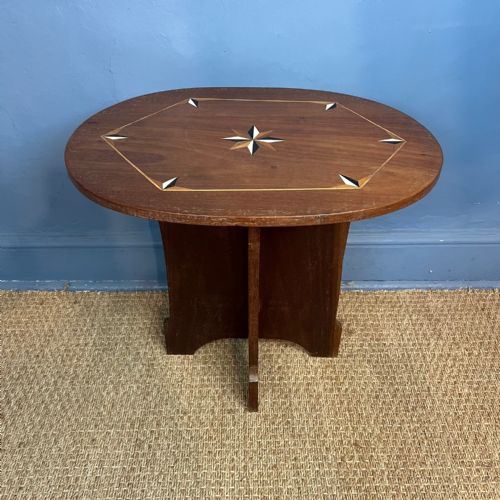
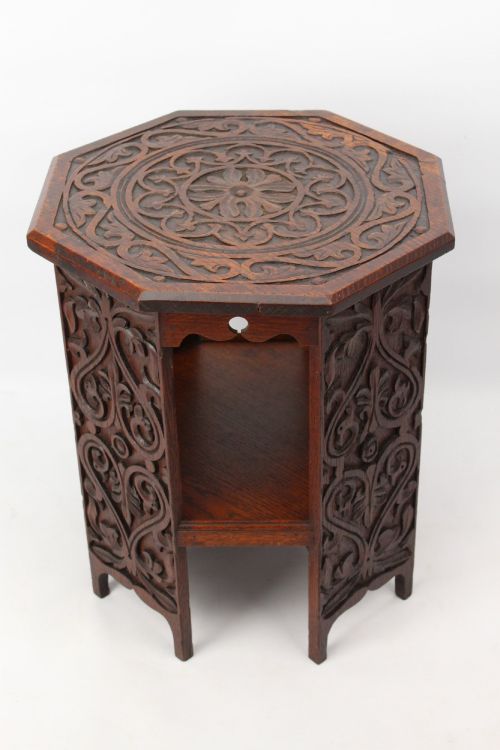
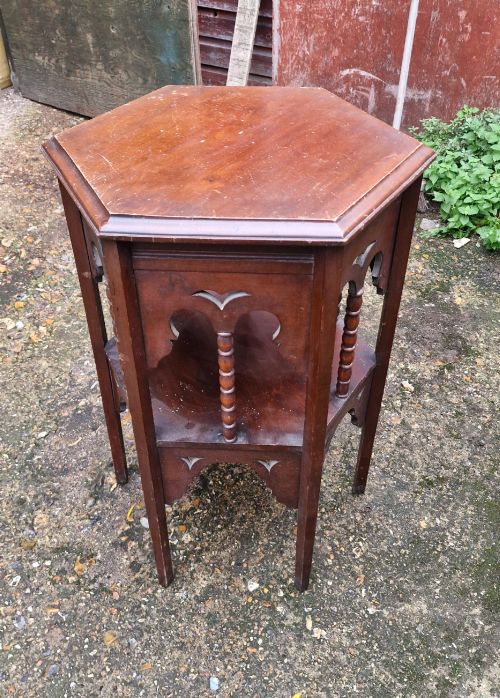
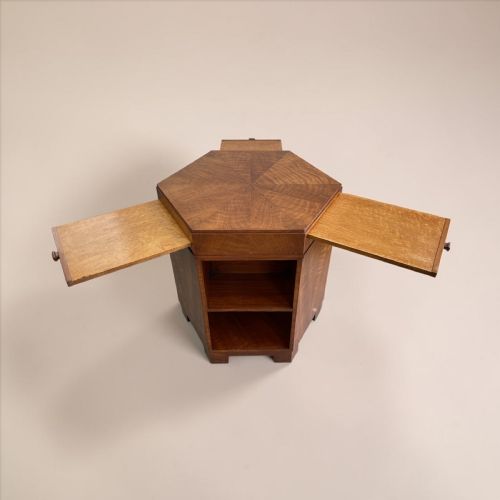
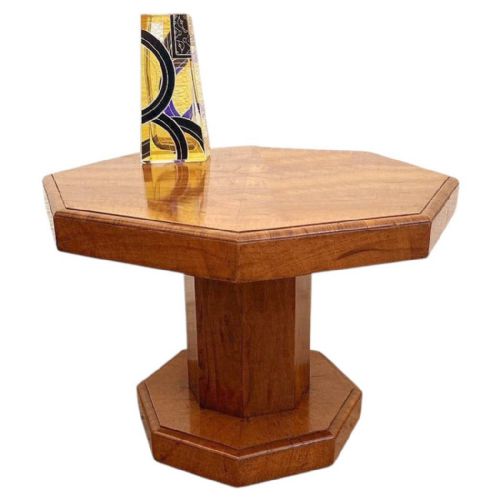


Hexagonal Coffee Table
These hexagonal coffee tables offer six-sided geometry that breaks the monotony of standard room layouts.
Hexagonal Coffee Table
A hexagonal coffee table is a six-sided low surface used primarily in seating areas for holding books, drinks, and decorative objects. The form appears in various historical styles ranging from the late nineteenth century into the twentieth century, adapting domestic spaces through distinct geometric surfaces.
The versions most commonly met on this page date from the Victorian Aesthetic Movement, the Arts and Crafts period, and the Art Deco era. Many examples originate as occasional tables, side tables, or plant stands that function naturally as coffee tables in modern settings.
Makers and workshops across Britain, France, and the Middle East produced these six-sided tables using regional hardwoods and decorative techniques. Buyers encounter pieces spanning the nineteenth century through the 1930s, reflecting diverse historical revivals and modernist design shifts.
How they were made
Carpenters constructed these tables using solid timbers such as oak, walnut, and mahogany, often applying walnut or general veneer to the six-sided tops. Ebonised wood also appears among the material selections, providing a dark and uniform surface finish.
Intricate surface decoration distinguishes several pieces through mother-of-pearl, brass, and geometric wood inlay work. Turnings, carved details, and multi-tiered structures further demonstrate the joinery and assembly methods employed by period makers.
Hexagonal Coffee Table Retail Price Guide 2026
Typical asking prices for hexagonal coffee table among the pieces listed under this phrase on Sellingantiques today, from the lower quarter to the upper quarter. They describe what is for sale here now, not the wider market.
Period origins span from nineteenth-century Victorian pieces through Arts and Crafts and Art Deco examples from the 1930s.
What varies in quality
Quality separates simple utilitarian furniture from ambitious decorative pieces through the selection of timber figures and the precision of veneer work. Figured walnut and coromandel exhibit striking grain patterns that elevate the visual weight of the six-sided top.
The intricacy and execution of inlay work, whether using mother-of-pearl or brass, define the upper tier of craftsmanship. Integrated two-tier designs and refined turned legs indicate greater labour investment by the workshop.
Heals of London·Liberty and Co
The Hexagonal Coffee Table Glossary
- Occasional table
- A small, movable table designed for secondary use in a room rather than primary dining. These pieces easily reposition beside seating.
- Veneer
- A thin layer of choice wood applied over a secondary timber base. This technique allows makers to display striking grain patterns economically.
- Moorish Revival
- An architectural and decorative style popular in the nineteenth century featuring geometric patterns and intricate inlay. Pieces often incorporate mother-of-pearl and exotic woods.
- Arts and Crafts
- A design movement valuing visible construction methods and honest material use. Tables from this tradition typically highlight plain oak surfaces and straightforward joinery.
- Art Deco
- A twentieth-century style characterised by sleek lines, geometric shapes, and polished surfaces. Walnut and figured veneers dominate this aesthetic.
Hexagonal Coffee Table: Frequently Asked Questions
What is a hexagonal coffee table?
A hexagonal coffee table is a low, six-sided surface designed for living spaces and seating areas. The format provides alternative angles to standard rectangular or round furniture.
Historically, many of these six-sided items began life as occasional tables, centre tables, or plant stands before finding modern utility as coffee tables.
How do I clean an inlaid wooden table?
Dust surfaces regularly with a soft, dry cloth to prevent dirt accumulation within intricate inlay channels. Avoid chemical polishes that can degrade historic finishes and loosen mother-of-pearl or brass elements.
Maintain stable humidity levels in the room to protect both the solid timbers and the delicate veneers from warping or cracking over time.
How do I date a six-sided table?
Dating relies on identifying stylistic markers, timber selections, and construction methods associated with specific eras like Arts and Crafts or Art Deco. Materials such as ebonised wood or figured walnut often point toward distinct decades.
Comparing leg turning styles, tier configurations, and inlay motifs against documented period examples helps narrow down the probable decade of manufacture.
Will a hexagonal table fit my room?
The six-sided footprint allows these tables to nest comfortably between multiple chairs or sit centrally in smaller seating arrangements. The angled corners soften traffic flow compared to sharp rectangular edges.
Measure the available floor space and surrounding seating distances to ensure the table maintains comfortable clearance for legs and movement.