


Heals Style Table
A heals style table brings honest craftsmanship and sturdy oak construction into your home, offering practical utility with distinct period character.
Heals Style Table
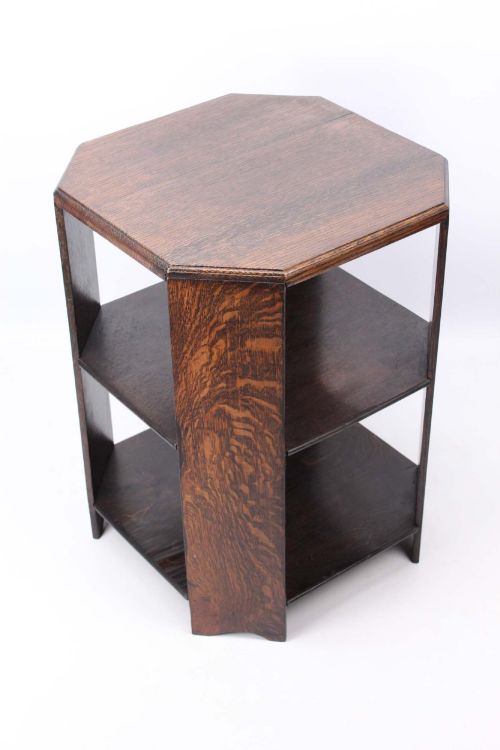
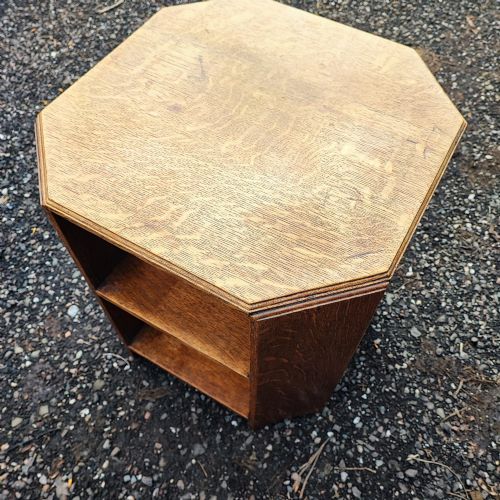
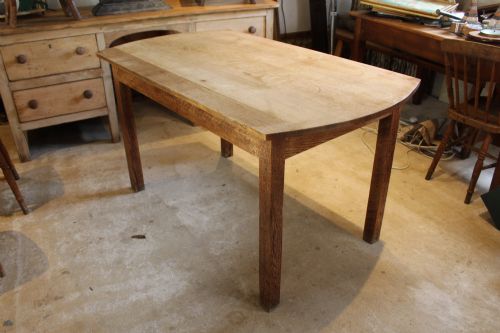
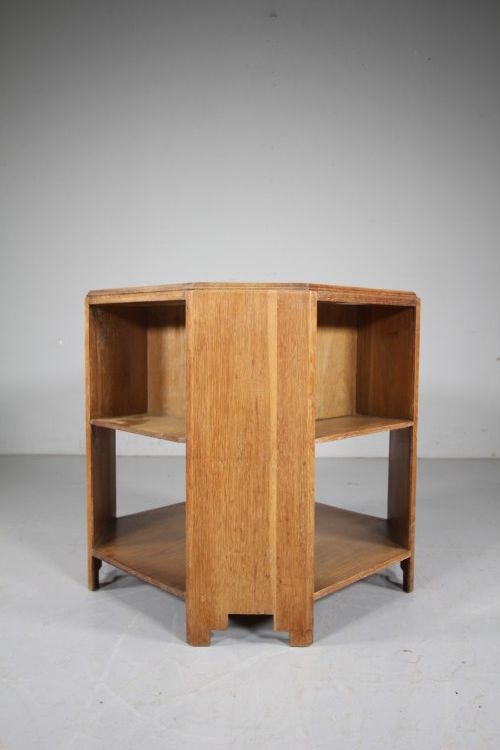
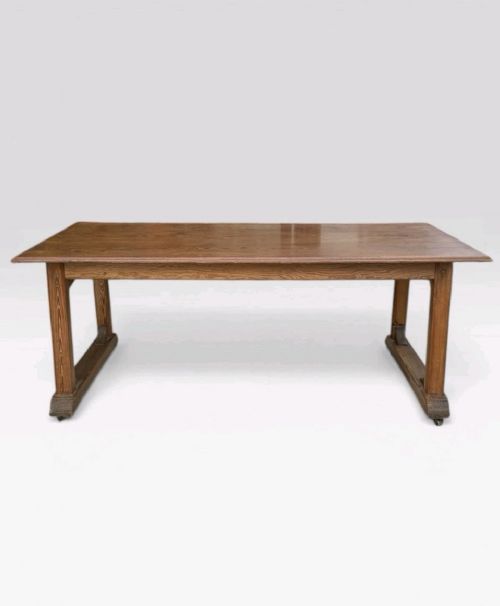
When you search for a heals style table, you encounter practical oak furniture spanning dining tables, coffee tables, book tables, and desks. These pieces embody the functional philosophy of early twentieth century design, focusing on utility and construction rather than excessive ornamentation.
Dining tables, side tables, and occasional book tables dominate the selection, often constructed in solid oak or quarter-sawn oak. Many items carry attributions or display the characteristic restraint of London workshops from the period.
How they were made
Makers utilised solid oak and quarter-sawn oak to showcase natural grain patterns, often applying a limed finish to lighten the timber. Construction relied on visible joinery and robust framing rather than hidden fasteners.
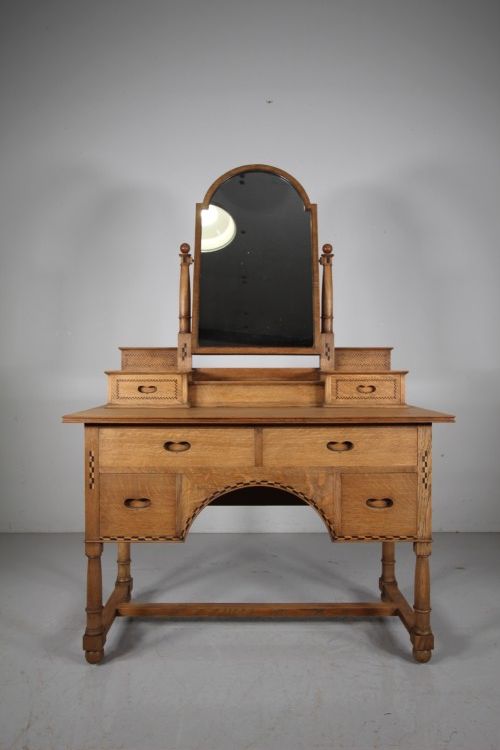
Selected pieces incorporate contrasting materials such as glass, leather, brass hardware, wood inlay, or ceramic tiles. These elements added functional durability and visual interest to surfaces used daily.
A tiny child's oak desk waits patiently on the floor, sized just right for an Edwardian toddler.
What varies in quality
Quality in these tables rests upon the selection of timber and the precision of the carpentry. Quarter-sawn oak displays superior stability and prominent medullary rays compared to plain-sawn boards.
The integrity of the construction, from trestle bases to tiered book table framing, dictates the endurance of the piece. Labelled examples or direct attributions carry distinct weight among collectors seeking documented provenance.
Heal and Son
The Heals Style Table Glossary
- Quarter-sawn oak
- Timber cut radially from the log to produce a distinctive grain pattern with enhanced dimensional stability. This method was favoured by Arts and Crafts makers for exposed surfaces.
- Limed oak
- A wood finishing technique where a white pigment is rubbed into the open pores of oak. This treatment creates a pale, frosted appearance popular during the interwar years.
- Arts and Crafts
- A design movement promoting traditional craftsmanship and simple forms. It rejected mass production in favour of hand-finished integrity.
- Book table
- A compact tiered table designed to store volumes within reach of a seat. These forms often feature cruciform partitions or octagonal footprints.
- Refectory table
- A long dining table traditionally used in communal halls. Twentieth century interpretations adapt this sturdy form for domestic dining rooms.
Heals Style Table: Frequently Asked Questions
What defines a heals style table?
These tables are defined by honest construction, visible oak grain, and straightforward utility. They draw inspiration from early twentieth century London workshop designs.
Such pieces avoid superfluous carving, letting the natural properties of the timber and sound joinery form the primary aesthetic.
How do I date a heals style table?
Dating relies on stylistic shifts visible across the Edwardian period, the nineteen twenties, and the nineteen thirties. Arts and Crafts influences point to earlier decades, while geometric lines suggest Art Deco.
Construction methods and material finishes, such as limed oak treatments, provide further clues to the decade of manufacture.
Were these tables made only from oak?
Oak remains the predominant timber across this category, appearing in solid, quarter-sawn, and limed variants. Walnut also appears in specific Art Deco pieces.
Additional materials like brass, glass, leather, and ceramic tiles were integrated into surfaces and fittings for practical use.
How do I care for an oak table?
Solid oak surfaces benefit from regular dusting with a dry cloth and occasional treatment with suitable furniture wax. Avoiding direct heat sources preserves the finish.
Protecting the timber from excessive moisture prevents staining and maintains the natural lustre of the wood over time.