






1920s Oak Side Table
A 1920s oak side table brings sturdy domestic utility and period grain to a hallway or sitting room.

1920s Oak Side Table
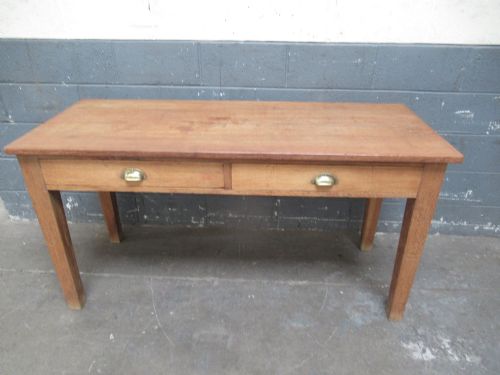
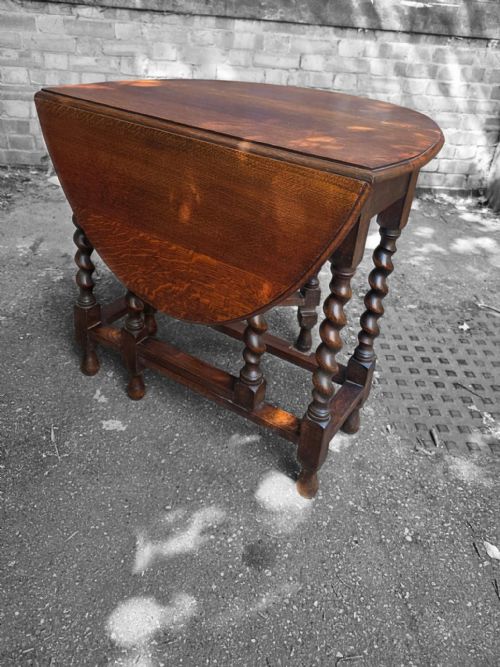
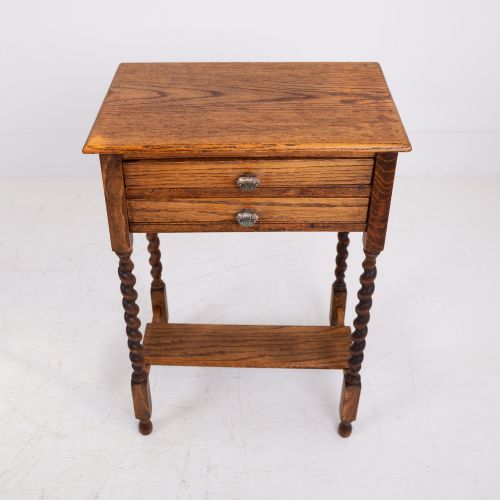
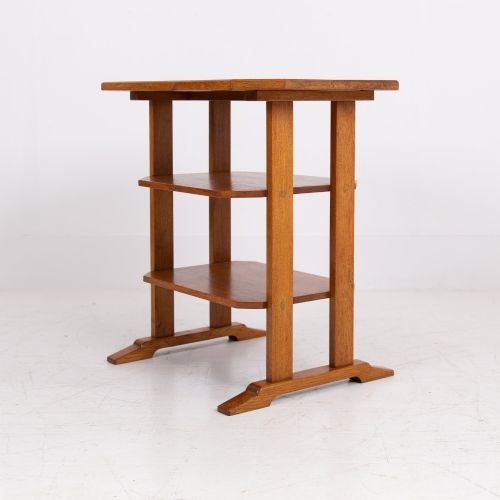
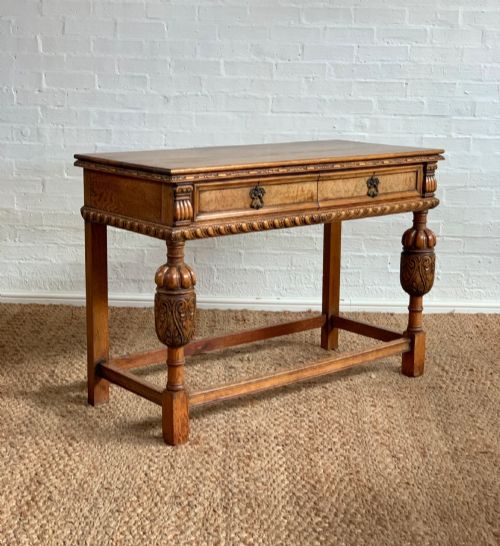
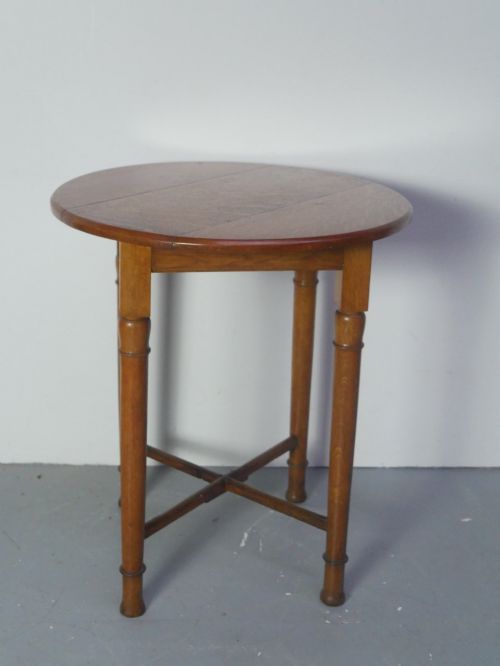
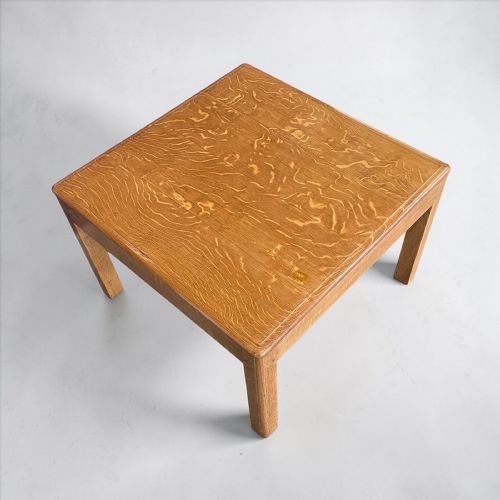
A 1920s oak side table encompasses a range of compact domestic forms designed for occasional use, displaying styles from Jacobean Revival to Art Deco. Buyers looking at this page encounter rectangular, oblong, demi-lune, D-shaped, six-sided, and three-tier formats created as side, console, hall, serving, or lamp tables.
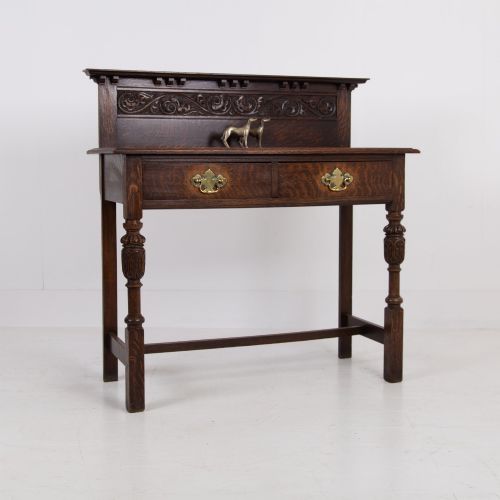
The domestic output of this decade draws heavily on earlier historical vocabularies while keeping practical proportions for interwar homes. Alongside Jacobean Revival and Art Deco examples, pieces appear in Continental styles, William & Mary forms, or with details suggesting the Cotswold School.
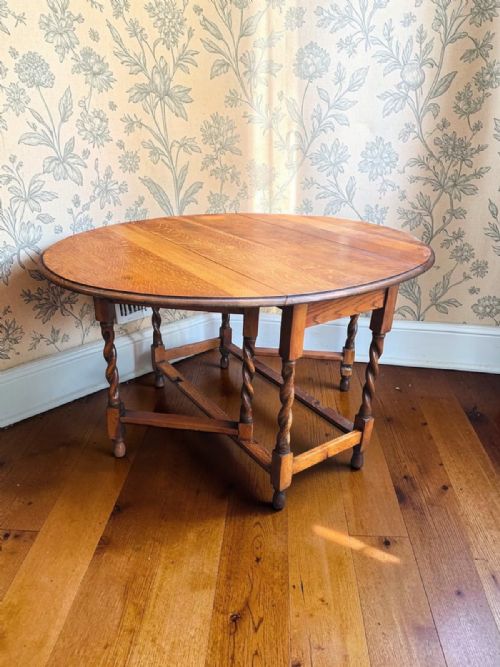
Most items date firmly to the 1920s, with occasional pieces stretching back slightly into the 1910s. Whether featuring a single drawer, two drawers, or a fold-over top that converts the piece into a dining table, these tables provide everyday surface space anchored by durable timber.
Materials and construction
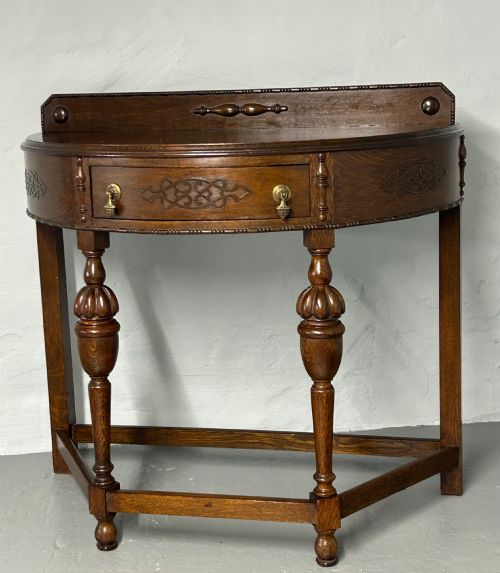
Construction relies upon solid oak, utilising the natural figure and strength of the timber for heavy tops and structural frames. Selected pieces incorporate brass hardware, such as handles or decorative mounts, alongside carved enrichment.
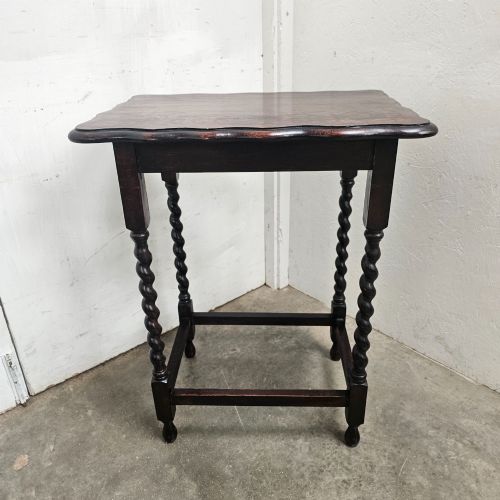
Turned elements appear frequently, notably through barley twist legs that demonstrate traditional carpentry techniques adapted for interwar production. Surfaces balance plain boards with carved borders, pie crust edges, and geometric or curved profiles.
1920s Oak Side Table Retail Price Guide 2026
Typical asking prices for 1920s oak side table among the pieces listed under this phrase on Sellingantiques today, from the lower quarter to the upper quarter. They describe what is for sale here now, not the wider market.
Several tables manage to multiply their surface area on demand, hiding dining capacity inside a modest hallway console.
Distinguishing quality
Quality rests in the selection of the timber and the crispness of the woodwork, from shaped pie crust edges to deeply carved panels and balanced proportions. Solid oak construction throughout indicates a higher standard of manufacture compared to simpler utilitarian builds.
Beresford & Hicks London
The 1920s Oak Side Table Glossary
- Jacobean Revival
- A design style popular in the early twentieth century that imitates seventeenth-century English furniture through dark finishes, heavy turning, and geometric panel carving. It draws directly upon seventeenth-century motifs.
- Barley twist
- A cylindrical wooden furniture leg or support carved in a continuous helical spiral resembling a twisted rope. This turned detail appears frequently on early twentieth-century tables.
- Pie crust table
- A small table featuring a raised, carved, and scalloped edge around the perimeter of the circular or shaped top. The profile resembles the crimped pastry edge of a pie.
- Demi-lune
- A half-moon shaped furniture form with a flat back edge designed to stand flush against a wall. These console or side tables save floor space in narrow hallways.
- Cotswold School
- An arts and crafts inspired movement emphasising honest construction, exposed joints, and respect for natural timber grain. Pieces in this manner display simplified, robust forms.
1920s Oak Side Table: Frequently Asked Questions
Where do I put a 1920s oak side table?
These compact tables fit easily into entrance halls, alongside armchairs in sitting rooms, or as lamp surfaces in corners. Their varied shapes allow them to sit flush against walls or occupy narrow spaces.
Because they offer surface space and sometimes drawer storage, they function practically as serving tables, hall consoles, or occasional tables for everyday use.
How do I identify the style?
Look at the legs, edges, and overall silhouette to determine whether a piece leans toward traditional revivalism or modernism. Barley twist legs and heavy carving point to Jacobean or William & Mary revivals.
Smoother lines, geometric shapes, and simpler surfaces indicate Art Deco influences or utilitarian interwar design. Comparing the edge profiles and hardware helps clarify the period aesthetic.
Are these tables sturdy enough for daily use?
Solid oak construction and traditional joinery make these pieces remarkably robust for everyday domestic environments. They support lamps, books, and serving items without difficulty.
Careful handling of fold-over mechanisms and drawer runners ensures these functional antique tables remain practical for modern living.