

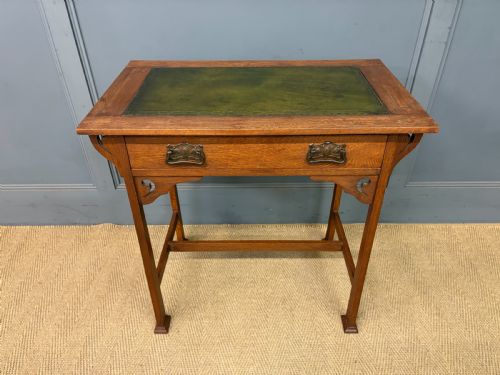
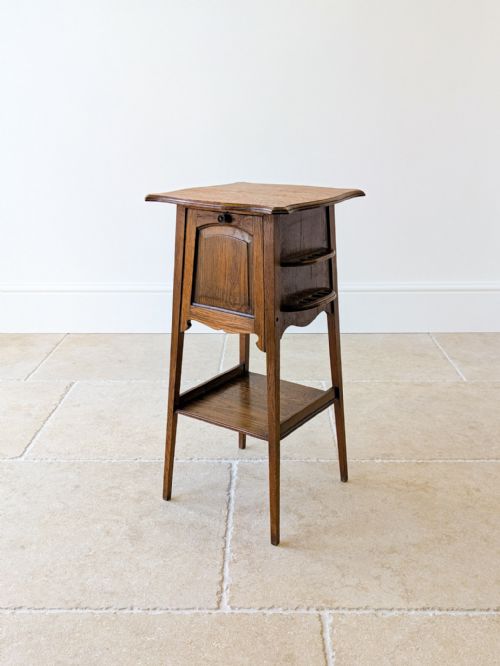
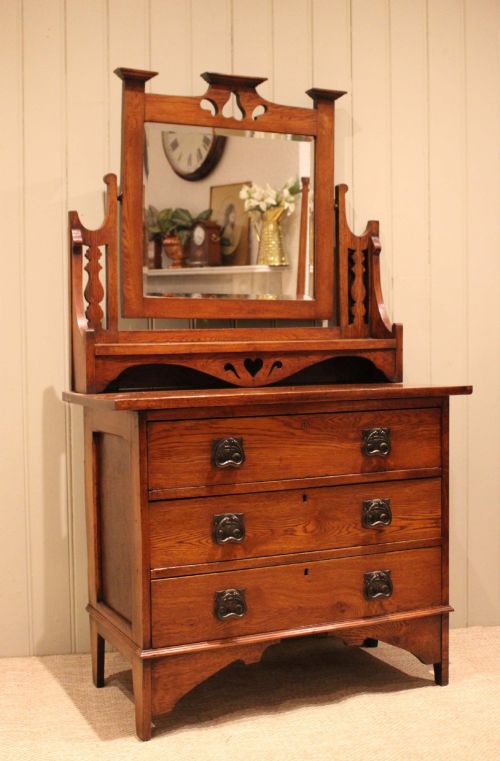
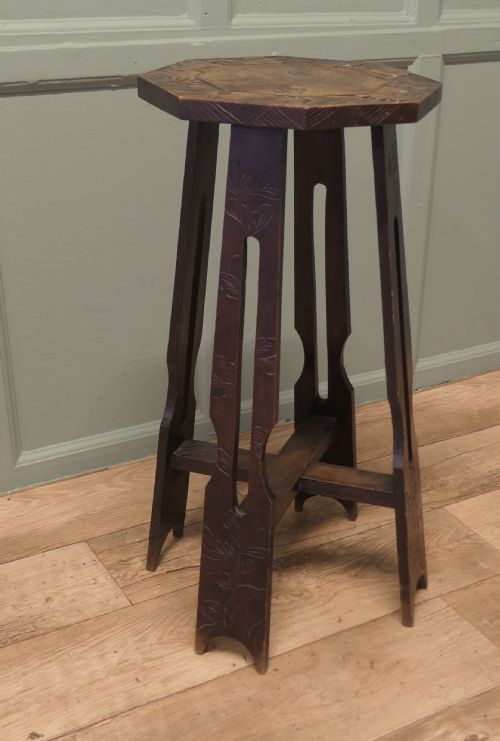
Liberty Style Table
When you search for a liberty style table, you discover pieces defined by Arts and Crafts utility, Moorish geometry and aesthetic movement design.
Liberty Style Table
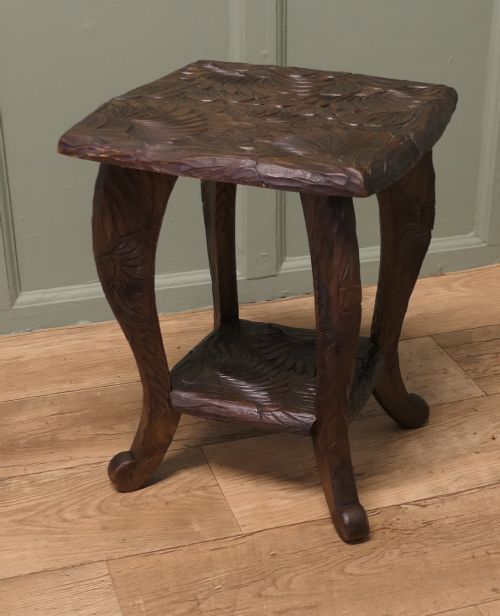
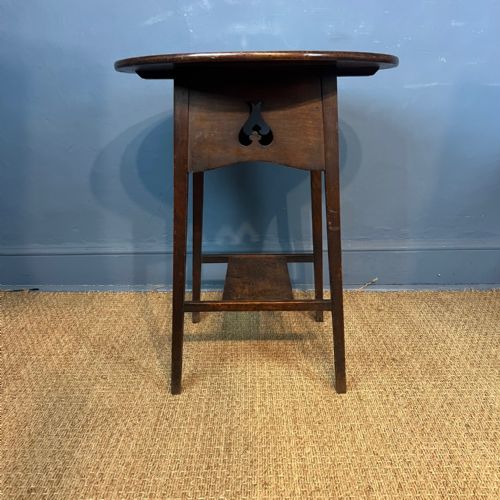
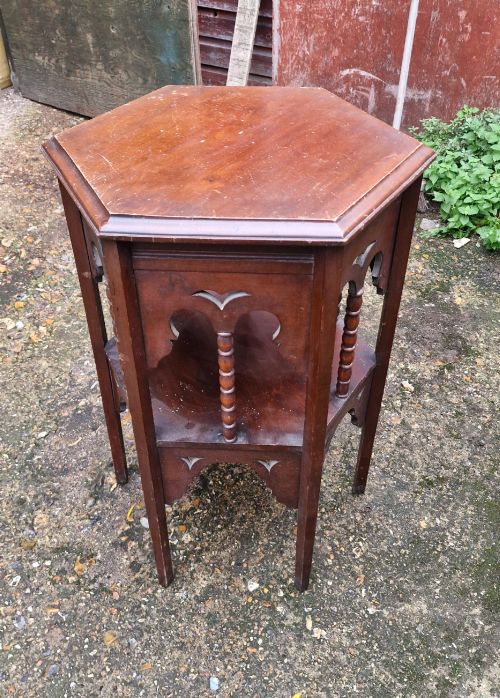
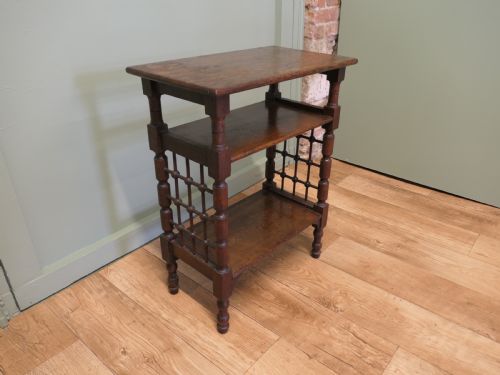
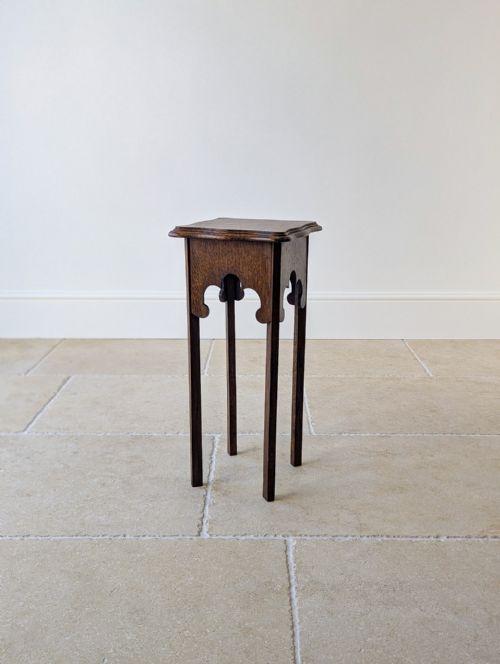
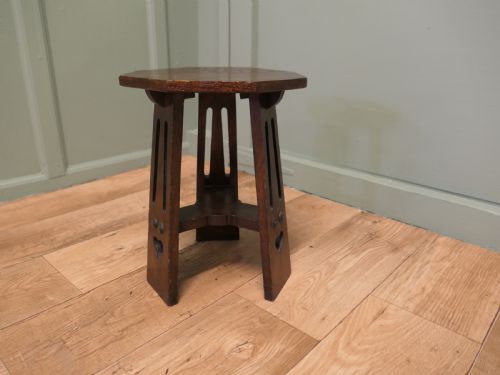
A liberty style table brings together distinct late nineteenth and early twentieth century design movements, most commonly appearing as compact occasional furniture, plant stands and side tables. Buyers seeking these forms encounter sturdy oak structures alongside more exotic walnut, mahogany and bamboo frames.
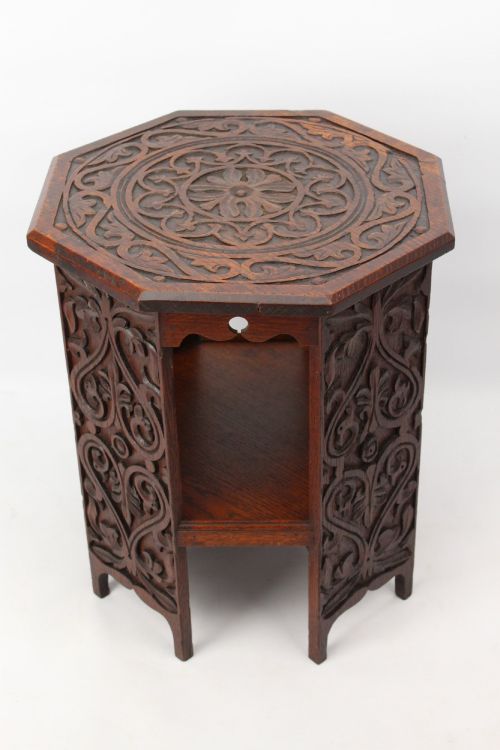
The aesthetic bridges domestic utilitarian needs with adventurous global influences, spanning straightforward Arts and Crafts construction to intricate Moorish and Japanese carving. Octagonal surfaces, two tier tea tables and folding Benares styles dominate the selections available to collectors.
Materials and construction
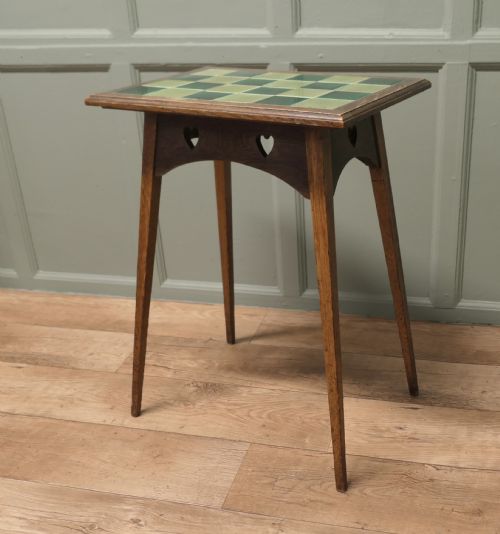
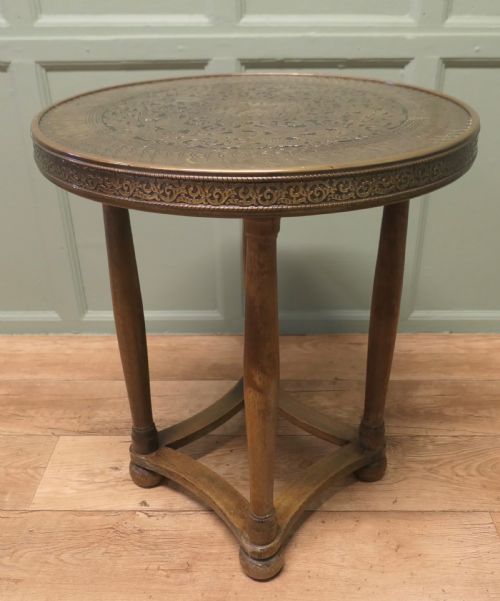
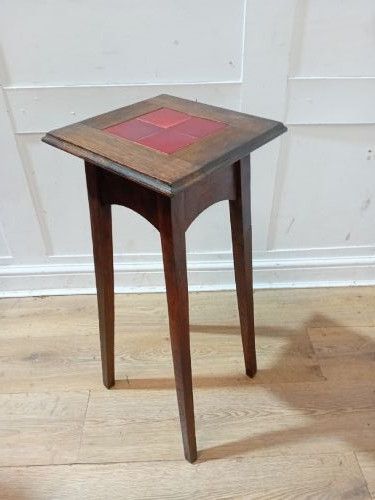
Makers relied heavily on solid oak, walnut and mahogany, often combining the timber with contrasting details in copper, brass, ceramic tiles and mother-of-pearl inlay. Surface decoration involved deep hand-carving, fretwork and bone inlay executed in Anglo-Indian and Japanese tastes.
Joinery methods prioritized functional durability, utilising visible pegs, mortise and tenon joints, and tiered structures that supported drop flaps or folding bases. Metal elements such as beaten copper tops and pewter cabochons integrated industrial craft with traditional woodworking.
Liberty Style Table Retail Price Guide 2026
Typical asking prices for liberty style table among the pieces listed under this phrase on Sellingantiques today, from the lower quarter to the upper quarter. They describe what is for sale here now, not the wider market.
Several tables arrive with hidden folding actions ready for impromptu tea.
Distinctions in craftsmanship
The hierarchy of these tables rests upon the depth of hand-carving, the crispness of inlay and the selection of figured timbers rather than plain woods. Superior examples exhibit precise geometric bone work or intricate Moorish fretwork that remains tight and stable within the frame.
Makers' marks, stamps or attribution to specific designers and retail houses elevate the standing of a piece, separating standard commercial output from workshop creations. Original surface patination and intact metal inserts such as removable copper trays further define the upper tier of quality.
Liberty & Co·Baillie Scott·Archibald Knox
The Liberty Style Table Glossary
- Arts and Crafts
- A design movement emphasising handcraft, traditional joinery and plain materials. It rejected mass production in favour of honest construction.
- Moorish Revival
- An architectural and decorative style incorporating Islamic geometric motifs, horseshoe arches and intricate woodwork. It heavily influenced late Victorian occasional furniture.
- Two-Tier Table
- A piece featuring a primary upper surface and a secondary lower shelf joined by upright stretchers. This layout provided extra space for display or storage.
- Cricket Table
- A small, lightweight three-legged table traditionally used near the hearth. The design ensures stability on uneven floors.
- Occasional Table
- A versatile, small-scale table designed for specific, intermittent use around a room. Common forms include lamp stands and tea tables.
Liberty Style Table: Frequently Asked Questions
What is a liberty style table?
These tables are domestic occasional pieces produced during the late nineteenth and early twentieth centuries that reflect the retail aesthetic of Liberty & Co. They merge British Arts and Crafts utility with international influences like Moorish geometry and Japanese carving.
Buyers find them in forms ranging from simple oak plant stands to intricately inlaid octagonal tea tables. The style values honest materials and artistic craftsmanship over mass-produced ornamentation.
How do I identify a Moorish table?
Moorish tables typically feature octagonal tops, dense geometric bone or mother-of-pearl inlay, and pierced fretwork panels. They often use folding or pegged frames derived from traditional Middle Eastern designs.
Walnut and mahogany are common timbers for these pieces, which were popularized in British interiors by retailers seeking exotic, eclectic accents. The construction balances intricate surface patterns with sturdy domestic utility.
Where were these tables placed?
Historically, homeowners positioned these small tables beside seating for lamps, books and tea services, or utilised them as plant and jardiniere stands. Their compact footprints made them adaptable for halls, parlours and drawing rooms.
Today, they function similarly in modern interiors as bedside surfaces, plant displays or accent tables. Their varied heights and tiered shelves provide practical display areas without dominating a room.
How do I date an Arts and Crafts table?
Dating relies on examining construction methods, timber selection and stylistic cues such as exposed joinery, hand-beaten copper tops and specific hardware. Pieces from the late nineteenth century often display heavier Victorian proportions, while Edwardian examples tend toward lighter framing.
Makers' stamps, retailer marks and registration numbers found underneath surfaces offer the most precise chronological indicators. Comparing the primary wood and decorative motifs against documented periods helps narrow the decade of manufacture.