

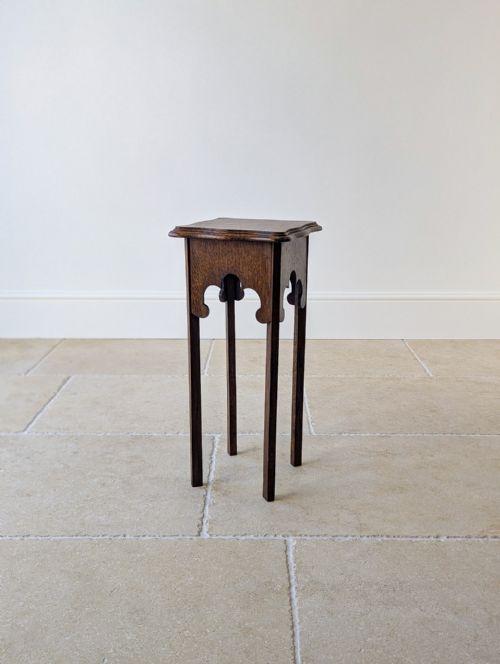
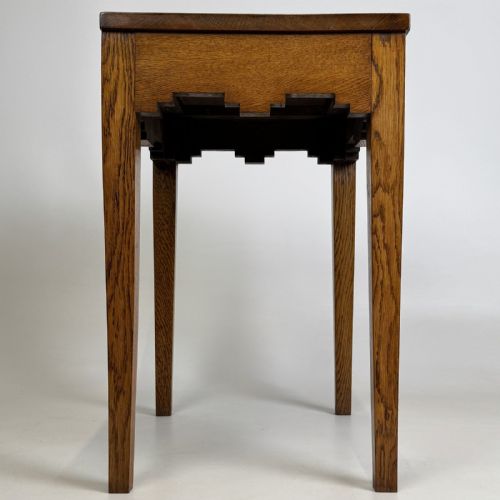
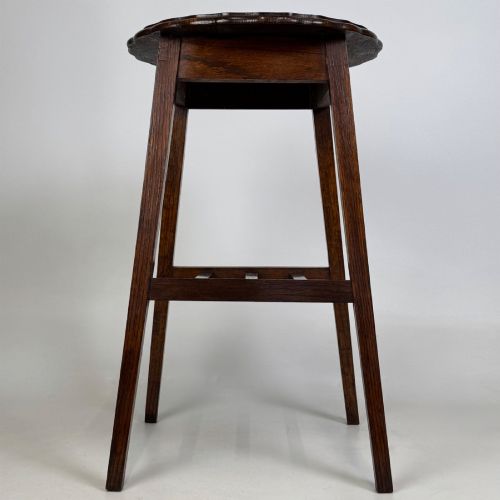
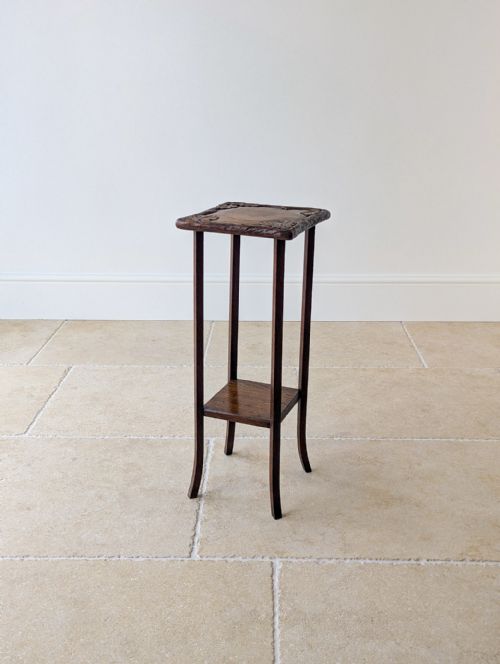
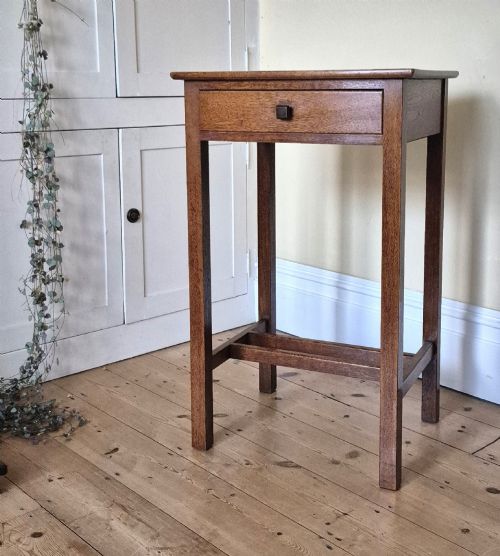

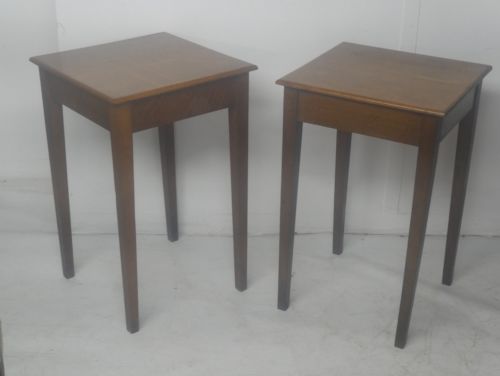
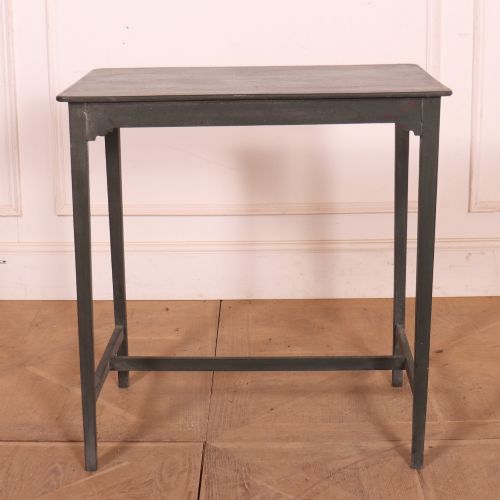


Tall Oak Side Table
A tall oak side table gives a room useful surface space and height, built from sturdy timber to last generations.
Tall Oak Side Table
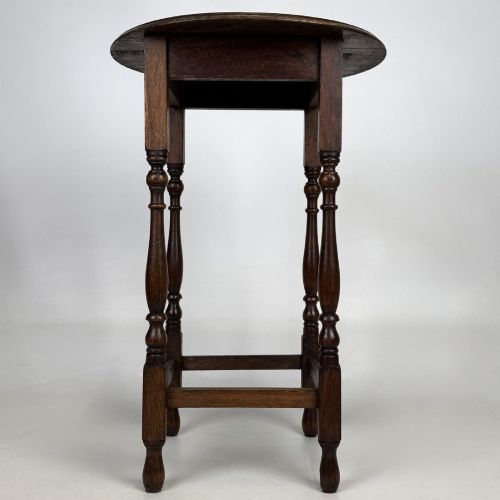
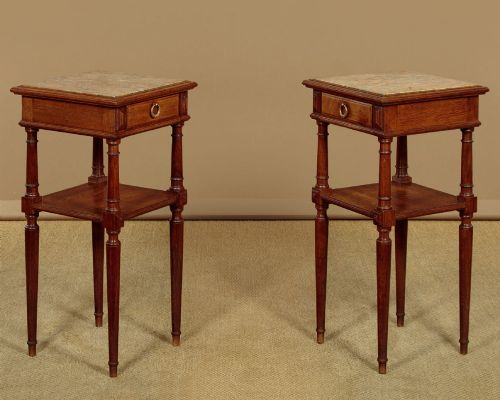
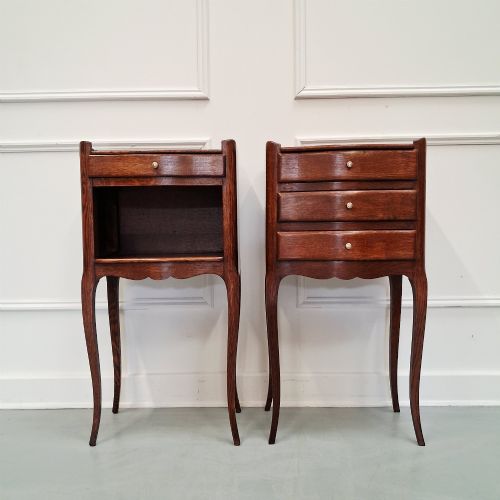
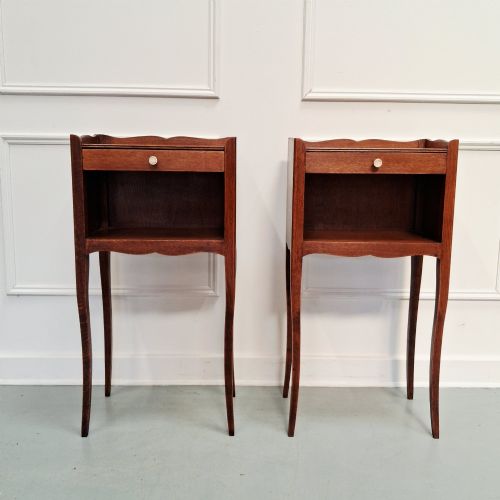
A tall oak side table brings a practical surface to corners and narrow spaces, combining height with the sturdiness of solid timber. When you search for a tall oak side table, you encounter forms ranging from plant stands and lamp tables to occasional tables and refectory pieces.
The pieces appearing in this category span the nineteenth century through the Edwardian era and into the 1920s and 1930s. Design influences draw heavily on Arts and Crafts ideals, English and Scottish country traditions, and occasional revivals of Jacobean styles.
Most examples function primarily as lamp stands, plant holders, or compact occasional tables. Their elevated proportions make them particularly useful beside seating or in hallways where floor space is limited.
Distinguishing quality
Quality reveals itself in the selection of the timber, particularly where quarter-sawn oak displays distinct grain patterns and medullary rays. The weight and stability of the frame distinguish a robustly built piece from a lighter utility item.
Execution of decorative details, from hand-shaped edges to turned barley twist legs, sets finer workshop examples apart from standard production. Proportion and balance also matter greatly when a table stands noticeably tall relative to its top surface.
Tall Oak Side Table Retail Price Guide 2026
Typical asking prices for tall oak side table among the pieces listed under this phrase on Sellingantiques today, from the lower quarter to the upper quarter. They describe what is for sale here now, not the wider market.
Listings feature pieces spanning from eighteen sixty through the Edwardian period into the nineteen twenties and thirties, constructed primarily in oak, brass, and painted hardwood.
Liberty London·Hubert Simpson of Kendal
The Tall Oak Side Table Glossary
- Arts and Crafts
- A design movement valuing hand-craftsmanship, simple forms, and visible construction methods. This aesthetic heavily influences many early twentieth century pieces.
- Barley Twist
- A spiral turning technique applied to table legs and supports, popular during revival periods and the Edwardian era. It adds texture and visual weight to taller furniture.
- Refectory Table
- A long, narrow table traditionally used for dining but adapted in various heights and proportions. Examples in this category provide substantial surfaces on elevated frames.
- Plant Stand
- A tall, narrow table designed specifically to elevate flora. These share similar dimensions and construction with tall lamp and side tables.
- Quarter-sawn
- A method of cutting oak logs that produces distinct grain patterns and structural stability. This technique is often seen in higher quality Arts and Crafts furniture.
Tall Oak Side Table: Frequently Asked Questions
What were tall oak side tables used for?
These tables served various domestic functions, frequently holding lamps, decorative plants, or serving as occasional surfaces beside seating. Their height made them suitable for illuminating dark corners or displaying items at eye level.
In hallways and sitting rooms, they provided a convenient drop-off point without occupying a large footprint on the floor.
How do I identify an Edwardian piece?
Edwardian furniture often displays lighter proportions and borrows heavily from earlier historical styles while retaining a refined simplicity. Look for characteristic timber finishes and construction methods typical of the period around nineteen hundred to nineteen ten.
Makers from this era frequently combined traditional joinery with Arts and Crafts design principles.
Are these tables made of solid oak?
Many examples utilise solid oak throughout the top, frame, and legs, though some incorporate secondary timbers like pine or hardwood in less visible areas. Painted oak surfaces also appear among the listed variations.
Inspect the timber grain and construction joints to understand the specific materials used in an individual piece.
Where do Arts and Crafts influences show?
Arts and Crafts influence appears in the emphasis on honest construction, visible grain, and straightforward joinery rather than excessive ornamentation. Tables from this tradition often feature unadorned surfaces that celebrate the natural qualities of the wood.
Designers associated with this movement prioritised utility and simple geometric forms.
How do I style a tall table at home?
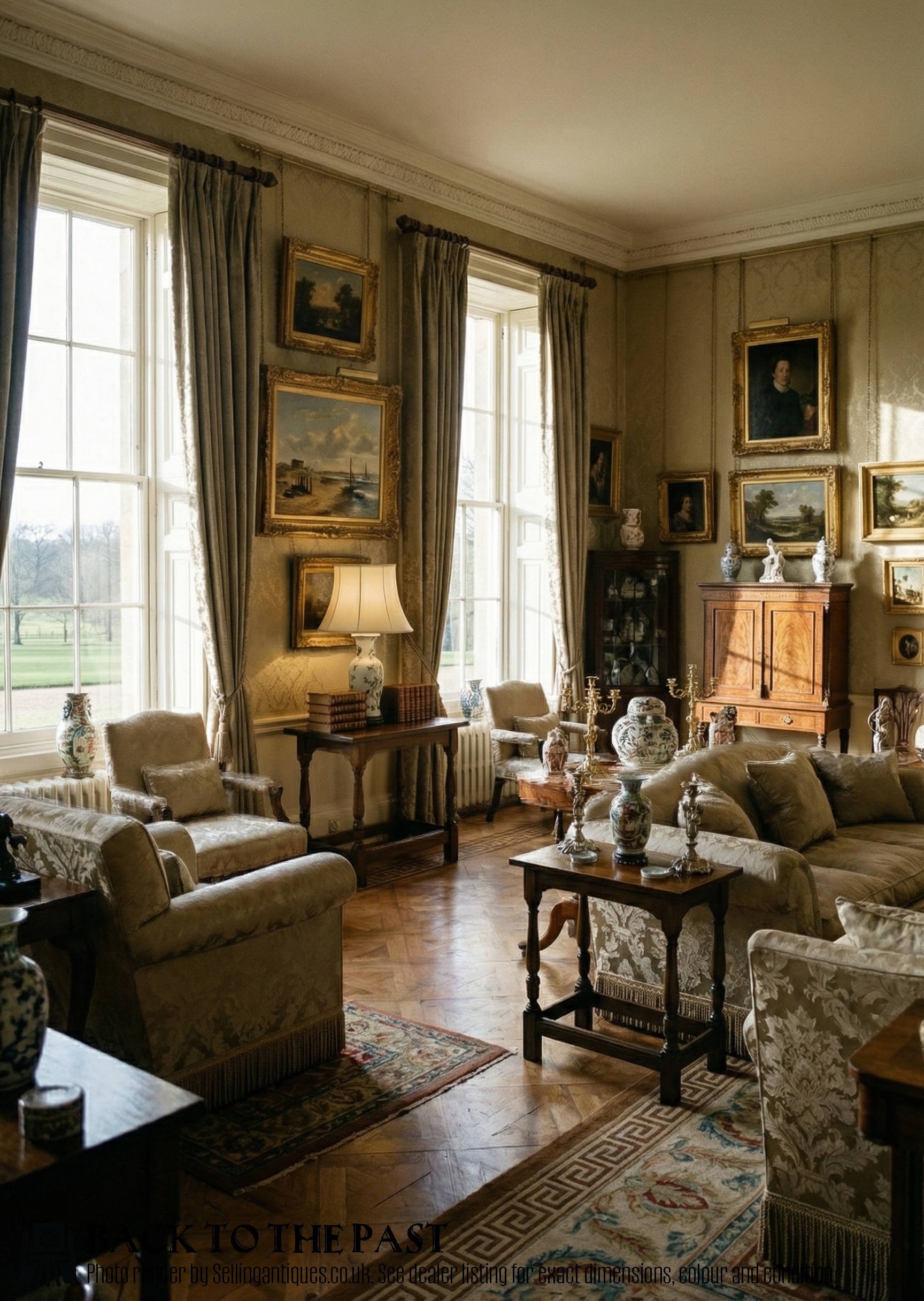
A tall table works well in awkward corners, narrow hallways, or beside a deep armchair where standard height surfaces fall short. Utilise the elevation to place a reading lamp or a trailing plant that benefits from the height.
Keep the items placed on top proportionate to the compact surface area to maintain stability and visual balance.