



Hexagonal Top Table
These hexagonal top table examples offer versatile surfaces with six-sided tops, bringing distinct geometric form and historic character to any room.
Hexagonal Top Table
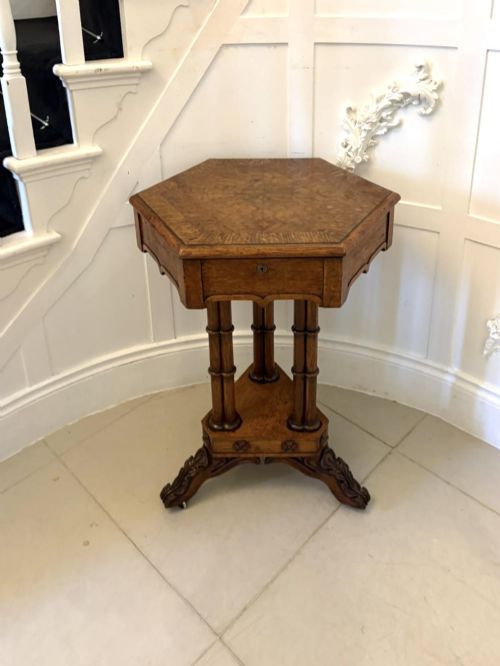
A hexagonal top table presents a six-sided surface configuration that distinguishes it from standard square or circular furniture forms. The selections found here span varied historic periods from the Georgian era through the Victorian epoch and into the twentieth century.
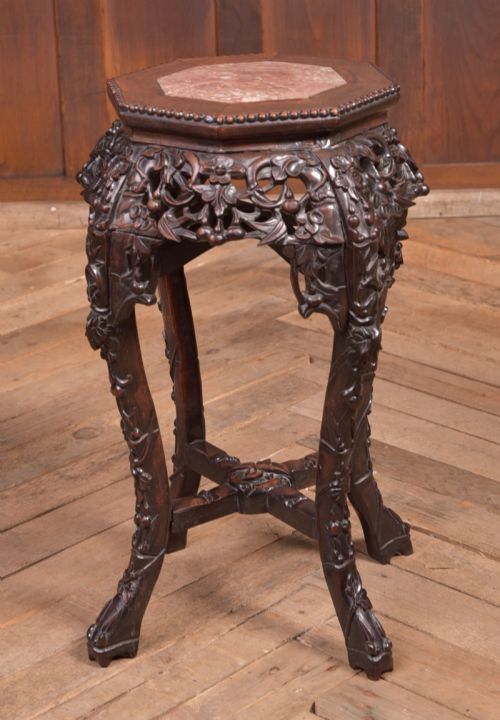
The architectural origins vary considerably across the inventory, ranging from English regional workshops to Anglo-Indian productions and Chinese stands, showing how diverse cultures adopted the six-sided geometry.
How they were made
Cabinetmakers constructed these pieces using dense hardwoods including mahogany, rosewood, padouk, and pollard oak, often selecting timbers for distinct grain patterns and rich natural colour. Surface treatments incorporate polished wood finishes alongside inset marble slabs and gilded brass mounts.
Joinery techniques ranged from turned and carved upright supports to stable tripod bases and fitted lift-top compartments. Artisans also utilised specialised parquetry, specimen wood arrangements, and painted or polished details to accentuate the six-sided geometry.
Listings feature mahogany, rosewood, and oak as the primary timber choices, spanning the Georgian, Victorian, and Edwardian periods.
What varies in quality
Excellence in these pieces rests upon the precision of the six-sided geometry and the integrity of the timber selection. Superior examples display thoughtful grain matching across the top and robust, stable underframes without undue timber shrinkage.
The refinement of carved details, the quality of inset marble slabs, and the integration of decorative elements like gilded brass or turned legs elevate finer productions above utilitarian work.
The Hexagonal Top Table Glossary
- Pollard oak
- Timber taken from trees that have been pollarded, producing a highly figured and speckled grain pattern. It was favoured by nineteenth-century cabinetmakers for decorative veneering.
- Padouk
- A heavy, durable tropical hardwood with a reddish-brown hue that darkens with age. It appears frequently in pieces originating from Asian workshops.
- Torchere
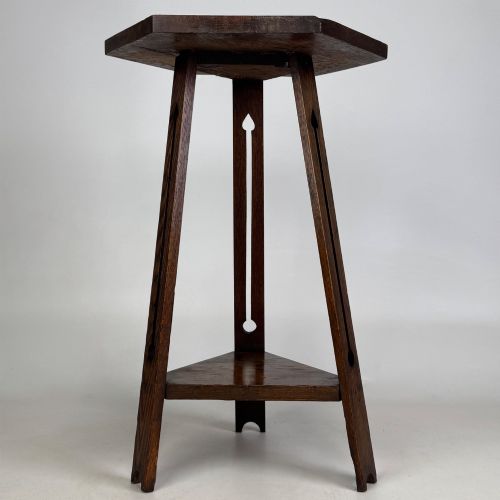
- A tall, slender stand designed specifically to hold a light source or a decorative plant. These pieces often feature narrow hexagonal or circular tops.
- Specimen wood
- Furniture surface composed of numerous small pieces of different timbers arranged in geometric patterns. This technique highlights the natural colour variations of various woods.
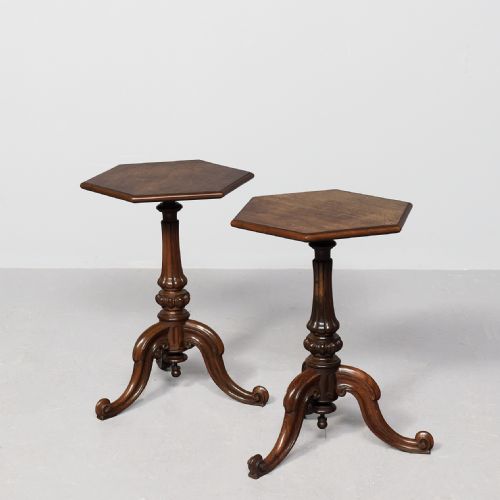
- Tripod base
- A support structure utilising three legs radiating from a central column. This design ensures stability on uneven floors.
Hexagonal Top Table: Frequently Asked Questions
What were hexagonal top tables used for?
These tables served various domestic functions depending on their height and build. Many acted as occasional surfaces for lamps, books, or decorative objects in principal rooms.
Others functioned as plant stands, torchieres, or specialised games tables, adapting easily to tight corners or window spaces due to their compact six-sided footprint.
How do I date a hexagonal top table?
Dating relies upon examining the timber species, construction methods, and stylistic cues present in the legs and base. Regency and William IV pieces often display heavier classical turns, while Edwardian and later examples show lighter proportions.
Documentation, secondary wood types, and tool marks on the underside further assist in narrowing the period of production.
Are marble top tables difficult to maintain?
Marble surfaces require simple care to preserve their polished finish and prevent staining. Regular dusting with a soft cloth keeps the stone clear of abrasive particles.
Spills should be wiped away promptly, particularly acidic liquids that can etch polished marble over time.
Where were these tables made?
The pieces originate from diverse geographic workshops across Britain, continental Europe, and international trade centres. Anglo-Indian and Chinese export pieces reflect cross-cultural design influences during the nineteenth century.
British regional cabinetmakers produced domestic variants using locally accessible hardwoods like oak and mahogany.