



Gothic Revival Plant Stand
These gothic revival plant stands combine ecclesiastical architectural motifs with domestic utility, offering a striking structural focal point for greenery or sculpture.
Gothic Revival Plant Stand
A gothic revival plant stand takes many shapes across the nineteenth and early twentieth centuries, appearing as pedestals, torcheres, stools, and occasional tables. The buyer looking at this selection encounters items designed to elevate foliage or display decorative objects within domestic interiors.
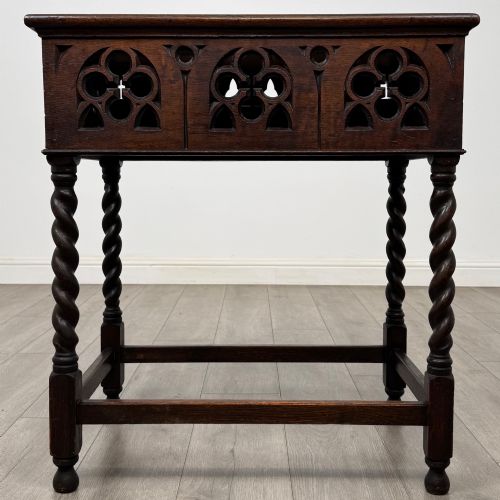
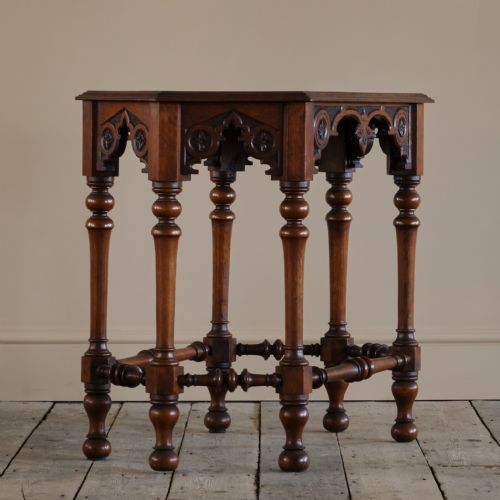
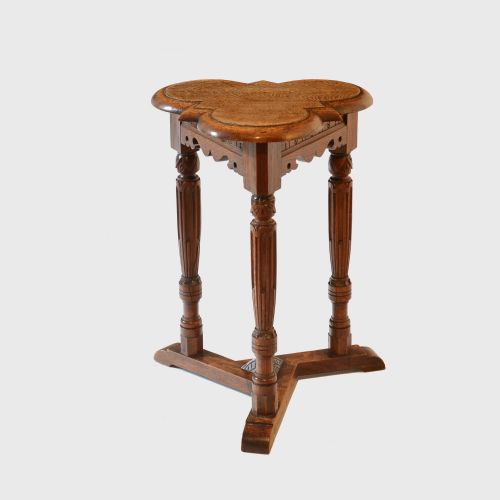
Oak forms the backbone of these pieces, alongside walnut, carved wood, and occasional brass or ceramic elements. Examples frequently display trefoil motifs, clover leaf designs, and spiral columns that reflect the broader architectural revivals of the period.
Materials and construction
Carpenters and cabinetmakers relied primarily on hardwoods such as oak and walnut, shaping them through hand-carving and turning. Ebonised wood and paint appear alongside natural timber finishes to suit varied interior schemes.
Joinery techniques ranged from solid board construction to complex turned columns and pedestal bases. Decorative details often incorporated brass hardware and inset ceramic tiles to add texture and colour.
A winged griffin stands ready to guard your favourite fern.
Factors of distinction
Quality rests in the depth and crispness of the carved ornamentation, distinguishing spirited handwork from simpler production. Pieces featuring integrated architectural elements like caryatids or intricate trefoil cutouts show greater ambition in design.
The choice of material and stability of the underlying structure define the enduring worth of a stand. Heavier timbers and balanced proportions ensure the piece holds weight securely while retaining its decorative integrity.
Baillie Scott
The Gothic Revival Plant Stand Glossary
- Trefoil
- A three-lobed ornamental design resembling clover leaves, frequently pierced through table tops or incorporated into tracery.
- Torchere
- A tall stand designed originally to support a candle or light, later adapted to hold plants, urns, or decorative figures.
- Caryatid
- A sculpted female figure serving as an architectural support in place of a column or pilaster.
- Ebonised wood
- Timber treated with a finish to imitate expensive ebony, popular for achieving a dense black surface in nineteenth-century furniture.
Gothic Revival Plant Stand: Frequently Asked Questions
What were gothic revival plant stands used for?
These stands served primarily to elevate potted plants, ferns, and floral arrangements within Victorian and Edwardian reception rooms.
By raising greenery off the floor, they protected carpets from moisture while creating vertical interest in domestic interiors.
How do I identify a gothic revival plant stand?
Look for characteristic architectural motifs such as pointed arches, trefoils, quatrefoils, and heavy carved woodwork.
Materials are typically solid oak or walnut, often displaying structural details borrowed from medieval churches and cathedrals.
Can these stands support heavy plants?
Most solid hardwood pedestals and tables possess the structural strength to carry substantial potted plants or heavy ceramic urns.
It remains wise to inspect the stability of the central column and base joints before placing exceptionally heavy specimens on top.
How do I date a gothic revival piece?
Dating relies on assessing the timber, joinery methods, and the specific stylistic influence, whether Victorian Gothic, Arts and Crafts, or Aesthetic Movement.
Most surviving examples date from the mid-nineteenth century through to the Edwardian era.