




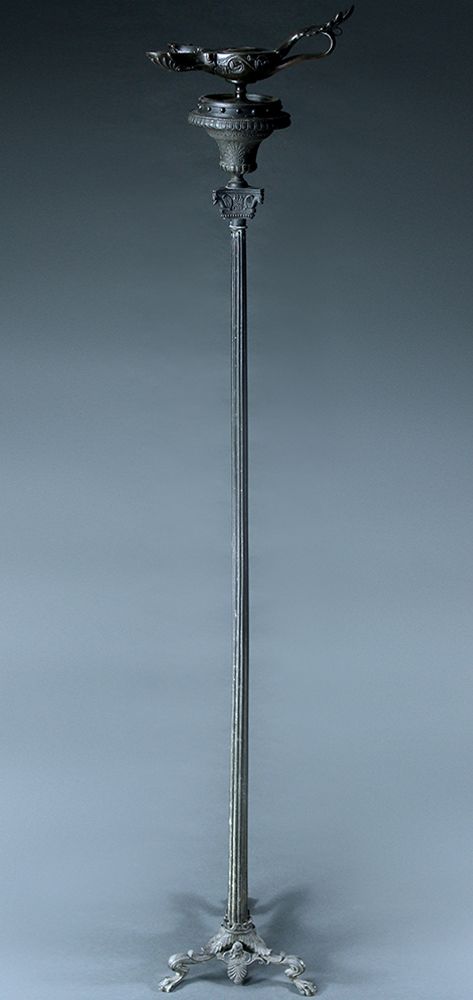
19th Century Torchere
A 19th century torchere is a tall, slender stand designed to elevate a light source, plant, or decorative object within a room.
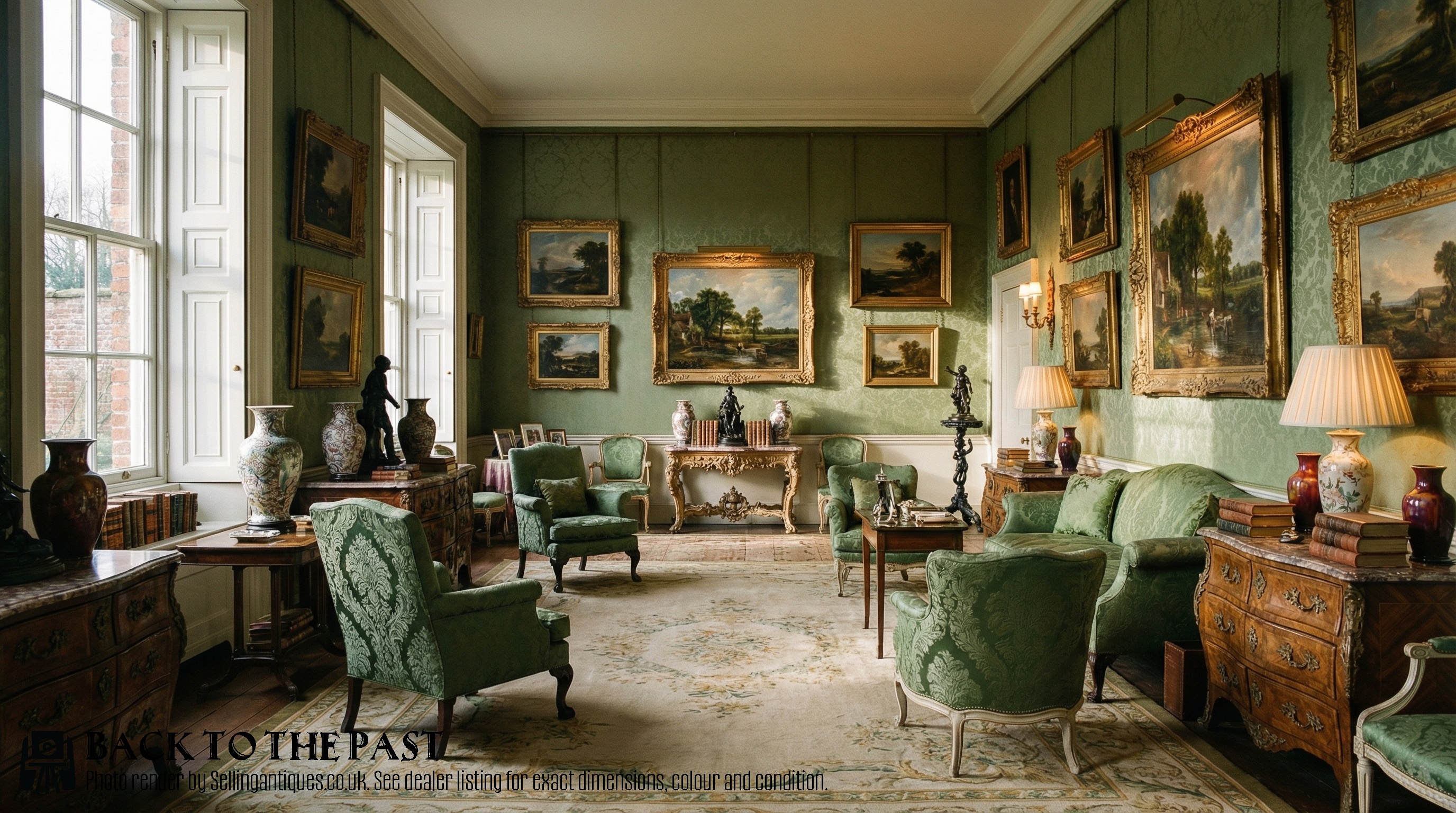
19th Century Torchere
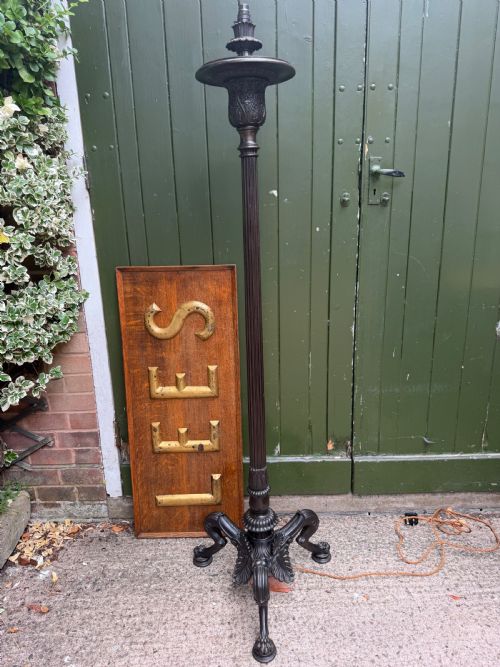
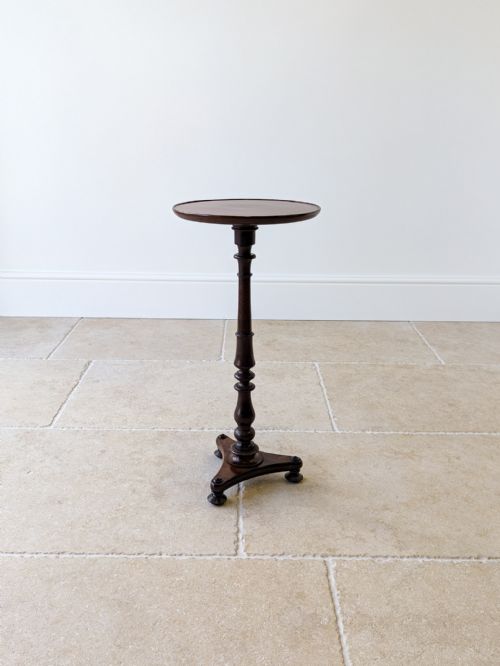
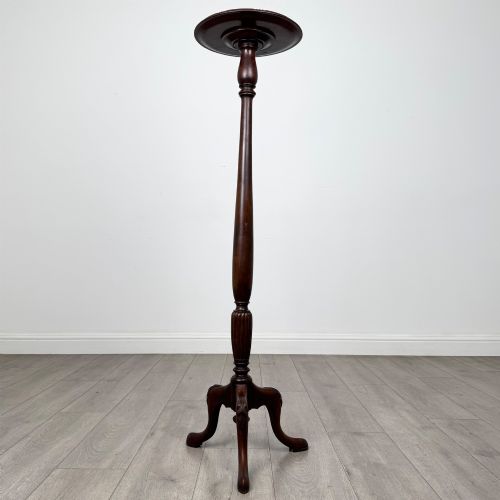
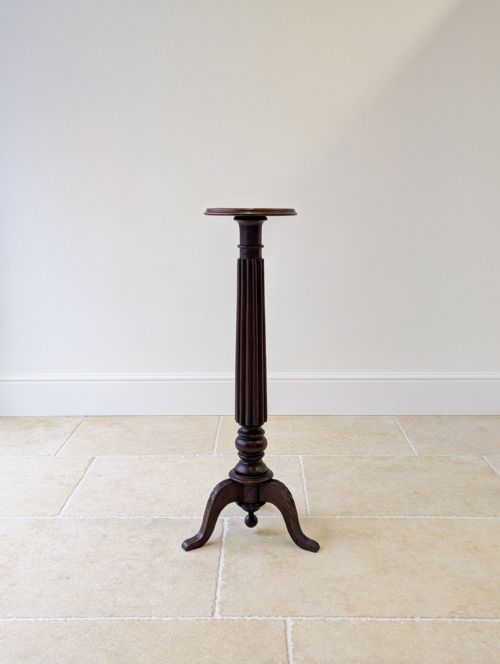
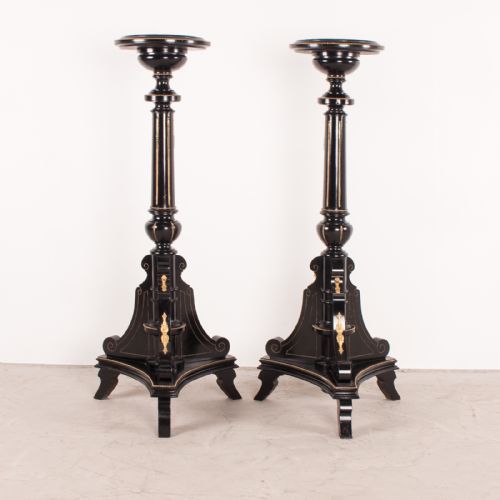
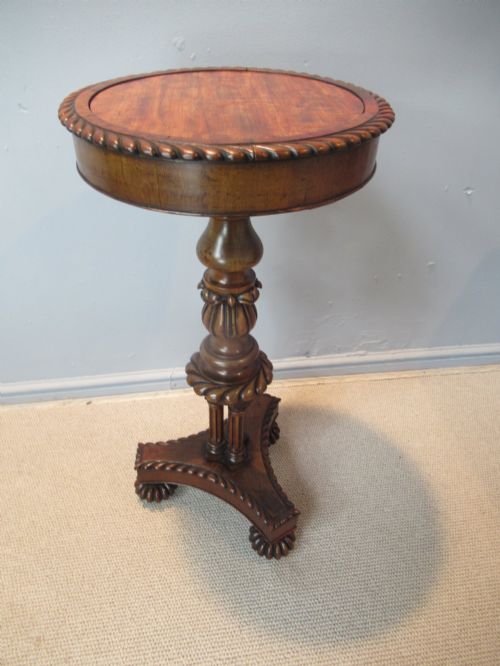
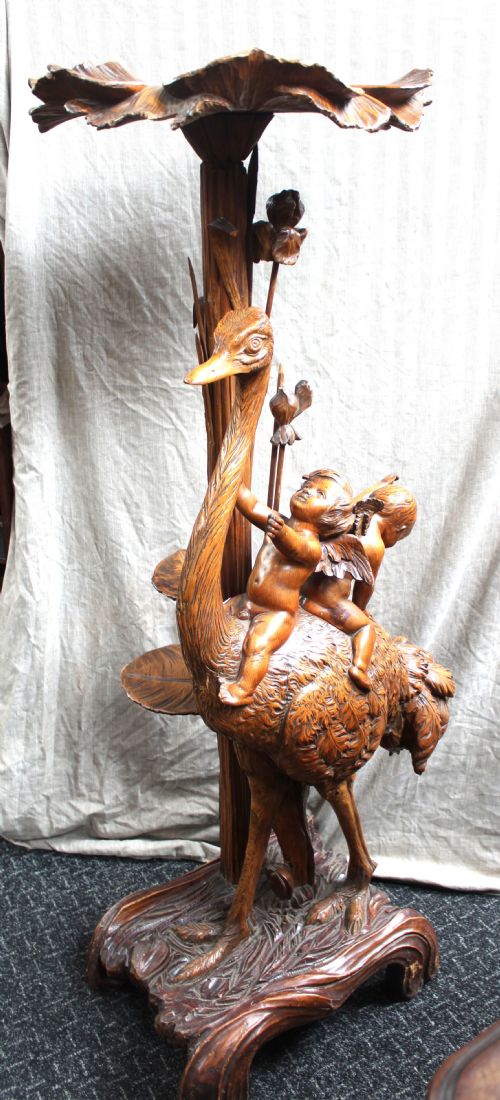
A 19th century torchere functions primarily as an elevated display stand for figures, plants, lamps, and candelabra. Pieces matching this 19th century torchere description range from tall mahogany columns to elaborate carved figural supports.
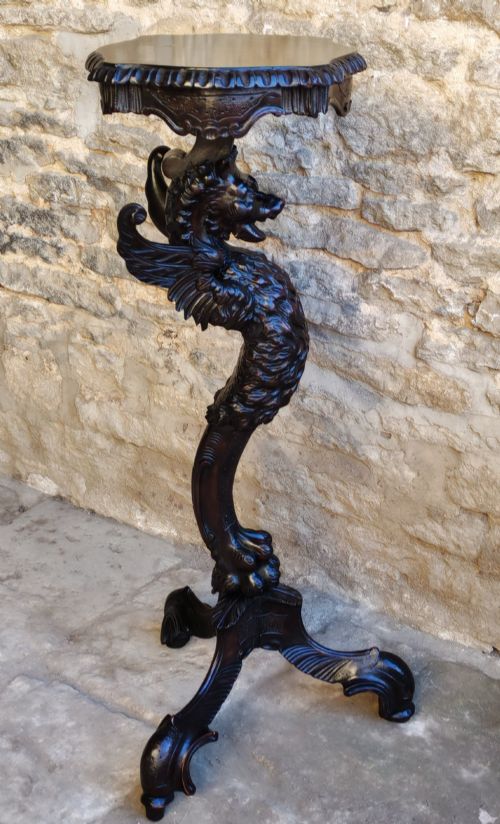
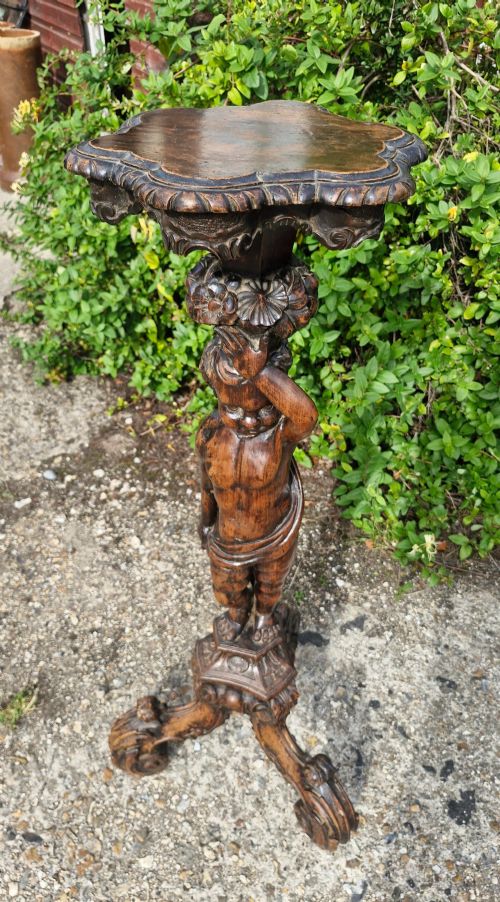
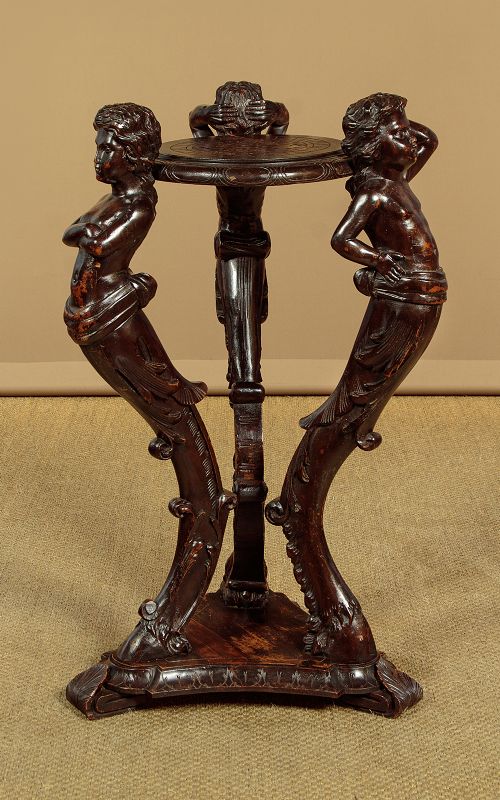
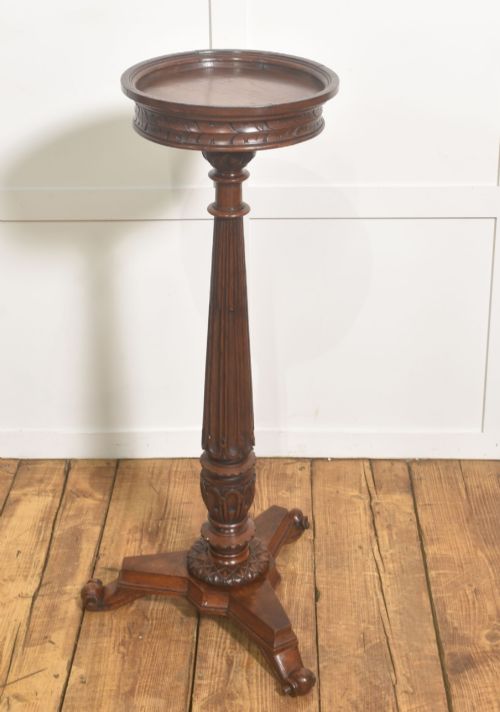
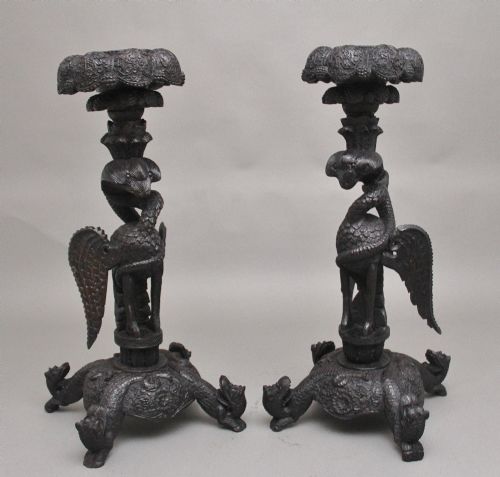
Examples on this page appear in various regional interpretations, including Venetian polychrome figures, Anglo-Indian rosewood stands, and neoclassical mahogany columns. The form adapts easily from a floor-standing lamp base to an occasional plant pedestal.
Makers and workshops across Britain and continental Europe produced these supports in differing heights, often utilising tripod bases or circular tops to hold urns and candelabra securely.
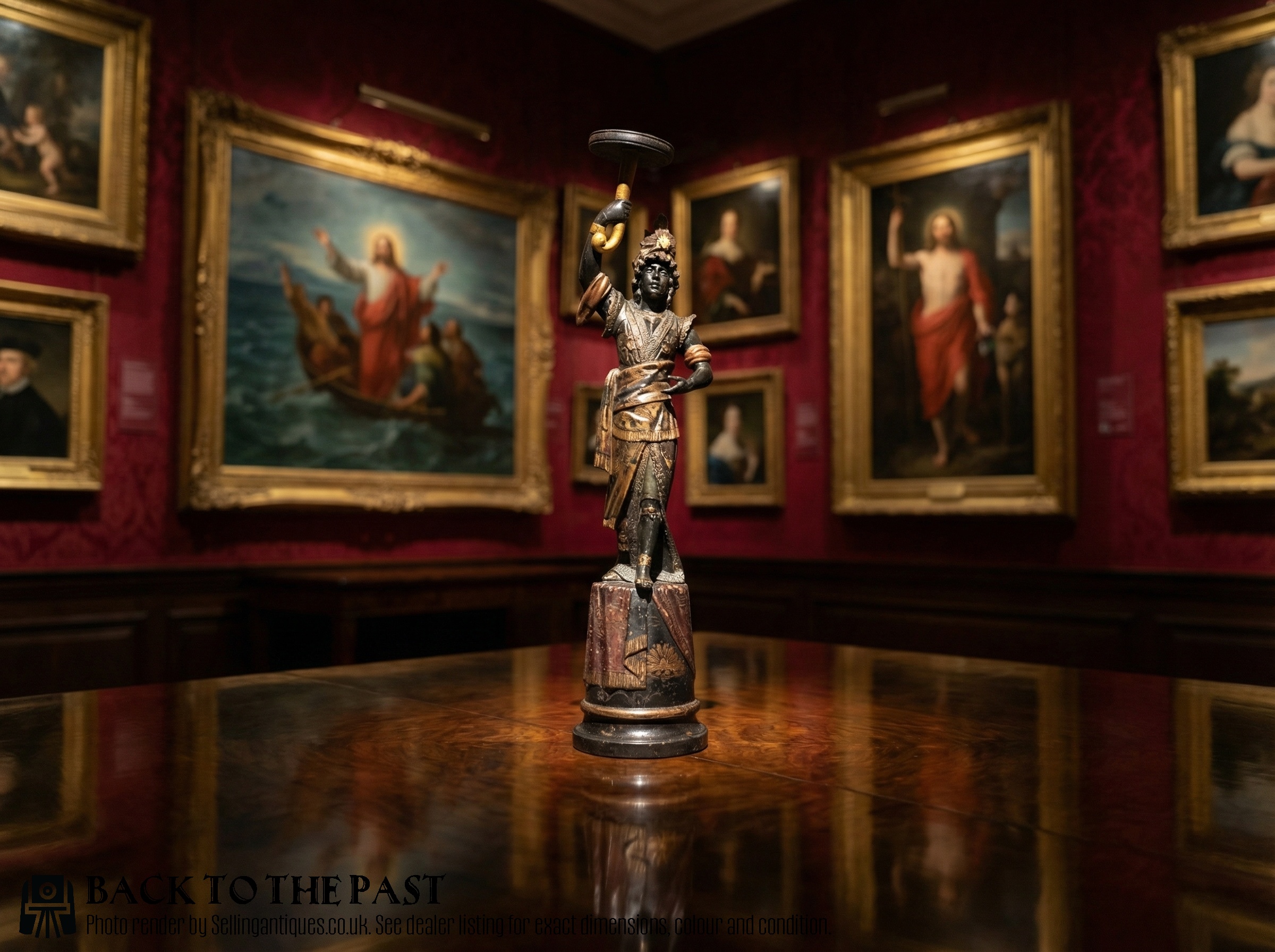
Materials and construction
Cabinetmakers utilised dense timbers such as mahogany, walnut, and rosewood, shaping them into fluted columns, barley twist shafts, and tripod supports.
Surface decoration frequently involved giltwood, gold leaf, polychrome paint, and ebonising, particularly on Italian and French figural stands.
Metal components also appear, combining cast-iron, bronze, and onyx to support heavy classical lamps and candelabra.
19th Century Torchere Retail Price Guide 2026
Typical asking prices for 19th century torchere among the pieces listed under this phrase on Sellingantiques today, from the lower quarter to the upper quarter. They describe what is for sale here now, not the wider market.
Some winged devil stands double as side tables.
Judging quality and execution
The depth and crispness of hand-carved woodwork separate standard utility pieces from high-end decorative stands.
Original polychrome paint, gilding, and surface patination dictate the desirability of Venetian and French figural examples.
Structural stability in slender shafts and heavy tripod bases depends upon sound joinery and balanced weight distribution.
Shoolbred·Emile Picault·Humphrey Hopper·Robert Lorimer
The 19th Century Torchere Glossary
- Torchere
- A tall stand designed to hold a light, plant, or ornament. The form evolved from candle-bearing stands into general display pedestals.
- Blackamoor
- A carved wooden figural stand originating largely from Venetian workshops. These pieces typically depict human figures in decorative or exotic attire holding trays or torches.
- Giltwood
- Timber treated with gesso and covered in thin gold leaf. This finish creates a brilliant reflective surface common on decorative European stands.
- Caryatid
- A sculpted female figure serving as an architectural support instead of a pillar. Such figures frequently form the structural shaft of classical stands.
- Barley twist
- A spiral turning technique applied to wooden furniture legs and columns. This decorative cut creates a dynamic optical effect along the shaft.
19th Century Torchere: Frequently Asked Questions
What were 19th century torcheres originally used for?
These tall stands were originally built to hold candles or oil lamps in grand reception rooms, elevating the flame to cast light across dark corners.
Over time, many functioned purely as decorative pedestals to display sculptures, large urns, or imported porcelain.
How do I style a torchere in a modern room?
A slender wooden or gilt column works effectively in an empty corner to add vertical height and visual interest to an interior.
They serve practical purposes as plant stands or torchere tables, holding table lamps and trailing foliage without taking up much floor space.
How do I distinguish Italian and English pieces?
English examples tend to focus on architectural wood turning, utilising mahogany, walnut, and rosewood with classical proportions and minimal surface pigment.
Italian pieces frequently employ carved figures, polychrome paint, and gilt gesso decoration, particularly in Venetian workshop styles.
What is the difference between a torchere and a plant stand?
The terms often overlap because both describe tall, narrow pedestals used for elevation within domestic interiors.
A torchere historically implies a connection to lighting, whereas plant stands and jardiniere supports focus specifically on botanical display.