




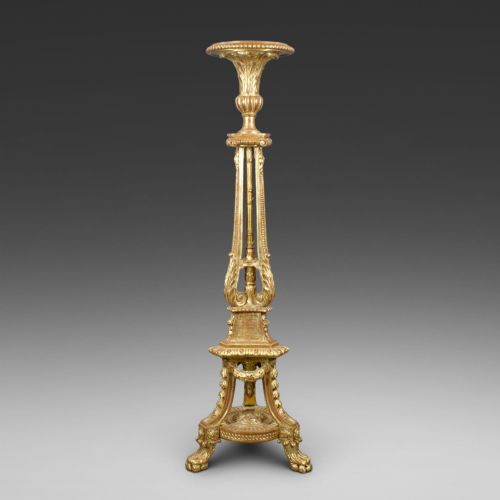
Georgian Style Torchere
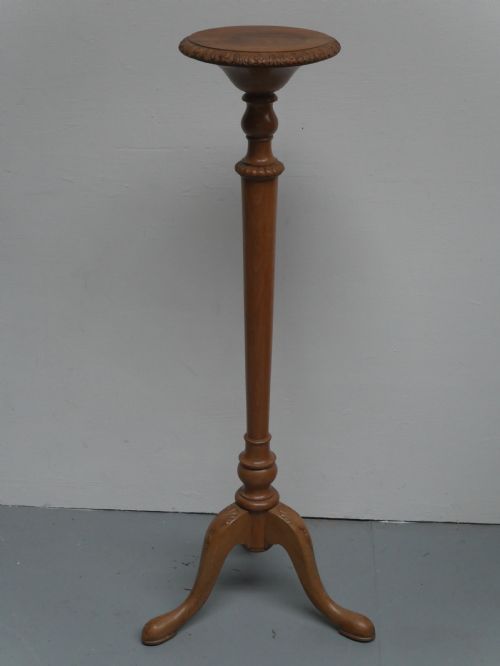
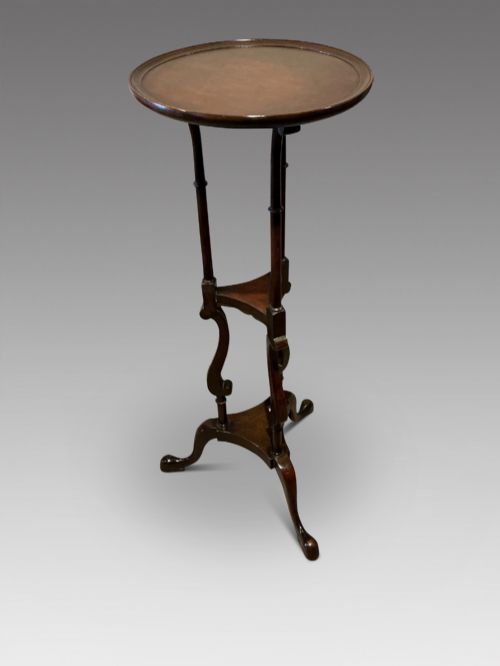
A georgian style torchere brings slender height and classic architectural form to any empty corner, serving as a raised platform for plants, urns or lamps.
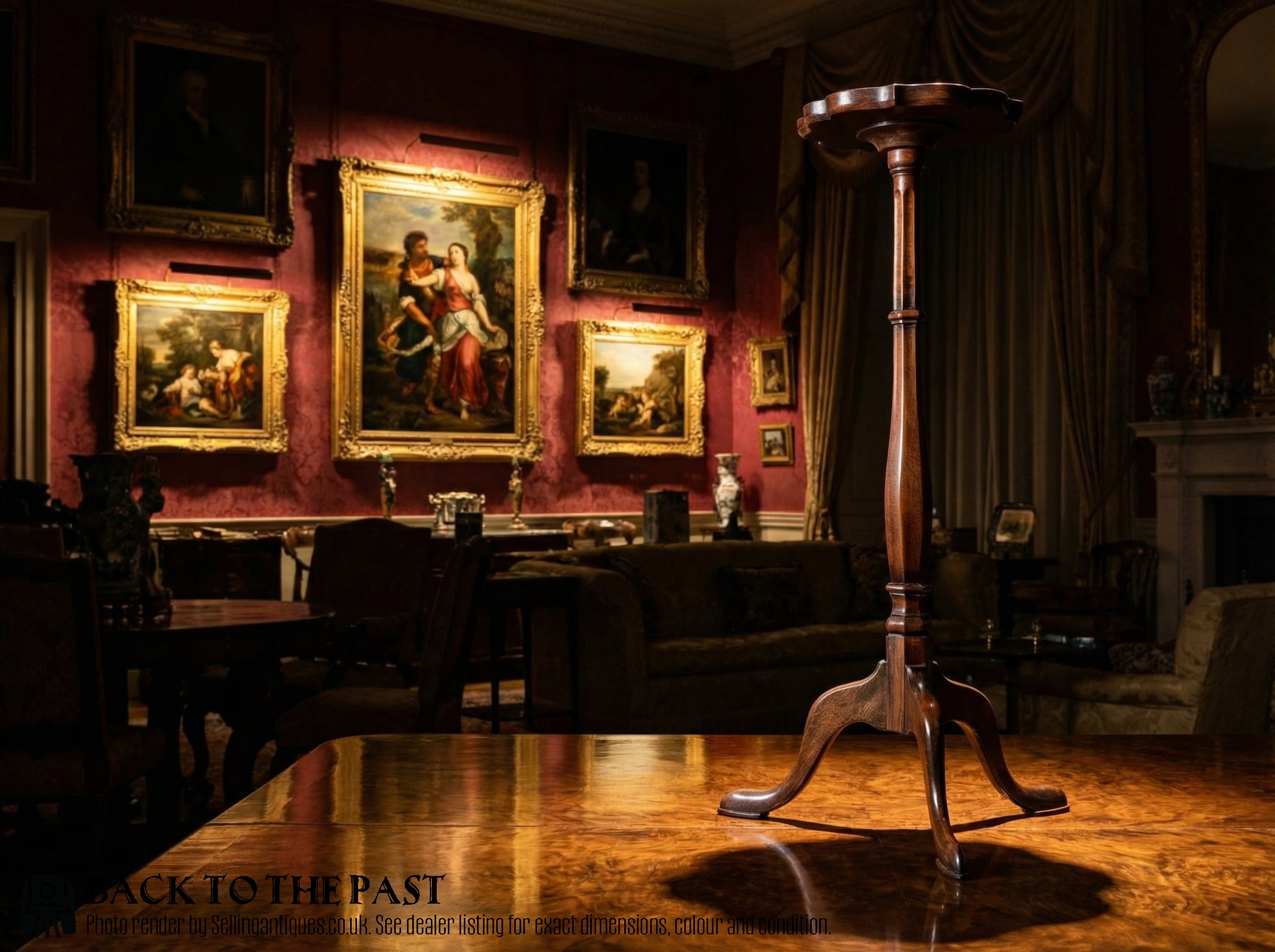
Georgian Style Torchere
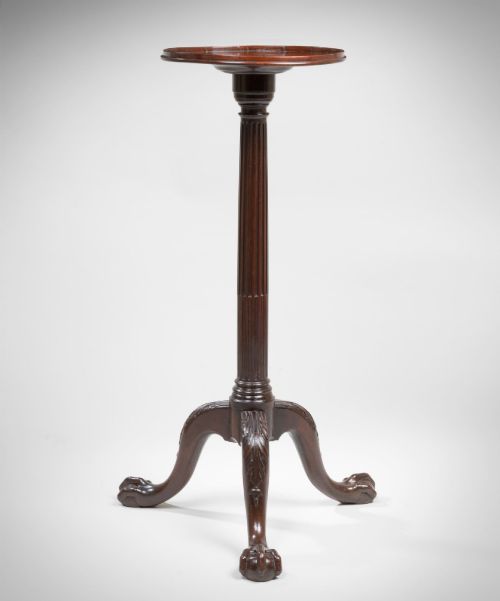
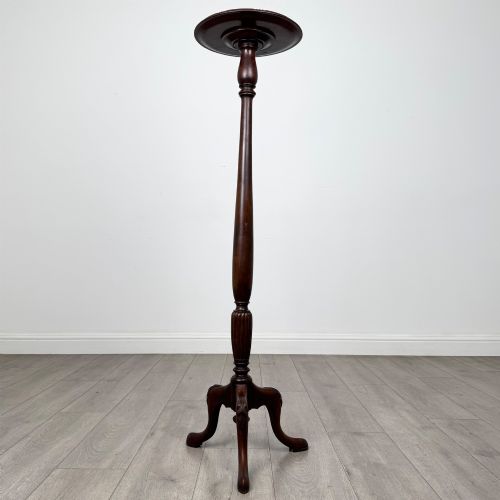
A georgian style torchere stands tall and upright, designed originally to hold a single candle or lamp for illumination in dark rooms. You will frequently encounter tall mahogany plant stands, slender pedestals, and carved candle stands originating from revival periods spanning the late nineteenth and early twentieth centuries alongside genuine older pieces.
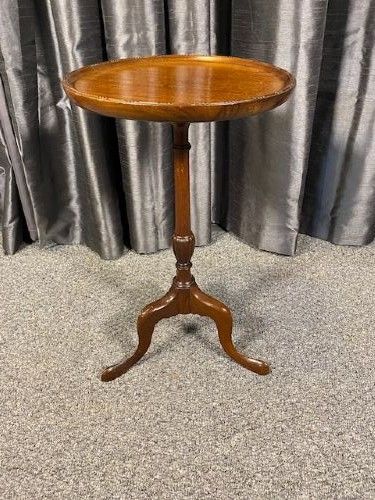
These stands perform a dual function in contemporary and traditional interiors as both functional display surfaces and decorative vertical accents. The dominant form is a slender column or post supported by tripod legs or a weighted circular base, topped with a small circular or square platform.
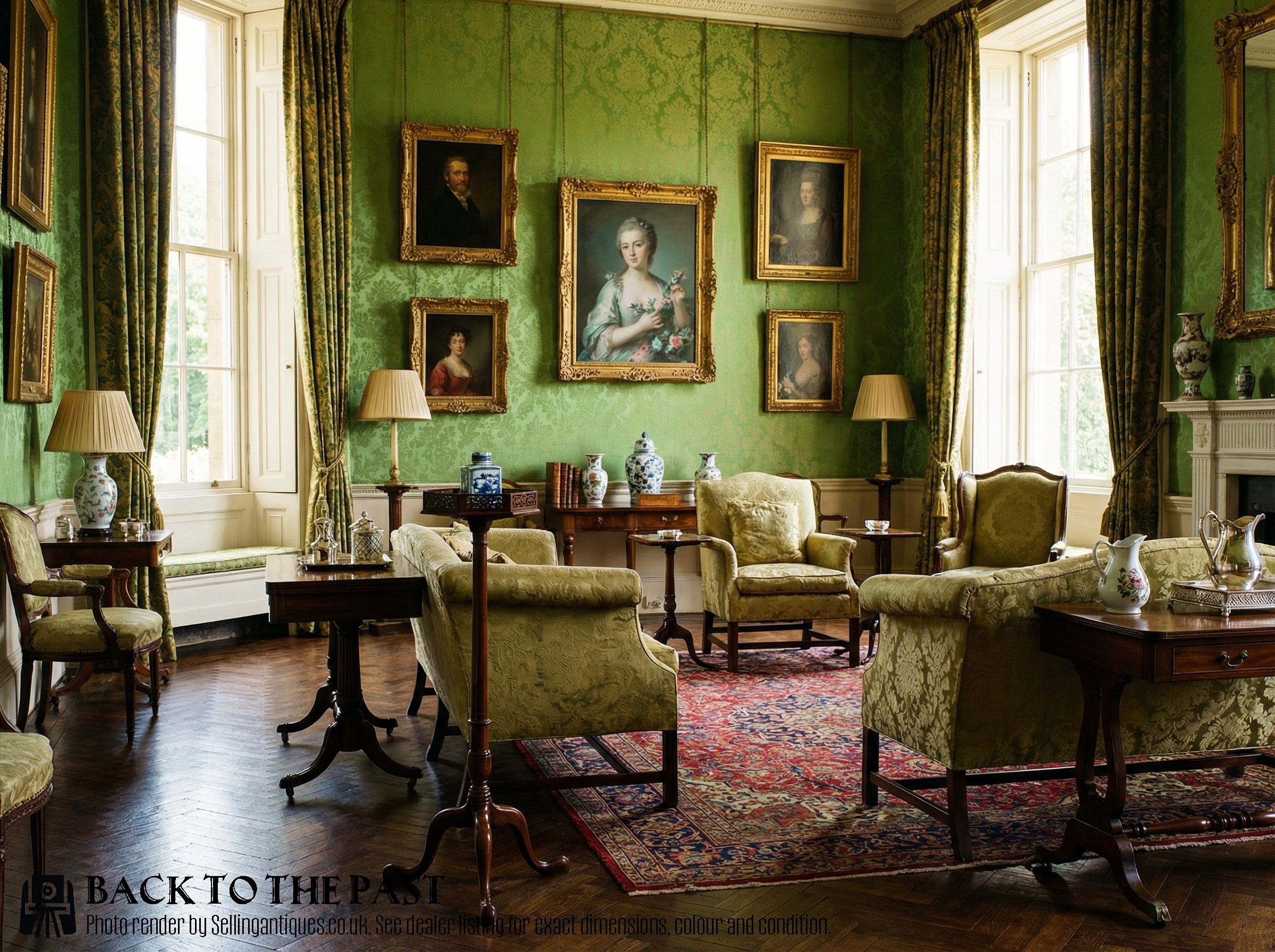
Materials and Construction
Makers relied heavily on dense hardwoods such as mahogany and walnut, utilising fruitwood marquetry and satinwood inlay to decorate the surfaces of tops and columns. Carved gesso and gilt wood appear on Neoclassical and revival examples, adding metallic sheen and detailed relief work to the vertical framework.
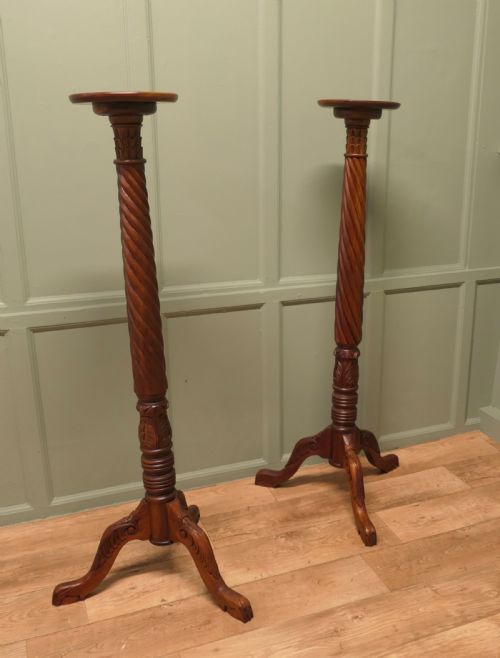
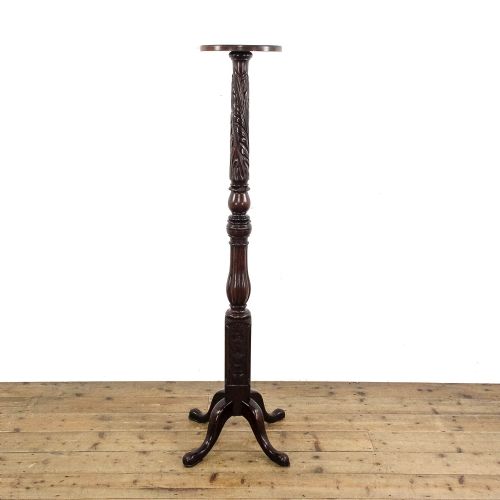
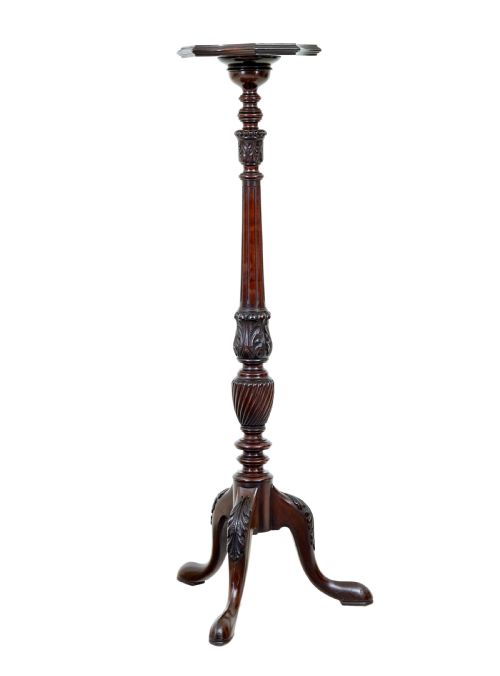
Construction techniques include turned wooden columns, rope twist carving, and detailed tripod bases secured to central shafts. Inlaid details are carefully fitted into the timber surfaces, while carved stands show hand-chiselled surface texture along the pedestals.
Georgian Style Torchere Retail Price Guide 2026
Typical asking prices for georgian style torchere among the pieces listed under this phrase on Sellingantiques today, from the lower quarter to the upper quarter. They describe what is for sale here now, not the wider market.
Some nineteenth-century makers evidently decided a simple column was not enough, twisting solid mahogany rope-twist shafts until the timber appears to spiral upward under its own weight.
Assessing Quality
The distinction between ordinary and superior stands lies in the crispness of the wood carving and the choice of timber figure. Finer examples display deep, sharp hand-carving along the column and legs rather than soft, moulded details, paired with well-matched grain on the top platform.
Stability and balance define a well-made torchere, requiring a heavy enough base or widely splayed legs to support weight safely at height. The integration of inlay and the weight of the wood distinguish workshops of higher ambition from mass-produced utility items.
The Georgian Style Torchere Glossary
- Torchere
- A tall ornamental stand designed to support a light fixture, candle, or decorative object. The form derives from seventeenth-century French lighting stands.
- Marquetry
- Decorative patterns formed by inserting thin pieces of wood, veneer, or shell into a solid timber ground. It creates intricate floral or geometric surface designs.
- Gesso
- A plaster-like mixture applied to wood surfaces as a base for gilding or painting. It accepts fine carving and holds gold leaf securely.
- Neoclassical
- A style drawing inspiration from the classical art and architecture of ancient Greece and Rome. It emphasises symmetry, straight lines, and classical motifs.
Georgian Style Torchere: Frequently Asked Questions
What is a torchere used for?
A torchere serves as an elevated display surface for items such as potted plants, heavy urns, or decorative lamps. Their narrow footprint allows them to occupy awkward corners without taking up floor space.
Historically, these stands held candles to illuminate dark corners of large rooms. Today, they function primarily as decorative vertical elements that draw the eye upward.
How do I spot a reproduction?
Examinations of timber grain, joinery methods, and wear patterns help identify the age of a stand. Revival pieces often display machine-tooled elements or modern adhesives hidden beneath the base.
True period items show natural oxidation in the wood and hand-cut joinery marks. Comparing the finish to known historical periods clarifies the manufacturing date.
Where should I place a torchere?
These tall stands suit empty corners, narrow hallways, or spaces beside large pieces of furniture. Their height breaks up blank wall expanses without crowding the room.
Placement should avoid high-traffic zones where the slender column might be knocked over. Stability improves when paired with a heavy base or placed against a secure wall.
What woods were commonly used?
Mahogany dominates the surviving examples, prized for its strength and rich reddish-brown tone. Walnut and fruitwood also appear frequently across various revival periods.
Inlay work often incorporates lighter satinwood to create contrasting borders. Gilt wood and painted surfaces surface on more decorative Neoclassical revival designs.