

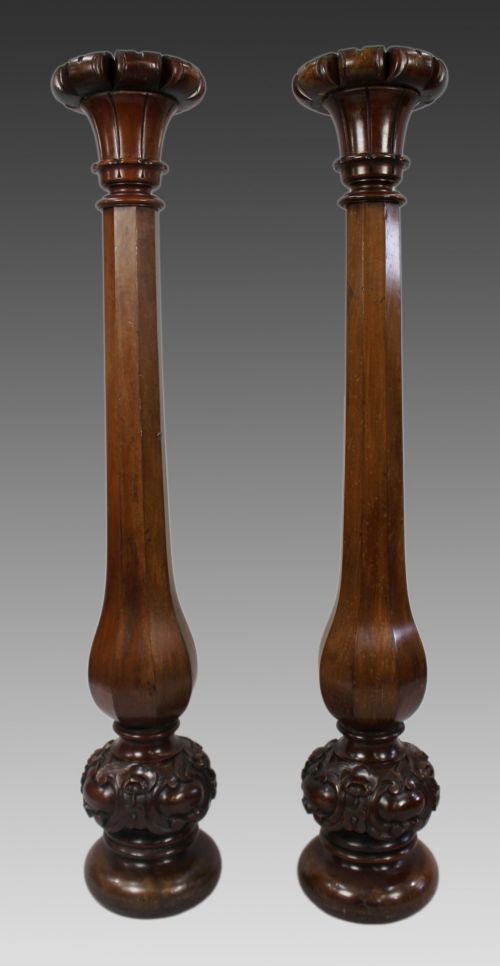
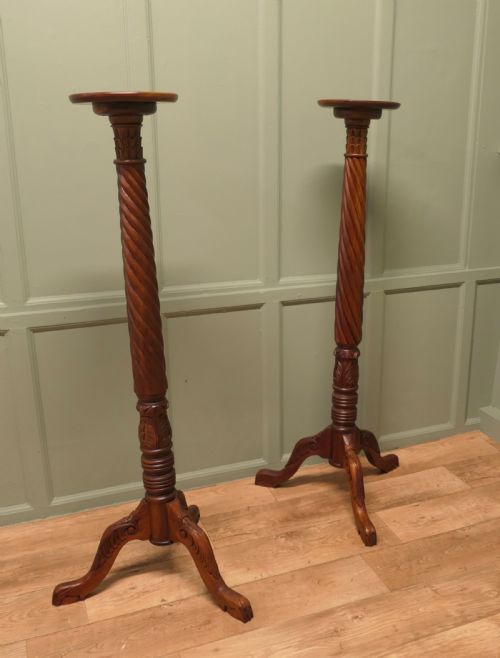
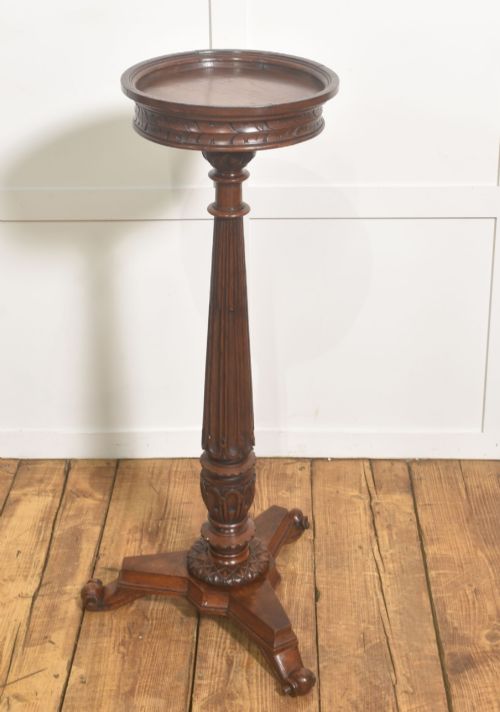
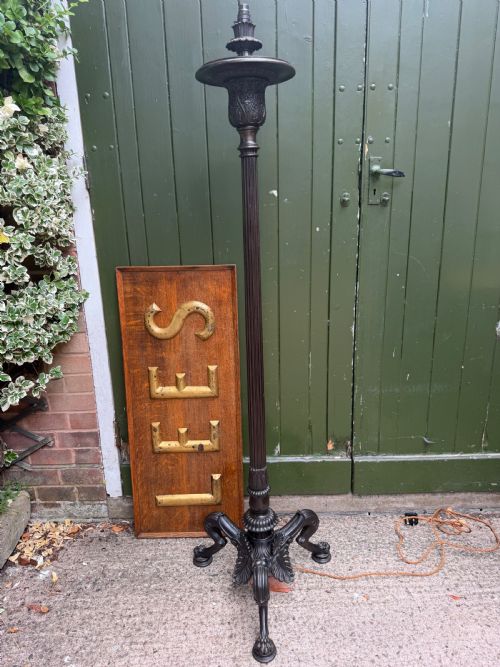

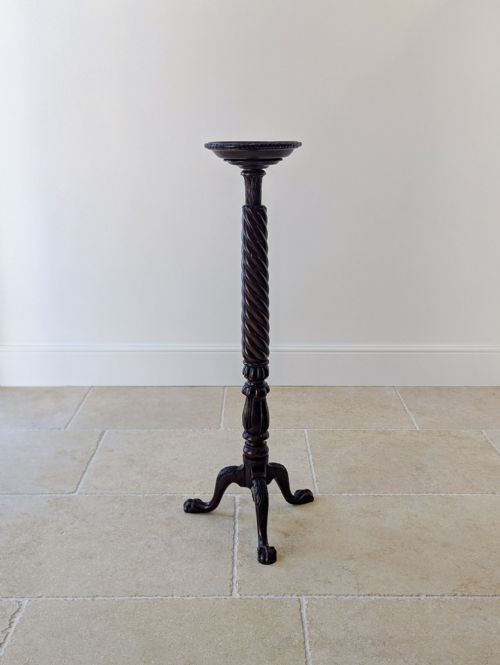
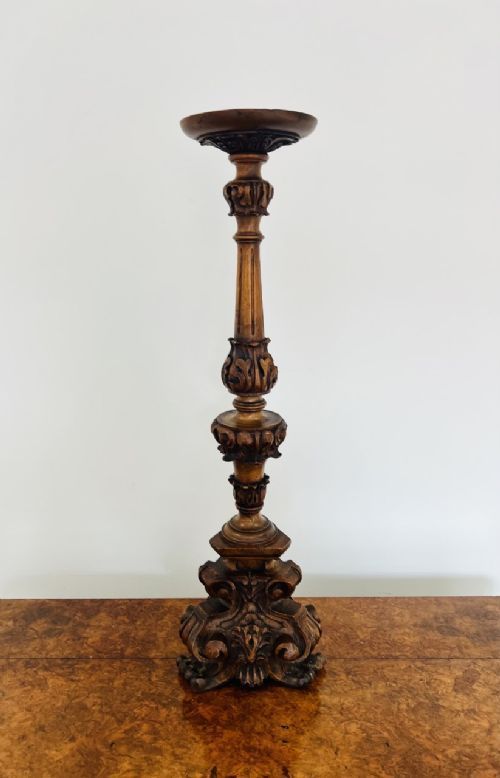
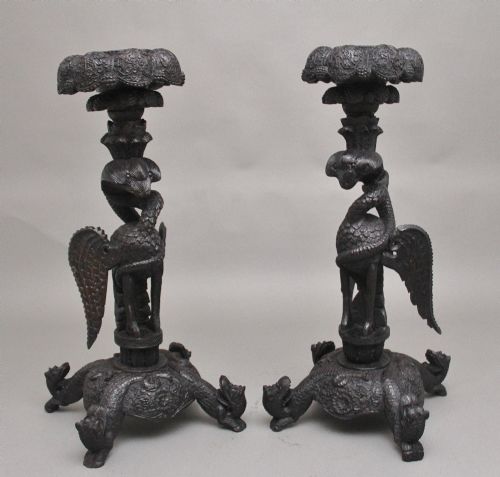
Victorian Torchere Stand
A victorian torchere stand elevates a bronze bust, a potted fern or a reading lamp with slender nineteenth-century dignity.
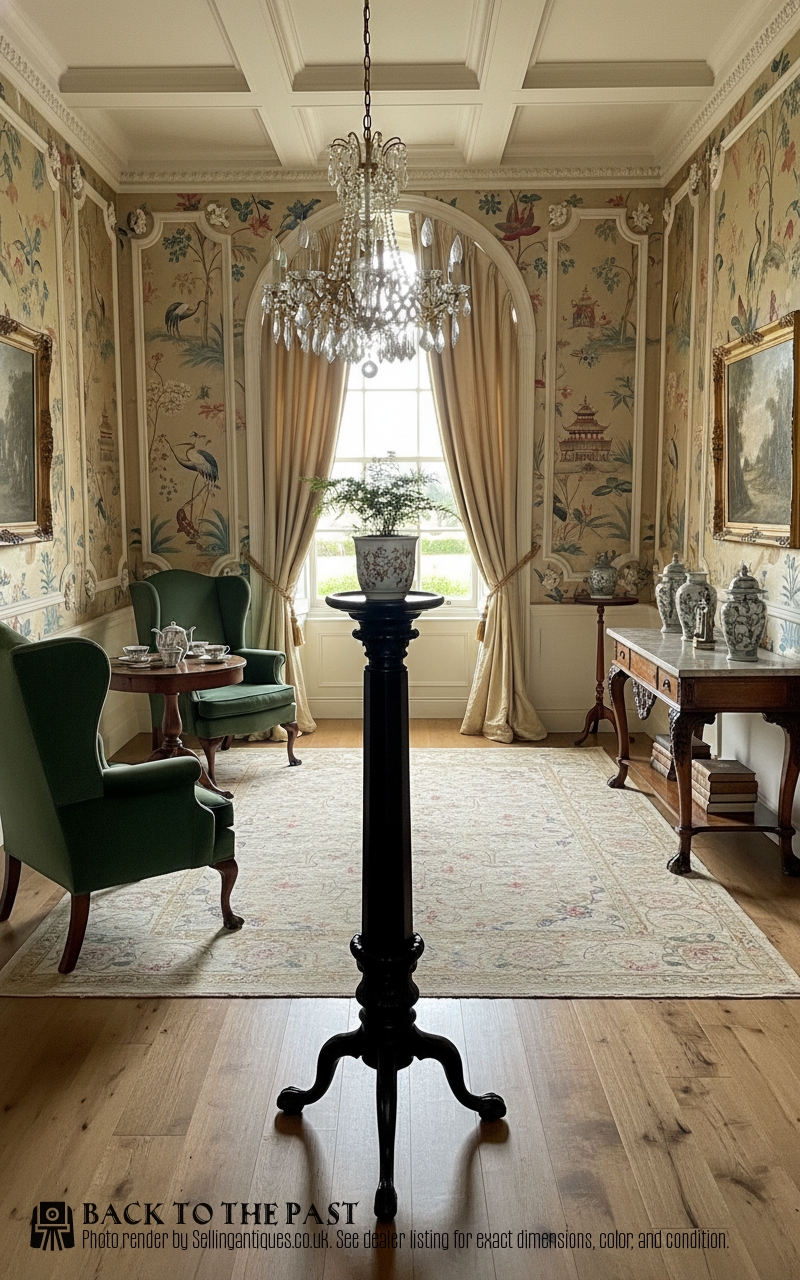
Victorian Torchere Stand
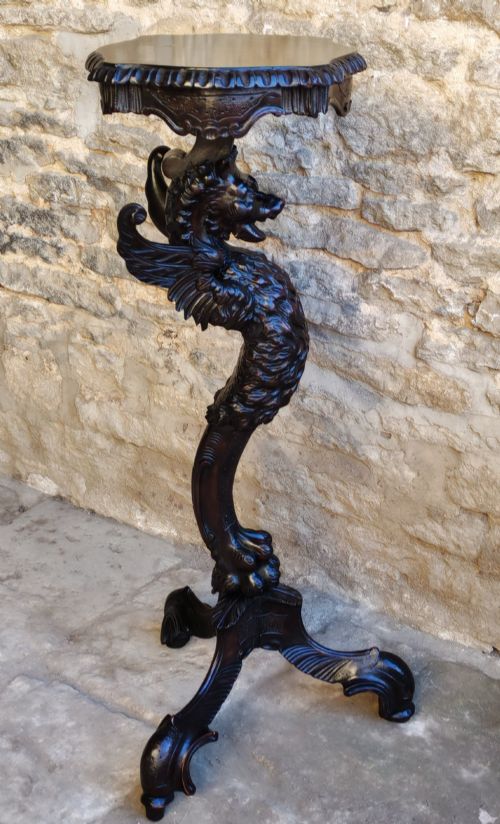
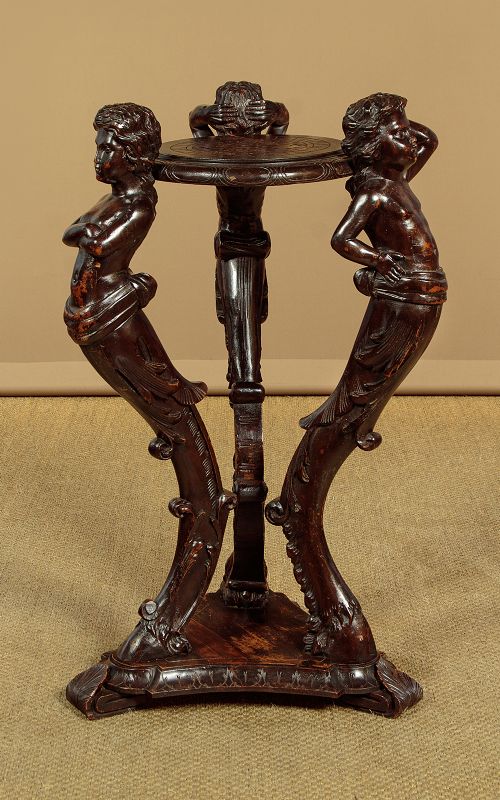
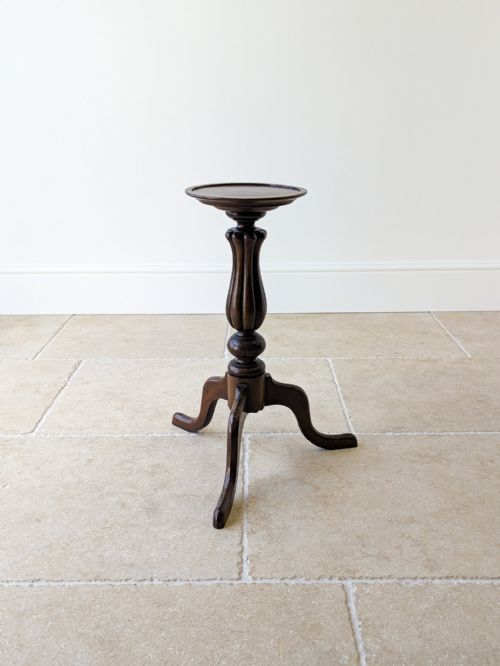
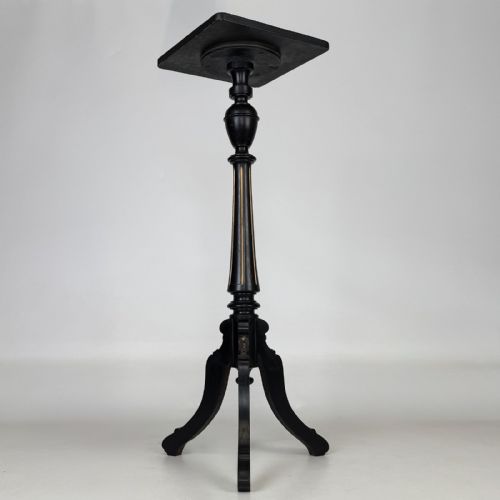
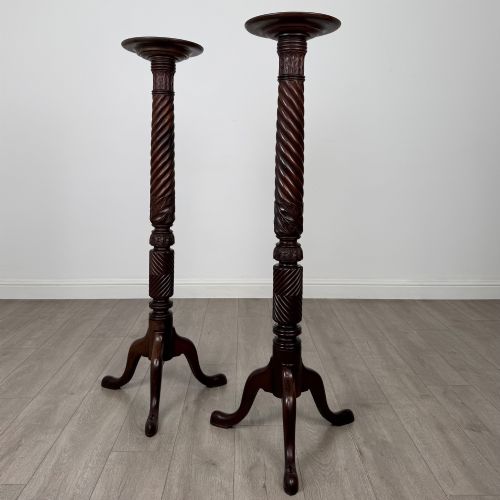
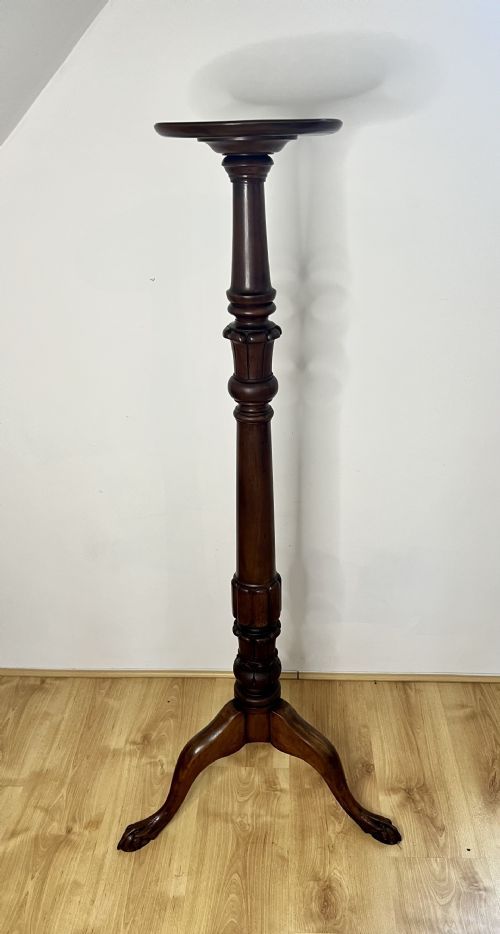
A victorian torchere stand is a tall, slender column designed to support a plant, lamp or sculptural bust above floor level. These furnishings developed from lighting supports into versatile display furniture during the nineteenth century, adopting forms that ranged from simple turned shafts to elaborate carved columns.
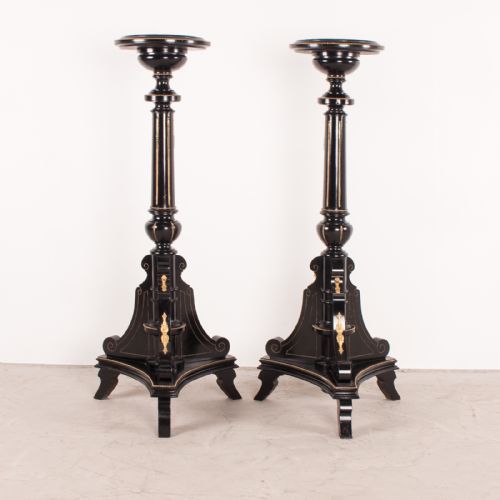
Mahogany and walnut examples dominate the selection, often featuring tripod bases, reeded shafts or spiral pillars. Variations include Anglo-Indian rosewood pieces, ebonised wood stands, and figural supports carved as caryatids or Blackamoor figures.
Makers produced these stands for country houses and urban drawing rooms alike, pairing functional display surfaces with classical Revival or Gothic ornamentation. The surviving pieces function equally well today as plant stands, jardiniere columns or floor lamp bases.
What varies in quality
The distinction between ordinary and exceptional pieces lies in the crispness of the hand-carved ornamentation and the weight of the timber. Finely executed acanthus leaves, sharp reeding and substantial solid mahogany or walnut indicate superior workshop production compared to softer pine alternatives.
Proportion and stability define a well-made stand, where a heavy tripod or weighted circular base balances a tall column without tipping. The refinement of turned details, such as barley twist pillars or brass-mounted capitals, separates standard utility items from decorative drawing-room showpieces.
Victorian Torchere Stand Retail Price Guide 2026
Typical asking prices for victorian torchere stand among the pieces listed under this phrase on Sellingantiques today, from the lower quarter to the upper quarter. They describe what is for sale here now, not the wider market.
Listings feature woods including mahogany, walnut, oak, rosewood and ebonised hardwood alongside cast-iron and bronze.
Shoolbred
The Victorian Torchere Stand Glossary
- Torchere
- A tall stand originally intended to carry a candle or torch, later adapted to hold lamps, plants or busts.
- Jardiniere
- A decorative pot or stand designed to hold plants and flowers within domestic interiors.
- Caryatid
- A sculpted female figure serving as an architectural support in place of a column or pillar.
- Ebonised
- Wood treated with a dark stain or finish to imitate the appearance of expensive ebony.
- Reeded
- Decorated with parallel convex mouldings carved vertically into a column shaft.
Victorian Torchere Stand: Frequently Asked Questions
What is a torchere stand used for?
These tall stands were originally built to hold lighting devices, but Victorian households quickly adapted them to display potted plants, marble busts and decorative vases.
Today, they serve the same purpose in modern interiors, offering a vertical accent that lifts greenery or lamps above standard table height.
How do I date a victorian torchere stand?
Dating relies on observing timber choices, decorative styles and construction methods typical of the nineteenth century. Earlier mid-century pieces often feature heavy mahogany with bold tripod bases, while late-century examples embrace ebonised finishes or revival styles.
Matching the turned details and column profiles against dated exhibition pieces helps narrow the decade of manufacture.
Where should I place a torchere stand at home?
These slender columns fit comfortably into empty corners, beside fireplaces, or framing doorways where floor space is limited. Their height draws the eye upward, making them ideal for accentuating dark corners with a trailing plant or reading lamp.
Placement should prioritise stable flooring to ensure the tall column remains secure against accidental knocks.
What is the difference between a torchere and a plant stand?
While historic terminology often overlaps, torcheres traditionally carried lighting instruments while plant stands focused on jardiniere display. In practice, nineteenth-century makers used the terms interchangeably for tall, slender display columns.
Both forms share similar tripod bases and vertical shafts suited to supporting weighted objects.