




Edwardian Mahogany Torchere
These Edwardian mahogany torcheres elevate green foliage, busts and lamps with slender vertical grace, bringing refined height to quiet corners.
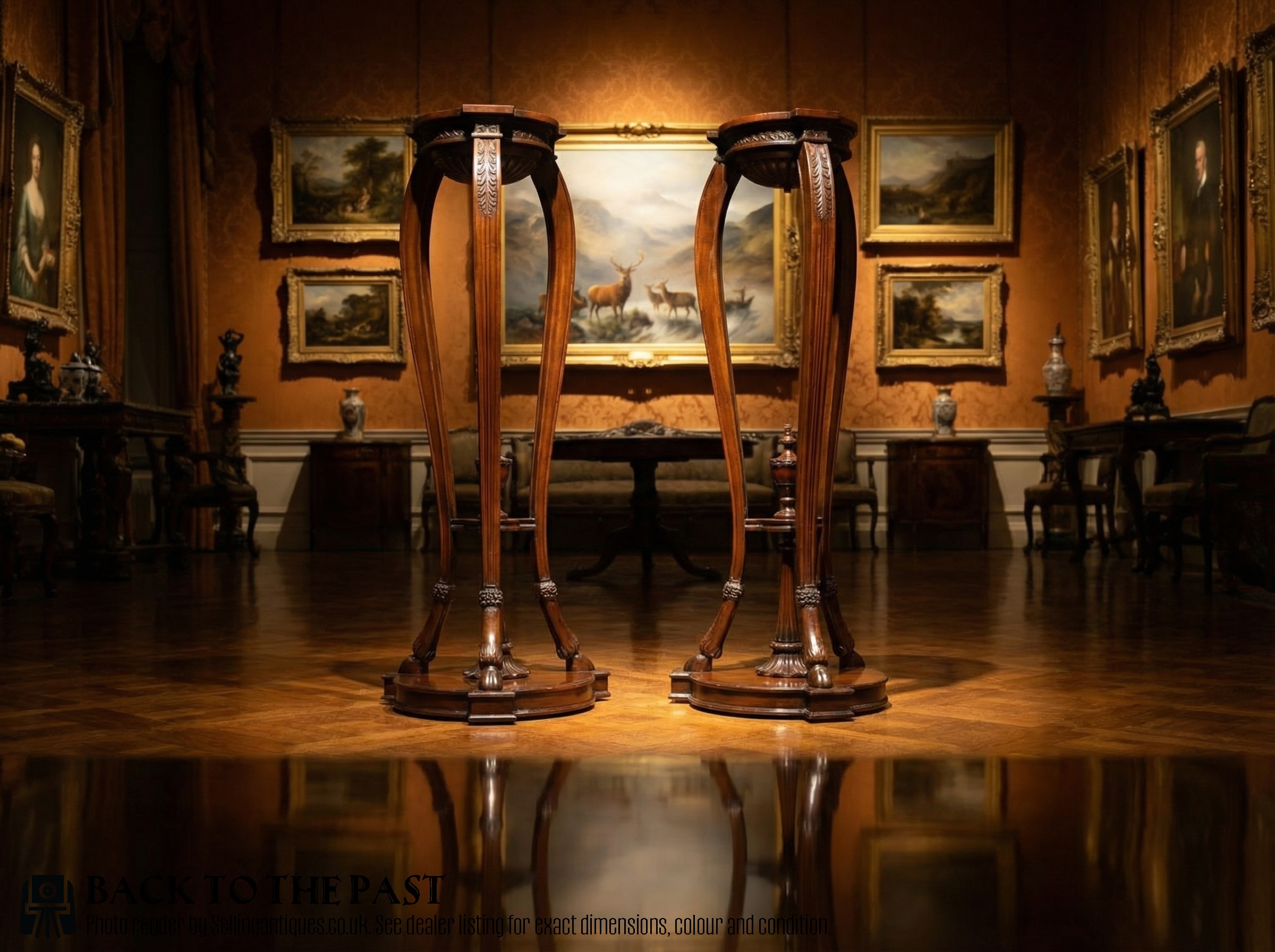
Edwardian Mahogany Torchere
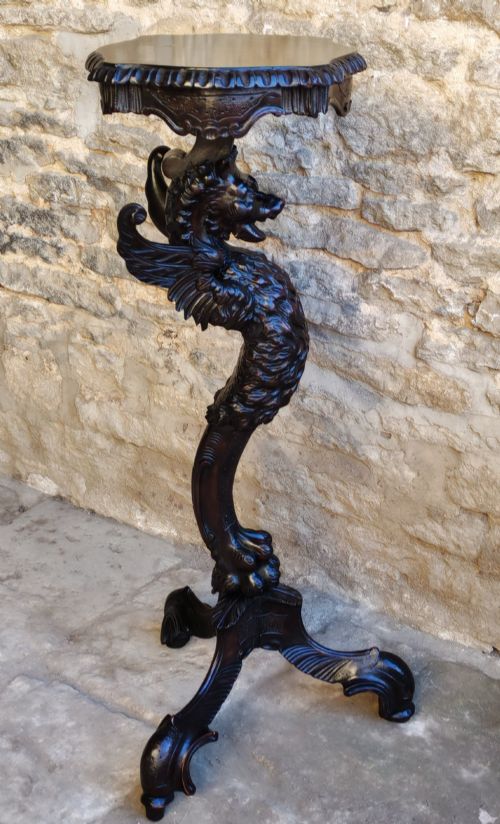
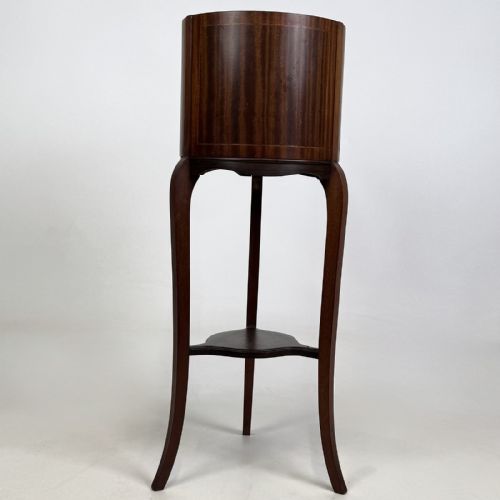
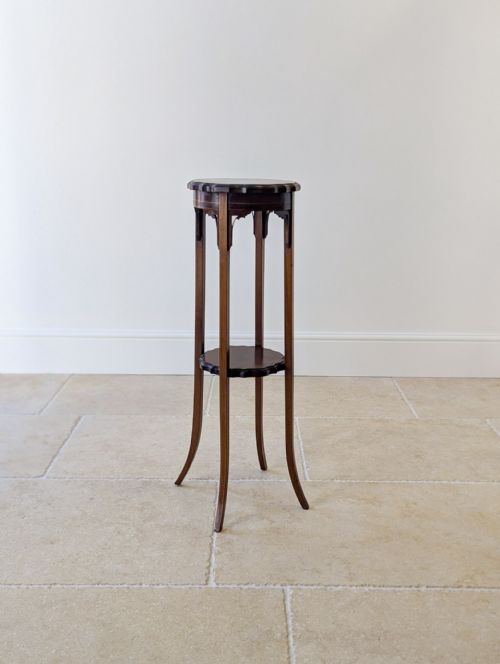
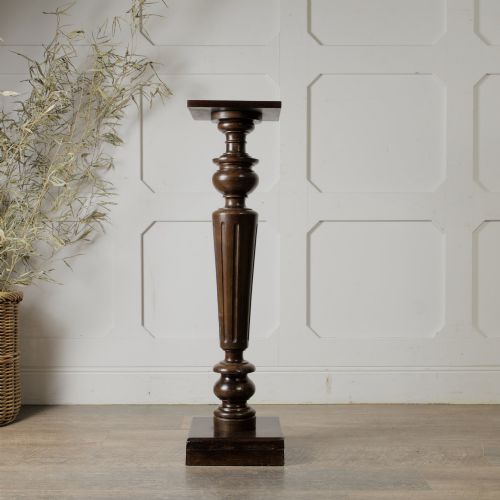
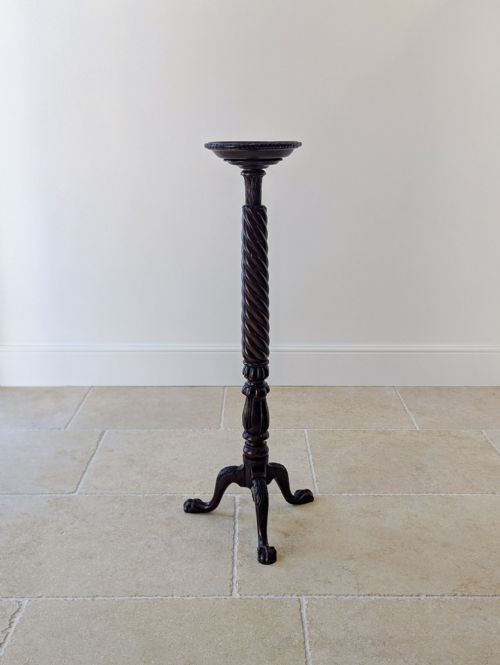
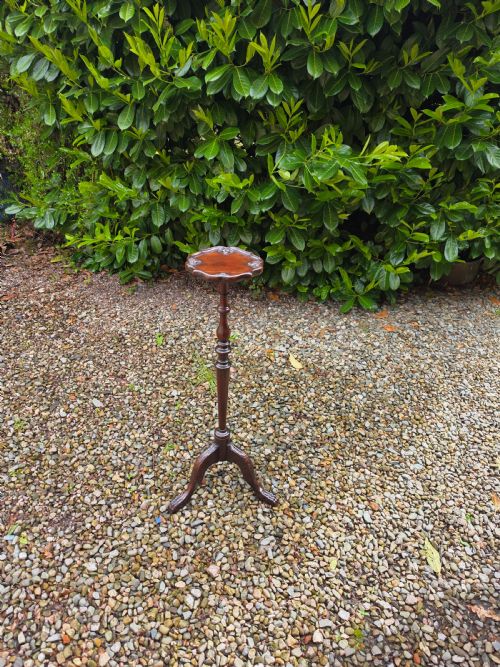
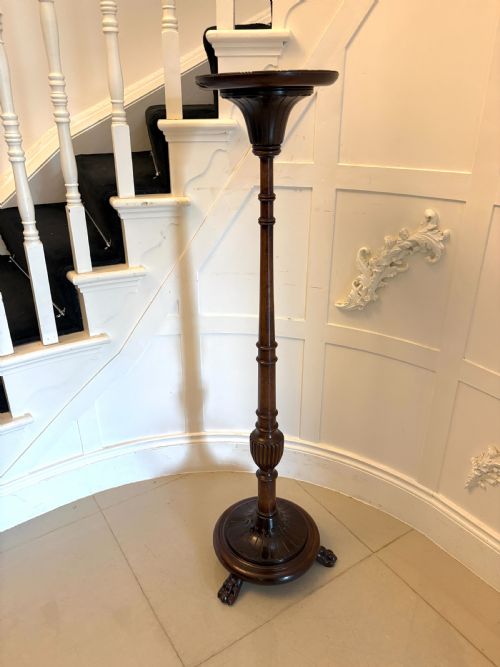
An Edwardian mahogany torchere functions primarily as a display piece for plants, jardinières, busts or small lamps. The pieces seen here span the Edwardian era alongside Victorian, eighteen-ninety, and nineteen-ten examples, connecting functional plant stands and tall pedestals.
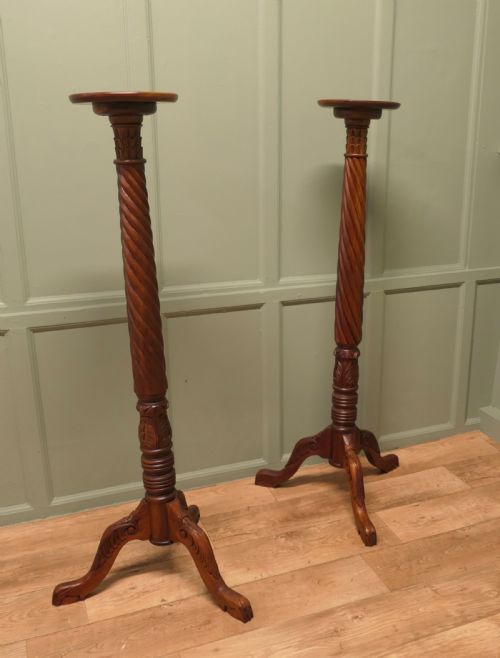
Most examples appear singly or as matched pairs, offering versatile vertical height for domestic interiors. Their slim profiles allow them to occupy tight spaces while drawing the eye upward through carved columns and slender shafts.
Makers drew on Georgian, Adam, and Chippendale revival styles alongside pure Edwardian taste, uniting classical proportions with early twentieth-century proportions. These tall stands bridge the gap between heavy Victorian furnishings and lighter twentieth-century aesthetics.
Materials and construction techniques
Solid and veneered mahogany forms the structural core of these stands, frequently enhanced by contrasting satinwood inlay, banding, stringing or marquetry. Select pieces integrate marble tops and ormolu mounts to heighten their decorative presence.
Carpenters utilised traditional jointing methods alongside hand-carved detailing, shaping fluted or turned columns and tripod bases. Finishes rely on polished mahogany grains that emphasise the warm reddish-brown tones of the timber.
Edwardian Mahogany Torchere Retail Price Guide 2026
Typical asking prices for edwardian mahogany torchere among the pieces listed under this phrase on Sellingantiques today, from the lower quarter to the upper quarter. They describe what is for sale here now, not the wider market.
Listings feature mahogany and satinwood inlay across Edwardian, Victorian, and revival styles including Adam and Chippendale.
Distinctions in construction and detail
Quality rests in the crispness of the hand-carving, the precision of the satinwood inlay, and the stability of the slender tripod or pedestal base. Superior examples display refined proportions and select timber cuts, such as flame mahogany veneers.
Makers who invested greater labour into delicate stringing, marquetry motifs, or cast ormolu mounts produced stands with enduring visual weight. Simpler utilitarian plant stands prioritize sturdy upright function over intricate decorative embellishment.
The Edwardian Mahogany Torchere Glossary
- Torchere
- A tall, slender stand originally designed to hold a light source and later adapted for plants and decorative objects. These pieces feature elevated platforms supported by vertical columns.
- Jardiniere
- An ornamental pot or stand intended for holding flowers or growing plants. Many tall stands serve this precise botanical display function.
- Satinwood inlay
- A contrasting light-coloured timber embedded into the darker mahogany surface in geometric or floral bands. This decorative technique highlights the borders and tops of Edwardian tables and pedestals.
- Ormolu
- Gilded bronze mounts applied to furniture for decorative accent. These metal details appear alongside marble on select high-status pedestals.
- Tripod base
- A three-legged support structure commonly found beneath the central shaft of tall stands. This configuration ensures stability on uneven floorboards.
Edwardian Mahogany Torchere: Frequently Asked Questions
What is a torchere used for?
A torchere serves to elevate decorative objects, potted plants, busts, or lamps above floor level. They bring vertical interest and focus to empty corners or transitional spaces.
Historically designed to hold candles or oil lamps, these stands now support indoor greenery and sculptural ornaments in domestic settings.
How do I style a torchere?
Place a tall stand in an empty hallway corner or beside a seating area to introduce varying heights to room layouts. Topped with trailing plants, ceramics, or small bronzes, they break up horizontal sightlines.
Paired stands work effectively flanking doorways, fireplaces, or large pieces of case furniture for a balanced appearance.
Are these stands stable enough for heavy plants?
Most Edwardian tall stands feature balanced tripod or weighted pedestal bases designed to support typical plant pots and jardinières securely. The weight distribution depends on the width of the base relative to the height of the shaft.
Heavier marble-topped variants offer extra stability, while slender tripod designs suit lighter decorative arrangements.
How do I distinguish Edwardian from Victorian stands?
Edwardian stands generally display lighter framing, refined satinwood inlay, and cleaner lines influenced by classical revivals. Victorian counterparts tend to feature heavier carved mahogany elements and darker, denser timbers.
Design overlaps occur due to transitional pieces made around eighteen-ninety to nineteen-ten, blending Victorian proportions with Edwardian decorative lightness.