

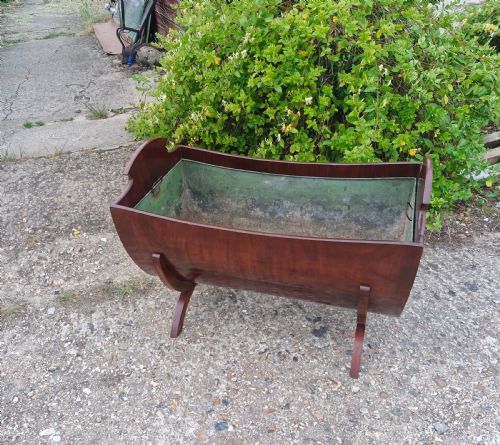


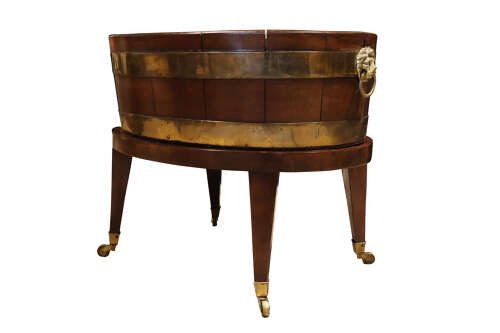
Mahogany Jardiniere Stand
When you set out to acquire a mahogany jardiniere stand, you are choosing an elevated stage for indoor greenery that combines timber warmth with domestic utility.
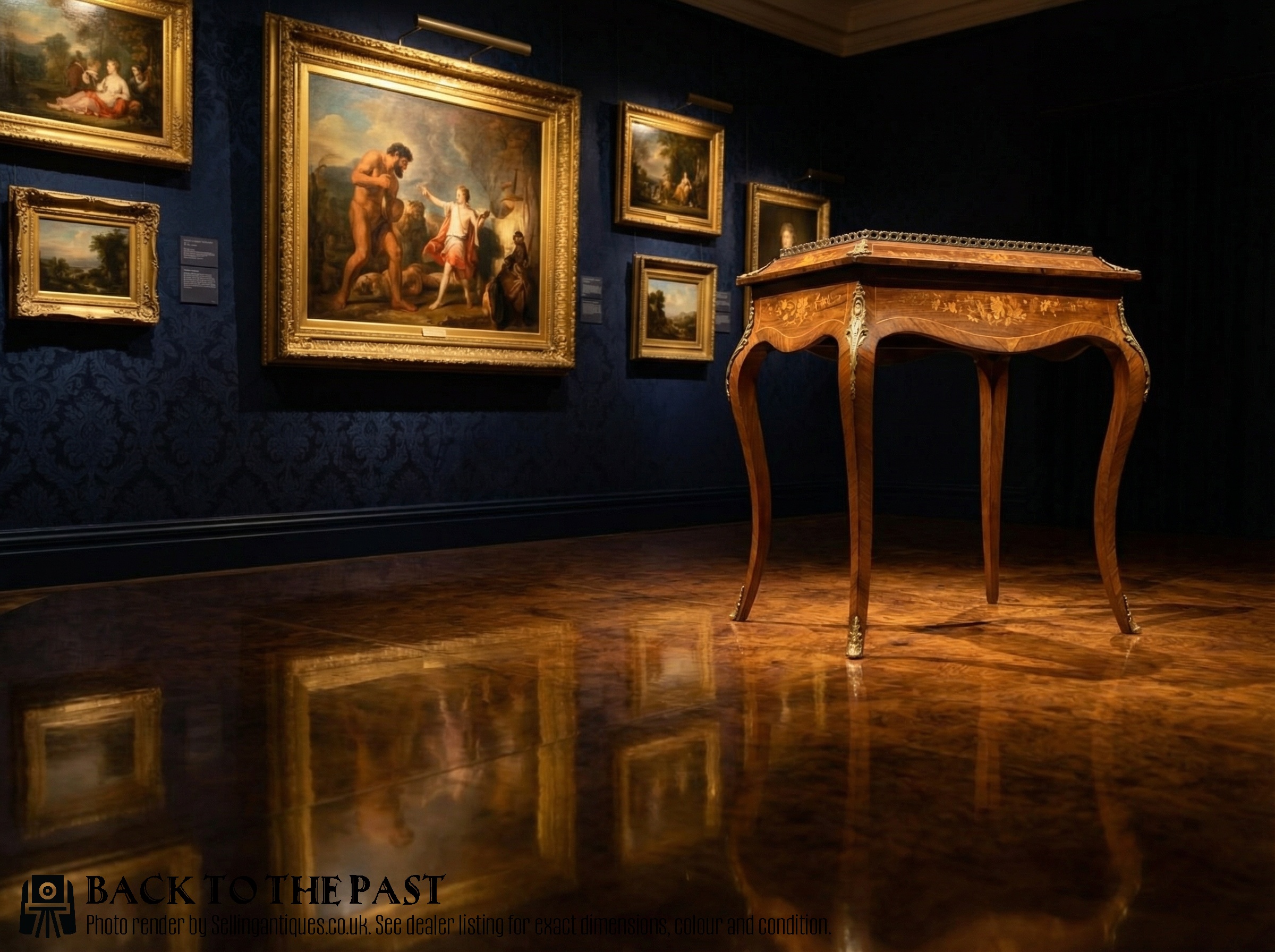
Mahogany Jardiniere Stand
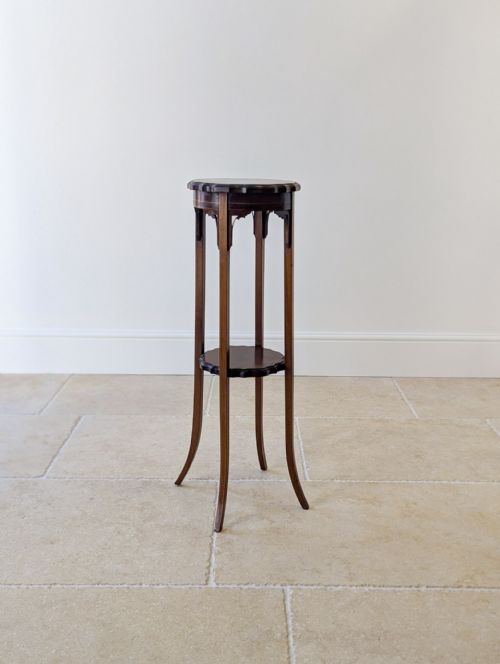
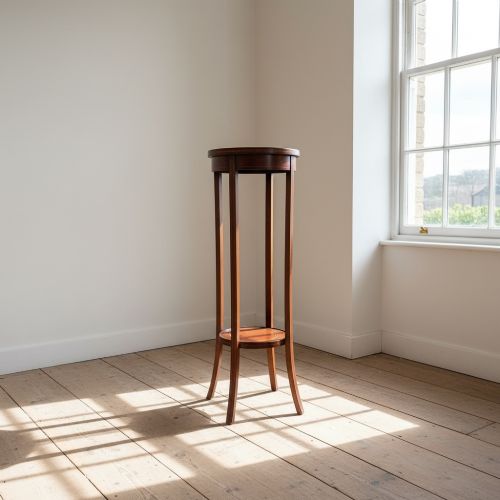
A mahogany jardiniere stand is a dedicated elevated support designed to hold potted plants, floral arrangements, or related vessels within a domestic interior. The selection spans distinct periods including Georgian, Regency, Victorian, and Edwardian, alongside revival aesthetics.
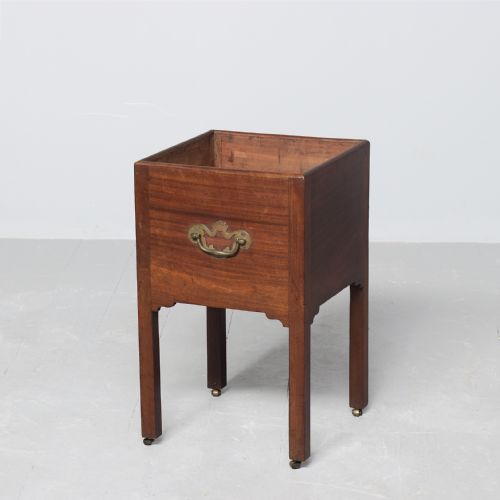
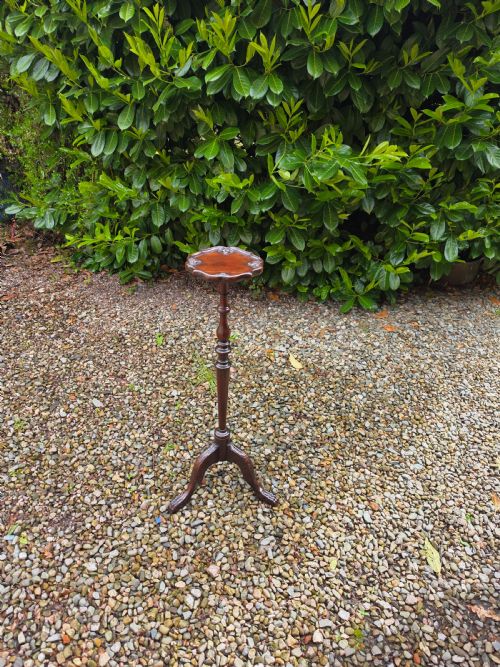
The form frequently overlaps with related display items such as plant stands, torchères, wine coolers, and cellarettes. Edwardian inlaid examples and tall 19th-century pedestals appear most frequently in current and archived holdings.
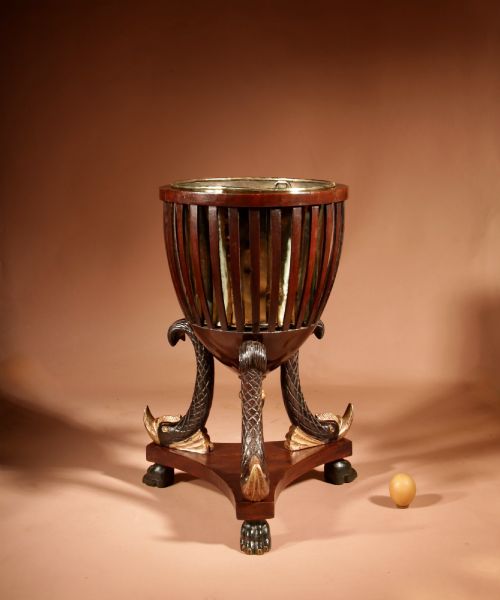
Makers and craftsmen adapted the form across different regions, yielding pieces ranging from British parlour furnishings to Chinese export pieces and Dutch coopered buckets on stands. These items bridge utilitarian horticulture and ornamental interior display.
How they were made
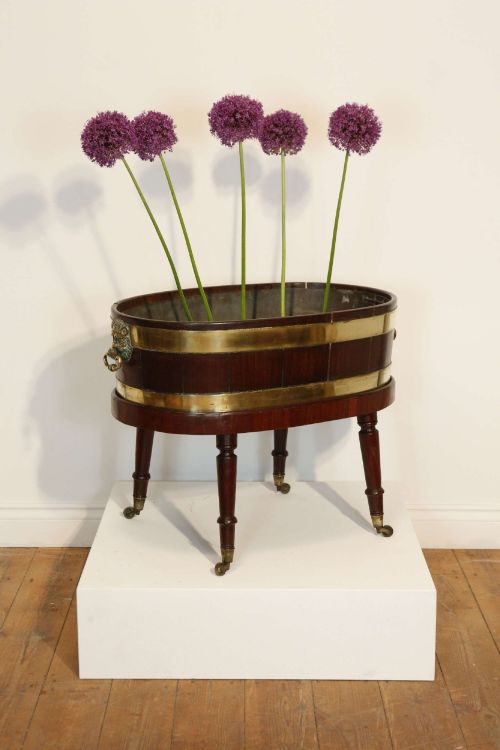
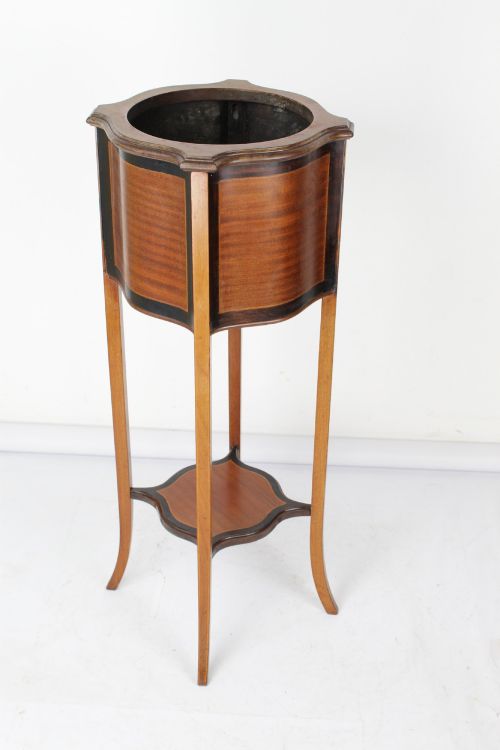
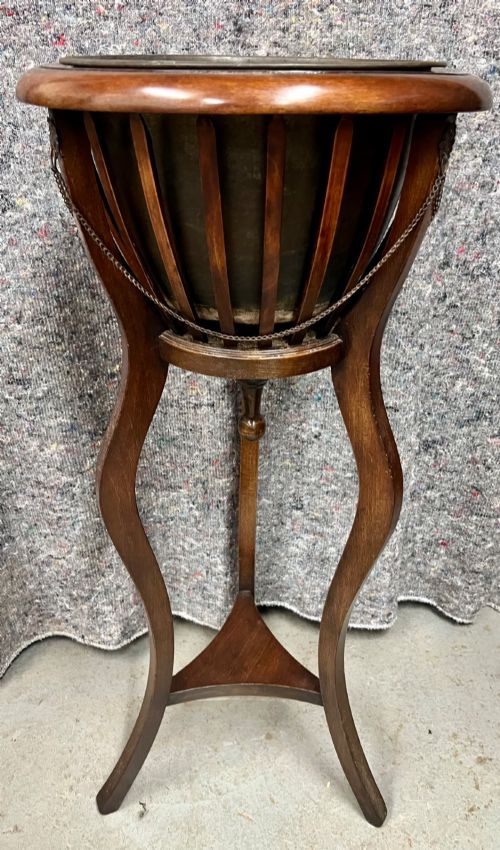
Makers relied primarily on solid and veneered mahogany, frequently enhanced by contrasting secondary timbers such as satinwood, ebonised wood, and rosewood. Construction methods included traditional coopered staves for bucket-style planters alongside turned columns and carved pedestals.
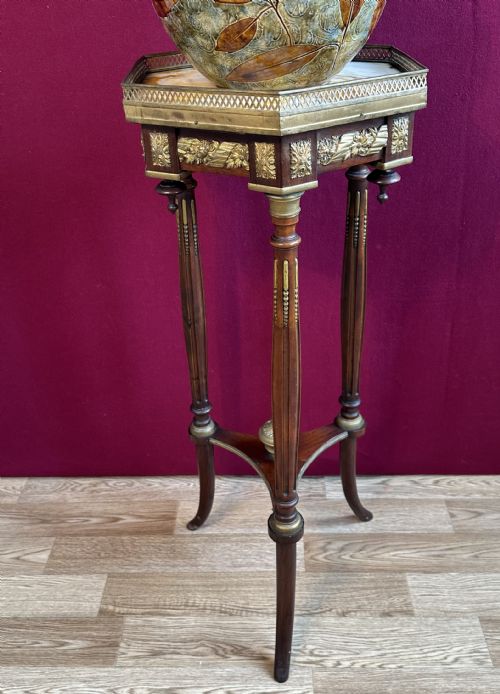
Metal components played a structural and decorative role, with brass banding and liners commonly utilised to protect the wood from moisture. Inlaid details, including stringing and classical motifs, surface across Edwardian and Georgian revival items.
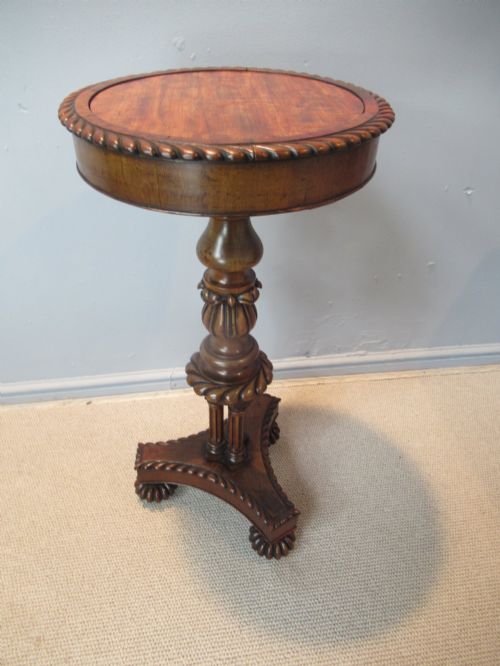
Carving techniques defined the decorative vocabulary of many examples, particularly on tripod bases and Chinese export or oriental hardwood pieces. Surface finishes highlight the natural grain of the hardwood while providing a degree of resistance to daily wear.
Mahogany Jardiniere Stand Retail Price Guide 2026
Typical asking prices for mahogany jardiniere stand among the pieces listed under this phrase on Sellingantiques today, from the lower quarter to the upper quarter. They describe what is for sale here now, not the wider market.
Listings demonstrate a strong representation of Edwardian and 19th-century pieces, utilising mahogany alongside brass, marble, and inlaid satinwood.
What varies in quality
Quality rests significantly on the selection of timber and the precision of the joinery, whether in the tightness of coopered staves or the stability of a tripod base. Superior examples demonstrate thoughtful grain matching and crisp, hand-carved detailing rather than mechanical uniformity.
The integration of secondary materials dictates a piece's refinement, observable in the snug fit of original brass bands, liners, and delicate satinwood inlay. Pieces retaining their structural integrity without excessive timber shrinkage or replaced mounts occupy the upper tier of the range.
The Mahogany Jardiniere Stand Glossary
- Jardiniere
- An ornamental pot or stand for holding plants or flowers. It derives from the French word for gardener.
- Cellarette
- A lockable container or stand originally used for holding bottles of wine near the dining table. They frequently share forms with coopered planters.
- Coopered
- Constructed from curved wooden staves bound together with metal hoops, much like a traditional barrel. This technique is common in bucket-style plant holders.
- Torchere
- A tall stand or pedestal originally designed to hold a candelabrum or lamp. In later usage, it frequently serves interchangeably with a plant stand.
- Stringing
- A narrow strip of contrasting veneer inlaid into the surface of a piece of furniture. It is characteristic of Edwardian inlaid mahogany items.
Mahogany Jardiniere Stand: Frequently Asked Questions
How were mahogany jardiniere stands used historically?
These stands functioned primarily to elevate potted plants, palms, or floral arrangements above floor level in domestic drawing rooms and parlors. By lifting greenery, they protected carpets from moisture while showcasing exotic indoor plants at eye level.
Certain variations served dual purposes as wine coolers, log baskets, or tea stove buckets. This versatility allowed households to repurpose heavy timber vessels for entertaining or seasonal domestic tasks.
How do I distinguish between an Edwardian stand and a Georgian original?
Georgian pieces typically display heavier timber construction, simpler structural lines, and robust brass banding associated with utility and dining room accessories. They often rely on proportion and timber quality rather than surface ornamentation.
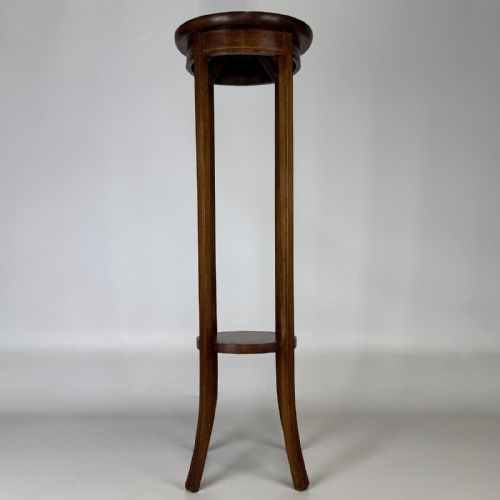
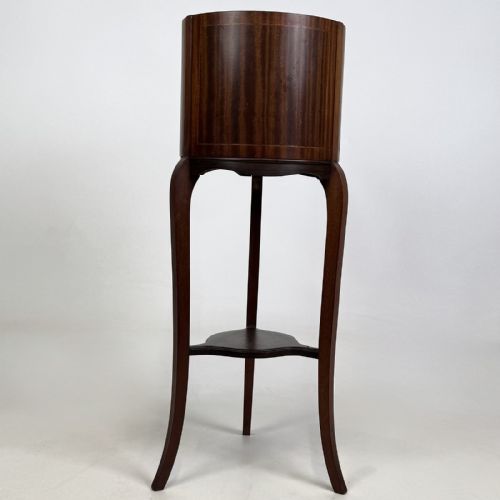
Edwardian examples frequently incorporate delicate satinwood inlay, line stringing, and lighter turned or tapered legs. Revival interest during the early twentieth century led makers to replicate earlier styles with lighter framing.
Are metal liners essential for these stands?
Original metal liners or brass bands were designed to contain moisture and soil from direct contact with the mahogany timber. Their presence indicates that a piece was actively used for horticulture rather than purely decorative display.
Many surviving pieces have lost their original liners over time due to corrosion or separate removal. Replacements are common, though surviving original brass components add historical completeness.