
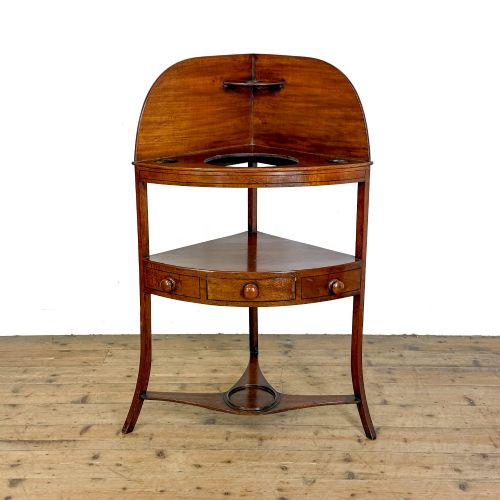
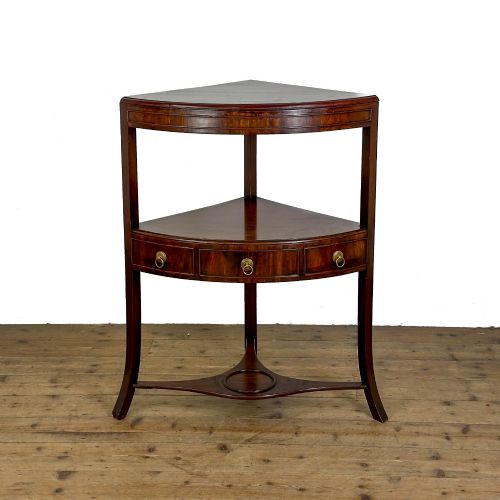
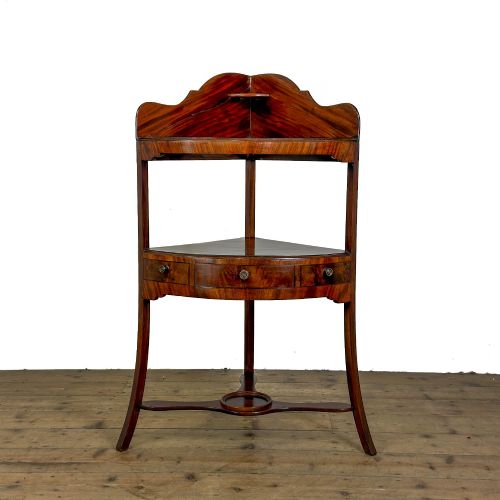
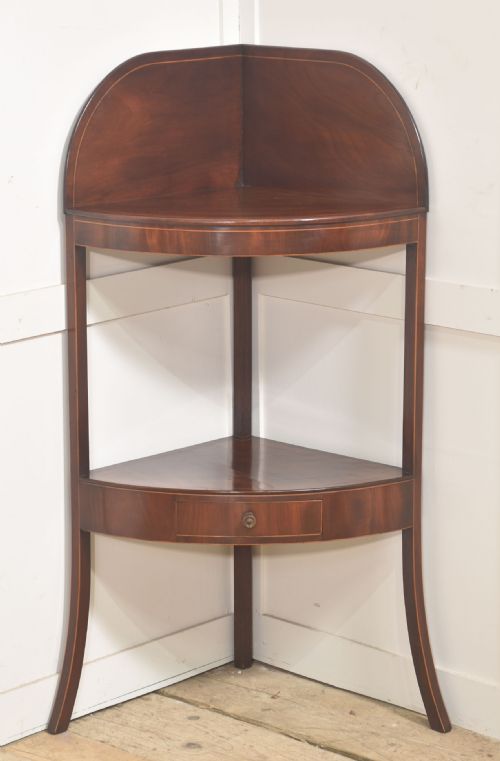


Georgian Wash Stand
A georgian wash stand is a practical piece of period furniture designed for morning ablutions, offering clever storage and sturdy timber construction.
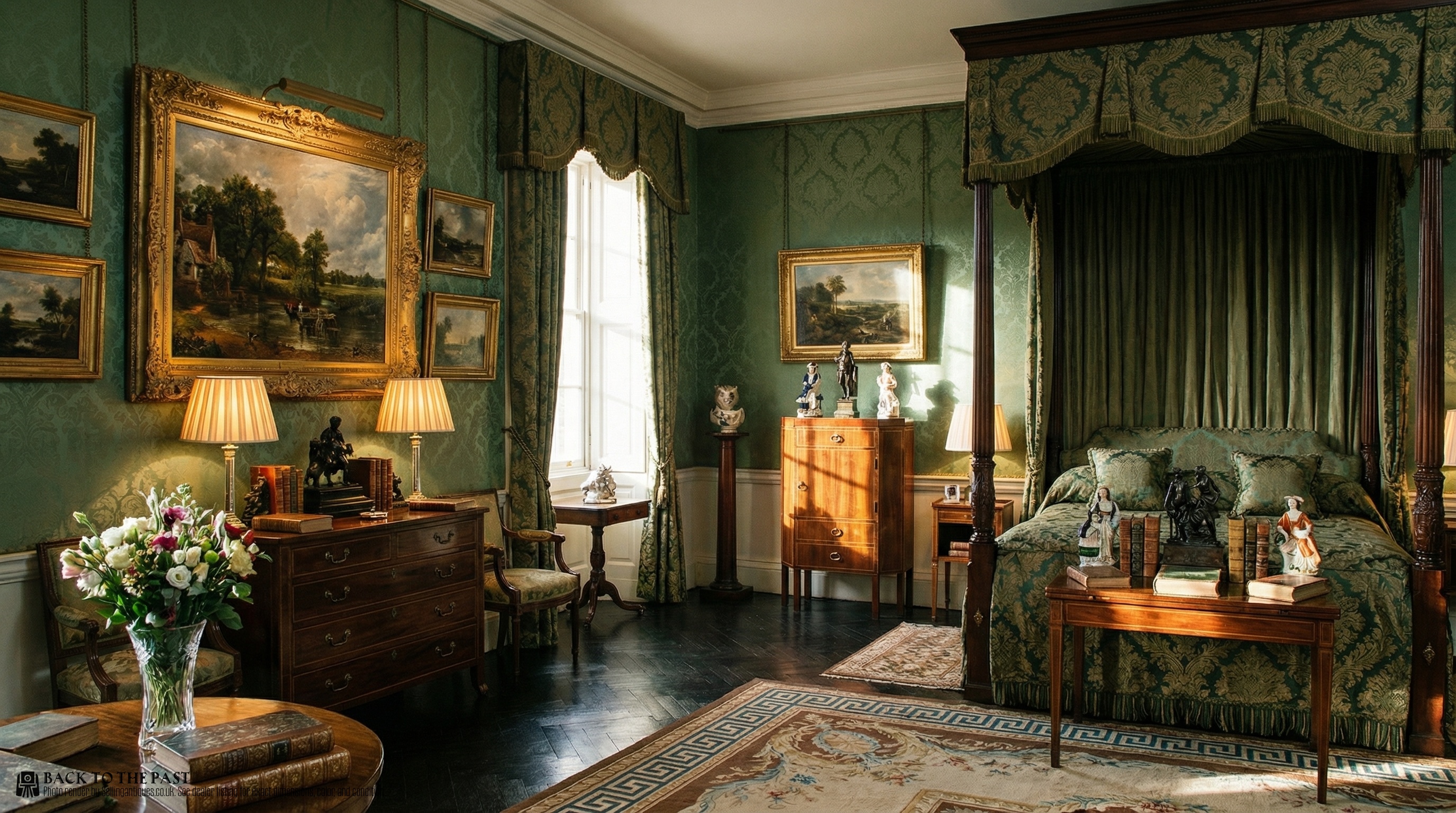
Georgian Wash Stand
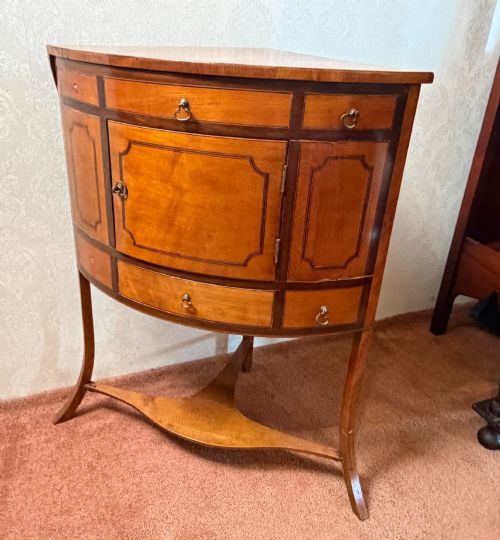
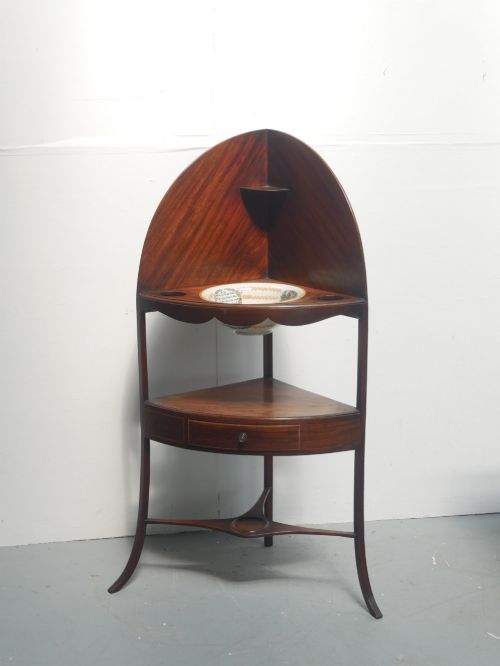
A georgian wash stand is primarily encountered as a corner unit designed to fit neatly into domestic chambers, alongside freestanding bedside variations and basin stands.
The material record spans the eighteenth and nineteenth centuries, with mahogany dominating alongside occasional examples in satinwood, oak, and painted pine.
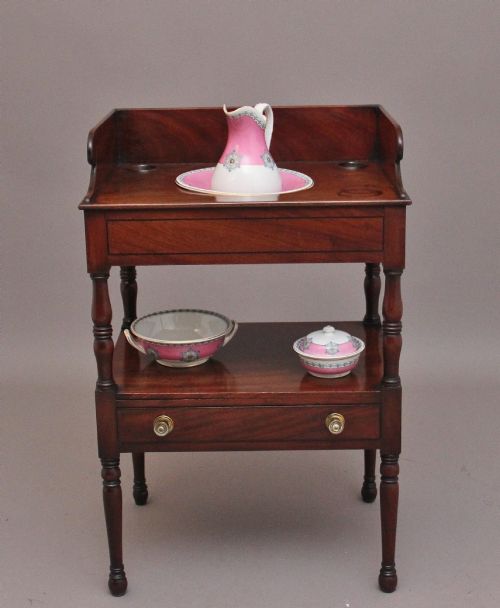
Surviving formats range from simple three-tier frames to sophisticated pieces with folding tops, tambour cabinets, and integrated ceramic bowls.
Materials and construction
Cabinetmakers utilised dense tropical hardwoods like mahogany for structural durability, frequently embellishing surfaces with delicate boxwood inlay and contrasting satinwood veneers.
Hardware elements such as brass fittings and glazed ceramic basins provide functional utility, while specialised joinery allowed for folding tops and compact corner configurations.
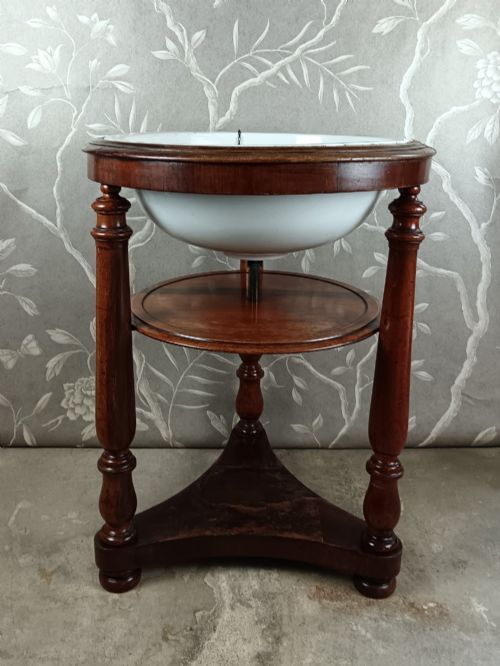
The archive records versatile formats including wig stands, triform basin supports, and folding campaign tables alongside standard corner washstands.
Judging execution
Quality rests in the crispness of the timber joinery, the subtlety of any boxwood stringing, and the integrity of the secondary woods used in internal framing.
Pieces that retain original brass components, undamaged ceramic bowls, and smoothly operating folding mechanisms or tambour doors command greater attention from discerning collectors.
Gillows Lancaster
The Georgian Wash Stand Glossary
- Corner washstand
- A triangular piece designed to fit snugly into the corner of a room to maximise floor space. These often feature stepped tiers for water jugs and basins.
- Tambour
- A sliding door made of narrow vertical strips of wood glued to a canvas backing. This mechanism allowed easy access to enclosed cabinet space in tight quarters.
- Basin stand
- A freestanding circular or square frame designed to hold a wash bowl. They frequently include small drawers or shelf tiers beneath the basin ring.
- Boxwood inlay
- Narrow strips of pale boxwood inserted into contrasting dark mahogany surfaces to create decorative borders. This technique highlights the geometric lines of the cabinetwork.
- Campaign washstand
- A portable folding stand designed for travel. These pieces utilise clever hinged frames for quick dismantling and packing.
Georgian Wash Stand: Frequently Asked Questions
What was a georgian wash stand used for?
These pieces served as the primary washing station in bedrooms before plumbed bathrooms existed. They held basins, pitchers, and soap.
Today, many owners repurpose them as corner tables or plant stands in hallways and living rooms.
How do I spot a genuine period piece?
Examine the timber for depth of colour, hand-cut dovetails in the drawers, and appropriate signs of age in the secondary woods. Makers used native timbers for internal partitions.
Fittings like brass handles and ceramic liners should match the manufacturing techniques of the late eighteenth or early nineteenth century.
Can I use these with modern plumbing?
Original georgian wash stands were built for portable ceramic basins and jugs rather than fixed plumbing. Fitting modern pipes requires altering historic timber.
Most buyers keep them dry and use the top surfaces for display, occasional lamps, or decorative bowls.
What is the difference between a corner stand and a bedside table?
Corner stands feature angled sides specifically shaped to meet room walls, often including tiered tops with circular cut-outs for wash bowls. Bedside tables are rectangular.
Many nineteenth-century variants combine both functions, offering a small cupboard beneath the basin platform for night storage.