


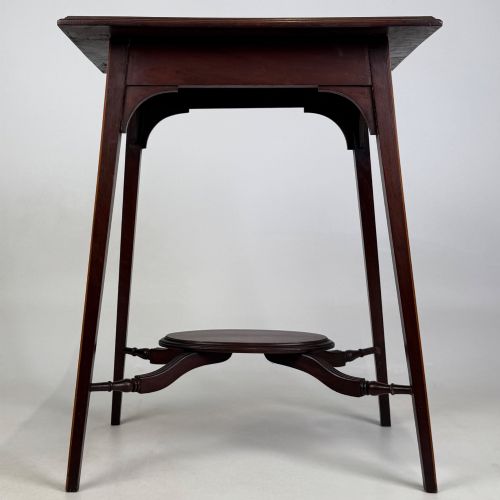
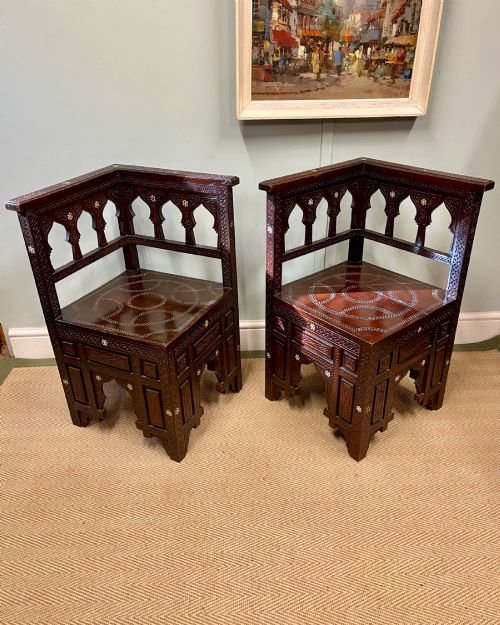

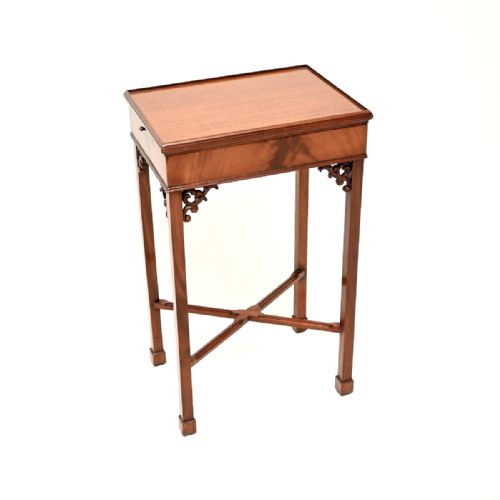
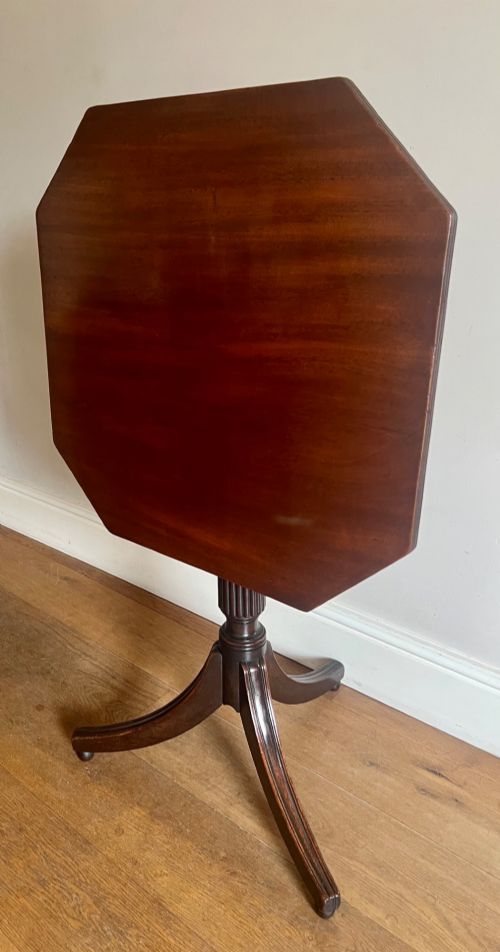

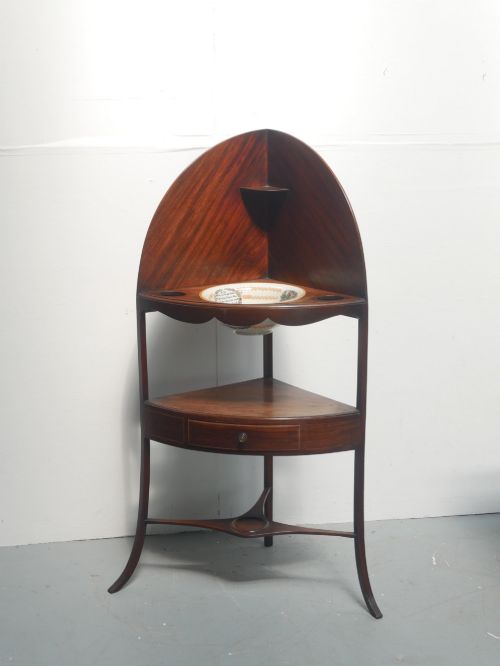
Mahogany Corner Table
A mahogany corner table makes clever use of overlooked room perimeters while offering rich timber surfaces.
Mahogany Corner Table
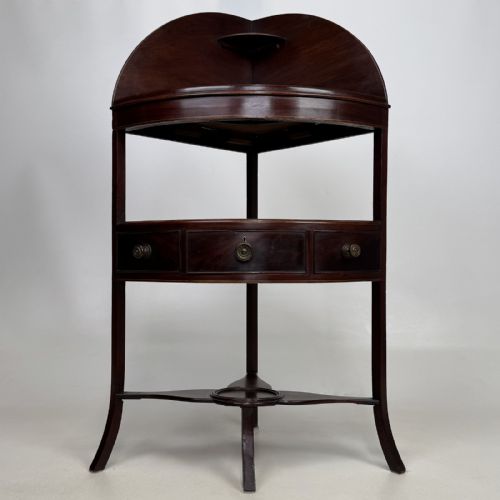
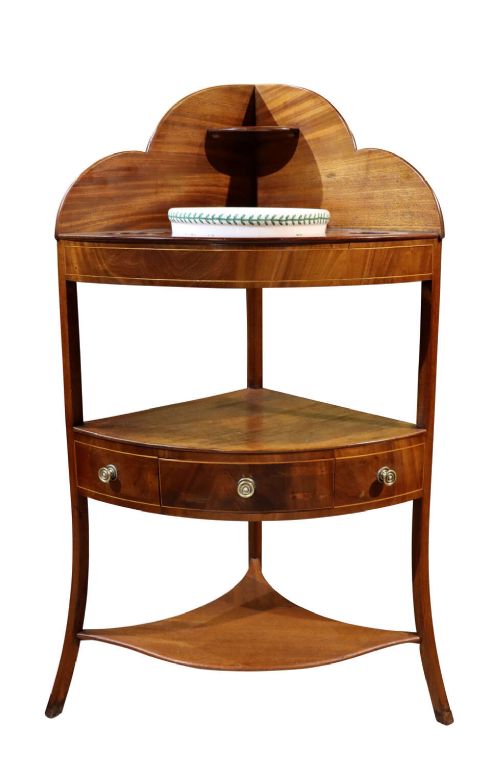
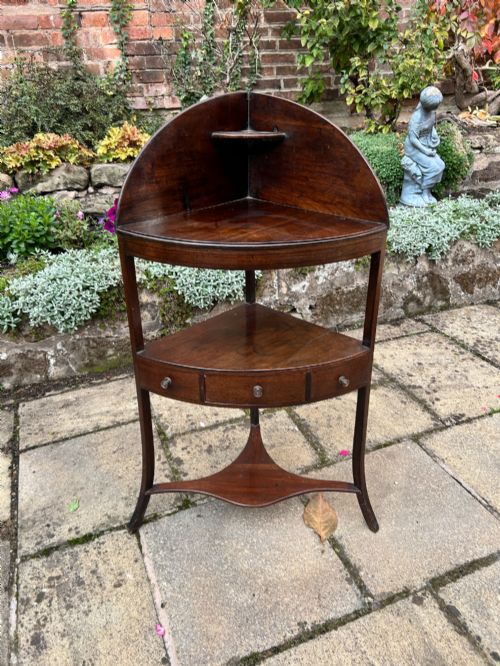
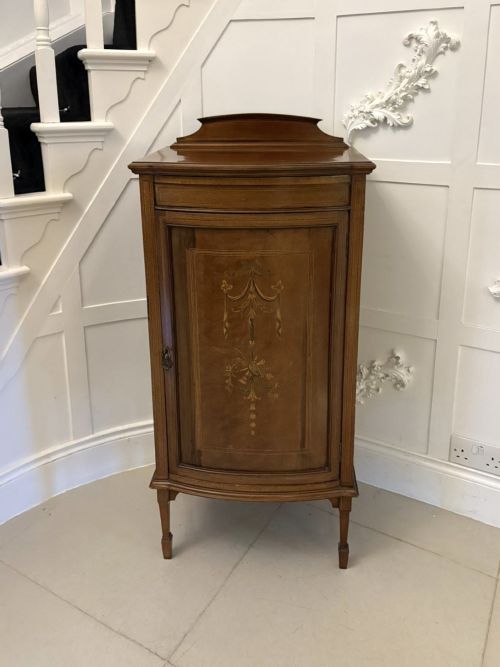
A mahogany corner table transforms difficult room angles into functional surfaces, appearing across Georgian, Victorian, and early twentieth century periods. You will regularly encounter practical washstands, drop-leaf tea tables, and occasional variants designed specifically to fit into ninety-degree junctions.
The evidence shows diverse configurations ranging from simple triangular tops to sophisticated bow-front designs, envelope folds, and console formats. Pieces span the eighteenth century through to Edwardian Sheraton revival interpretations and later twentieth century hardwood pieces.
Georgian examples often double as functional washstands or folding tea tables with triangular drops, while later Victorian and Edwardian iterations serve as lamp stands or display units. Each version utilises the specific geometry of the corner to anchor a room.
Materials and construction
Construction relies heavily on solid mahogany and selected hardwoods, frequently enhanced with satinwood inlay and brass hardware details. Cabinetmakers utilised traditional joinery to build stable triangular carcasses capable of supporting folding leaves and heavy wash bowls.
Surface treatments include fine polish that highlights natural grain patterns, alongside gilded accents on specific console tables. Drop-leaf and envelope mechanisms employ clever pivoting joints hidden within the timber framework.
Mahogany Corner Table Retail Price Guide 2026
Typical asking prices for mahogany corner table among the pieces listed under this phrase on Sellingantiques today, from the lower quarter to the upper quarter. They describe what is for sale here now, not the wider market.
Early Irish makers occasionally fashioned triangular tea tables so guests could sip in the corner.
Judging execution
Quality separates through the crispness of carved details, such as pad or hoof feet on George II and George III pieces, compared to plain turnings. Finer examples display meticulous satinwood inlay and rich, established patination across the mahogany surfaces.
Structural integrity of folding actions, drop-leaf hinges, and internal washstand compartments distinguishes superior workshop production from standard utility items. The integration of gilded monopodia or complex bow-front framing indicates higher ambition in the design.
The Mahogany Corner Table Glossary
- Bow front
- A convex curved front section that projects outward, commonly seen on Georgian and Regency examples.
- Drop-leaf
- A table top with hinged flaps that fold down or raise to expand the usable surface area.
- Monopodia
- A single carved animal-form support or pedestal leg, occasionally found on console table variants.
- Pad foot
- A rounded foot shape resting flat on the floor, characteristic of earlier eighteenth century furniture.
- Sheraton revival
- A late nineteenth and early twentieth century style drawing on the lighter neoclassical designs of the Georgian period.
Mahogany Corner Table: Frequently Asked Questions
What is a corner table used for?
These pieces fit snugly into room angles to hold lamps, display objects, or serve daily utility needs without blocking circulation.
Historically, many versions functioned specifically as washstands or tea tables with clever folding leaves.
How do I identify a Georgian corner table?
Look for characteristic construction details like pad or hoof feet, solid mahogany timbers, and traditional joinery from the eighteenth century.
Many period items also incorporate satinwood inlay or clever drop-leaf mechanisms designed for compact spaces.
Are all corner tables made of mahogany?
While mahogany is the dominant primary timber recorded in the evidence, related hardwoods and satinwood details also appear.
Some later revival pieces incorporate mixed hardwoods alongside the traditional dark tropical timber.
How do I live with a corner table?
Position the piece in an empty room angle where standard rectangular furniture cannot easily fit or wastes floor space.
Use the surface for lamps, decorative items, or plants while enjoying the architectural geometry it brings to the corner.